Gas Collection Hood
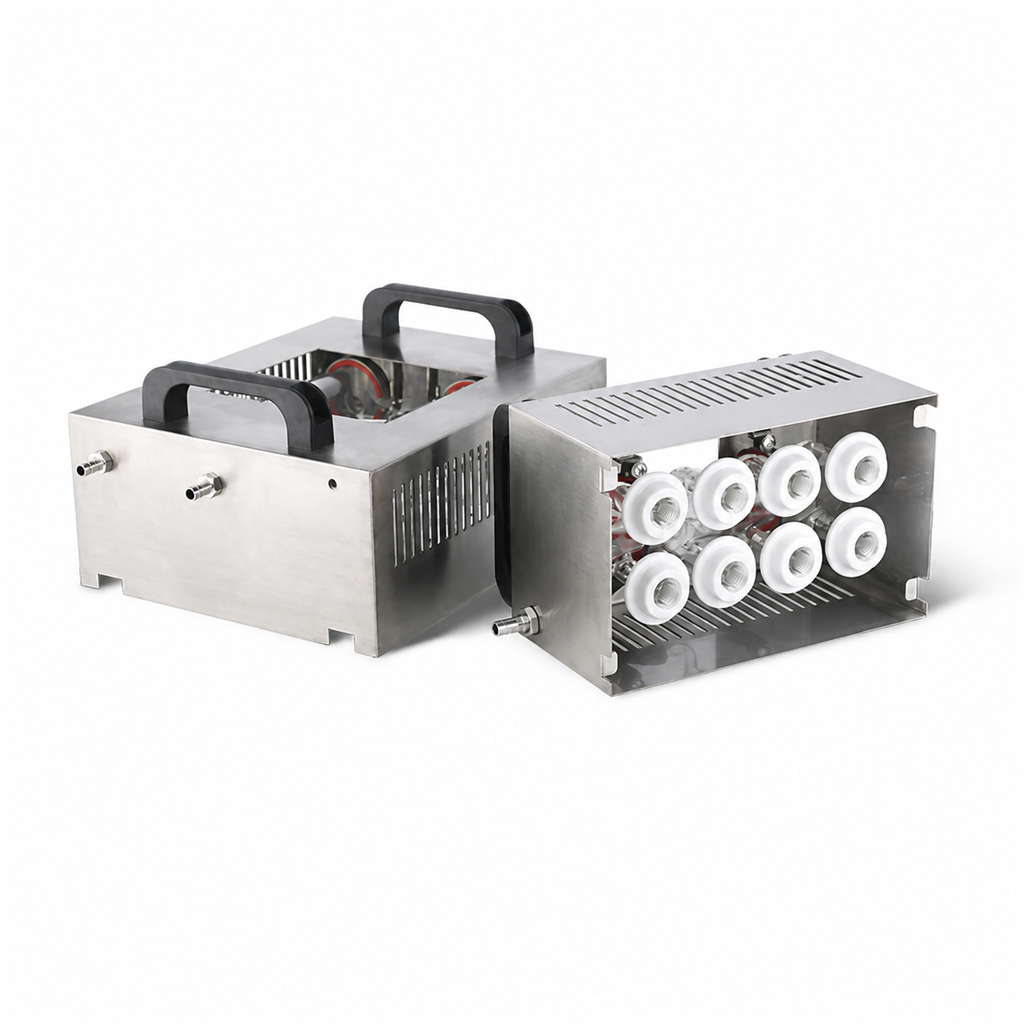
Benchtop gas collection system with multiple ports for controlled sampling and extraction of gases and vapors in laboratory applications.

Louise Corscadden, PhD
Director of Science · ConductScience
Ask Louise about Gas Collection Hood fit, setup, configuration, or quote prep.
Already working with us? Sign in to connect this with My Scientist.
Key Specifications
Full details →- Model fit
- Configured during quote
- SKU family
- BIO-0457
- Shipping box
- 13.78 x 10.24 x 10.24 cm
- Ordering
- Online checkout and quote request available
- Category
- Benchtop Instruments
- Build notes
- Confirm accessories, station layout, and support needs before purchase
Gas Collection Hood
Professional laboratory fume hood designed for safe work with hazardous chemicals and vapors. Features vertical laminar airflow with HEPA filtration and comprehensive operator protection in compliance with laboratory safety standards.
Key Features:
- Vertical laminar airflow design
- HEPA filtration system
- Multiple size configurations
- Durable construction materials
- Safety monitoring systems
- Operator-friendly controls
How It Works
The Gas Collection Hood operates on the principle of controlled air displacement and capture. The system creates a contained environment where gases and vapors can be selectively collected through dedicated sampling ports while maintaining controlled airflow patterns.
The multiple collection ports allow simultaneous sampling from different sources or collection points, while the integrated extraction system maintains negative pressure to prevent sample loss and cross-contamination. The extraction ports facilitate removal of unwanted gases and maintain clean working conditions during collection procedures.
The controlled environment within the hood ensures representative sampling by minimizing external air interference and maintaining consistent collection conditions across all sampling points.
Features & Benefits
Shipping weight
- 8.82 lb
Shipping box
- L: 13.78 cm
- W: 10.24 cm
- H: 10.24 cm
| Feature | This Product | Typical Alternative | Advantage |
|---|---|---|---|
| Collection Ports | 8 ports for simultaneous sampling | Basic systems often provide 2-4 collection points | Enables complex experimental designs with multiple sample sources or parallel collections. |
| Extraction System | Integrated air extraction with dedicated ports | Simple hoods may lack controlled extraction | Maintains controlled airflow for safety and prevents cross-contamination between samples. |
| Configuration Options | Multiple model variants (GCH-10, GCH-15) | Single configuration designs limit flexibility | Allows researchers to select appropriate capacity based on experimental scale and requirements. |
| Benchtop Design | Compact 350×260×260mm footprint | Larger fume hood systems require significant space | Provides dedicated gas collection capability without requiring extensive laboratory infrastructure. |
| Weight | 3-4kg gross weight | Portable systems may lack stability | Provides stable operation while maintaining portability for laboratory setup flexibility. |
This gas collection hood offers comprehensive multi-port sampling capabilities in a compact benchtop format. The integrated extraction system and multiple configuration options provide researchers with flexible and safe gas collection for various analytical applications.
Practical Tips
Verify extraction flow rates using a calibrated flow meter before beginning sample collection.
Why: Consistent airflow is critical for representative sampling and contamination prevention.
Clean collection ports and replace sampling tubing regularly based on usage frequency and chemical exposure.
Why: Contaminated surfaces can compromise sample integrity and analytical results.
Allow adequate purge time between samples when switching collection sources or target compounds.
Why: Incomplete purging can lead to carryover effects and compromised analytical data.
Check for leaks in tubing connections if extraction efficiency appears reduced.
Why: Air leaks can disrupt controlled airflow patterns and affect collection performance.
Monitor and record extraction flow rates during collection to ensure consistent sampling conditions.
Why: Flow rate variations can affect collection efficiency and sample representativeness.
Ensure adequate ventilation connection before collecting potentially hazardous gases or vapors.
Why: Proper extraction prevents accumulation of dangerous compounds in the laboratory environment.
Use dedicated sampling lines for each collection port to prevent cross-contamination.
Why: Shared tubing can introduce analyte carryover between different sample sources.
Setup Guide
What’s in the Box
- Gas collection hood main unit
- User manual and operating instructions
- Port connection accessories (typical)
- Tubing adapters for standard connections (typical)
- Calibration and setup guide (typical)
Warranty
ConductScience provides a standard one-year manufacturer warranty covering defects in materials and workmanship. Technical support is available for setup guidance, operational questions, and troubleshooting assistance.
Compliance
What types of sampling tubing are compatible with the collection ports?
The collection ports accommodate standard laboratory tubing connections. Consult the product datasheet for specific port dimensions and recommended tubing materials based on your target analytes.
Can the system handle corrosive or reactive gases?
Material compatibility depends on the specific gases being collected. Review the construction materials specification and consult technical support for guidance on chemical compatibility with your target compounds.
What extraction flow rates are recommended for optimal collection?
Flow rate requirements vary based on application and target analytes. The system supports adjustable flow rates through the extraction ports - consult your analytical method specifications for optimal settings.
How do I prevent cross-contamination between collection ports?
The integrated extraction system maintains controlled airflow patterns to minimize cross-contamination. Use dedicated sampling lines for each port and follow proper purging procedures between collections.
What maintenance is required for consistent performance?
Regular cleaning of collection ports and tubing connections is recommended. Replace tubing periodically based on usage and chemical exposure, and verify extraction system performance regularly.
Can the hood be used for quantitative gas collection?
Yes, when properly calibrated with appropriate flow measurement and control systems. Quantitative applications require careful attention to collection efficiency and flow rate validation.
What vacuum requirements are needed for the extraction system?
Extraction system requirements depend on your specific application and desired airflow rates. Most laboratory vacuum systems or dedicated exhaust connections can provide adequate extraction capacity.
Have a question about this product?
Have a question? Just ask.
Send it over and we'll email you a personalized answer — no call, no scheduling.
Prefer to talk it through?