Gel Card Centrifuge
Specialized benchtop centrifuge for gel card testing with 24-card capacity, 4000 rpm maximum speed, and programmable timing for blood banking and immunohematology applications.

Louise Corscadden, PhD
Director of Science · ConductScience
Ask Louise about Gel Card Centrifuge fit, setup, configuration, or quote prep.
Already working with us? Sign in to connect this with My Scientist.
Key Specifications
Full details →- Model fit
- Configured during quote
- SKU family
- BIO-0939
- Shipping box
- 27.0 x 48.0 x 35.8 cm
- Ordering
- Online checkout and quote request available
- Category
- Centrifuges
- Build notes
- Confirm accessories, station layout, and support needs before purchase
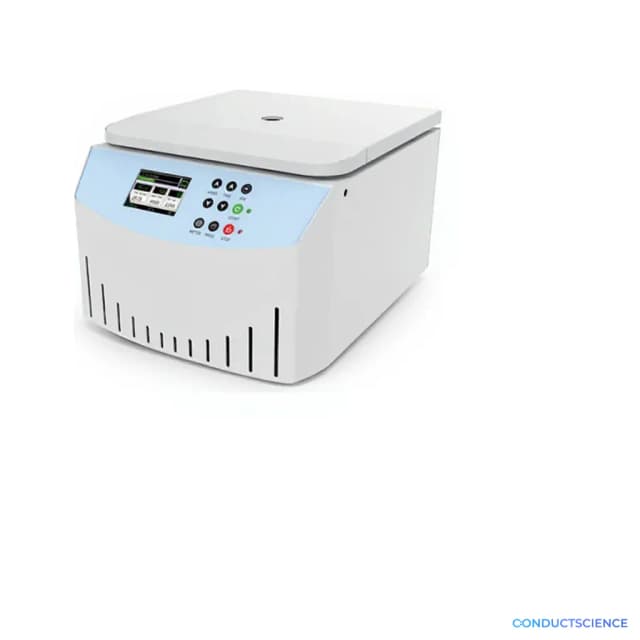
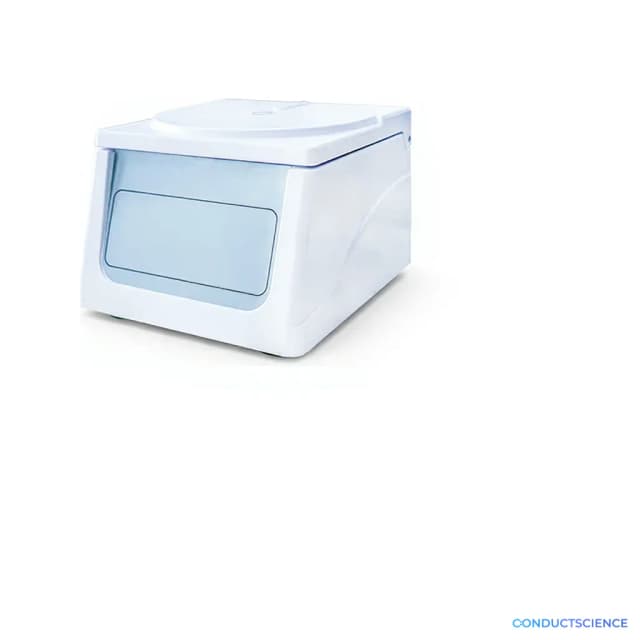
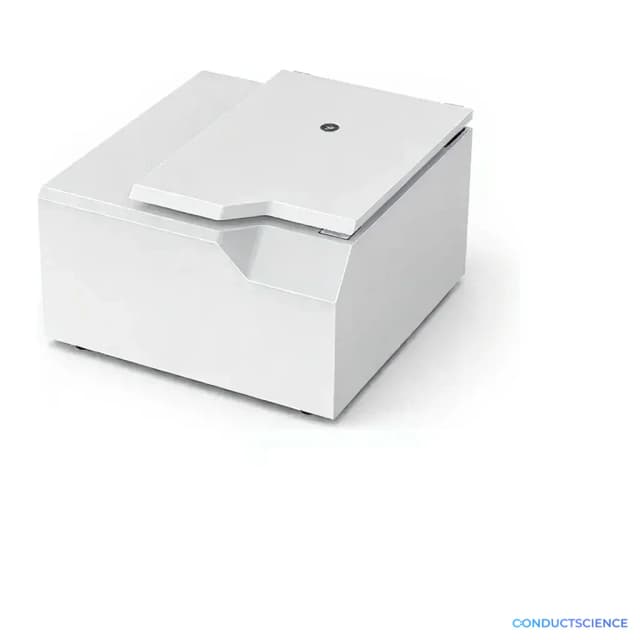
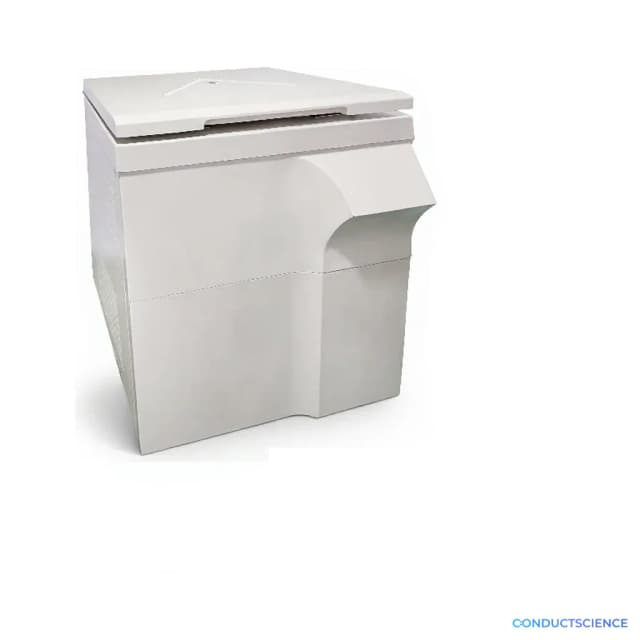
The Gel Card Centrifuge is a specialized laboratory centrifuge designed for gel card testing applications in blood banking, immunohematology, and clinical diagnostics. This compact benchtop instrument accommodates up to 24 gel cards simultaneously, providing controlled centrifugal separation at speeds up to 4000 rpm with ±20 rpm precision. The unit features programmable timing from 1 second to 999 minutes, enabling precise protocol execution for antigen-antibody reactions and blood typing procedures.
Operating at noise levels ≤60 dB, this centrifuge maintains a quiet laboratory environment while delivering consistent performance for gel card agglutination assays. The universal power supply (AC110-220V, 50/60Hz) and compact footprint (480×358×270mm) make it suitable for diverse laboratory settings requiring reliable gel card processing capabilities.
How It Works
The gel card centrifuge operates on the principle of controlled centrifugal separation to enhance antigen-antibody reactions within specialized gel matrix cards. During centrifugation, the applied centrifugal force drives red blood cells through the gel medium, where specific antibodies are immobilized. Positive reactions result in agglutinated cells trapped at various levels within the gel column, while negative reactions allow cells to pellet at the bottom.
The precise speed control (±20 rpm accuracy) and programmable timing ensure reproducible separation conditions across different assay protocols. The rotor design accommodates standard gel card formats, maintaining uniform centrifugal force distribution across all 24 card positions. This controlled environment enables clear differentiation between positive and negative reactions, critical for accurate interpretation of blood typing and compatibility testing results.
Features & Benefits
Shipping weight
- 17.0 lb
Shipping box
- L: 27.0 cm
- W: 48.0 cm
- H: 35.8 cm
| Feature | This Product | Typical Alternative | Advantage |
|---|---|---|---|
| Card Capacity | 24 cards | Entry-level models often accommodate 6-12 cards | Higher throughput reduces processing time for busy blood banks and reduces the need for multiple centrifugation cycles. |
| Speed Precision | ±20 rpm accuracy | Basic models may have ±50-100 rpm tolerance | Tighter speed control ensures reproducible separation conditions critical for standardized gel card interpretation. |
| Noise Level | ≤60 dB operation | Standard centrifuges often operate at 70-80 dB | Quieter operation enables use in patient care areas and reduces laboratory noise pollution. |
| Timing Range | 1 second to 999 minutes | Limited models may offer shorter maximum timing | Extended timing capability supports specialized protocols and research applications requiring longer incubation periods. |
| Power Compatibility | Universal AC110-220V, 50/60Hz | Some models require specific voltage configurations | Global power compatibility simplifies international deployment and reduces installation requirements. |
This gel card centrifuge offers specialized design features including 24-card capacity, precise speed control (±20 rpm), and quiet operation (≤60 dB) specifically optimized for blood banking and immunohematology applications. The universal power supply and compact footprint provide installation flexibility for diverse laboratory environments.
Practical Tips
Verify speed accuracy quarterly using a tachometer or speed verification kit to ensure precise centrifugal force delivery.
Why: Speed accuracy directly affects gel card assay interpretation and result reproducibility.
Clean the rotor and chamber weekly with mild detergent and inspect for gel card residue that could affect balance.
Why: Residue buildup can cause vibration and interfere with proper card seating during centrifugation.
Allow gel cards to reach room temperature before centrifugation and avoid overpacking the rotor beyond rated capacity.
Why: Temperature equilibration ensures consistent viscosity while proper loading prevents mechanical stress and ensures even force distribution.
If excessive vibration occurs, check rotor balance by redistributing cards and ensure the unit is level on a stable surface.
Why: Vibration can affect separation quality and cause premature wear of centrifuge components.
Document centrifugation parameters for each assay type to establish standardized protocols and ensure result consistency.
Why: Standardized parameters enable protocol validation and support quality assurance requirements.
Always ensure the lid is properly closed and locked before starting centrifugation, and never attempt to open during operation.
Why: The lid interlock system prevents operator injury from rotating components and maintains proper centrifugation conditions.
Schedule annual professional service calibration to verify timing accuracy and mechanical integrity.
Why: Regular calibration maintains instrument specifications required for regulatory compliance and quality assurance.
Use only gel cards within their expiration dates and store according to manufacturer specifications before centrifugation.
Why: Expired or improperly stored gel cards can produce false results regardless of centrifuge performance.
Setup Guide
What’s in the Box
- Gel Card Centrifuge main unit
- Gel card rotor adapter
- Power cord
- User manual and operation guide
- Installation hardware (typical)
- Warranty documentation (typical)
Warranty
ConductScience provides a standard one-year manufacturer warranty covering defects in materials and workmanship. Technical support and service documentation are included to ensure optimal instrument performance.
Compliance
What gel card formats are compatible with this centrifuge?
The rotor adapter accommodates standard gel card formats used in blood banking. Consult product datasheet for specific card dimensions and compatibility requirements.
How do I determine optimal centrifugation parameters for different assays?
Follow gel card manufacturer protocols for speed and timing. Typical blood typing requires 1-5 minutes at 1000-3000 rpm, while antibody screening may require different parameters.
What maintenance is required for consistent performance?
Regular cleaning of the rotor and chamber, periodic speed verification, and annual service calibration ensure reliable operation and accuracy.
Can this centrifuge be used for other applications besides gel cards?
This unit is specifically designed for gel card applications. The rotor adapter and chamber configuration are optimized for gel card dimensions and may not accommodate other tube formats.
How does the noise level compare to standard laboratory centrifuges?
At ≤60 dB, this unit operates significantly quieter than high-speed centrifuges, making it suitable for patient care areas and open laboratory environments.
What happens if there's a power interruption during centrifugation?
Consult user manual for power failure procedures. Most protocols can be repeated if interrupted, but specific gel card assays may require fresh samples for accurate results.
How do I ensure balanced loading for optimal performance?
Distribute gel cards evenly around the rotor positions. If running fewer than 24 cards, place them in opposing positions to maintain rotor balance and prevent vibration.
Have a question about this product?
Have a question? Just ask.
Send it over and we'll email you a personalized answer — no call, no scheduling.
Prefer to talk it through?