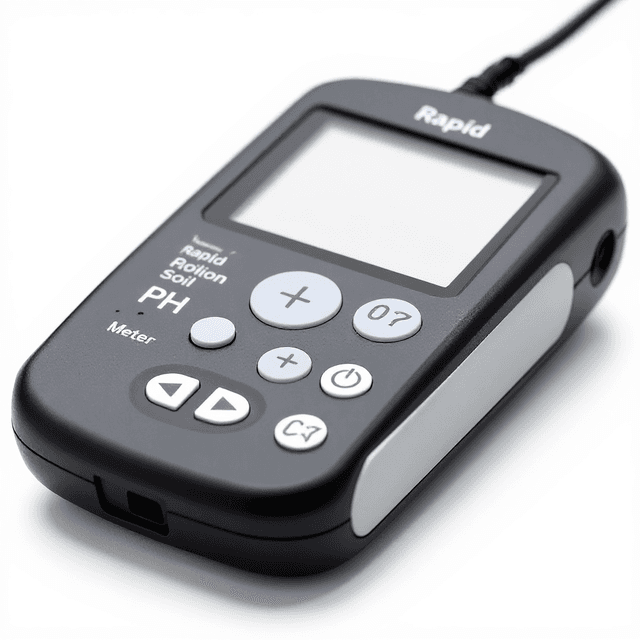
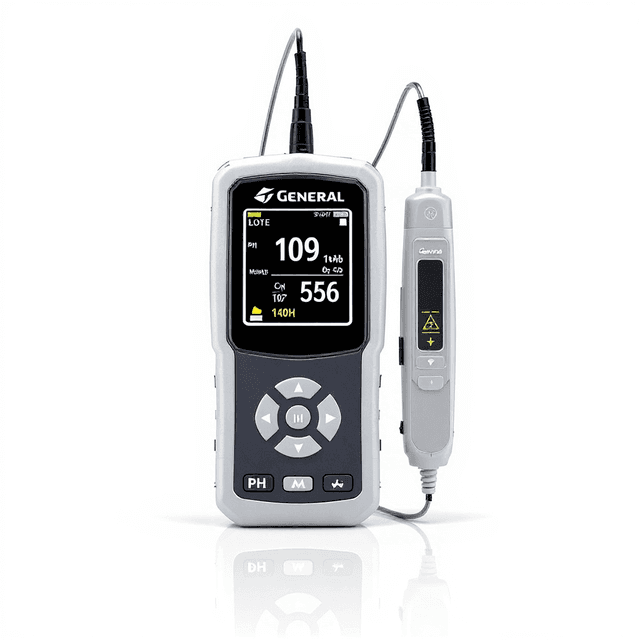
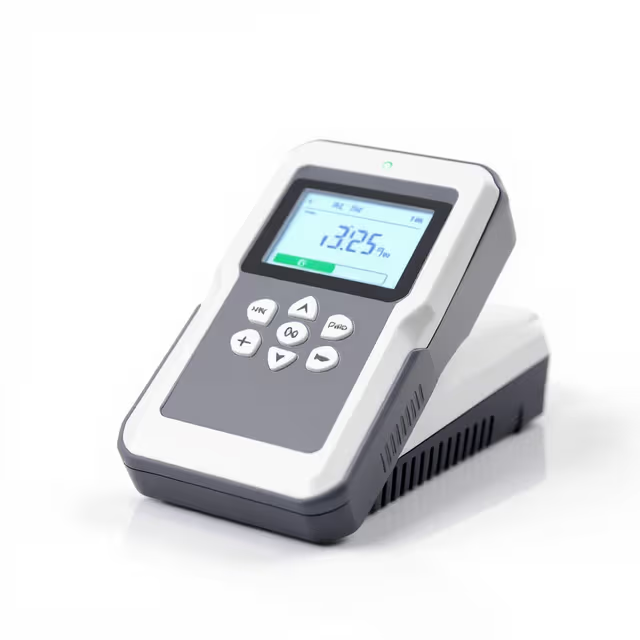
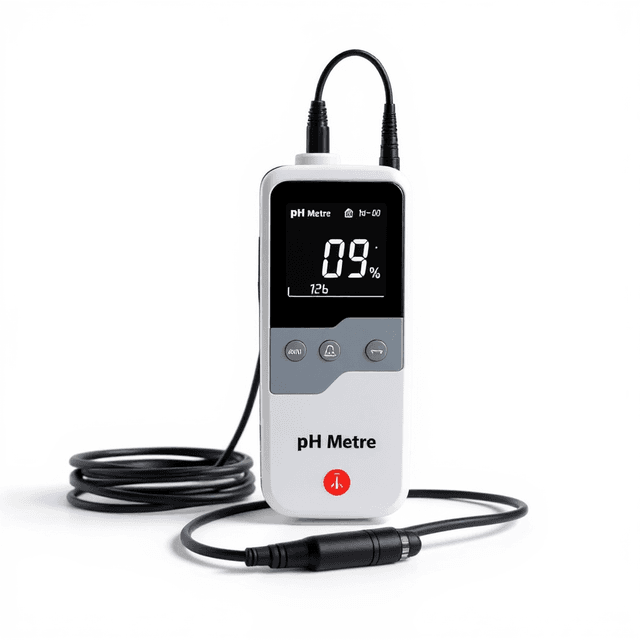
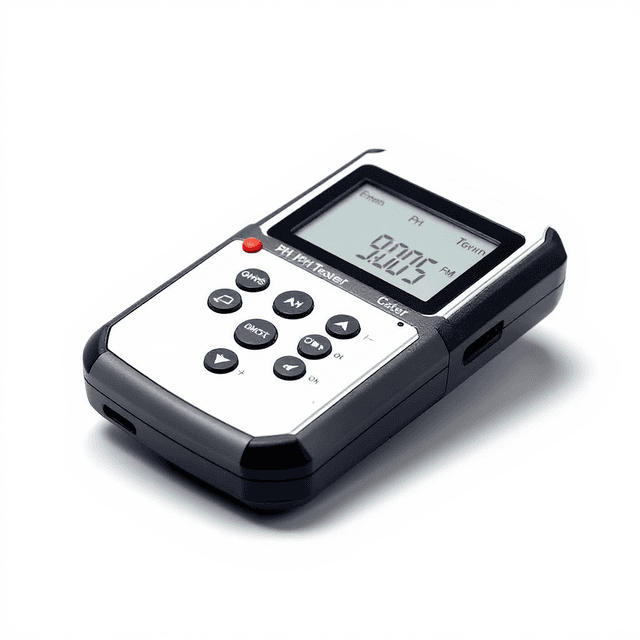
Laboratory pH Meter BK-PH Series
Laboratory pH meter with 0.01 pH accuracy, 7-inch touch screen interface, and 1-3 point calibration for precise electrochemical measurements in research applications.

Louise Corscadden, PhD
Director of Science · ConductScience
Ask Louise about Laboratory pH Meter BK-PH Series fit, setup, configuration, or quote prep.
Already working with us? Sign in to connect this with My Scientist.
Key Specifications
Full details →- Model fit
- 1 selectable configurations
- SKU family
- BIO-0365
- Shipping box
- 7.1 x 25.0 x 19.0 cm
- Ordering
- Online checkout and quote request available
- Category
- pH Meters
- Build notes
- Confirm accessories, station layout, and support needs before purchase
The Laboratory pH Meter BK-PH Series provides precise pH and mV measurements with 0.01 pH accuracy for aqueous solution analysis in research and quality control applications. The instrument features a 7-inch touch screen interface for intuitive operation and supports 1-3 point calibration protocols to ensure measurement accuracy across different pH ranges.
Designed for laboratory environments requiring reliable electrochemical measurements, the pH meter includes manual temperature compensation and BNC connectivity for standard pH electrodes. The instrument offers both pH and millivolt measurement modes with 0.01 pH repeatability, supporting applications from buffer preparation to environmental sample analysis where precise hydrogen ion activity determination is required.
How It Works
pH measurement relies on the electrochemical potential developed across a glass membrane electrode when immersed in aqueous solutions. The pH-sensitive glass membrane selectively responds to hydrogen ion activity, generating a voltage proportional to the logarithm of hydrogen ion concentration according to the Nernst equation.
The BK-PH Series employs a high-impedance voltmeter to measure the potential difference between the glass electrode and a stable reference electrode. The instrument's analog-to-digital conversion system processes this millivolt signal and applies calibration factors to display pH values. Manual temperature compensation adjusts for the temperature dependence of the Nernst slope, ensuring accurate readings across the instrument's operating range of -5.0 to 110.0°C.
Features & Benefits
Shipping weight
- 5.0 lb
Shipping box
- L: 7.1 cm
- W: 25.0 cm
- H: 19.0 cm
| Feature | This Product | Typical Alternative | Advantage |
|---|---|---|---|
| Display Interface | 7-inch touch screen | Basic LCD or smaller touch screens | Larger display area improves readability and provides intuitive menu navigation in busy laboratory environments |
| pH Accuracy | 0.01 pH accuracy class | Entry-level meters often specify ±0.02 pH accuracy | Higher precision supports applications requiring tight pH control such as buffer preparation and quality control testing |
| Calibration Points | 1-3 point calibration | Single or dual-point calibration only | Three-point calibration enables better linearity correction across wider pH ranges for improved measurement accuracy |
| Temperature Range | -5.0 to 110.0°C operating range | Limited temperature ranges on basic models | Extended temperature capability accommodates heated samples and specialized applications beyond room temperature |
| Connectivity Options | BNC and 3.5mm jack connectors | BNC only on most basic meters | Dual connectivity supports both pH electrodes and temperature sensors for complete measurement setup |
The BK-PH Series combines high accuracy measurement capability with an intuitive touch screen interface and flexible calibration options. The extended temperature range and dual connectivity provide versatility for diverse laboratory applications requiring precise pH determination.
Practical Tips
Perform 2-point calibration using buffers that bracket your expected sample pH range for optimal accuracy.
Why: Interpolating between calibration points is more accurate than extrapolating beyond them.
Store the pH electrode in pH 4.01 buffer solution or 3M KCl when not in use to maintain electrode hydration.
Why: Proper storage prevents glass membrane dehydration and extends electrode lifetime.
Allow electrode to equilibrate in sample for 30-60 seconds before recording readings.
Why: Stabilization time ensures the electrode potential reaches steady state for accurate measurement.
If readings drift continuously, check for electrode contamination or junction clogging in the reference electrode.
Why: Blocked or contaminated junctions prevent stable reference potential establishment.
Rinse electrode with distilled water and blot dry between samples to prevent cross-contamination.
Why: Sample carryover can bias readings, especially when measuring samples with significantly different pH values.
Never immerse the meter body in liquid - only the electrode should contact sample solutions.
Why: Water ingress into electronic components can damage the instrument and create electrical hazards.
Use fresh calibration buffers and avoid contaminating buffer bottles with used electrodes.
Why: Buffer contamination shifts pH values and reduces calibration accuracy over time.
Setup Guide
What’s in the Box
- Laboratory pH Meter BK-PH Series main unit
- Power adapter and cable
- pH electrode (typical)
- Electrode stand (typical)
- Calibration buffer solutions (typical)
- User manual and quick start guide
- USB cable for data transfer (typical)
- Calibration certificate
Warranty
ConductScience provides a standard one-year manufacturer warranty covering defects in materials and workmanship, with technical support available for instrument operation and troubleshooting.
Compliance
What buffer solutions are recommended for calibration?
Use certified pH buffers spanning your measurement range. Standard buffers at pH 4.01, 7.00, and 10.01 cover most applications. For acidic samples, consider pH 1.68 and 4.01 buffers.
How often should the instrument be calibrated?
Calibrate daily for critical measurements or when changing electrode. Check calibration with a known buffer before each measurement session to ensure accuracy.
Can the meter store measurement data?
Data storage capabilities should be confirmed in the product datasheet. Many similar instruments include internal memory or USB connectivity for data transfer.
What maintenance is required for the pH electrode?
Store electrode in pH 4 buffer or KCl solution between uses. Replace electrode when slope calibration falls below 95% of theoretical value or response time becomes sluggish.
How is temperature compensation applied?
Manual temperature compensation requires entering sample temperature. The instrument adjusts pH readings based on the Nernst equation temperature dependence of -2mV/pH/°C deviation from 25°C.
What is the measurement response time?
Response time depends on electrode condition and sample properties. Typical stabilization occurs within 30-60 seconds for aqueous samples with good ionic strength.
Can the instrument measure non-aqueous solutions?
Standard glass pH electrodes are designed for aqueous solutions. Specialized electrodes may be required for organic solvents or mixed solvent systems.
How does the BNC connection ensure stable readings?
BNC connectors provide secure electrical contact and electromagnetic shielding for the high-impedance pH signal, minimizing noise and ensuring stable measurements.
Have a question about this product?
Have a question? Just ask.
Send it over and we'll email you a personalized answer — no call, no scheduling.
Prefer to talk it through?
Accessories
Enhance your setup with compatible accessories
Frequently Bought Together