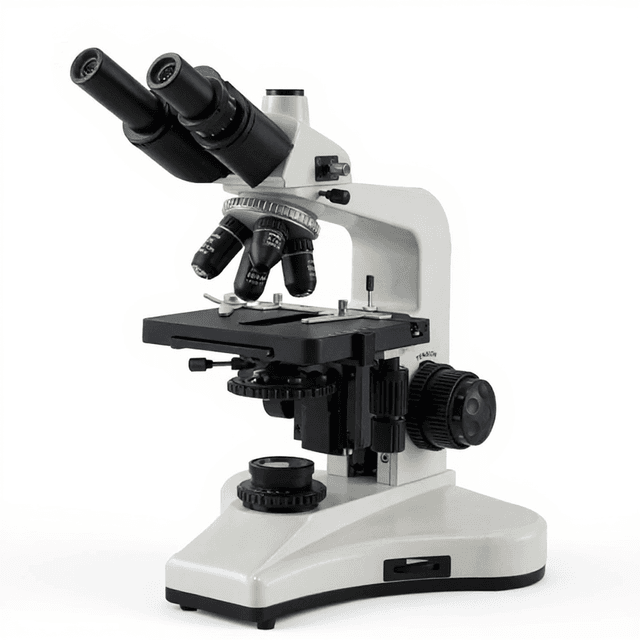
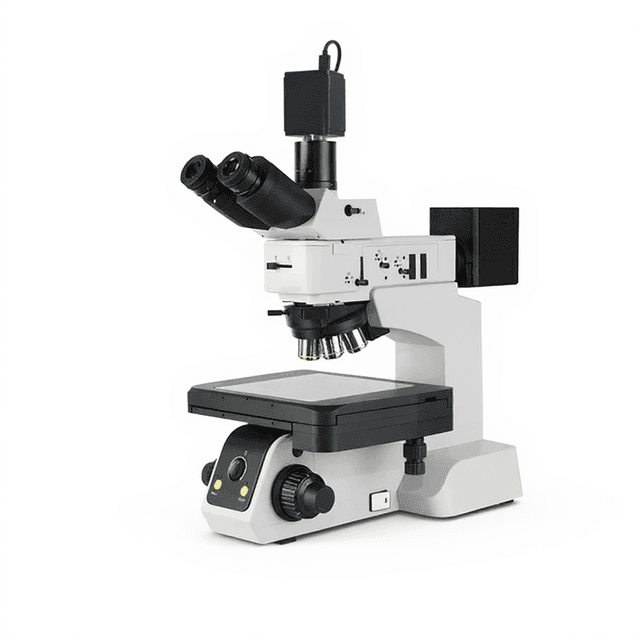
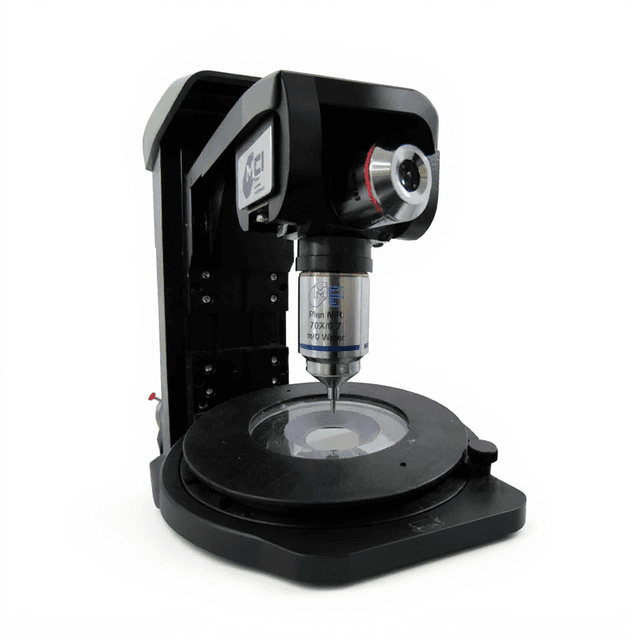
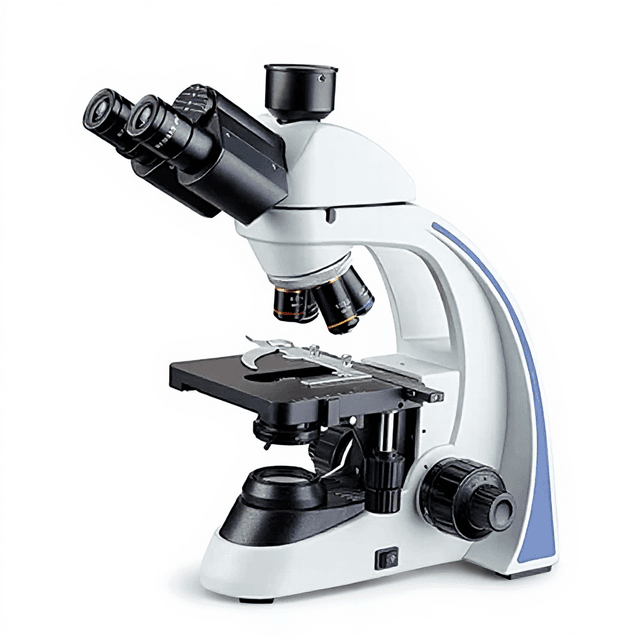
Multi-function Digital Biological Microscope
Multi-function biological microscope with infinite optical system, featuring multiple objective and eyepiece configurations for comprehensive specimen examination in biological research applications.

Louise Corscadden, PhD
Director of Science · ConductScience
Ask Louise about Multi-function Digital Biological Microscope fit, setup, configuration, or quote prep.
Already working with us? Sign in to connect this with My Scientist.
Key Specifications
Full details →- Model fit
- Configured during quote
- SKU family
- BIO-0499
- Shipping box
- 44.0 x 32.3 x 26.4 cm
- Ordering
- Online checkout and quote request available
- Category
- Microscopy
- Build notes
- Confirm accessories, station layout, and support needs before purchase
The Multi-function Digital Biological Microscope (BMM-1000/2000) is a research-grade optical instrument featuring an infinite optical system designed for biological specimen examination. This compound microscope provides multiple objective configurations including achromatic, semi-plan achromatic, and plan achromatic objectives spanning 4X to 100X magnification, accommodating diverse imaging requirements in biological research applications.
The instrument supports various eyepiece configurations (WF10X/18, P16X/11, WF10X/20, WF15X/16) to optimize viewing comfort and field of view for different experimental protocols. The infinite optical system design enables consistent optical performance across the magnification range while supporting additional optical components integration for specialized imaging techniques.
How It Works
The microscope operates on brightfield transmission microscopy principles, where illumination passes through the specimen and objective lens system to form a magnified image. The infinite optical system design positions the objective lens to produce parallel light rays, which are then focused by a tube lens to create the intermediate image. This configuration eliminates spherical aberration and provides consistent optical performance regardless of the optical path length.
Multiple objective types provide different levels of optical correction: achromatic objectives correct for chromatic aberration at two wavelengths, semi-plan objectives provide improved field flatness compared to standard achromatic designs, and plan objectives deliver the highest level of field correction across the entire field of view. The 4X, 10X, 40X, and 100X magnifications enable progressive specimen examination from survey views to high-resolution cellular detail.
The eyepiece system further magnifies the intermediate image, with different eyepiece configurations offering various field numbers and magnifications to optimize the viewing experience for specific applications. The combination of objective and eyepiece magnifications determines the total system magnification and resolution capabilities.
Features & Benefits
Automation Level
- manual
BMM-1000
- BMM-2000
Optical System
- Infinite optical system
/
- √
√
- √
●
- ●
Eyepiece
- WF10X/18
P16X/11
- ●
WF10X/20
WF15×/16
Objective
- Achromatic objective 4X, 10X, 40X, 100X
Semi-plan achromatic objective 4X, 10X, 40X, 100X
- ●
Infinite achromatic objective 4X, 10X, 40X, 100X
- ●
Infinite semi-plan achromatic objective 4X, 10X, 4
- ●
Infinite plan achromatic objective 4X, 10X, 40X, 1
Brand
- ConductScience
Research Domain
- Cancer Research
- Cell Biology
- Developmental Biology
- Histopathology
- Materials Science
- Microbiology
Shipping weight
- 6.5 lb
Shipping box
- L: 44.0 cm
- W: 32.3 cm
- H: 26.4 cm
| Feature | This Product | Typical Alternative | Advantage |
|---|---|---|---|
| Optical System Design | Infinite optical system | Basic microscopes often use finite optical systems with shorter optical paths | Provides consistent optical performance and enables integration of additional optical components without affecting image quality |
| Objective Options | Multiple configurations including achromatic, semi-plan, and plan objectives | Entry-level models typically offer only achromatic objectives | Allows researchers to select optimal optical correction level based on specific application requirements |
| Magnification Range | 4X, 10X, 40X, 100X objectives | Basic models may offer limited magnification options | Enables comprehensive specimen examination from survey views to high-resolution detail in single instrument |
| Eyepiece Variety | Multiple eyepiece configurations (WF10X/18, P16X/11, WF10X/20, WF15X/16) | Standard models typically include fixed eyepiece configuration | Accommodates different field of view requirements and viewing preferences for various research applications |
This microscope offers research-grade infinite optical system design with multiple objective and eyepiece configurations. The variety of optical correction levels and magnification options provides comprehensive capability for biological research applications requiring high-quality imaging.
Practical Tips
Verify parfocal alignment monthly using a calibration slide, adjusting objective heights if necessary to maintain focus when switching magnifications.
Why: Proper parfocal alignment ensures efficient workflow and prevents specimen damage from refocusing at high magnifications
Clean objective front elements weekly using lens tissue and appropriate cleaning solution, working from center outward in circular motions.
Why: Contaminated objectives significantly degrade image quality and can permanently damage expensive optical coatings
Always start specimen examination at lowest magnification (4X) and progress systematically to higher magnifications to locate and center areas of interest.
Why: This approach maximizes efficiency and reduces time spent searching for specimen features at high magnification with limited fields of view
If image appears dim or lacks contrast, check condenser position and aperture diaphragm settings before adjusting illumination intensity.
Why: Proper condenser alignment and aperture setting are critical for optimal contrast and resolution before increasing light levels
Allow thermal equilibration period of 15-30 minutes before critical measurements to minimize focus drift from temperature changes.
Why: Thermal expansion affects mechanical components and can cause focus drift during extended observation sessions
Always use lowest effective illumination intensity to prevent specimen heating and photobleaching in fluorescent samples.
Why: Excessive illumination can damage biological specimens and degrade fluorescent markers over time
Store eyepieces in protective cases when not in use and cover microscope with dust cover to prevent contamination of optical surfaces.
Why: Dust and contamination on optical surfaces significantly impact image quality and require frequent cleaning that can damage coatings
Lubricate mechanical stage components annually according to manufacturer specifications to maintain smooth operation.
Why: Proper lubrication prevents mechanical wear and ensures precise specimen positioning for quantitative measurements
Setup Guide
What’s in the Box
- Multi-function Digital Biological Microscope main unit
- Objective lenses (configuration dependent on model)
- Eyepieces (configuration dependent on model)
- Power adapter and cord (typical)
- Dust cover (typical)
- User manual and documentation (typical)
- Calibration slide (typical)
Warranty
ConductScience provides standard manufacturer warranty coverage with technical support for instrument operation and troubleshooting. Warranty terms typically include parts and labor coverage for manufacturing defects.
Compliance
What is the difference between achromatic, semi-plan, and plan objective options?
Achromatic objectives correct chromatic aberration at two wavelengths, semi-plan objectives add improved field flatness compared to standard achromatic designs, and plan objectives provide the highest level of field correction across the entire field of view for the most demanding applications.
Can this microscope accommodate oil immersion techniques for 100X objectives?
Consult product datasheet for specific oil immersion compatibility with the 100X objectives, as this depends on the numerical aperture and design specifications of the particular objective configuration.
What eyepiece configuration provides the largest field of view?
Among the available options, WF10X/20 and WF15X/16 configurations would provide different field characteristics, with the field number (the number after the slash) indicating the field of view diameter in millimeters at the intermediate image plane.
Is the microscope compatible with digital camera systems?
The infinite optical system design typically supports camera integration through appropriate adapters, though specific compatibility should be verified based on the camera system requirements and available optical ports.
What maintenance is required for the optical components?
Regular cleaning of objective front elements and eyepiece lenses using appropriate optical cleaning materials, periodic calibration verification, and proper storage with dust protection are essential for maintaining optical performance.
How do I achieve parfocal alignment across different objectives?
Parfocal alignment is typically factory-set, but fine adjustments may be needed using the objective height adjustment mechanisms if available, ensuring specimens remain in focus when switching between magnifications.
Have a question about this product?
Have a question? Just ask.
Send it over and we'll email you a personalized answer — no call, no scheduling.
Prefer to talk it through?
Accessories
Enhance your setup with compatible accessories
Replacement Parts & Consumables


Frequently Bought Together
Upgrade Options
Related Products