Laboratory Biological Microscope XSB-Series
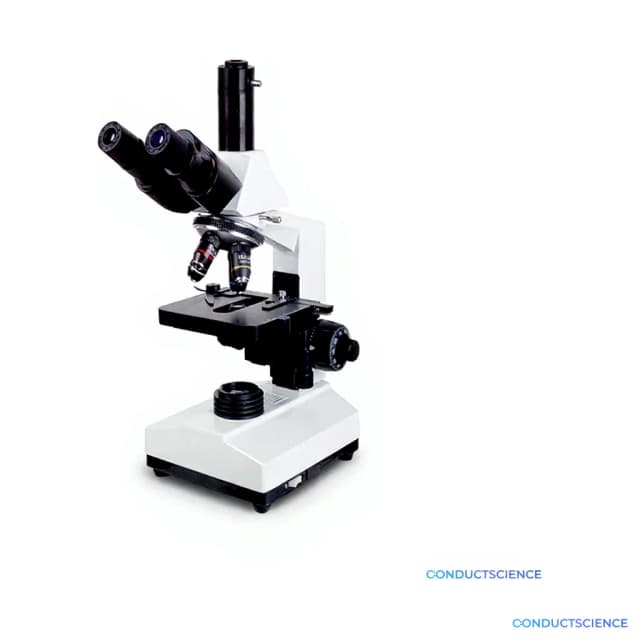
Professional biological microscope with plan achromat objectives, mechanical stage, and optional phase contrast capabilities for routine specimen examination and research applications.

Louise Corscadden, PhD
Director of Science · ConductScience
Ask Louise about Laboratory Biological Microscope XSB-Series fit, setup, configuration, or quote prep.
Already working with us? Sign in to connect this with My Scientist.
Key Specifications
Full details →- Model fit
- Configured during quote
- SKU family
- BIO-0502
- Shipping box
- 43.0 x 27.0 x 32.0 cm
- Ordering
- Online checkout and quote request available
- Category
- Microscopy
- Build notes
- Confirm accessories, station layout, and support needs before purchase
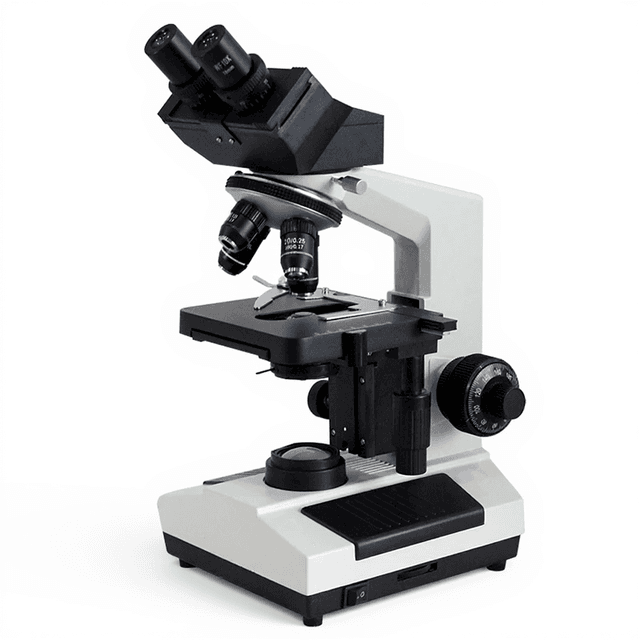
The Laboratory Biological Microscope XSB-Series is a professional-grade optical microscope designed for routine biological specimen examination and research applications. The system features a hinge-type 30° tilt binocular observation head with wide-angle WF10X18 mm eyepieces and plan achromat objective lenses (4X, 10X, 40X spring-loaded, 100X oil immersion spring-loaded) mounted on a multi-roller four-aperture nosepiece. The double-layer mechanical stage (135×140mm) provides precise specimen positioning and movement control.
Built-in illumination with universal AC power supply (100-240V, 50/60Hz) ensures consistent operation across laboratory environments. Optional accessories including darkfield condenser and phase contrast kit expand imaging capabilities for specialized applications. The compact design and standardized components make this microscope suitable for educational institutions, clinical laboratories, and research facilities requiring reliable brightfield microscopy with optional contrast enhancement techniques.
How It Works
The XSB-Series microscope operates on transmitted light brightfield microscopy principles, where illumination passes through the specimen to create contrast based on differential light absorption and scattering. The built-in illumination system provides uniform light distribution through the condenser system to the specimen plane. Plan achromat objective lenses minimize spherical and chromatic aberrations while providing flat field correction across the entire field of view.
The mechanical stage system uses precision gearing to enable fine positional control of specimens in both X and Y axes. The 30° tilted binocular head reduces neck strain during extended observation periods while maintaining optimal optical alignment. The multi-roller nosepiece allows rapid objective changes while maintaining parfocal and parcentric alignment between magnifications.
Optional phase contrast and darkfield accessories utilize specialized optical techniques to enhance contrast in unstained biological specimens. Phase contrast converts phase differences in light passing through transparent specimens into amplitude differences visible to the eye, while darkfield illumination creates bright specimens against dark backgrounds by utilizing oblique lighting angles.
Features & Benefits
Automation Level
- manual
XSB-301P
- XSB-301B
XSB-102B
- XSB-301A
Observation Head
- Hinge-type 30° tilt binocular observation head
Hinge-type 30° tilt trinocular observation head
- √
Nosepiece
- Multi-roller four-aperture objective lens converter
√
- √
Eyepiece
- Wide-angle eyepiece: WF10X18 mm
Objective Lens
- Plan achromat 4X, 10X, 40X(spring), 100X(spring, oil)
Stage
- Double-layer mechanical platform 135*140mm
Illumination
- Built-in lighting
Optional Accessories
- Darkfield condenser, phase contrast kit
Package
- Cardboard box with foam
Packing Size
- 270*320*430mm
Brand
- ConductScience
Research Domain
- Cell Biology
- Clinical Diagnostics
- Developmental Biology
- Environmental Monitoring
- Histopathology
- Microbiology
Power/Voltage
- AC100~240V, 50/60Hz
Shipping weight
- 7.0 lb
Shipping box
- L: 43.0 cm
- W: 27.0 cm
- H: 32.0 cm
| Feature | This Product | Typical Alternative | Advantage |
|---|---|---|---|
| Objective Lens Correction | Plan achromat objectives with spherical and chromatic aberration correction | Basic achromat lenses with limited aberration correction | Provides sharper, more accurate imaging across the entire field of view for quantitative applications. |
| Stage Type and Size | Double-layer mechanical stage (135×140mm) with X-Y positioning controls | Fixed stages or smaller mechanical stages with limited working area | Enables systematic specimen examination and precise positioning for detailed morphological studies. |
| Nosepiece Configuration | Multi-roller four-aperture objective converter | Three-position nosepieces with basic click-stop mechanisms | Accommodates complete magnification range while maintaining superior alignment precision between objectives. |
| Observation Head Design | 30° tilt binocular head with hinge mechanism | Fixed angle or basic tilting heads with limited adjustment | Reduces operator fatigue during extended observation sessions while maintaining optical quality. |
| Power Supply Compatibility | Universal AC 100-240V, 50/60Hz power supply | Region-specific power requirements | Ensures operation compatibility across different international laboratory environments without additional converters. |
| Optional Contrast Methods | Darkfield condenser and phase contrast kit availability | Limited or no contrast enhancement options | Expands imaging capabilities for unstained biological specimens and specialized research applications. |
The XSB-Series combines plan achromat optics with mechanical precision suitable for routine research and clinical applications. The spring-loaded high-magnification objectives and comprehensive contrast options provide versatility beyond basic educational models while maintaining operational simplicity.
Practical Tips
Verify parfocal alignment monthly using a test specimen at different magnifications.
Why: Maintains consistent focus when changing between objectives, improving workflow efficiency.
Clean objective lenses with lens paper and appropriate solvents, never touching glass surfaces with fingers.
Why: Prevents optical degradation and maintains image quality over extended use periods.
Start specimen examination at lowest magnification and progressively increase magnification to locate areas of interest.
Why: Preserves objectives from contact damage and provides systematic approach to specimen evaluation.
If image appears dim or uneven, check illumination centering and condenser alignment before adjusting intensity.
Why: Proper optical alignment is more critical than brightness level for optimal image contrast and resolution.
Allow 15-minute warm-up period after power-on before critical observations or imaging.
Why: Ensures thermal stability of illumination system for consistent color temperature and brightness.
Use immersion oil sparingly and clean immediately after use to prevent contamination of adjacent objectives.
Why: Prevents oil migration to dry objectives which can cause permanent optical damage.
Store microscope with lowest power objective in position and stage lowered to prevent accidental contact.
Why: Minimizes risk of objective damage during transport or storage periods.
Use mechanical stage controls rather than moving slides by hand for precise positioning.
Why: Prevents slide breakage and enables reproducible specimen positioning for documentation purposes.
Setup Guide
What’s in the Box
- XSB-Series microscope main unit
- Binocular observation head (30° tilt)
- WF10X18 mm eyepieces (pair)
- Plan achromat objectives (4X, 10X, 40X, 100X)
- Multi-roller nosepiece (four-aperture)
- Mechanical stage assembly
- Power cord
- Dust cover
- User manual and documentation
- Cardboard box with foam packaging
Warranty
ConductScience provides a standard one-year manufacturer warranty covering defects in materials and workmanship, with technical support available for setup, operation, and maintenance guidance.
Compliance
What is the working distance of the 100X oil immersion objective?
Consult product datasheet for specific working distance specifications of the 100X oil immersion objective lens.
Can the microscope accommodate standard 25×75mm glass slides?
Yes, the 135×140mm mechanical stage provides adequate space for standard microscope slides with room for positioning and movement.
What type of immersion oil should be used with the 100X objective?
Use Type A immersion oil with refractive index 1.515 at 23°C, following standard microscopy protocols for oil immersion techniques.
Is the illumination system compatible with fluorescence accessories?
The built-in transmitted light system is designed for brightfield applications. Consult manufacturer regarding fluorescence module compatibility and installation requirements.
How do I maintain parfocal alignment between objectives?
Parfocal alignment is factory-set but may require adjustment after transport. Use calibration protocols to verify and adjust objective heights if necessary.
Can the trinocular head option accommodate digital cameras?
The optional trinocular head includes a camera port designed for standard C-mount camera adapters and digital imaging systems.
What maintenance schedule is recommended for optimal performance?
Regular cleaning of optics, annual calibration verification, and periodic lubrication of mechanical components according to manufacturer guidelines.
Have a question about this product?
Have a question? Just ask.
Send it over and we'll email you a personalized answer — no call, no scheduling.
Prefer to talk it through?
Accessories
Enhance your setup with compatible accessories
Replacement Parts & Consumables
Frequently Bought Together
Upgrade Options
Related Products