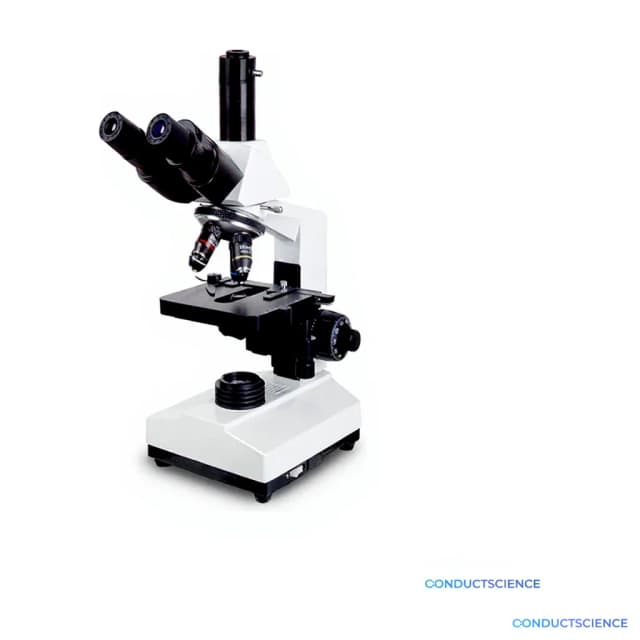
Laboratory Biological Microscope BX-Series
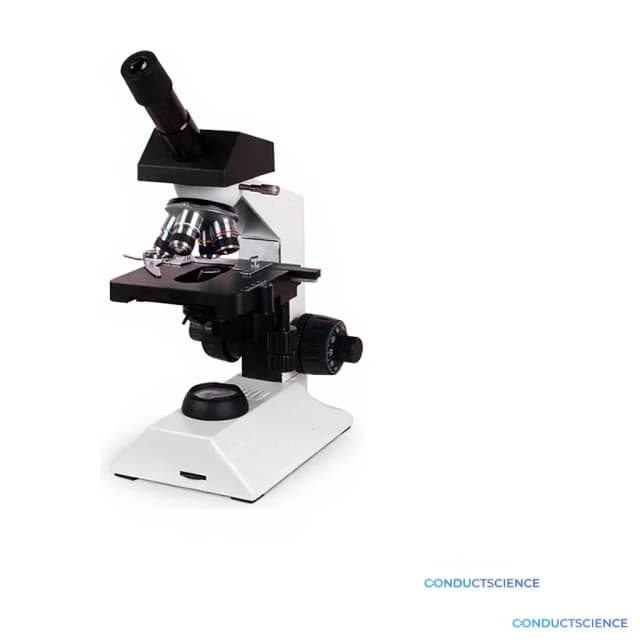
Professional compound biological microscope with monocular observation head, 4-position nosepiece, and achromatic objectives from 4X to 100X oil immersion for routine laboratory and educational applications.

Louise Corscadden, PhD
Director of Science · ConductScience
Ask Louise about Laboratory Biological Microscope BX-Series fit, setup, configuration, or quote prep.
Already working with us? Sign in to connect this with My Scientist.
Key Specifications
Full details →- Model fit
- Configured during quote
- SKU family
- BIO-0504
- Shipping box
- 46.0 x 25.0 x 36.0 cm
- Ordering
- Online checkout and quote request available
- Category
- Microscopy
- Build notes
- Confirm accessories, station layout, and support needs before purchase
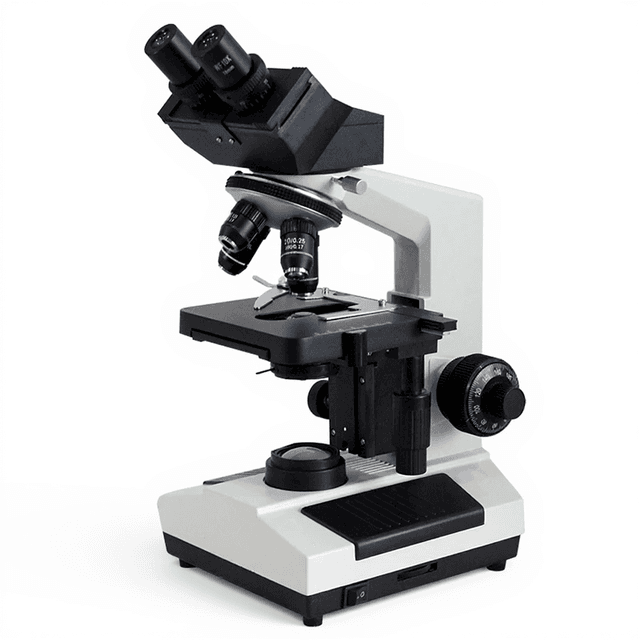
The Laboratory Biological Microscope BX-Series is a professional-grade compound microscope designed for routine biological and medical research applications. This microscope features a monocular observation head tilted at 45° for comfortable viewing, paired with a four-position objective nosepiece and achromatic objective lenses spanning magnifications from 4X to 100X oil immersion. The double-layer mechanical stage provides precise specimen positioning with 30×50mm travel range, while built-in illumination ensures consistent specimen lighting.
The BX-Series incorporates wide-angle plane eyepieces (WF10X×18mm) and spring-loaded high-magnification objectives (40X and 100X) to prevent damage during focusing. Universal power supply compatibility (AC100-240V, 50/60Hz) enables operation in international laboratory environments. This microscope is suitable for educational institutions, clinical laboratories, and research facilities requiring reliable optical performance for cellular and tissue examination.
How It Works
The BX-Series operates on the principle of compound light microscopy, utilizing multiple lenses to achieve high magnification and resolution. Light from the built-in illumination system passes through the specimen and is collected by the objective lens, which forms a primary magnified image. This image is further magnified by the eyepiece optics to produce the final viewed image. The achromatic objective lenses correct for chromatic aberration by bringing two wavelengths of light to the same focal point, improving image clarity and color fidelity.
The four-position nosepiece allows rapid switching between magnifications (4X, 10X, 40X, and 100X), with spring-loaded mechanisms protecting the higher magnification objectives from damage during focusing. The double-layer mechanical stage provides precise X-Y positioning through calibrated controls, enabling systematic examination of specimens. The 45° tilted observation head reduces neck strain during extended viewing sessions while maintaining optimal light path geometry for image quality.
Features & Benefits
Automation Level
- manual
BX-101A
- BX-101B
Observation Head
- Monocular observation head tilted 45°
Nosepiece
- Multi-roller four-aperture objective lens converter
√
- √
Eyepiece
- Wide-angle plane eyepiece: WF10X18mm
Objective Lens
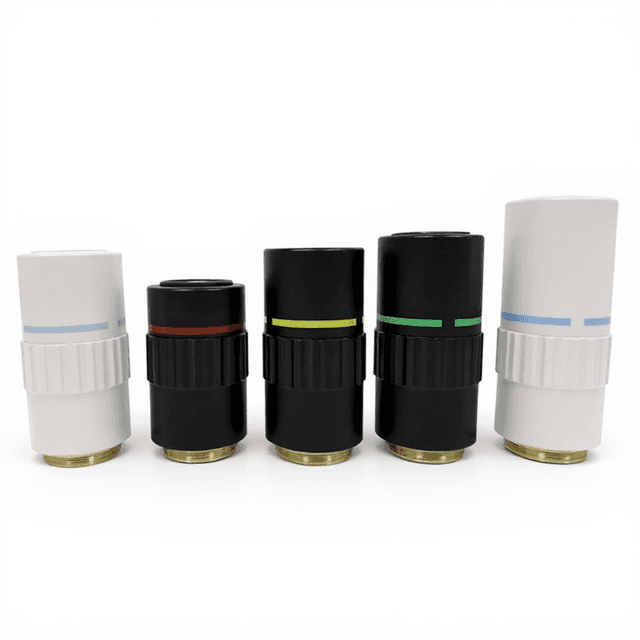
- 185 achromatic 4X, 10X, 40X(spring), 100X(spring, oil)
Stage
- Double-layer mechanical platform 115*125mm, moving range 30*50mm
Illumination
- Built-in lighting
Package
- Foam carton
Packing Size
- 250*360*460mm
Brand
- ConductScience
Research Domain
- Cancer Research
- Cell Biology
- Clinical Diagnostics
- Developmental Biology
- Histopathology
- Microbiology
Power/Voltage
- AC100~240V, 50/60Hz
Weight
- 6kg
Shipping weight
- 6.0 lb
Shipping box
- L: 46.0 cm
- W: 25.0 cm
- H: 36.0 cm
| Feature | This Product | Typical Alternative | Advantage |
|---|---|---|---|
| Objective Lens Configuration | 4-position nosepiece with 4X, 10X, 40X(spring), 100X(spring, oil) achromatic objectives | Entry-level models often provide 3-position nosepieces without oil immersion capability | Complete magnification range enables examination from tissue overview to cellular detail in a single instrument |
| Stage Design | Double-layer mechanical stage 115×125mm with 30×50mm travel range | Basic models may feature fixed stages or limited mechanical movement | Precise X-Y positioning enables systematic scanning of large specimens and accurate repositioning |
| Viewing Head Configuration | Monocular observation head tilted 45° | Some models offer straight viewing tubes or basic tilted heads | Ergonomic 45° angle reduces neck strain during extended observation sessions |
| Eyepiece Specification | Wide-angle plane eyepiece WF10X×18mm | Standard eyepieces typically provide smaller field of view | Larger 18mm field of view reveals more specimen area for efficient examination |
| Power Supply Compatibility | Universal AC100-240V, 50/60Hz | Some models require specific voltage configurations | International compatibility eliminates need for voltage converters in global laboratory environments |
| Objective Protection | Spring-loaded mechanisms on 40X and 100X objectives | Basic models often lack spring protection on high magnification lenses | Prevents costly objective damage from excessive focusing force during routine use |
The BX-Series provides a complete achromatic objective set including oil immersion capability, mechanical stage precision, and ergonomic design features typically found in higher-end instruments. The universal power compatibility and protective mechanisms enhance reliability for routine laboratory applications.
Practical Tips
Check parfocal alignment monthly by focusing on a specimen with one objective, then rotating to other objectives - minimal refocusing should be required.
Why: Proper parfocal alignment maintains focus when changing magnifications and indicates optical system stability.
Clean objective lenses weekly with lens tissue and appropriate cleaning solution, wiping in a spiral pattern from center outward.
Why: Regular cleaning prevents oil residue buildup and maintains image contrast and resolution.
Always start observation with the lowest magnification (4X) objective and progress to higher magnifications after locating areas of interest.
Why: This workflow prevents missing important features and reduces risk of damaging specimens or objectives.
Use only a small drop of immersion oil with the 100X objective and clean thoroughly after each use session.
Why: Excess oil can leak into objective mechanisms, while dried oil residue degrades optical performance.
If image quality appears poor, check that the correct objective is clicked into position and that illumination intensity matches the magnification being used.
Why: Partially engaged objectives and improper illumination are common causes of reduced image sharpness.
Always lower the stage or raise the objective to its highest position before rotating the nosepiece to change magnifications.
Why: This prevents collision between objectives and specimens that could damage both the optics and sample.
Allow the illumination system to warm up for 5-10 minutes before critical observations to ensure stable color temperature.
Why: Stable illumination prevents color shifts and intensity variations that can affect image documentation and analysis.
Lubricate mechanical stage movement mechanisms quarterly with light machine oil according to manufacturer specifications.
Why: Regular lubrication maintains smooth stage operation and prevents wear that could affect positioning precision.
Setup Guide
What’s in the Box
- BX-Series microscope main unit
- WF10X×18mm wide-angle plane eyepiece
- Achromatic objective lens set (4X, 10X, 40X spring, 100X spring oil)
- Power cord with universal AC adapter
- Immersion oil for 100X objective (typical)
- Lens cleaning tissue and solution (typical)
- User manual and specifications documentation (typical)
- Dust cover (typical)
Warranty
ConductScience provides a 1-year manufacturer warranty covering defects in materials and workmanship, with technical support for setup and operation guidance. Extended service plans and calibration services are available through authorized service centers.
Compliance
What is the numerical aperture and resolution limit of the 100X oil immersion objective?
Consult product datasheet for specific numerical aperture values and resolution specifications of the 100X oil immersion objective lens.
Is the microscope compatible with phase contrast or DIC illumination techniques?
This model features standard brightfield illumination. Consult technical specifications for compatibility with additional contrast enhancement methods.
What type of immersion oil should be used with the 100X objective?
Use standard microscope immersion oil with refractive index of 1.515 at 23°C. Type A immersion oil is typically recommended for achromatic objectives.
Can the monocular head be upgraded to binocular or trinocular configuration?
Consult manufacturer specifications for head upgrade compatibility. Head replacement may require professional service depending on the optical tube design.
What is the working distance of each objective lens?
Working distances vary by magnification - consult objective lens specifications for exact measurements. Lower magnification objectives typically provide greater working distances.
How should the mechanical stage be maintained for optimal performance?
Clean stage surfaces regularly with lens tissue and appropriate solvents. Lubricate stage movement mechanisms according to maintenance schedule to prevent wear.
What specimen slide thickness is optimal for this optical system?
Standard #1 cover glass (0.17mm thickness) is typically optimal for achromatic objectives. Consult objective specifications for cover glass tolerance requirements.
Can digital cameras be mounted to this microscope for image capture?
Camera mounting depends on the availability of a camera port or C-mount adapter. Consult specifications for imaging system compatibility options.
Have a question about this product?
Have a question? Just ask.
Send it over and we'll email you a personalized answer — no call, no scheduling.
Prefer to talk it through?
Accessories
Enhance your setup with compatible accessories
Replacement Parts & Consumables
Frequently Bought Together
Upgrade Options
Related Products