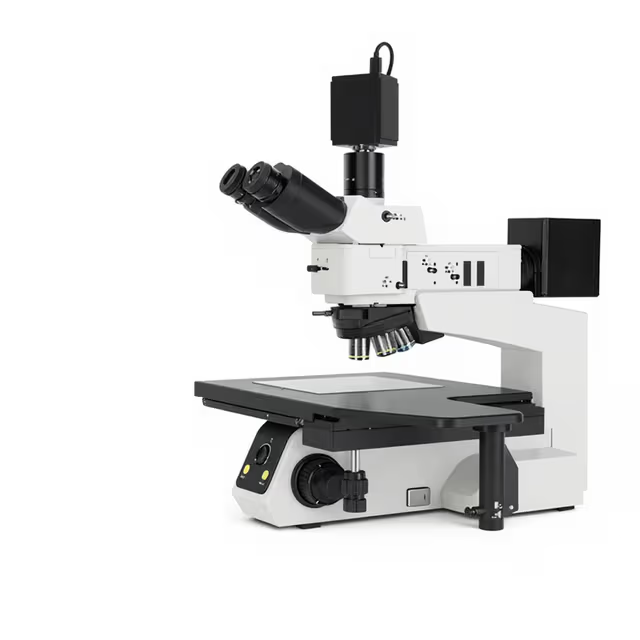
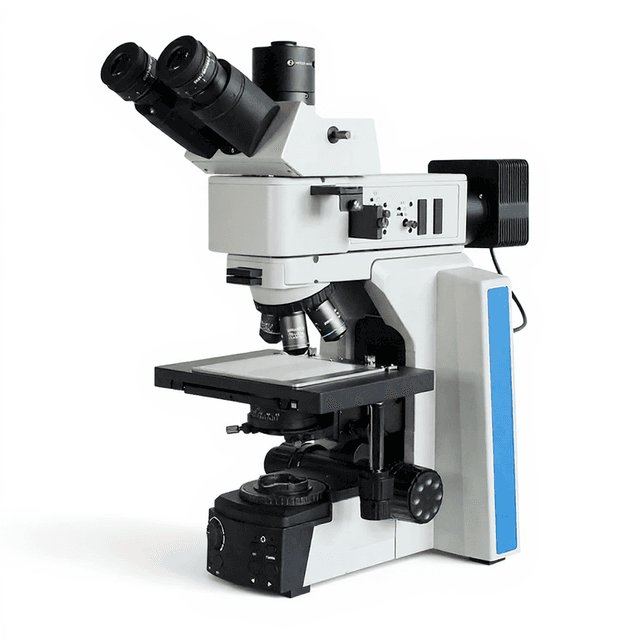
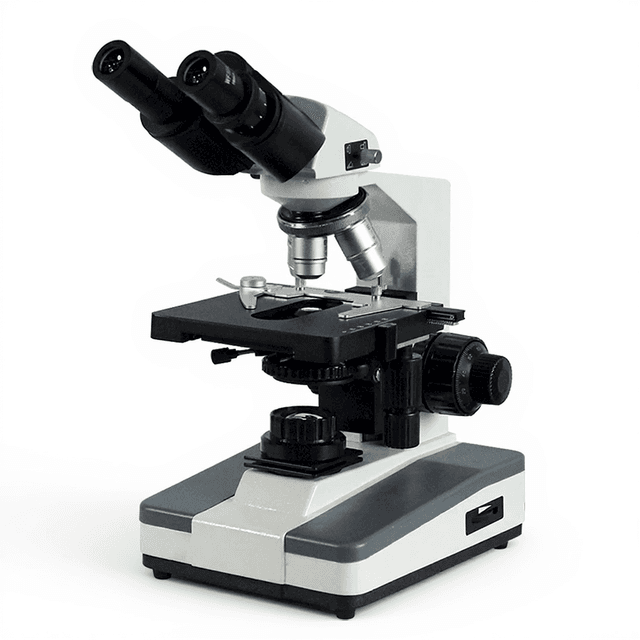
Laboratory Biological Microscope — Monocular
Compound biological microscope with monocular head, 4-position achromatic objective turret (4X-100X), mechanical stage, and built-in illumination for cellular and tissue observation.

Louise Corscadden, PhD
Director of Science · ConductScience
Ask Louise about Laboratory Biological Microscope — Monocular fit, setup, configuration, or quote prep.
Already working with us? Sign in to connect this with My Scientist.
Key Specifications
Full details →- Model fit
- Configured during quote
- SKU family
- BIO-0503
- Shipping box
- 46.0 x 25.0 x 36.0 cm
- Ordering
- Online checkout and quote request available
- Category
- Microscopy
- Build notes
- Confirm accessories, station layout, and support needs before purchase
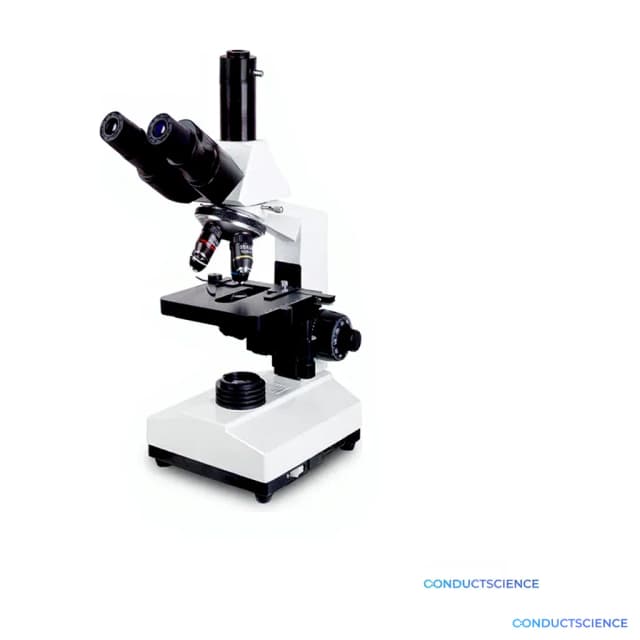
The Laboratory Biological Microscope (BIO-0503) is a compound optical microscope designed for routine biological observation and educational applications. This system features a monocular observation head with 45° tilt for comfortable viewing, coupled with a four-position objective turret housing achromatic lenses at 4X, 10X, 40X, and 100X magnifications. The built-in illumination system and mechanical stage provide stable sample positioning and consistent lighting for cellular and tissue examination.
The microscope incorporates wide-angle eyepieces (WF10X18mm) and a double-layer mechanical stage with 30×50mm translation range, enabling systematic specimen scanning across a 115×125mm platform area. Spring-loaded high-magnification objectives (40X and 100X) protect against accidental contact during focusing, while the 100X oil immersion lens supports high-resolution bacterial observation and cytological analysis.
How It Works
The biological microscope operates on transmitted light microscopy principles, utilizing a built-in illumination system to direct light through specimens mounted on glass slides. Light passes through the condenser system, specimen, and objective lens, with the objective collecting transmitted light to form a magnified real image. This image is further magnified by the eyepiece to produce the final virtual image observed by the user.
The achromatic objective lenses correct for chromatic aberration across the visible spectrum, providing color-corrected images with improved resolution. The mechanical stage enables precise specimen positioning through rack-and-pinion translation mechanisms, while the 45° tilted observation head reduces neck strain during extended observation periods. Oil immersion at 100X magnification increases the numerical aperture by eliminating air gaps between the objective and specimen, achieving theoretical resolution limits approaching 0.2 micrometers.
Features & Benefits
Automation Level
- manual
BX-102B
- BX-102C
Observation Head
- Monocular observation head tilted 45°
45° tilt sliding binocular observation head
- √
Nosepiece
- Multi-roller four-aperture objective lens converter
√
- √
Eyepiece
- Wide-angle plane eyepiece: WF10X18mm
Objective Lens
- Achromatic 4X, 10X, 40X(spring), 100X(spring, oil)
Stage
- Double-layer mechanical platform 115*125mm, moving range 30*50mm
Illumination
- Built-in lighting
Package
- Foam carton
Packing Size
- 250*360*460mm
Brand
- ConductScience
Research Domain
- Cell Biology
- Clinical Diagnostics
- Developmental Biology
- Histopathology
- Microbiology
Power/Voltage
- AC100~240V, 50/60Hz
Weight
- 6kg
Shipping weight
- 6.0 lb
Shipping box
- L: 46.0 cm
- W: 25.0 cm
- H: 36.0 cm
| Feature | This Product | Typical Alternative | Advantage |
|---|---|---|---|
| Observation Head Configuration | Monocular head with 45° tilt angle | Entry-level models often feature straight monocular tubes without tilt | Tilted viewing angle reduces neck strain during extended observation sessions compared to straight-tube designs |
| Objective Lens Protection | Spring-loaded 40X and 100X objectives | Basic models may lack spring protection on high magnification objectives | Prevents costly objective damage during routine focusing operations, particularly important for oil immersion applications |
| Stage Translation Range | 30×50mm mechanical stage movement | Smaller translation ranges limit specimen scanning capabilities | Larger translation range enables systematic examination of larger specimens without frequent slide repositioning |
| Eyepiece Field of View | Wide-angle WF10X18mm eyepiece | Standard eyepieces typically offer smaller field numbers | Increased field of view reduces the frequency of stage repositioning needed during specimen examination |
This microscope combines essential features for biological observation including spring-protected objectives, wide-field eyepieces, and substantial stage translation range. The tilted monocular design balances ergonomic considerations with cost-effectiveness for routine laboratory applications.
Practical Tips
Verify optical alignment by centering illumination field and checking that specimen remains centered when rotating between objectives.
Why: Proper alignment ensures consistent image quality across all magnifications and prevents field asymmetry.
Clean oil immersion objective immediately after each use with lens paper and appropriate solvent to prevent oil residue hardening.
Why: Oil residue can permanently damage objective front elements and degrade optical performance if allowed to cure.
Always start specimen examination at lowest magnification (4X) and progress systematically to higher powers.
Why: Low magnification provides context for specimen orientation and reduces risk of missing target areas when advancing to high magnification.
If image appears dim or unevenly illuminated, check that objective is properly clicked into position and illumination is centered.
Why: Partially engaged objectives create optical misalignment that reduces light transmission and image contrast.
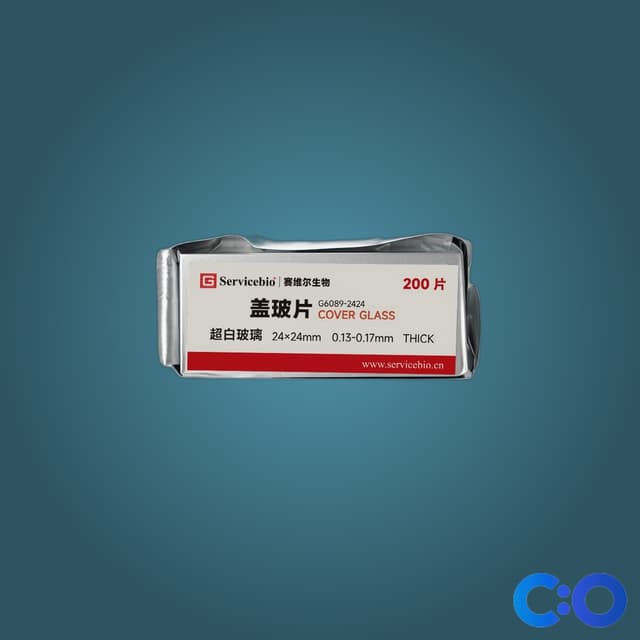
Ensure coverslip thickness matches objective correction (typically #1.5 coverslips for 0.17mm thickness) for optimal resolution.
Why: Incorrect coverslip thickness introduces spherical aberration that degrades image sharpness, particularly at high magnifications.
Use spring-loaded objectives properly by allowing them to retract when contacting slides rather than forcing focus adjustments.
Why: Proper spring operation protects both objectives and specimens from damage while maintaining optical alignment.
Setup Guide
What’s in the Box
- Laboratory Biological Microscope main unit
- WF10X18mm wide-angle eyepiece
- Achromatic objective set (4X, 10X, 40X spring, 100X oil spring)
- Power cord
- User manual and documentation (typical)
- Dust cover (typical)
- Immersion oil sample (typical)
Warranty
ConductScience provides standard 1-year manufacturer warranty covering defects in materials and workmanship, with technical support for operational questions and maintenance guidance.
Compliance
What is the numerical aperture and resolution limit of the 100X oil immersion objective?
Consult product datasheet for specific numerical aperture values. Oil immersion objectives typically achieve numerical apertures above 1.0, with theoretical resolution approaching 0.2 micrometers under optimal conditions.
Can this microscope accommodate phase contrast or differential interference contrast?
The basic configuration uses brightfield transmitted light microscopy. Phase contrast and DIC capabilities would require additional condenser and objective modifications not included in the standard system.
What slide thickness range is compatible with the objectives?
Standard microscope objectives are corrected for #1.5 coverslips (0.17mm thickness). Consult product specifications for working distance and slide thickness tolerance information.
How do I properly clean and maintain the achromatic objectives?
Use lens paper and appropriate optical cleaning solutions. Never touch lens surfaces directly, and store objectives in protective caps when not in use. Oil immersion objectives require thorough cleaning after each use to prevent oil residue buildup.
What type of immersion oil is required for the 100X objective?
Use standard microscope immersion oil with refractive index matched to glass (typically n=1.515). Apply small drop between coverslip and objective front lens for optimal resolution.
Can I add a camera adapter for digital imaging?
The monocular head design may accommodate camera adapters depending on the specific optical tube diameter. Consult manufacturer specifications for compatible imaging accessories.
What is the minimum specimen thickness this system can resolve?
Resolution depends on objective numerical aperture and illumination conditions. Consult optical specifications for depth of field calculations at each magnification level.
Have a question about this product?
Have a question? Just ask.
Send it over and we'll email you a personalized answer — no call, no scheduling.
Prefer to talk it through?
Accessories
Enhance your setup with compatible accessories
Replacement Parts & Consumables
Frequently Bought Together
Upgrade Options
Related Products