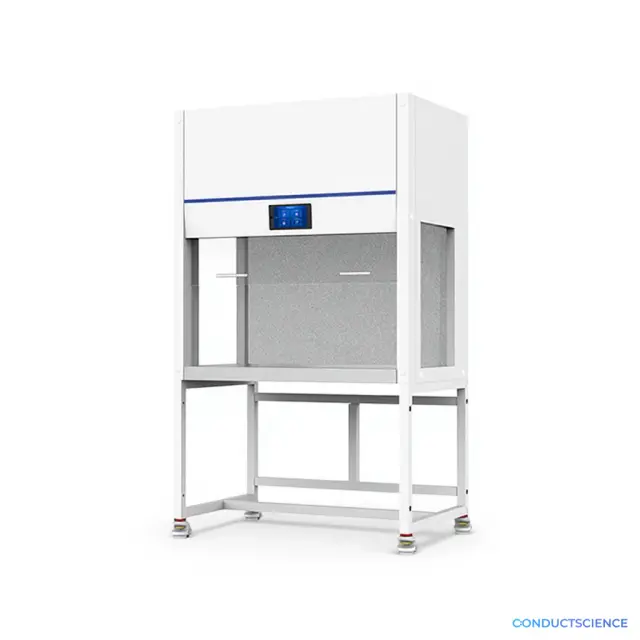
New EN Certified Biological Safety Cabinet
Class II biological safety cabinet with dual ULPA filtration (99.9995% efficiency at 0.12 μm) and integrated safety monitoring for microbiological and cell culture applications.

Louise Corscadden, PhD
Director of Science · ConductScience
Ask Louise about New EN Certified Biological Safety Cabinet fit, setup, configuration, or quote prep.
Already working with us? Sign in to connect this with My Scientist.
Key Specifications
Full details →- Model fit
- Configured during quote
- SKU family
- BIO-0904
- Shipping box
- 200.0 x 70.0 x 70.0 cm
- Ordering
- Online checkout and quote request available
- Category
- Clean Benches & Fume Hoods
- Build notes
- Confirm accessories, station layout, and support needs before purchase
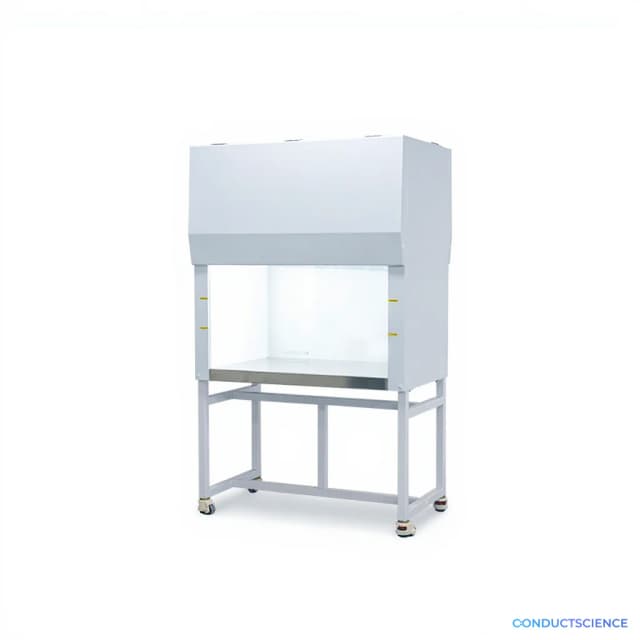
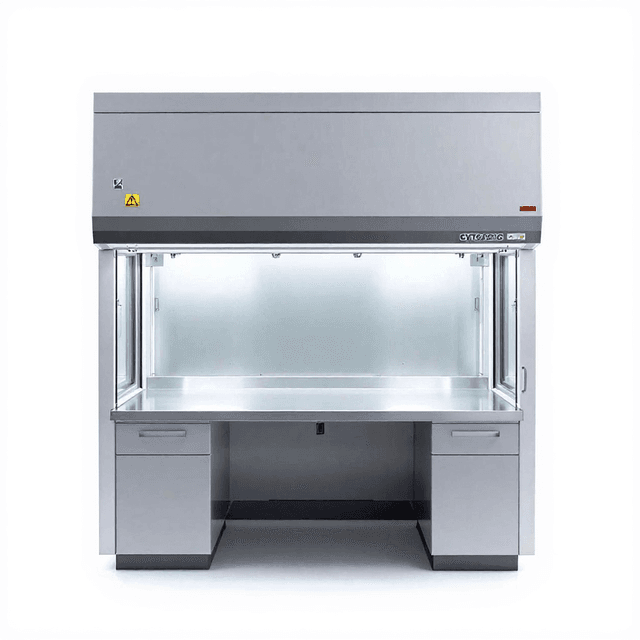
The New EN Certified Biological Safety Cabinet is a Class II cabinet designed for microbiological work requiring sterile conditions and operator protection. This unit features dual ULPA filtration with 99.9995% efficiency for 0.12 μm particles, providing comprehensive protection for both personnel and work materials. The cabinet incorporates an EC motor with variable speed control and integrated safety monitoring systems that alert users to operational deviations.
The 600×500×540mm work chamber provides adequate space for routine cell culture, microbiology procedures, and aseptic manipulations. The manual and electric front window system includes UV-resistant glass, while the color touch screen interface allows for intuitive operation monitoring. Three-layer protection is achieved through inflow, downflow, and exhaust filtration, making this cabinet suitable for BSL-1 and BSL-2 applications where containment and sterility are required.
How It Works
The biological safety cabinet operates on the principle of directional airflow containment combined with high-efficiency filtration. Room air is drawn into the cabinet through the front opening, creating an inflow velocity that prevents aerosols from escaping the work area. This contaminated air is then filtered through ULPA filters before being recirculated as sterile downflow air over the work surface.
The dual ULPA filtration system removes particles ≥0.12 μm with 99.9995% efficiency, effectively capturing bacteria, fungal spores, and other biological contaminants. The EC motor maintains consistent airflow patterns while allowing speed adjustments to optimize containment performance. Internal air circulation creates a laminar flow environment over the work surface, while the exhaust system ensures that all air leaving the cabinet has been filtered.
Safety monitoring systems continuously assess airflow velocity and sash position, providing audible and visual alerts when operating parameters deviate from safe ranges. The front window position directly affects containment effectiveness, with optimal protection achieved at the designated 200mm opening height.
Features & Benefits
Shipping weight
- 168.0 lb
Shipping box
- L: 200.0 cm
- W: 70.0 cm
- H: 70.0 cm
| Feature | This Product | Typical Alternative | Advantage |
|---|---|---|---|
| Filtration Efficiency | 99.9995% at 0.12 μm (ULPA standard) | Entry-level models typically offer HEPA filtration at 99.97% for 0.3 μm particles | Superior protection against smaller biological contaminants including bacteria and virus-sized particles |
| Motor Technology | EC motor with variable speed control and high efficiency | Standard models often use fixed-speed AC motors with higher power consumption | Optimizes energy efficiency while maintaining precise airflow control for varying operational demands |
| User Interface | Color touch screen display for system monitoring | Basic models commonly feature analog gauges or simple LED indicators | Provides comprehensive system status information and intuitive operation monitoring in real-time |
| Safety Monitoring | Integrated alarms for airflow, sash position, and power failures | Limited monitoring capabilities with fewer alarm functions | Ensures immediate notification of containment breaches or system malfunctions that could compromise safety |
| Window Design | Manual and electric operation with UV-resistant glass | Manual-only operation with standard glass components | Flexible operation modes with enhanced durability during UV decontamination procedures |
| Work Chamber Volume | 600×500×540mm internal dimensions | Compact models often offer smaller work areas | Accommodates multiple plate formats and standard laboratory equipment while maintaining laminar flow |
This cabinet combines ULPA-grade filtration with advanced motor control and comprehensive safety monitoring. The dual filtration system and color touch screen interface provide enhanced performance over basic biological safety cabinets with standard HEPA filtration and analog controls.
Practical Tips
Verify airflow velocity using a calibrated anemometer at multiple points across the work opening to ensure uniform inflow patterns.
Why: Non-uniform airflow can create containment gaps that compromise sterility and operator protection.
Monitor ULPA filter differential pressure weekly and maintain logbook records of airflow measurements and alarm events.
Why: Regular monitoring prevents gradual performance degradation and ensures filters are replaced before containment is compromised.
Allow cabinet to run for 15-20 minutes before use and avoid rapid arm movements that can disrupt laminar airflow patterns.
Why: Airflow stabilization and proper aseptic technique prevent contamination of work materials and maintain containment effectiveness.
Keep sash at the designated 200mm opening height and never override safety alarms without investigating the cause.
Why: Proper sash position is critical for containment effectiveness and safety alarms indicate potentially hazardous operating conditions.
If airflow alarms activate, check for obstructed filters, verify sash position, and ensure room air currents are not interfering with cabinet operation.
Why: Most airflow issues result from filter blockage or environmental factors that can be corrected without service calls.
Document all maintenance activities and performance verifications to maintain compliance with laboratory quality systems.
Why: Proper documentation ensures traceability and demonstrates due diligence for regulatory inspections and accreditation.
Clean interior surfaces with appropriate disinfectants between different microbial cultures to prevent cross-contamination.
Why: Residual contamination on work surfaces can compromise subsequent experiments even with proper airflow containment.
Schedule annual certification by qualified technicians to verify containment performance and safety system functionality.
Why: Professional certification ensures the cabinet maintains manufacturer specifications and meets laboratory safety requirements.
Setup Guide
What’s in the Box
- Biological safety cabinet main unit
- ULPA filters (2 pieces, pre-installed)
- Power cord with European plug
- Operation manual and safety guidelines
- Installation and certification documentation (typical)
- Airflow verification report (typical)
Warranty
ConductScience provides a standard one-year manufacturer warranty covering defects in materials and workmanship, with technical support for installation guidance and operational troubleshooting.
Compliance
What is the difference between ULPA and HEPA filtration performance?
ULPA filters achieve 99.9995% efficiency for 0.12 μm particles compared to HEPA filters at 99.97% for 0.3 μm particles, providing superior protection against smaller biological contaminants including bacteria and some viruses.
How do I verify proper containment performance?
Use smoke visualization or hot-wire anemometer measurements to confirm inflow velocity and proper directional airflow patterns. Maintain sash at 200mm opening height for optimal containment effectiveness.
What maintenance schedule is recommended for ULPA filters?
Monitor differential pressure indicators and replace filters when airflow velocity drops below specification. Typical filter life ranges from 1-3 years depending on usage and environmental conditions.
Can this cabinet handle volatile chemicals or chemotherapy drugs?
This Class II cabinet is designed for biological containment. For volatile chemicals or chemotherapeutic agents, consult product datasheet for specific chemical compatibility and consider ducted exhaust options.
What are the electrical requirements for installation?
Requires 230V AC power supply at 50/60Hz with 950W rated consumption and proper grounding through European standard socket connection.
How does the alarm system function?
Integrated alarms monitor airflow velocity, front sash position, and power system integrity, providing audible alerts when parameters deviate from safe operating ranges.
What is the recommended room environment for optimal performance?
Install in low-traffic areas away from HVAC vents and room air currents. Maintain stable room temperature and minimize personnel movement near the cabinet during operation.
Is certification required after installation?
Yes, biological safety cabinets typically require initial certification and annual recertification by qualified technicians to verify airflow performance and containment effectiveness.
Have a question about this product?
Have a question? Just ask.
Send it over and we'll email you a personalized answer — no call, no scheduling.
Prefer to talk it through?
Accessories
Enhance your setup with compatible accessories