Nitrite Test Tube In Price
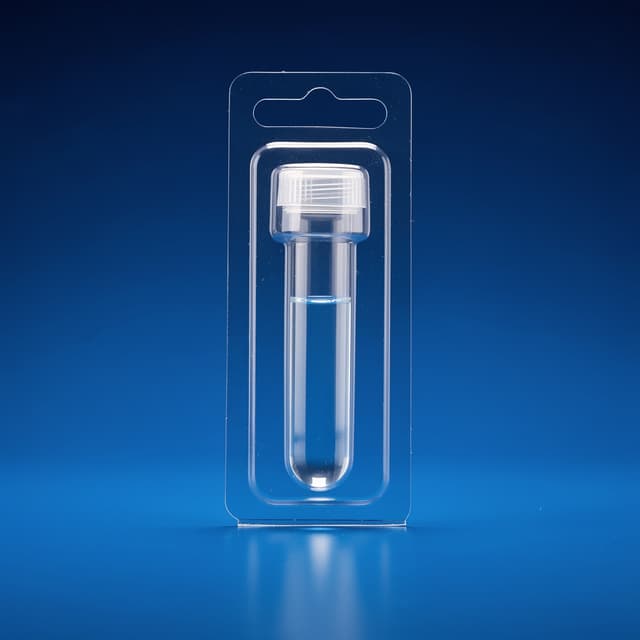
Laboratory test tube for colorimetric nitrite detection in water samples, supporting quantitative analysis workflows in environmental monitoring and water quality assessment.

Louise Corscadden, PhD
Director of Science · ConductScience
Ask Louise about Nitrite Test Tube In Price fit, setup, configuration, or quote prep.
Already working with us? Sign in to connect this with My Scientist.
Key Specifications
Full details →- Model fit
- 1 selectable configurations
- SKU family
- CS-LH-LAB021
- Shipping box
- 8.8 x 7.3 x 5.9 cm
- Ordering
- Online checkout and quote request available
- Category
- Water Test Kits
- Build notes
- Confirm accessories, station layout, and support needs before purchase
The Nitrite Test Tube provides colorimetric detection of nitrite ions in water samples through established analytical chemistry methods. This lab consumable supports quantitative analysis workflows in environmental monitoring, water quality assessment, and analytical testing applications where nitrite concentration determination is required.
The test tube system is designed for use in laboratory settings where researchers need to evaluate nitrite levels in various sample matrices. This product supports standard colorimetric detection protocols and integrates with existing laboratory analytical procedures for water quality testing and environmental sample analysis.
How It Works
Colorimetric nitrite detection relies on the formation of chromogenic complexes when nitrite ions react with specific reagent systems. The most widely used approach involves diazotization reactions where nitrite forms diazonium compounds that subsequently couple with aromatic compounds to produce colored azo dyes with characteristic absorption spectra in the visible range.
The analytical process typically involves sample preparation, reagent addition, reaction incubation, and spectrophotometric measurement at specific wavelengths. The intensity of color development is proportional to nitrite concentration, enabling quantitative determination through calibration against known standards. Detection limits and measurement ranges depend on the specific reagent system and analytical protocol employed.
This colorimetric approach provides a cost-effective alternative to instrumental methods such as ion chromatography or electrochemical detection, making it suitable for routine laboratory analysis and field applications where portable detection is required.
Features & Benefits
Shipping weight
- 0.26 lb
Shipping box
- L: 8.8 cm
- W: 7.3 cm
- H: 5.9 cm
| Feature | This Product | Typical Alternative | Advantage |
|---|---|---|---|
| Detection Method | Colorimetric detection for nitrite analysis | Some systems use electrochemical or chromatographic detection methods | Colorimetric methods provide visual confirmation of results and work with standard laboratory spectrophotometers. |
| Sample Processing | Manual sample handling in individual test tubes | Automated systems may offer flow-through or microplate formats | Individual tube format allows flexible sample volumes and customized reaction conditions. |
| Equipment Requirements | Compatible with standard laboratory spectrophotometers | Specialized instruments may require dedicated analyzers | Utilizes existing laboratory equipment without additional capital investment in specialized instrumentation. |
| Analytical Flexibility | Supports various colorimetric reagent systems | Fixed detection methods in integrated analyzers | Allows method optimization for specific sample types and detection requirements. |
This nitrite test tube system provides a flexible, cost-effective solution for colorimetric nitrite analysis using standard laboratory equipment. The manual format offers analytical flexibility while maintaining compatibility with established colorimetric detection protocols.
Practical Tips
Prepare fresh nitrite standards regularly and store in dark conditions to prevent photochemical degradation.
Why: Nitrite standards can decompose over time, leading to inaccurate calibration and poor analytical results.
Process samples immediately after collection or preserve according to analytical method requirements.
Why: Nitrite can be oxidized to nitrate or reduced to nitric oxide in stored samples, affecting measurement accuracy.
Clean test tubes thoroughly between analyses and inspect for scratches or cloudiness that could affect spectrophotometric readings.
Why: Optical interference from dirty or damaged tubes can cause measurement errors and poor reproducibility.
Include appropriate blanks and duplicate analyses to monitor analytical precision and detect systematic errors.
Why: Quality control measures help identify analytical problems and ensure reliable quantitative results.
If color development is inconsistent, check reagent age, storage conditions, and reaction temperature.
Why: Colorimetric reactions are sensitive to reagent quality and environmental conditions affecting reaction kinetics.
Handle colorimetric reagents in well-ventilated areas and dispose of waste solutions according to laboratory safety protocols.
Why: Some nitrite detection reagents contain aromatic amines and other chemicals requiring proper handling and disposal.
Setup Guide
What’s in the Box
- Nitrite test tubes (typical)
- Product identification label (typical)
- Basic handling instructions (typical)
Warranty
ConductScience provides standard warranty coverage for laboratory consumables with technical support for analytical applications. Product quality is backed by manufacturing standards for laboratory-grade consumables.
Compliance
References
Background reading relevant to this product:
What colorimetric methods are compatible with these test tubes?
The test tubes support standard colorimetric protocols including Griess reaction-based methods and other diazotization approaches. Specific reagent compatibility should be verified through the product datasheet or technical specifications.
What detection limits can be achieved with this system?
Detection limits depend on the specific analytical method and reagent system employed. Consult product datasheet for performance specifications or validate detection limits under your specific analytical conditions.
Are these suitable for automated analytical systems?
The standardized tube format typically integrates with common laboratory automation equipment. Verify dimensional compatibility with your specific automated sample handling or measurement systems.
What sample volumes are recommended for analysis?
Optimal sample volumes depend on the analytical protocol and expected nitrite concentrations. Consult product specifications for recommended working volumes and dilution guidelines.
How should samples be preserved before analysis?
Follow standard protocols for nitrite sample preservation including appropriate storage temperatures and time limits. Some analytical methods require immediate analysis to prevent sample degradation.
What interfering substances should be considered?
Common interferences in nitrite analysis include nitrate, sulfide, and various organic compounds. Consider sample preparation steps to minimize interference based on your specific sample matrix.
Have a question about this product?
Have a question? Just ask.
Send it over and we'll email you a personalized answer — no call, no scheduling.
Prefer to talk it through?
Accessories
Enhance your setup with compatible accessories

Frequently Bought Together