1 / 7
Odor Span Test
SKU CS-958226
$8,499.99
IncludesStandard care
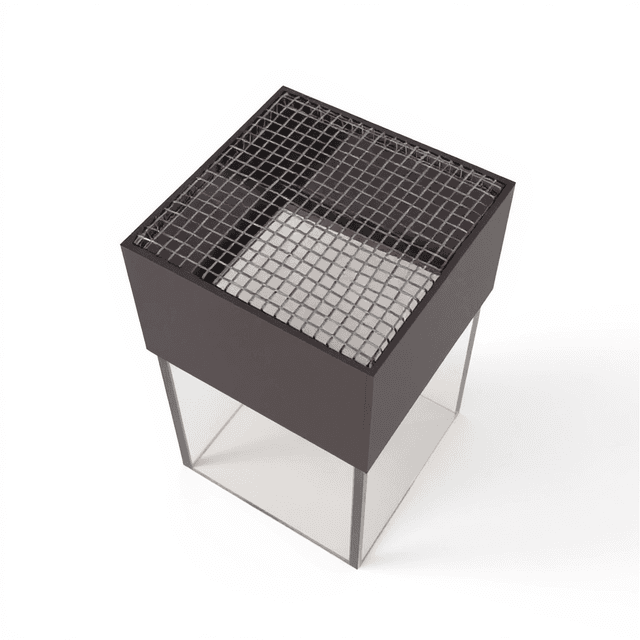
Behavioral apparatus for assessing working memory capacity in rodents through progressive olfactory discrimination tasks requiring identification of novel versus familiar scents.
CE MarkedBAA available
Scientist guidance

Louise Corscadden, PhD
Director of Science · ConductScience
Ask Louise about Odor Span Test fit, setup, configuration, or quote prep.
Already working with us? Sign in to connect this with My Scientist.
Key Specifications
Full details →- Model fit
- Mouse, Rat
- SKU family
- CS-958226
- Shipping box
- 65.0 x 36.0 x 27.0 cm
- Ordering
- Online checkout and quote request available
- Category
- Behavioral Mazes
- Build notes
- Confirm accessories, station layout, and support needs before purchase
The Odor Span Test is a behavioral assessment apparatus designed to evaluate working memory capacity in laboratory rodents through olfactory discrimination tasks. This test presents subjects with an expanding array of distinct odors, requiring animals to identify novel scents while avoiding previously encountered stimuli within the testing session.
The apparatus supports systematic investigation of working memory function across various experimental paradigms, pharmacological interventions, and genetic models. Researchers utilize this test to assess cognitive performance in studies examining memory disorders, drug effects on cognition, and neurobiological mechanisms underlying working memory processes.
How It Works
The Odor Span Test operates on the principle of progressive working memory load through olfactory discrimination. Animals are presented with an increasing number of distinct odor stimuli across successive trials, with the requirement to identify and respond to novel scents while avoiding previously encountered odors within the testing session.
Working memory capacity is assessed by determining the maximum number of odors an animal can maintain in active memory while successfully discriminating novel from familiar stimuli. The test exploits rodents' natural propensity for exploring novel olfactory stimuli while avoiding familiar scents, providing a species-appropriate assessment of cognitive function.
Performance metrics include span length (maximum number of odors successfully maintained), error patterns, and response latencies, allowing researchers to quantify both working memory capacity and the quality of memory-guided decision making.
Features & Benefits
Progressive difficulty paradigm
Allows precise determination of individual working memory capacity limits by systematically increasing cognitive load across trials
Species-appropriate olfactory modality
Leverages rodents' highly developed olfactory system for naturalistic assessment of cognitive function without requiring extensive training
Standardized odor presentation system
Ensures consistent stimulus delivery and prevents contamination between trials for reliable and reproducible results
Automated response detection
Provides objective measurement of behavioral responses and eliminates observer bias in performance scoring
Flexible testing protocols
Accommodates various experimental designs including acute drug studies, chronic treatment paradigms, and developmental assessments
Real-time performance monitoring
Enables immediate assessment of testing progress and allows for protocol adjustments during experimental sessions
Behavioral Construct
- Working Memory
- Olfactory Discrimination
- Cognitive Assessment
Automation Level
- semi-automated
Research Domain
- Addiction Research
- Aging Research
- Behavioral Pharmacology
- Learning and Memory
- Neuroscience
Species
- Mouse
- Rat
Compatible Tracking Software
- ConductVision
Shipping weight
- 6.06 lb
Shipping box
- L: 65.0 cm
- W: 36.0 cm
- H: 27.0 cm
| Feature | This Product | Typical Alternative | Advantage |
|---|---|---|---|
| Sensory modality | Olfactory-based discrimination tasks | Most working memory tests rely on spatial or visual cues | Leverages rodents' highly developed olfactory system for species-appropriate cognitive assessment |
| Training requirements | Minimal pre-training due to natural odor exploration behavior | Spatial tasks often require extensive maze training and food restriction | Reduces experimental timeline and potential confounds from differential learning rates |
| Motor demands | Low motor requirements with simple approach responses | Spatial mazes require intact locomotor function and navigation abilities | Enables cognitive assessment in animals with motor impairments or age-related mobility decline |
| Progressive difficulty | Systematic increase in memory load within single sessions | Fixed difficulty levels across testing sessions | Allows precise determination of individual working memory capacity limits |
The Odor Span Test provides olfactory-based working memory assessment with minimal training requirements and low motor demands, making it suitable for diverse experimental populations and conditions where traditional spatial tests may be compromised.
Neuroscience
Evaluating working memory deficits in transgenic mouse models of Alzheimer's disease and other neurodegenerative conditions to characterize cognitive phenotypes.
Behavioral Pharmacology
Assessing dose-dependent effects of NMDA receptor antagonists, cholinergic modulators, and other pharmacological agents on working memory performance.
Learning and Memory
Investigating the neural mechanisms of working memory by comparing performance before and after targeted brain lesions or optogenetic manipulations.
Aging Research
Characterizing age-related decline in working memory capacity by testing young versus aged rodents in progressive difficulty paradigms.
Addiction Research
Measuring working memory impairments associated with chronic drug exposure or withdrawal states in rodent models of substance use disorders.
Practical Tips
Calibration
Verify odor delivery timing and concentration consistency before each experimental session using standardized detection methods.
Why: Ensures reliable stimulus presentation and prevents variability in cognitive demands across testing sessions.
Maintenance
Clean all odor presentation components thoroughly between sessions and replace stimulus containers regularly to prevent contamination.
Why: Maintains stimulus integrity and prevents confounding effects from residual odors or degraded stimuli.
Best Practices
Randomize odor sequence presentation across animals while maintaining consistent difficulty progression within individual sessions.
Why: Controls for order effects while preserving the systematic increase in working memory load required for span determination.
Data Quality
Monitor response latencies and exploration patterns in addition to accuracy measures to identify potential motivational or motor confounds.
Why: Provides comprehensive assessment of performance quality and helps distinguish cognitive deficits from other behavioral factors.
Troubleshooting
If animals show reduced exploration, verify odor concentrations are within optimal range and check for olfactory system blockages.
Why: Poor stimulus detection can confound cognitive assessment and lead to underestimation of working memory capacity.
Safety
Use only non-toxic odor stimuli at concentrations that do not cause respiratory irritation or aversion responses.
Why: Ensures animal welfare while maintaining valid cognitive assessment conditions.
Setup Guide
Unpack and Inspect
Remove all components from packaging and verify completeness against the included inventory list, checking for any shipping damage.
Assemble Test Arena
Construct the testing chamber according to the provided schematic, ensuring proper alignment of odor presentation ports and response mechanisms.
Prepare Odor Stimuli
Prepare distinct olfactory stimuli using standardized concentrations and ensure proper storage conditions to maintain stimulus integrity throughout testing.
Calibrate Delivery System
Test odor delivery mechanisms to ensure consistent stimulus presentation timing and verify proper air circulation to prevent cross-contamination between trials.
Establish Baseline Parameters
Configure testing parameters including inter-trial intervals, stimulus presentation duration, and response recording protocols based on experimental requirements.
Conduct Training Sessions
Acclimate subjects to the testing environment and train animals on basic discrimination tasks before beginning formal span testing protocols.
Initiate Testing Protocol
Begin span testing with low odor loads and progressively increase complexity while monitoring animal performance and response patterns.
What’s in the Box
- Main testing apparatus (typical)
- Odor presentation system components (typical)
- Response detection mechanisms (typical)
- Calibration standards (typical)
- User manual and protocol guides (typical)
- Assembly hardware and tools (typical)
Warranty
ConductScience provides a standard one-year manufacturer warranty covering defects in materials and workmanship, with comprehensive technical support for setup and protocol optimization.
Compliance
ARRIVE GuidelinesSupports standardized reporting of behavioral experiments in animal research through systematic protocol documentation
IACUC Protocol RequirementsFacilitates compliance with institutional animal care protocols through humane testing procedures and minimal stress paradigms
References
Background reading relevant to this product:
1.Michael Mathews et al. (2018) “Effects of N-Methyl-D-aspartate (NMDA) antagonists ketamine, methoxetamine, and phencyclidine on the odor span test of working memory in rats.” Experimental and Clinical Psychopharmacology doi:10.1037/pha0000158
Protocol and background
Introduction
The Odor Span Task (OST) is used to study olfactory working memory capacity in rodents. First developed by Dudchenko et al., to study nonspatial working memory using different odors and effects of hippocampal lesions on the performance of rats in the task. The apparatus was then slightly modified by Young et al., a few years later to study olfaction working memory in transgenic mice for the first time. Different variations of OST have been used since its development to study behavioral pharmacology in animal models of amnestic drugs, stimulant drugs, and other drugs that affect memory and learning. The OST has shown potential for use as a biomarker for diseases like Alzheimer’s disease and Schizophrenia as the reduction in odor recognition capability and memory is one of the earliest signs. The OST can also be used to test novel compounds for treatments of neurological diseases.
The OST is an incrementing non-matching-to-sample task in which the number of stimuli to-be remembered (the span) was increased after every correct response. The subjects are exposed to a series of odor stimuli and selection of new stimuli is reinforced. The task is conducted on a square platform with 24 positions marked around the perimeter of the platform for placement of odor stimulus in the form of scented sand in a cup. Span length and errors made during the task are recorded for analysis.
Apparatus & Equipment
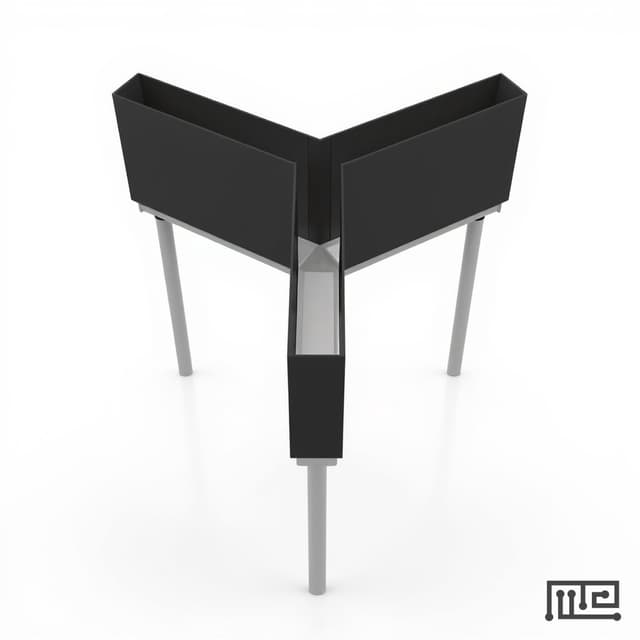
The OST is conducted on a black plexiform square platform supported by four legs rested 39 inches above the floor. The platform is 2.5 ft x 2.5 ft x 2.5 ft with a 1-inch high border around the platform’s perimeter when testing mice and 3 ft x 3 ft x 3 ft with a 1.25 inches high border when testing rats. 24 positions are marked along the platform’s perimeter, with 4 positions at each corner of the platform and 5 positions equally spaced along each border with strips of Velcro. Cups made up of clear acrylic with a diameter of 6.5 cm, and a height of 3.5 cm is used for the scented sand mixture. The bottom of the cups also has a piece of Velcro attached making it easier to place the cups on the platform, which also prevents the cups from tipping over during the trials. The scented sand is made by mixing 0.5 grams of odor with 100 grams of unscented playground sand. Woodchip can also be used instead of unscented playground sand. There are 25 different odors used to make up the scented mixtures in the task such as cocoa, cumin, orange, lemon, celery, thyme, basil, fennel, paprika, parsley, allspice, coffee, dill, cloves, marjoram, mint, cinnamon, oregano, tea, ginger, garlic, caraway, anise, sage, and nutmeg.
Training Protocol
The subjects are housed in groups with the room temperature maintained at 21±10C and a 12 hour light/dark cycle. The subjects are moderately food-deprived and maintained at 85% of their free-feeding weight with free access to water throughout training and testing. The training and testing of subjects take place during the light phase of the cycle. The platform is cleaned with 100% ethanol at the start and end of each trial to remove any unwanted stimuli that can affect the performance of the subjects in the task.
Shaping Protocol
The subjects are habituated to handling before training for 10 minutes every day for 3 consecutive days. Put unscented playground sand in a cup and bury 10 reward pellets in it. Place the cup on the platform at a random location. Remove a subject from its home cage and place it on the platform. Allow the subject to dig, retrieve and consume all the reward pellets. Place the subject back into its home cage.
The following day, take 100 grams of unscented playground sand and mix it with 18 crushed reward pellets. Take 5 grams of this mixture in two cups each and bury 5 reward pellets in only one of the cup. Place the cups on the platform at random locations. Remove the subject from its home cage and place it on the platform. Allow the subject to dig, retrieve and consume all 5 reward pellets. Place the subject back into the home cage. Repeat this process immediately with the same cup baited with reward pellets.
Odor nonmatching to sample
The trial consists of a sample and choice phase.
Sample Phase
For the sample phase, place a cup containing randomly selected scented sand with one reward pellet buried in it at a random location on the platform. Place the subject on the platform and allow it to dig, retrieve and consume the reward pellet. Remove the subject once it consumes the reward pellet and place it in an opaque bucket. Move the cup to a new location on the opposite side of the platform. Place the second cup with another randomly selected scented sand with one reward pellet buried in it at a random location on the platform.
Choice Phase
For the choice phase of the trial, place the subject on the platform and allow it to dig, retrieve and consume the reward pellet from the second cup. Remove the subject and place it in an opaque bucket. Also, remove the first scented cup and move the second scented cup to a random location on the platform.
Place a third cup containing randomly selected scented sand with one reward pellet buried in it on the platform at a random location. Place the subject on the platform and allow it to dig, retrieve and consume the reward pellet from the third cup. Remove the subject and place it in an opaque bucket. Also, remove the second scented cup and move the third scented cup to a random location on the platform. Place a fourth cup containing randomly selected scented sand with one reward pellet buried in it on the platform at a random location.
Place the subject on the platform and allow it to dig, retrieve and consume the reward pellet from the fourth cup. Repeat this process using sample and choice phase, each time introducing a novel scented sand. A total of 10-12 nonmatching to sample (NMS) trials are given per day for 3 days or until the subject reliably selects the new odor each time. The odors used are selected randomly, and at the end of 3 days, the subject should have been exposed to all 25 odors.
Odor Span Task
Each span trial consists of a sample and choice phase. For the sample phase, place a cup containing randomly selected scented sand with one reward pellet buried in it at a random location on the platform. Place the subject on the platform and allow it to dig, retrieve and consume the reward pellet. Remove the subject and place it in an opaque bucket after it consumes the reward pellet. Move the first cup to a random location on the platform. Place a second cup containing randomly selected scented sand with one reward pellet buried in it at a random location on the platform. For the choice phase, place the subject on the platform and allow it to dig, retrieve and consume the reward pellet before placing it back into the opaque bucket. If the subject starts digging in the first cup, remove it immediately and place it in the opaque bucket. The trial is then restarted.
Next, introduce a third cup containing randomly selected scented sand with one reward pellet buried in it at a random location on the platform. Move the first and second cup to different locations on the platform. Place the subject on the platform and allow it to dig, retrieve and consume the reward pellet then return it back into the opaque bucket. Continue with the process by adding a new randomly selected scented sand baited with one reward pellet at a random location on the platform and moving the previously sampled scented sand cups to new locations every time the subject makes a correct decision by choosing the baited sand. The trial is terminated if the subject chooses previously sampled cup and a new span trial is started from the beginning with one scented sand cup on the platform. The subjects are given as many span trials as possible for 15-20 minutes (2-5 trials) of the testing period for 4 consecutive days.
Twelve-odor span task
After completion of the OST when the subject has a mean span of 5 over 2 consecutive days or has gone through at least 20 trial sessions, it is put through the final stage of testing. In this task, the subjects are given one span trial per day for 7 days, with sample and choice phase as described above for OST until twelve odors have been presented. If the subject makes an incorrect choice, it is allowed to explore other scented cups on the platform until it selects the correct scented cup (baited). The trial continues by adding newly scented sands until all 12 odors have been sampled.
Probe sessions
Two probe sessions can be used for verification.
Probe one – Reward
It is used to verify if the subjects were using odor of the scented sand rather than the odor of the reward pellet to solve the task. For this session, the trial is conducted in the same manner as described in the OST but without any reward pellet buried in the cups. The reward is only given when the subject chooses the correct cup by starting to dig in it.
Probe two – Cup change
It is used to verify if the subjects were marking either the cups or the sand to complete the task. For this session, the trial is conducted in the same manner as the OST. At two points during the trial, with 5 cups (Span 4) and 9 cups (Span 8) on the platform, all the sand and cups are replaced with new sand and cups containing same odors.
The role of Odor Span Task in Spatial Span, Recognition, and Alternation
Dudchenko et al., developed novel span tasks to study effects of hippocampal damage on memory capacity in rats. One of the tasks was Odor Span Task (OST) which required the subjects to remember a variable number of odors to get a reward. The subjects were also tested using Spatial Span Task (SST) which required the subjects to remember a variable number of locations on the platform. The results of the trials showed that the subjects with hippocampal lesions were able to remember up to 24 different odors similar to control subjects. The lesioned rats, when tested using delayed NMS task, showed impairment at a long delay. This shows that the hippocampus may be important for odor recognition memory at more prolonged delays.
Assessing working memory through Odor Span Task
Evaluation of the effect of stimulant drugs on Odor Span Task performance
Data Analysis
The following data can be recorded from the trials
- Span/Span length – the number of cups presented and chosen sequentially without error minus 1
- Total number of spans completed.
- Percentage accuracy =
- Mean span latency =
Strengths & Limitations
Strengths
The OST is easy to set up and requires very little equipment to run. The apparatus used can be easily cleaned and maintained. The testing protocol can be modified and used in various areas of research from behavioral pharmacology to studying working memory in genetically modified animals.
Limitations
The OST is time-consuming as it requires multiple training and testing protocols.
Summary & Key Points
- The Odor Span Task (OST) is used to study olfactory working memory capacity in rodents.
- The OST is an incrementing non-matching-to-sample task in which the number of stimuli to-be remembered was increased after every correct response.
- The task is conducted on a square platform with 24 positions marked around the perimeter of the platform for placement of odor stimulus in the form of scented sand in a cup.
- The testing protocol can be modified and used in various areas of research from behavioral pharmacology to studying working memory genetically modified animals.
References
Dudchenko PA, Wood ER, Eichenbaum H (2000). Neurotoxic hippocampal lesions have no effect on odor span and little effect on odor recognition memory but produce significant impairments on spatial span, recognition, and alternation. Journal of Neuroscience 20(8), 2964-77. DOI: 10.1523/JNEUROSCI.20-08-02964.2000
Young JW, Kerr LE, Kelly JS, Marston HM, Spratt C, Finlayson K, Sharkey J (2007). The odour span task: a novel paradigm for assessing working memory in mice. Neuropharmacology. 52(2), 634-45. DOI: 10.1016/j.neuropharm.2006.09.006
Galizio M, Mathews M, Mason M, Panoz-Brown D, Prichard A, Soto P (2017). Amnestic drugs in the odor span task: Effects of flunitrazepam, zolpidem and scopolamine. Neurobiology of Learning and Memory 145, 67-74. DOI: 10.1016/j.nlm.2017.09.006
From the Maze Engineers documentation for this apparatus.
Q
What is the maximum span length this test can assess?
A
Consult product datasheet for maximum odor presentation capacity. Most rodents reach span limits between 8-15 odors depending on species and individual cognitive capacity.
Q
How long does a complete testing session typically require?
A
Session duration varies based on protocol parameters and individual animal performance, typically ranging from 30-90 minutes including setup and data collection phases.
Q
What types of odor stimuli are recommended for optimal performance?
A
Use distinct, non-aversive olfactory stimuli with standardized concentrations. Common choices include essential oils, food extracts, or commercial odorants that are easily discriminable by rodents.
Q
Can this test be used with pharmacological interventions?
A
Yes, the test is suitable for acute and chronic drug studies. Ensure appropriate timing between drug administration and testing based on pharmacokinetic profiles.
Q
How does this test compare to spatial working memory tasks?
A
The Odor Span Test provides assessment of working memory through olfactory modality, offering an alternative to spatial tasks that may be confounded by motor or motivational factors.
Q
What data outputs does the system provide?
A
Consult product datasheet for specific data recording capabilities. Typical outputs include span length, error rates, response latencies, and trial-by-trial performance metrics.
Have a question about this product?
Track rodents with ConductVision
ConductVision is our video-tracking software. Record your sessions on video, and it scores standard rodent tests, such as those listed below.
Examples of tests it scores
To check whether ConductVision scores your protocol in this apparatus, ask in your quote request.
Ask a question
Have a question? Just ask.
Send it over and we'll email you a personalized answer — no call, no scheduling.
Personalized email reply
Usually within one business day
Helpful answers published here
Prefer to talk it through?
Accessories
Enhance your setup with compatible accessories

Total: $0.00
Frequently Bought Together
Total: $6,390.00

Odor Span Test
$8,499.99
Added to quoteView Quote