Optogenetic Stimulation Kit
The application of optogenetics has been rapidly developing since 2010, it’s research field covers several classical experimental animal species, such as flies, mice, rats, zebrafish, primates (Monkey, cynomolgus monkey, rhesus monkey, etc.). Thes...
| waveform_generator_frequency | 20MHz |
| blue_laser_wavelength | 473nm |
| green_laser_wavelength | 532nm |
| blue_light_spectrum | 450-480nm |
| green_light_spectrum | 520-560nm |
| yellow_light_spectrum | 570-600nm |

Optogenetic Stimulation Kit
The application of optogenetics has been rapidly developing since 2010, its research field covers several classical experimental animal species, such as flies, C. elegans, mice, rats, zebrafish, and primates (Monkey, cynomolgus monkey, rhesus monkey, etc.). These animals generally have the advantages of the short developmental and reproductive cycle and easy integration of foreign genes, thus facilitating the introduction of the Photosensitive Protein Genes and the screening of the state of expression.
| Product Name | SKU | QTY |
|---|---|---|
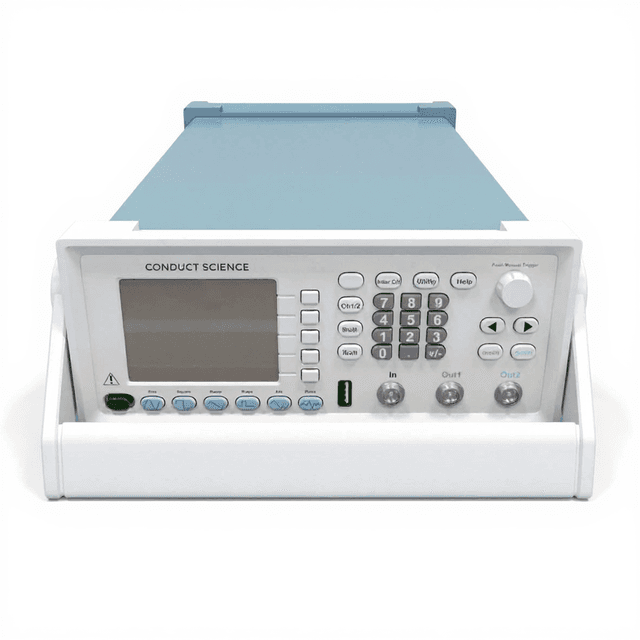
| Arbitrary Waveform/Function Generator-20MHz | RWD-AFG2021-SC | 1 |
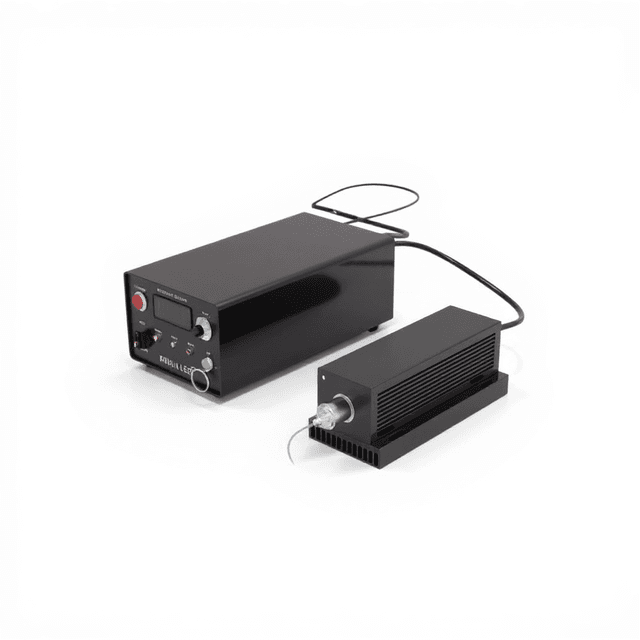
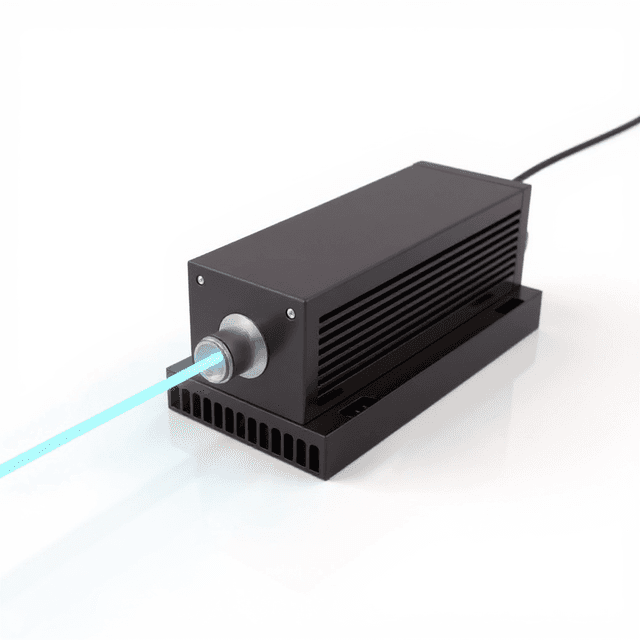
| 473nm Blu-ray Laser-50mW/power-adjustable/stable<1% | RWD-R-LG473-50-A1 | 1 |
| 532nm Green Laser-50mW/power-adjustable/stability<1% | RWD-R-LG532-50-A1 | 1 |
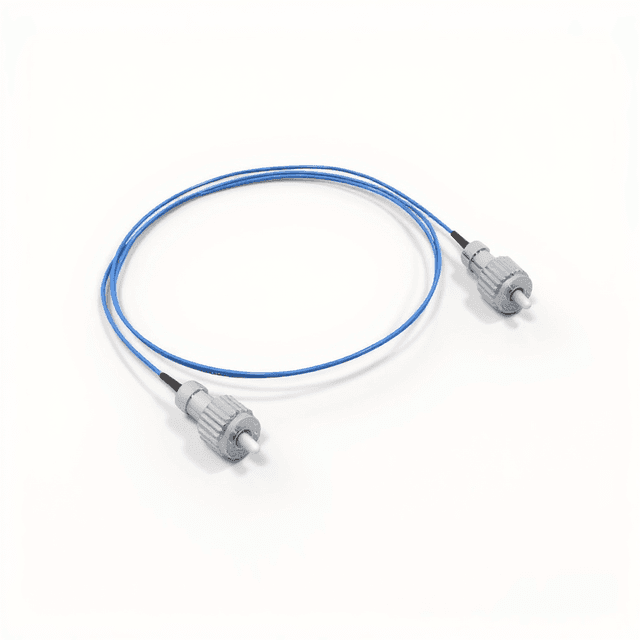
| FC/PC Optic Fiber Patch Cables(m)--200μm/0.22NA | RWD-R-FC-PC-N2-200-L1 | 1 |
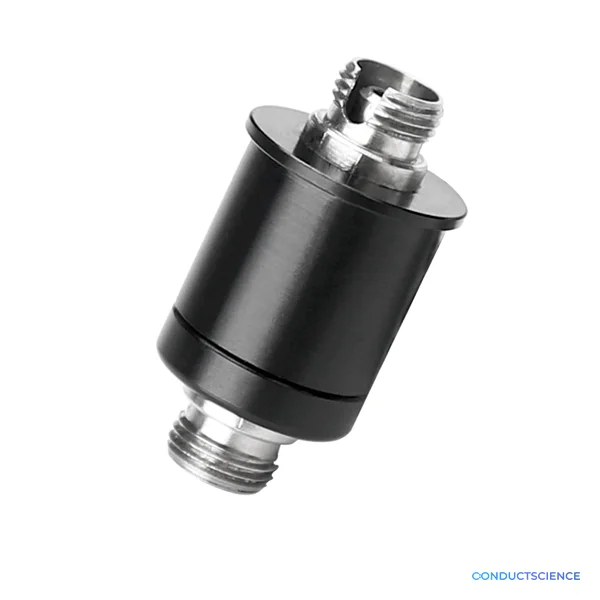
| 1x1 FC-FC Rotary Joint | RWD-R-FC-1x1 | 1 |
| Optic Fiber(m),200 um,LC/PC Adapter-Ø1.25mm/0.22NA | RWD-R-FC-L-N2-200-L1 | 1 |
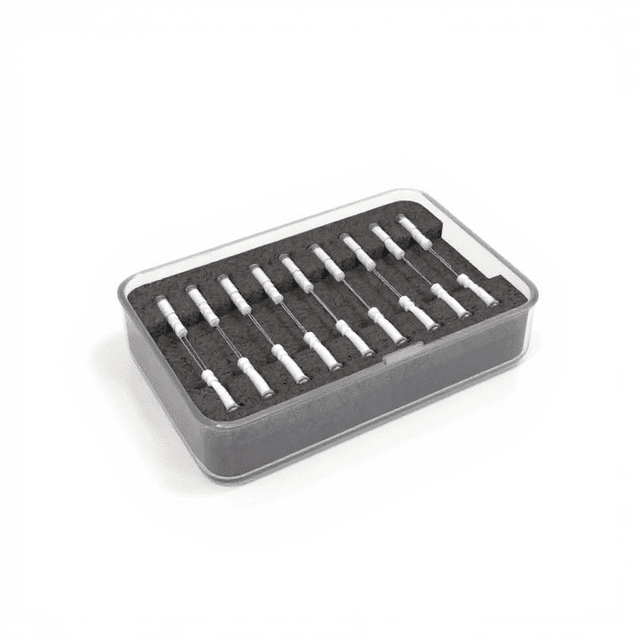
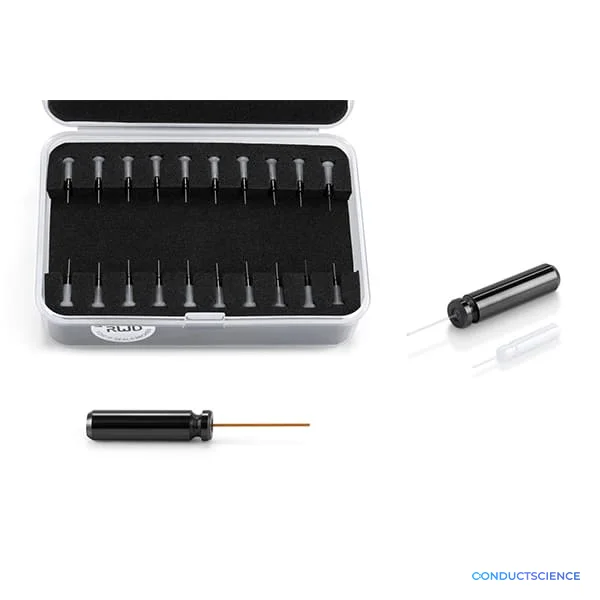
| Fiber Ceramic Cannula-Ø1.25mm/200μm/0.22NA (20/pkg) | RWD-R-FOC-L200C-22NA | 10 |
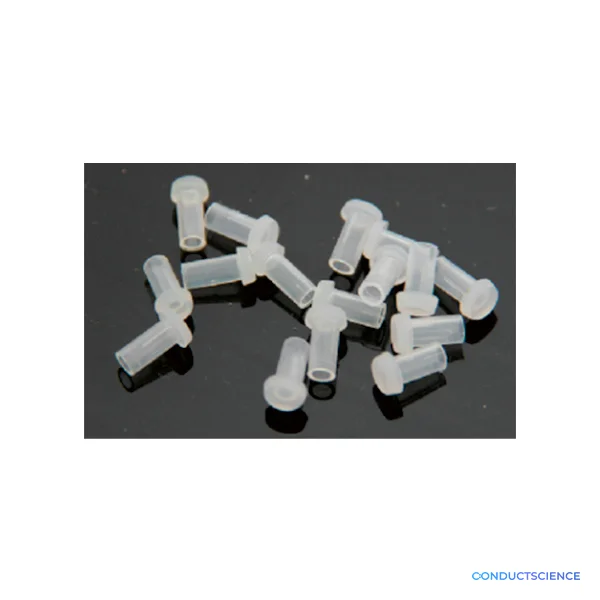
| Ceramic Ferrules Protective Cap.Ø1.25mm, pkg of 200pcs | RWD-R-DC-1.25 | 1 |
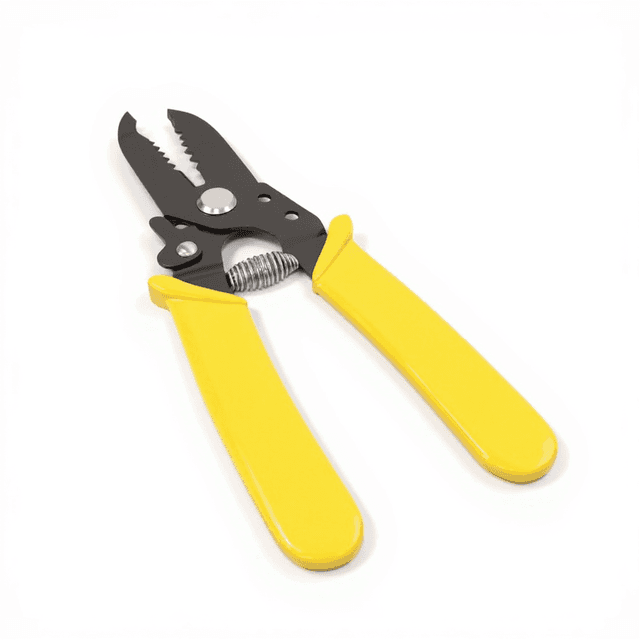
| Fiber Stripper- suitable for 100um - 800um fiber | RWD-R-OFT-600 | 1 |
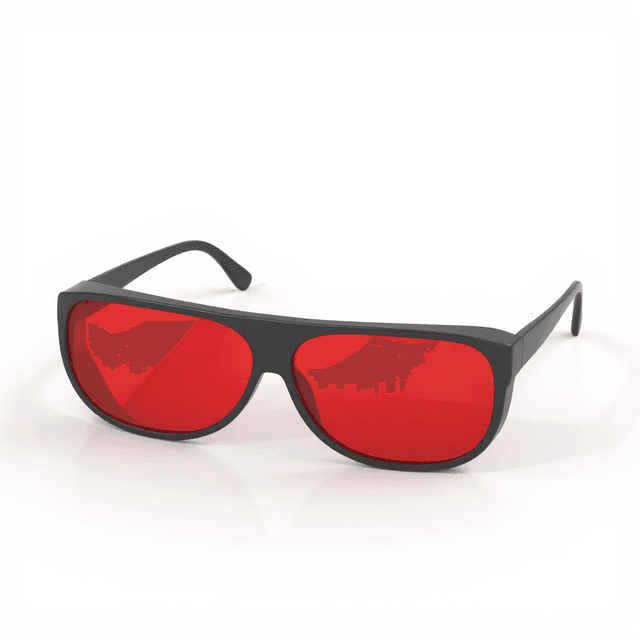
| Laser Goggles Against Blue and Yellow Light | RWD-R-LS-Y | 1 |
| Laser Goggles Against Blue and Green Light | RWD-R-LS-G | 1 |
Introduction and Principle
The optogenetic stimulation kit aims to modulate the activity of excitable cells by combining genetic and optical techniques. Optogenetics, a method to turn the neurons on or off using light, was developed by Edward Boyden and Karl Deisseroth in 2005. It is a photostimulation technique that allows the modulation of neuronal activity by light. A particular set of light-gated proteins, called microbial opsins that get stimulated by light, are expressed in neurons. An optogenetic stimulation kit comprises a laser source to excite/inhibit target cells, optic fiber, an optogenetic probe, cannulas, ceramic ferrules, and laser goggles. The researchers can utilize this kit to conduct neural modulation experiments in rodents, zebrafish, and primates.
In classical optogenetic experiments, microbial opsins are genetically targeted, and wavelengths of light are required to expose them in neurons. Optogenetic stimulation facilitates bidirectional neural function management and genetic targeting of specific cell types. There are two types of light-activated proteins, i.e., opsins: type I is present in fungi, algae, and prokaryotes, and type II in animals. However, type I opsins are known as "rhodopsins” as they contain both opsin protein and a light-sensitive chromophore. These rhodopsins are frequently used in optogenetic stimulation experiments (Mahmoudi et al., 2017). The technique follows the principle that the opsins are activated when a particular wavelength of light is incident on the targeted neuron cells. These activated opsins cause depolarization and hyperpolarization of the cell membrane, thereby silencing or exciting the neurons within a millisecond.
While performing any experiment using an optogenetic stimulation kit, a researcher should take into account the following considerations.
- Properties of the optogenetic tool like ionic current, nature of transported ions, current amplitude, and much more.
- Ability to specifically target desired cell type and deliver light to the area of interest in a precise manner (Ferenczi et al., 2019).
Neuroscience research vastly employs the use of optogenetic stimulation kit. The kit mainly comprises an optical cannula, optogenetic probe, laser source, optic fiber, ceramic ferrules, and optogenetic laser goggles to protect the personnel from harmful laser rays. An optogenetic stimulation kit includes lasers of different wavelengths lying within the visible light spectrum. The laser source can be blue (450-480nm), green (520-560nm), yellow (570-600nm), or red (600-780nm) depending on the opsins being expressed. Sometimes, different wavelengths can be combined to excite or inhibit cellular responses. In such cases, the researchers can use compound wavelength lasers to adjust between wavelengths instantly.
Apparatus and Equipment
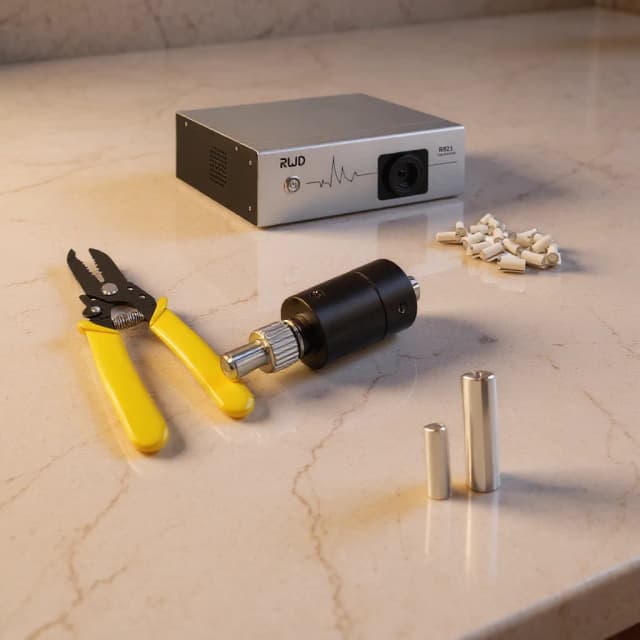
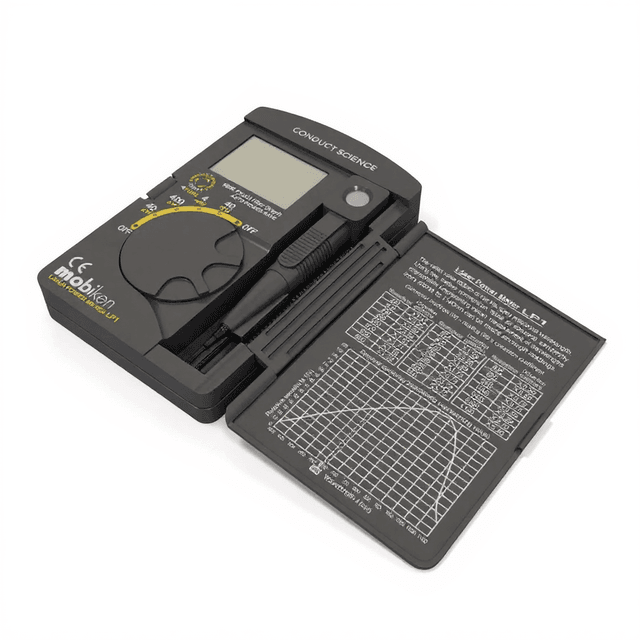
The optogenetic stimulation kit offered by Conduct Science comprises a 20MHz arbitrary waveform generator, power adjustable 473nm Blu-ray laser, 532nm green laser, optic fiber, optic fiber patch cables, rotary joint, 10 packs of ceramic cannulas, a pack of 1.25mm ceramic ferrule protective caps (containing 200 pieces), fiber stripper, laser goggles against blue and yellow light, and laser goggles against blue and green light. The kit is well-designed to cover most of your optogenetic experiment needs. However, some accessories, like a laser power meter, can be purchased separately. This optogenetic stimulation kit is suitable for classic experimental animals such as flies, rodents (rats and mice), zebrafish, and primates.
Applications
Optogenetic stimulation kit has manifold applications in the field of neuroscience. It has widely been used in labs to excite or inhibit spatially defined neuronal populations over extended durations. Furthermore, it has many applications in vitro electrophysiological recordings and calcium imaging in behaving animals. In general, the applications of optogenetic neuromodulation can be divided into three categories.
- Activation and Inhibition of Neural Activity
An optogenetic stimulation kit can be used to control both activation and inhibition of neuronal activity within the duration of a millisecond. The firing pattern produced by a sequence of light pulses reveals a specific neural code. This process is called "cracking neuronal codes."
- Neural Circuit Interrogation
This kit can assess neural circuits in animal models of various mental disorders and discover treatments for these diseases.
- Bidirectional Neural Activity Modulation
Bidirectional neuronal activity modulation has been possible by employing optogenetic tools (Mahmoudi et al., 2017).
Strengths and Limitations
Optogenetic stimulation kit presents several advantages over other neural stimulation techniques like deep brain stimulation (DBS). Optogenetic stimulation is more specific, whereas other methods can stimulate cells other than target cells or may fail to identify specific cells. Focused, high-intensity light coming in a single spot from the laser source helps target the desired cell types. This technique provides excellent spatiotemporal resolution. However, a potential disadvantage is that exposure to high-intensity lasers can damage the tissue. Therefore, achieving sufficient light exposure to neuromodulate the desired cell without damaging the neural cells is a real challenge for neuroscientists (Mahmoudi et al., 2017).
Summary
- Optogenetic stimulation kit combines genetic and optical techniques for neuromodulation experiments in animal species via photostimulation.
- Edward Boyden and Karl Deisseroth developed the technique of optogenetics in 2005.
- The kit works on the principle that when a specific wavelength of light is incident on neural cells, it stimulates light-sensitive proteins in these cells, called opsins. These opsins hyperpolarize or depolarize the cell membrane, thereby exciting or inhibiting cell responses.
- The equipment is frequently employed for bidirectional neuronal activity modulation, neural activity interrogation, and exciting or inhibiting neurons within a millisecond.
- Optogenetic stimulation is more specific than any other neural stimulation method.
References
Mahmoudi, P., Veladi, H., & Pakdel, F. G. (2017). Optogenetics, tools and applications in neurobiology. Journal of medical signals and sensors, 7(2), 71.
Ferenczi, E. A., Tan, X., & Huang, C. L. H. (2019). Principles of optogenetic methods and their application to cardiac experimental systems. Frontiers in physiology, 10, 1096.
How It Works
Optogenetic stimulation operates through the expression of light-sensitive ion channels or proteins (opsins) in genetically-defined cell populations. The 473nm blue laser activates channelrhodopsin variants for neuronal excitation, while the 532nm green laser drives halorhodopsin or archaerhodopsin for inhibition. Light delivery occurs through implanted ceramic fiber cannulas with 200μm core diameter and 0.22 numerical aperture for optimal tissue penetration.
The arbitrary waveform generator produces complex temporal patterns up to 20MHz, enabling precise control of stimulation timing, duration, and intensity. Power-adjustable lasers with <1% stability ensure consistent light delivery across experimental sessions. The rotary joint allows unrestricted animal movement during behavioral testing while maintaining stable fiber optic coupling.
Light transmission efficiency depends on fiber numerical aperture and tissue scattering properties. At 473nm, tissue penetration reaches approximately 1-2mm in brain tissue, while 532nm light achieves similar depths with reduced scattering. Ceramic ferrules provide biocompatible chronic implantation with minimal tissue reaction compared to metal alternatives.
Features & Benefits
waveform_generator_frequency
- 20MHz
blue_laser_wavelength
- 473nm
green_laser_wavelength
- 532nm
blue_light_spectrum
- 450-480nm
green_light_spectrum
- 520-560nm
yellow_light_spectrum
- 570-600nm
red_light_spectrum
- 600-780nm
ceramic_ferrule_size
- 1.25mm
ceramic_cannulas_quantity
- 10 packs
protective_caps_quantity
- 200 pieces
laser_type
- power adjustable
Automation Level
- semi-automated
Brand
- RWD
Material
- Ceramic
Species
- C. elegans
- Drosophila
- Non-human Primate
- Mouse
- Rat
- Zebrafish
Research Domain
- Anxiety and Depression
- Behavioral Pharmacology
- Developmental Biology
- Learning and Memory
- Motor Function
- Neurodegeneration
- Neuroscience
- Pain Research
Weight
- 8.27 kg
Dimensions
- L: 34.0 mm
- W: 39.0 mm
- H: 33.0 mm
Comparison Guide
| Feature | This Product | Typical Alternative | Advantage |
|---|---|---|---|
| Laser Wavelengths | Dual wavelength system (473nm blue, 532nm green) | Single wavelength systems require separate purchases | Enables both excitatory and inhibitory protocols within the same experimental setup. |
| Waveform Generation | 20MHz arbitrary waveform generator | Basic pulse generators offer limited pattern complexity | Supports sophisticated stimulation protocols with microsecond precision for physiologically relevant patterns. |
| Power Stability | <1% power stability | Entry-level systems may have 3-5% fluctuation | Ensures consistent light delivery across sessions for reproducible experimental results. |
| Fiber Cannula Material | Ceramic fiber cannulas | Metal cannulas are common in basic kits | Provides superior biocompatibility and reduced tissue reaction for chronic implantation studies. |
| Movement Freedom | FC/PC rotary joint system | Fixed connections limit behavioral testing | Allows unrestricted animal movement during behavioral protocols while maintaining stable optical coupling. |
| Safety Equipment | Wavelength-specific laser safety goggles | Generic safety equipment may not provide optimal protection | Ensures appropriate protection for specific laser wavelengths used in optogenetic applications. |
This optogenetic stimulation kit combines dual-wavelength laser capability, precision waveform generation, and biocompatible ceramic components in a complete system designed for sophisticated neural circuit manipulation across multiple model organisms.
Practical Tips
Measure actual power output at the fiber tip before each experimental session using an appropriate power meter.
Why: Coupling efficiency varies and power delivery affects the magnitude and kinetics of optogenetic responses.
Store fiber connectors with protective caps and inspect end-faces regularly under microscope for scratches or contamination.
Why: Damaged fiber surfaces reduce light transmission efficiency and can cause dangerous back-reflections into laser systems.
Begin stimulation protocols with low power and short durations, then gradually increase parameters based on behavioral or physiological responses.
Why: Prevents tissue heating and allows characterization of dose-response relationships for optimal experimental parameters.
Always wear appropriate wavelength-specific safety goggles when working with uncoupled laser systems or during fiber preparation.
Why: Direct or reflected laser exposure can cause permanent retinal damage, particularly with Class 3B laser devices.
If behavioral responses diminish over time, check fiber cannula patency and verify opsin expression levels in target tissue.
Why: Reduced efficacy often results from fiber blockage, tissue overgrowth, or decreased protein expression rather than equipment malfunction.
Document exact light delivery parameters, including power density, pulse duration, and temporal patterns for each experimental session.
Why: Reproducible results require precise parameter control, and these details are essential for methodology reporting.
Allow minimum 7-day recovery after cannula implantation before beginning optical stimulation protocols.
Why: Adequate healing time prevents inflammation-induced changes in neural excitability that could confound optogenetic responses.
Clean fiber connections with lint-free wipes and appropriate solvents before each coupling to maintain optimal light transmission.
Why: Contamination at fiber interfaces significantly reduces coupling efficiency and can create hotspots that damage optical components.
Setup Guide
What’s in the Box
- 20MHz Arbitrary Waveform/Function Generator
- 473nm Blue Laser (50mW, power-adjustable)
- 532nm Green Laser (50mW, power-adjustable)
- FC/PC Optic Fiber Patch Cable (200μm, 0.22NA)
- 1x1 FC-FC Rotary Joint
- LC/PC Fiber Optic Cable (200μm, 0.22NA)
- Fiber Ceramic Cannulas (10 pieces, 200μm, 0.22NA)
- Ceramic Ferrule Protective Caps (200 pieces)
- Fiber Stripper Tool
- Laser Safety Goggles (Blue/Yellow protection)
- Laser Safety Goggles (Blue/Green protection)
- User manual and safety documentation (typical)
Compliance
Warranty & ConductCare
ConductScience provides a one-year manufacturer warranty covering defects in materials and workmanship, with comprehensive technical support for setup and troubleshooting assistance.
What is the tissue penetration depth for each laser wavelength?
Blue light (473nm) penetrates approximately 1-2mm in brain tissue, while green light (532nm) achieves similar depths with reduced scattering. Actual penetration depends on tissue type and optical properties.
Can I use this system for simultaneous dual-wavelength stimulation?
Yes, the system includes separate blue and green lasers that can be independently controlled through the waveform generator for simultaneous excitation and inhibition protocols.
What temporal resolution can the waveform generator achieve?
The 20MHz arbitrary waveform generator supports microsecond-precision timing, enabling high-frequency stimulation patterns and precise temporal control of optogenetic responses.
How many animals can be tested simultaneously?
The kit is configured for single-animal testing. Multiple animal setups require additional fiber splitters and may reduce light power delivery to each site.
What maintenance is required for the ceramic cannulas?
Inspect fiber end-faces regularly for damage or contamination. Clean with appropriate solvents and re-cleave if necessary. Replace cannulas if light transmission decreases significantly.
Is the system compatible with head-fixed preparations?
Yes, the fiber patch cables can be used without the rotary joint for head-fixed experiments, providing stable light delivery for electrophysiology or imaging applications.
What power densities are achievable at the fiber tip?
With 50mW laser output and 200μm fiber core, theoretical power density approaches 1600 mW/mm². Actual values depend on coupling efficiency and should be measured for each setup.
Can I modify the stimulation protocols during experiments?
Yes, the arbitrary waveform generator allows real-time parameter adjustment including pulse duration, frequency, and amplitude for adaptive experimental protocols.
Have a question about this product?
Accessories
Enhance your setup with compatible accessories
Replacement Parts & Consumables
Frequently Bought Together
Upgrade Options