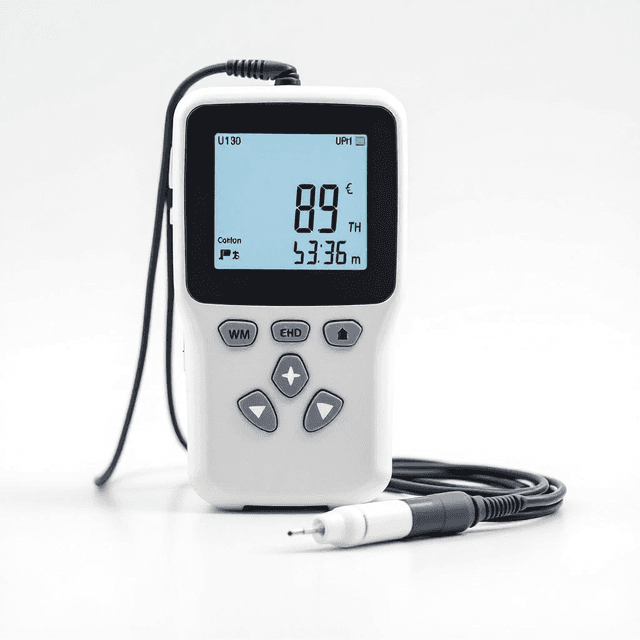
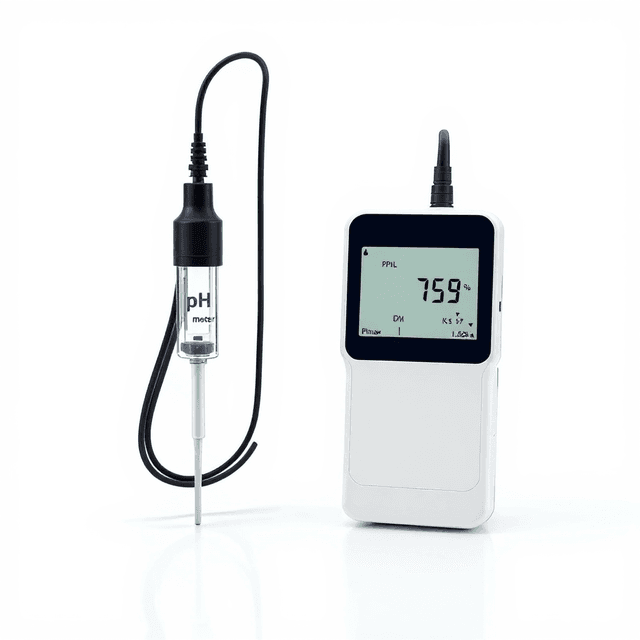
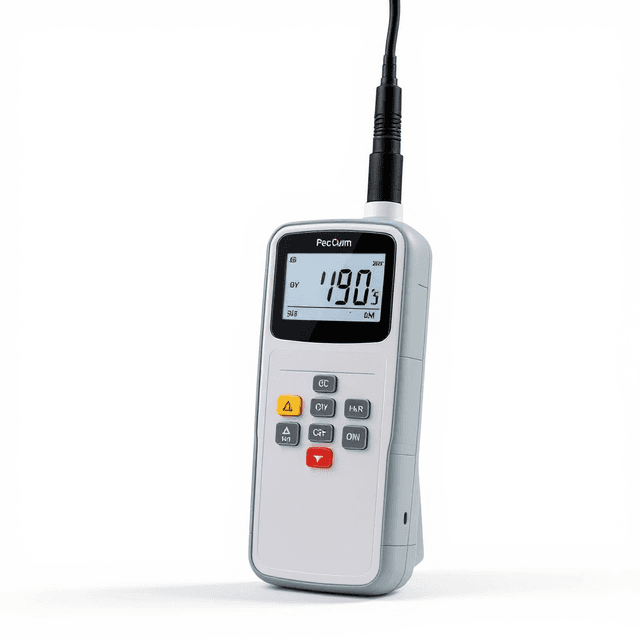
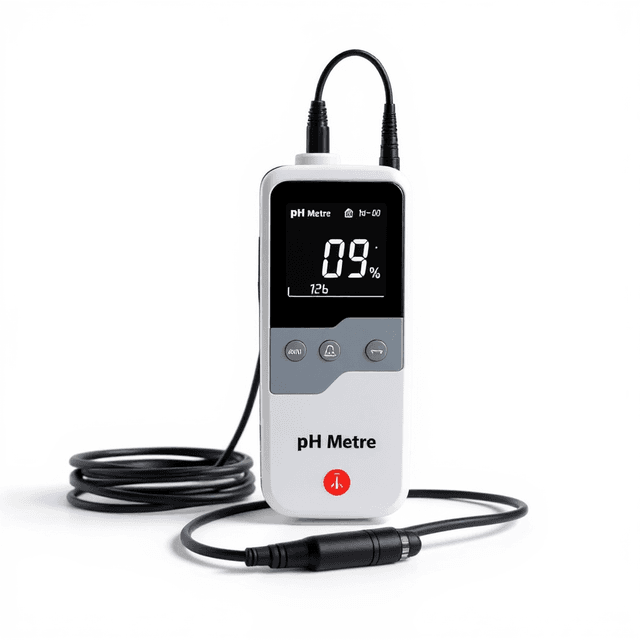
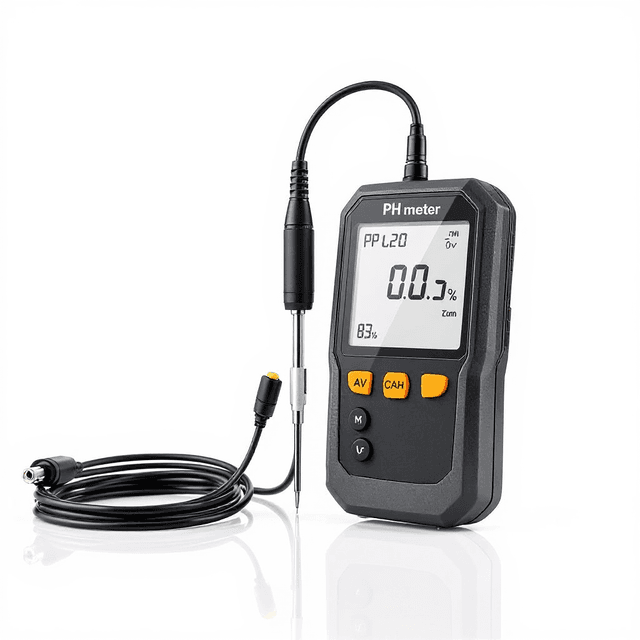
Pocket pH/°C/°F Tester
Portable electrochemical meter providing pH measurements from 0.0-14.0 with ±0.05 pH accuracy and temperature monitoring from 0-60°C with integrated calibration system.

Louise Corscadden, PhD
Director of Science · ConductScience
Ask Louise about Pocket pH/°C/°F Tester fit, setup, configuration, or quote prep.
Already working with us? Sign in to connect this with My Scientist.
Key Specifications
Full details →- Model fit
- 1 selectable configurations
- SKU family
- BIO-0373
- Shipping box
- 25.7 x 26.7 x 23.3 cm
- Ordering
- Online checkout and quote request available
- Category
- pH Meters
- Build notes
- Confirm accessories, station layout, and support needs before purchase
The Pocket pH/°C/°F Tester is a portable electrochemical measurement instrument designed for routine pH and temperature monitoring in research and quality control applications. This handheld meter employs standard glass electrode technology to provide pH measurements across the full 0.0-14.0 pH range with ±0.05 pH accuracy, while simultaneously measuring temperature from 0-60°C (32-140°F) with ±1°C precision.
The instrument features 2-point pH calibration using standard USA buffer solutions (pH 4.01, 7.00, 10.01) and includes automatic temperature compensation to ensure measurement reliability across varying thermal conditions. The compact design and dual-parameter capability make it suitable for field sampling, laboratory quality checks, and process monitoring where portability and ease of use are essential.
How It Works
The instrument operates on the principle of potentiometric measurement using a glass electrode system. The pH-sensitive glass membrane generates a potential difference proportional to the hydrogen ion activity in the sample solution. This electrochemical potential is measured against a reference electrode and converted to pH units through the Nernst equation relationship.
Temperature measurement is achieved through an integrated thermistor sensor that provides automatic temperature compensation (ATC) for the pH measurement. The ATC function is critical because the Nernst slope varies with temperature, affecting pH measurement accuracy. The instrument applies the appropriate temperature coefficient to ensure reliable pH readings across the specified temperature range.
Calibration is performed using standard buffer solutions at known pH values. The two-point calibration protocol establishes the electrode slope and offset parameters, with the instrument storing these calibration coefficients until the next calibration cycle.
Features & Benefits
Shipping weight
- 1.0 lb
Shipping box
- L: 25.7 cm
- W: 26.7 cm
- H: 23.3 cm
| Feature | This Product | Typical Alternative | Advantage |
|---|---|---|---|
| pH Measurement Range | 0.0-14.0 pH with ±0.05 pH accuracy | Entry-level models often offer ±0.1 pH accuracy | Higher precision enables more reliable measurements for critical quality control applications |
| Temperature Range | 0-60°C (32-140°F) with ±1°C accuracy | Basic models may have limited temperature measurement capability | Simultaneous pH and temperature measurement reduces the need for separate instruments |
| Calibration System | 2-point calibration with USA buffer compatibility | Single-point calibration common in basic models | Two-point calibration provides better accuracy across the full pH range |
| Temperature Compensation | Automatic temperature compensation with integrated sensor | Manual temperature compensation or no compensation | Eliminates user error in temperature correction and improves measurement reliability |
This instrument combines laboratory-grade pH accuracy with portable design and integrated temperature measurement. The automatic temperature compensation and two-point calibration system provide reliable performance for both field and laboratory applications requiring precise pH documentation.
Practical Tips
Always calibrate with fresh buffer solutions and ensure buffers are at the same temperature as your samples.
Why: Temperature differences between calibration buffers and samples can introduce measurement errors even with automatic temperature compensation.
Clean the electrode weekly with mild detergent solution and rinse thoroughly with distilled water.
Why: Protein buildup and sample residues can create junction potentials that affect measurement accuracy.
Allow the reading to stabilize for 30-60 seconds before recording pH values, especially in buffered solutions.
Why: Electrode equilibration time varies with sample ionic strength and can affect measurement precision if rushed.
If readings drift or calibration fails, soak the electrode in pH 7.0 buffer for 30 minutes to rehydrate the glass membrane.
Why: Dried or dehydrated glass membranes exhibit slow response times and calibration instability.
Record both pH and temperature values for each measurement to enable post-measurement temperature corrections if needed.
Why: Temperature data provides context for pH measurements and enables verification of automatic temperature compensation function.
Handle the glass electrode carefully and avoid contact with hydrofluoric acid or strong alkaline solutions above pH 12.
Why: Glass electrodes are fragile and certain chemicals can damage the sensing membrane or reference junction.
Setup Guide
What’s in the Box
- Pocket pH/Temperature meter (main unit)
- Combined pH/temperature electrode (typical)
- Electrode storage cap (typical)
- Calibration buffer solution set (pH 4.01, 7.00, 10.01) (typical)
- User manual and calibration certificate (typical)
- Carrying case (typical)
Warranty
ConductScience provides a standard 1-year manufacturer warranty covering defects in materials and workmanship, with technical support available for calibration procedures and measurement troubleshooting.
Compliance
What is the recommended calibration frequency for this pH meter?
Calibrate daily for critical measurements or weekly for routine monitoring. Always recalibrate when switching between sample types with significantly different pH ranges or when measurement drift is suspected.
Can this instrument measure pH in organic solvents or non-aqueous solutions?
The glass electrode is designed for aqueous solutions. Non-aqueous measurements may provide inaccurate results and could damage the electrode. Consult the technical datasheet for specific solvent compatibility information.
How should the electrode be stored between measurements?
Store the electrode with the protective cap filled with pH 7.0 buffer solution or electrode storage solution. Never store in distilled water for extended periods as this can damage the glass membrane.
What is the typical electrode lifespan and replacement frequency?
Glass electrodes typically last 6-12 months with regular use. Replace when calibration becomes unstable, response time increases significantly, or the electrode fails to achieve proper calibration slopes.
Does the instrument provide data logging or connectivity features?
Consult the product datasheet for specific data output capabilities. Basic handheld pH meters typically provide real-time display readings without built-in data storage.
What is the minimum sample volume required for accurate measurement?
The electrode must be fully immersed with the sensing area covered. Typical minimum sample volume is 10-20 mL depending on sample container geometry.
How does temperature affect pH measurement accuracy?
The instrument includes automatic temperature compensation to correct for the temperature dependence of pH measurements. Manual temperature compensation may be required for extreme pH values or temperatures outside the ATC range.
Have a question about this product?
Have a question? Just ask.
Send it over and we'll email you a personalized answer — no call, no scheduling.
Prefer to talk it through?
Accessories
Enhance your setup with compatible accessories
Frequently Bought Together
Upgrade Options