Surgical Needle Holders
Selectable surgical needle holders for small-animal closure, microsurgery, suture placement, and tray completion, with micro needle holders, lockable micro holders, standard needle holders, tungsten-carbide jaw options, suture-cutter configurations, straight and curved tips, 0.5 mm to 2.0 mm tip widths, stainless steel and titanium options, and 10 cm to 16 cm overall lengths.

Louise Corscadden, PhD
Director of Science · ConductScience
Ask Louise about Surgical Needle Holders fit, setup, configuration, or quote prep.
Already working with us? Sign in to connect this with My Scientist.
Key Specifications
Full details →- Model fit
- 12 selectable configurations
- SKU family
- CS-SRG-NEEDLE-HOLDERS
- Sizing
- Model-specific dimensions confirmed from the selected configuration
- Ordering
- Online checkout and quote request available
- Category
- Surgical Instruments
- Build notes
- Stainless steel, titanium, and tungsten-carbide jaw options
Overview
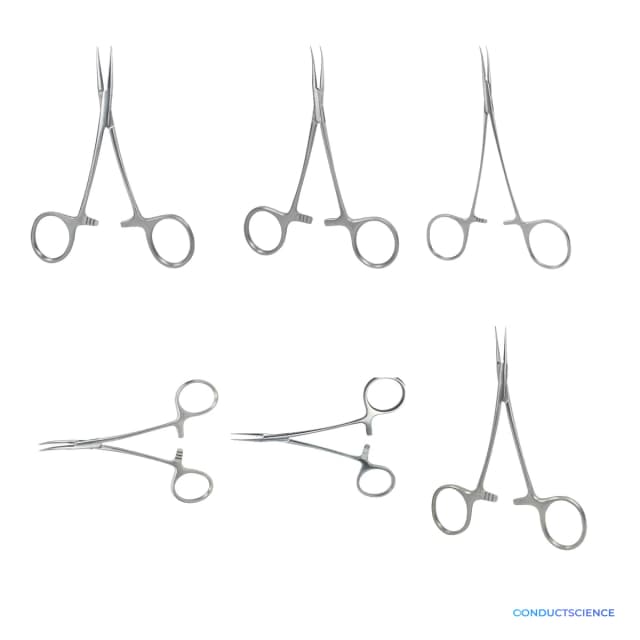
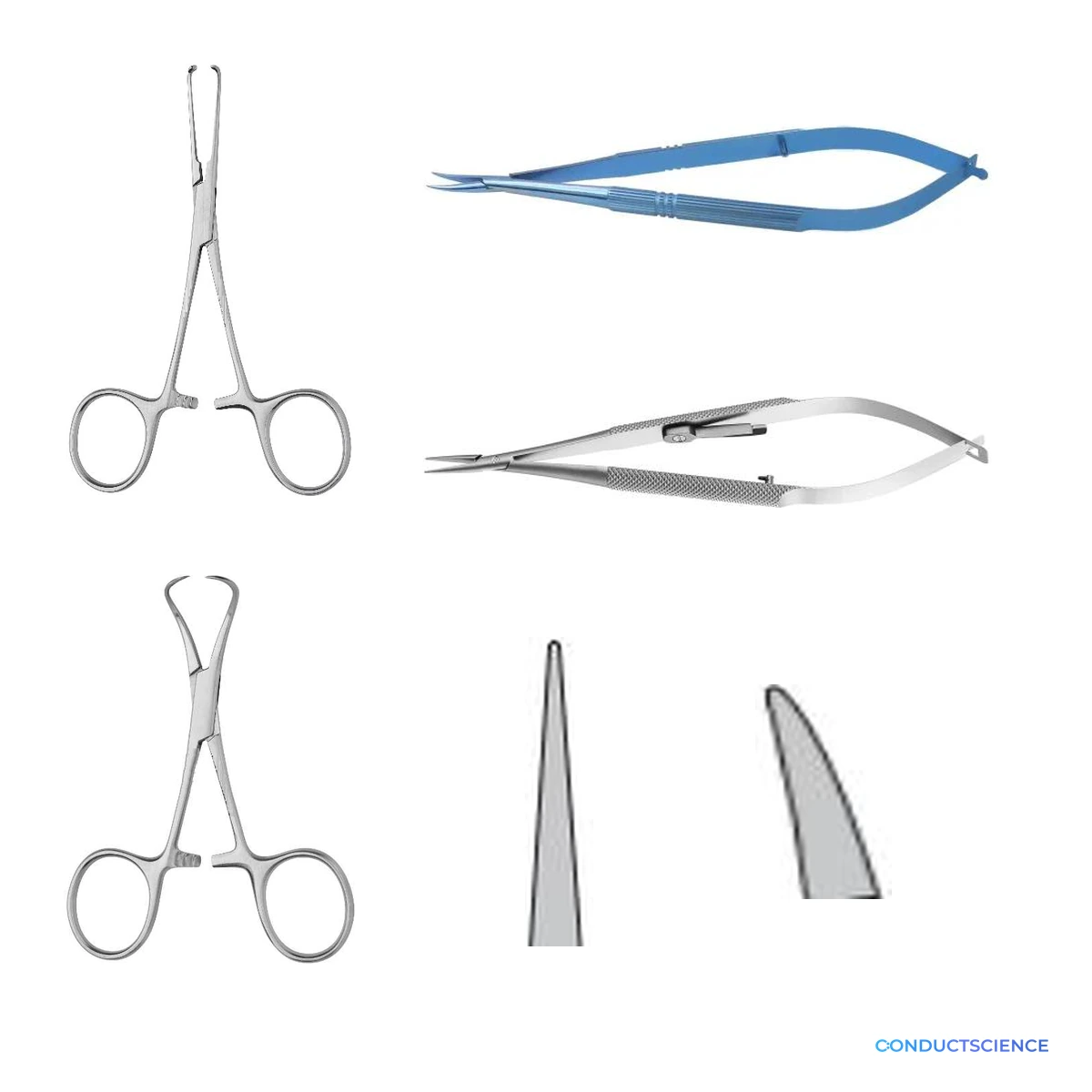
The Surgical Needle Holders page gives research labs one comparison surface for needle holders used in small-animal closure, microsurgery, suture placement, and surgical tray completion. The product family includes micro needle holders, lockable micro needle holders, standard needle holders, tungsten-carbide jaw needle holders, and suture-cutter configurations.
The selection value is matching the holder to the closure task. Micro 0.5 mm tip-width configurations support fine suture handling in compact fields, straight and curved tips let the operator choose approach geometry, lockable micro holders add held-position control, standard 1.5 mm options cover general closure work, tungsten-carbide jaws support higher-grip needle control, and suture-cutter configurations combine holding and cutting in one instrument.
Scientific Use
Surgical needle holders are practical across rodent microsurgery, ischemia and perfusion preparation, catheter surgery, spinal access, reproductive surgery, wound-closure benches, and general small-animal surgical tray refreshes. The 10 cm to 16 cm length range lets labs match hand position and field depth, while stainless steel, titanium, and tungsten-carbide jaw options support different balance, grip, and durability preferences.
This listing is intentionally separate from Hemostatic Forceps. Hemostatic Forceps provide ratcheting clamp control for holding tissue or vessels, while Surgical Needle Holders focus on grasping and driving suture needles during closure.
Buying Fit
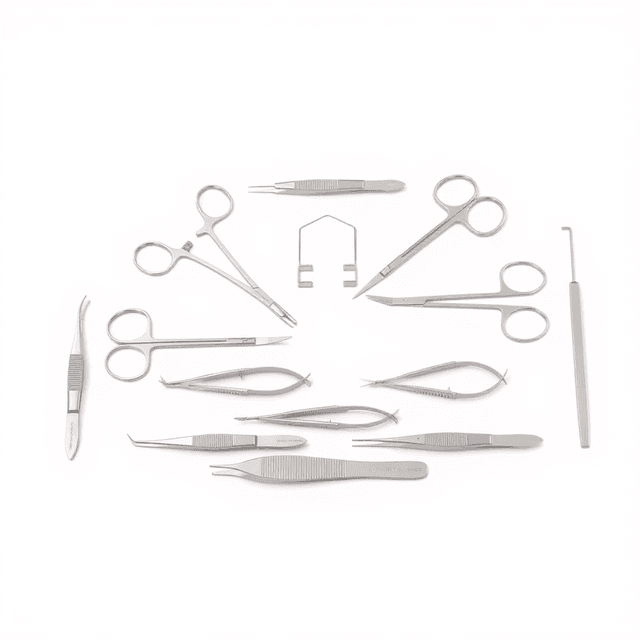
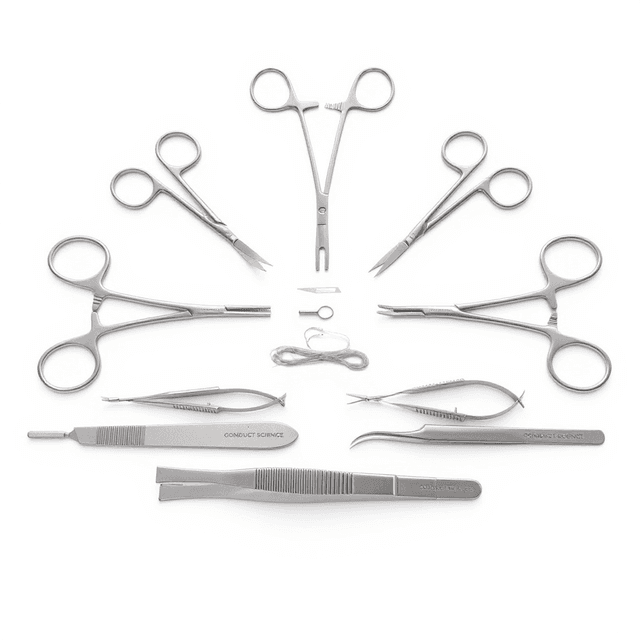
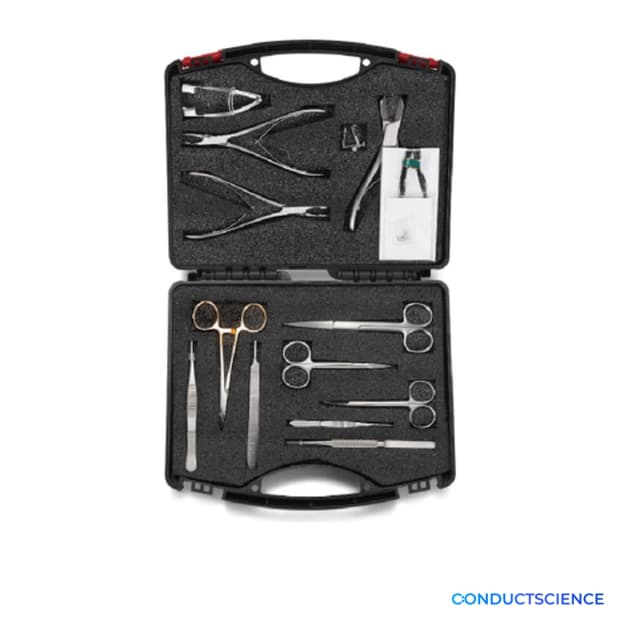
Choose this page when the lab needs replacement or procedure-specific needle holders rather than a full surgical kit. Pair the selected configuration with fine surgical tweezers, hemostatic forceps, micro scissors, handles and blades, sutures, magnification, anesthesia, warming, and sterile-field supplies when building a complete small-animal surgical station.
Features & Benefits
Pattern range
- Micro, lockable micro, standard, tungsten-carbide jaw, and suture-cutter needle holders
Tip width range
- 0.5 mm, 1.5 mm, or 2.0 mm depending on selected configuration
Material choices
- Stainless steel, titanium, and tungsten-carbide jaw options
Overall length
- 10 cm, 12.5 cm, 13 cm, 14 cm, or 16 cm depending on selected configuration
Use fit
- Suture handling, needle driving, closure planning, and surgical tray completion
| Model | SKU | Listed price | Status | Shipping box |
|---|---|---|---|---|
| Needle holder, 1.5 mm tip width, 10 cm | CS-SRG-NH-STD-15-100 | $64.99 | Available | Confirmed during quote |
| Needle holder, 1.5 mm tip width, 13 cm | CS-SRG-NH-STD-15-130 | $69.99 | Available | Confirmed during quote |
| Micro needle holder, titanium, straight, 0.5 mm tip width, 12.5 cm | CS-SRG-NH-MICRO-TI-STR-05-125 | $139.99 | Available | Confirmed during quote |
| Micro needle holder, titanium, curved, 0.5 mm tip width, 12.5 cm | CS-SRG-NH-MICRO-TI-CVD-05-125 | $139.99 | Available | Confirmed during quote |
| Micro needle holder, stainless steel, straight, 0.5 mm tip width, 12.5 cm | CS-SRG-NH-MICRO-SS-STR-05-125 | $98.99 | Available | Confirmed during quote |
| Micro needle holder, stainless steel, curved, 0.5 mm tip width, 12.5 cm | CS-SRG-NH-MICRO-SS-CVD-05-125 | $98.99 | Available | Confirmed during quote |
| Micro needle holder with lock, stainless steel, straight, 0.5 mm tip width, 12.5 cm | CS-SRG-NH-MICRO-LOCK-SS-STR-05-125 | $109.99 | Available | Confirmed during quote |
| Micro needle holder with lock, stainless steel, curved, 0.5 mm tip width, 12.5 cm | CS-SRG-NH-MICRO-LOCK-SS-CVD-05-125 | $109.99 | Available | Confirmed during quote |
| Needle holder with suture cutter, tungsten-carbide jaws, 1.5 mm tip width, 12.5 cm | CS-SRG-NH-CUTTER-TC-15-125 | $201.99 | Available | Confirmed during quote |
| Needle holder with suture cutter, tungsten-carbide jaws, 1.5 mm tip width, 14 cm | CS-SRG-NH-CUTTER-TC-15-140 | $210.99 | Available | Confirmed during quote |
| Needle holder with tungsten-carbide jaws, 2.0 mm tip width, 12.5 cm | CS-SRG-NH-TC-20-125 | $158.99 | Available | Confirmed during quote |
| Needle holder with tungsten-carbide jaws, 2.0 mm tip width, 16 cm | CS-SRG-NH-TC-20-160 | $169.99 | Available | Confirmed during quote |
Practical Tips
Include the target species and procedure context in the quote request.
Why: Mouse and rat suture handling, closure planning, and surgical tray completion workflows may require different handling scale and support components.
Review anesthesia and animal-support equipment alongside the surgical kit.
Why: Surgical instruments are only one part of a reproducible small-animal procedure setup.
Treat exact kit contents as quote-confirmed rather than fixed from the preview page.
Why: This keeps the public listing accurate while allowing the final configuration to match the lab workflow.
Setup Guide
What’s in the Box
- 1 x selected surgical needle holder configuration
- Configuration selected by micro, lockable micro, standard, tungsten-carbide jaw, or suture-cutter pattern, plus tip shape, material, tip width, and length where applicable
Warranty
Support, replacement, and fulfillment terms are confirmed with the final quote and institutional purchasing requirements.
Compliance
Which Surgical Needle Holders configurations are available?
The page includes micro needle holders, lockable micro needle holders, standard needle holders, tungsten-carbide jaw needle holders, and suture-cutter configurations with 0.5 mm to 2.0 mm tip widths and 10 cm to 16 cm overall lengths.
When should I choose a micro needle holder?
Choose a micro needle holder when the closure workflow uses fine sutures, compact fields, or microscope-assisted handling where a broad holder would be too large.
When should I choose tungsten-carbide jaws?
Choose tungsten-carbide jaw configurations when needle grip and jaw durability are the main purchasing decision for repeated closure work.
When is a suture-cutter configuration useful?
A suture-cutter configuration is useful when the operator wants to hold and cut suture with one instrument during closure planning, reducing tool changes in the field.
How are Surgical Needle Holders different from Hemostatic Forceps?
Surgical Needle Holders are built for grasping and driving suture needles. Hemostatic Forceps are locking clamps used for held-position clamping, vessel-control staging, and tissue presentation.
Have a question about this product?
Have a question? Just ask.
Send it over and we'll email you a personalized answer — no call, no scheduling.
Prefer to talk it through?
Accessories
Enhance your setup with compatible accessories
Frequently Bought Together