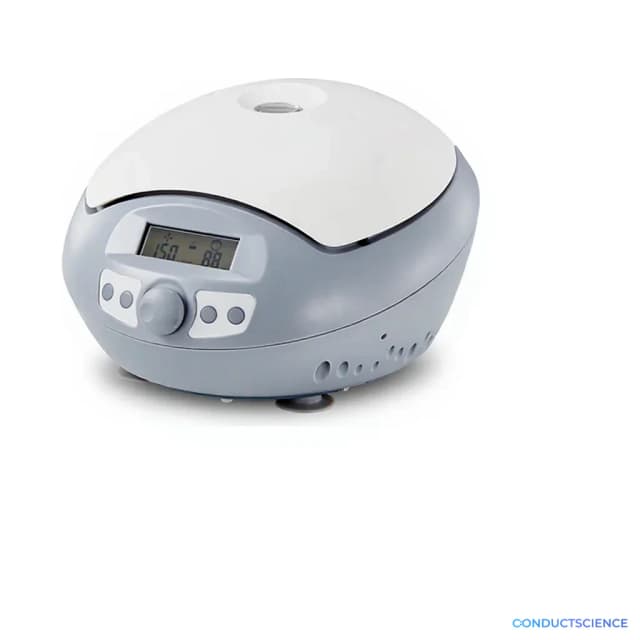
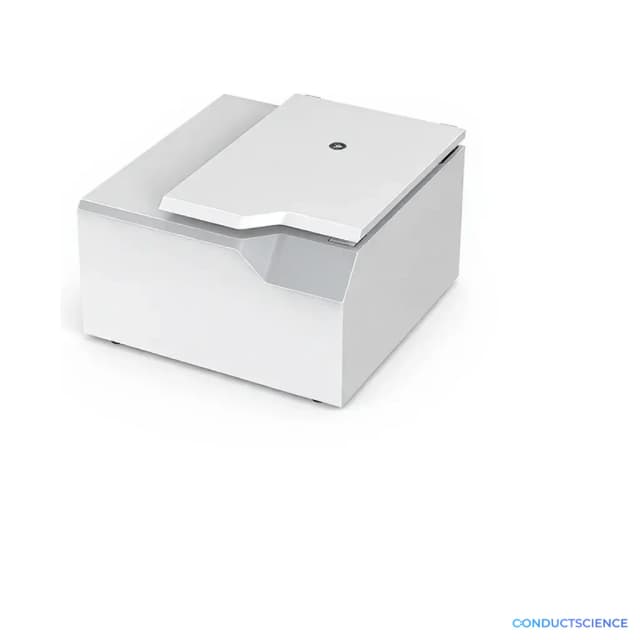
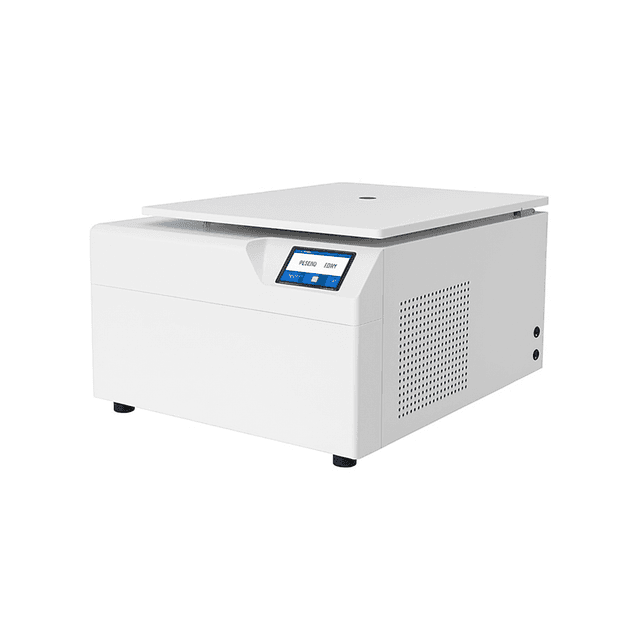
Table Top Low Speed Centrifuge(CGF)
Compact tabletop centrifuge providing up to 4000 rpm (2250×g) for routine laboratory separations with 12×20 ml tube capacity.

Louise Corscadden, PhD
Director of Science · ConductScience
Ask Louise about Table Top Low Speed Centrifuge(CGF) fit, setup, configuration, or quote prep.
Already working with us? Sign in to connect this with My Scientist.
Key Specifications
Full details →- Model fit
- Configured during quote
- SKU family
- BIO-0322
- Shipping box
- 27.8 x 34.0 x 43.0 cm
- Ordering
- Online checkout and quote request available
- Category
- Centrifuges
- Build notes
- Confirm accessories, station layout, and support needs before purchase
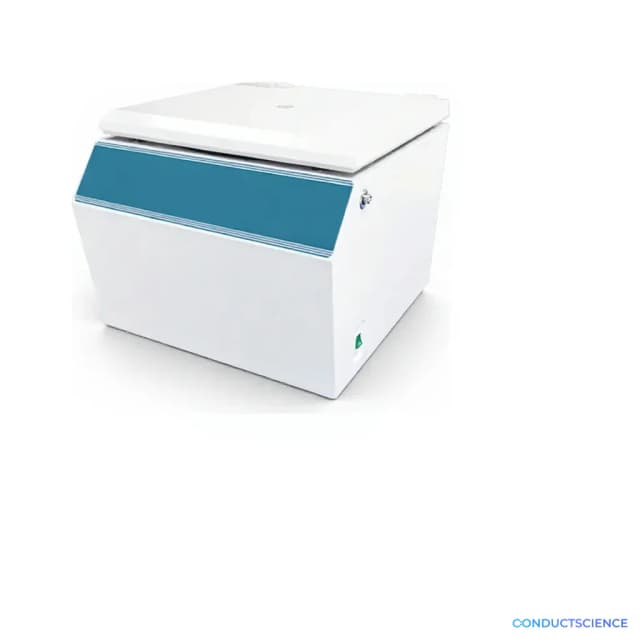
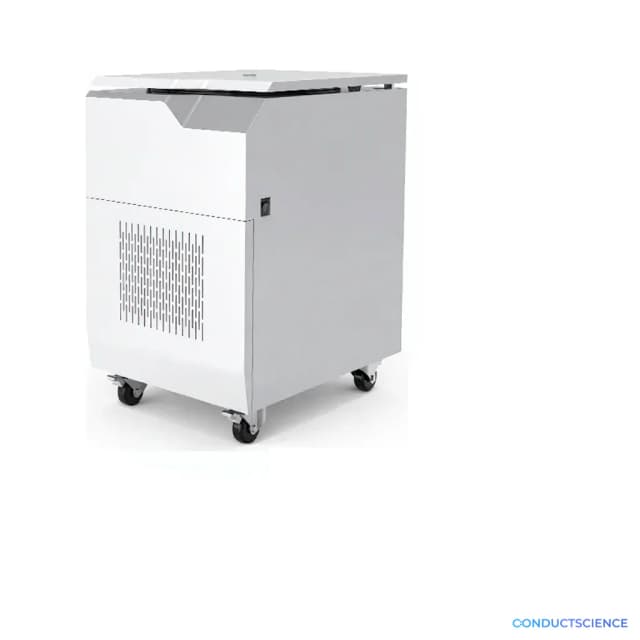
The Table Top Low Speed Centrifuge (CGF) is a compact benchtop instrument designed for routine separation applications requiring moderate centrifugal forces. Operating at maximum speeds up to 4000 rpm with maximum relative centrifugal force (RCF) of 2250×g, this centrifuge accommodates standard laboratory tubes and provides precise timing control from 1 second to 99 minutes.
The instrument features a 12-position rotor capable of handling 20 ml tubes, making it suitable for standard sample processing workflows including cell pelletization, protein precipitation, and phase separation procedures. With speed accuracy of ±10 rpm and noise levels maintained at ≤60 dB, the unit supports consistent operation in shared laboratory environments while maintaining acceptable acoustic conditions.
How It Works
Centrifugal separation operates on the principle of differential sedimentation, where particles suspended in a medium experience radial acceleration when subjected to rotational motion. The centrifuge generates centrifugal force proportional to the square of the angular velocity and the radius of rotation, expressed as relative centrifugal force (RCF) in multiples of gravitational acceleration (×g).
During operation, samples placed in the rotor experience outward acceleration, causing denser particles to migrate toward the bottom of the tube while less dense components remain in the supernatant. The separation efficiency depends on particle size, density differences between phases, medium viscosity, and applied centrifugal force. At the maximum RCF of 2250×g, this instrument provides sufficient force for routine laboratory separations including cell pelletization, protein precipitation, and phase clarification.
The electronic control system maintains precise rotational speed within ±10 rpm accuracy while providing programmable timing from 1 second to 99 minutes, allowing users to optimize separation conditions for specific sample types and desired resolution.
Features & Benefits
Automation Level
- manual
Max speed
- 4,000 rpm
Max. Volume
- 12*20ml
Timing Range
- 1s~99min
Speed Accuracy
- ±10r/min
Noise
- ≤60dB
External Size(L*W*H)
- 340*430*278mm
Packing Size(L*W*H)
- 476*566*436mm
Rotor NO.
- Capacity
Max. Speed(rpm)
- Max. RCF(×g)
4M0016
- 12*5/7ml
Brand
- ConductScience
Research Domain
- Analytical Chemistry
- Cell Biology
- Clinical Diagnostics
- Immunology
- Microbiology
- Pharmaceutical QC
Power/Voltage
- AC220V, 50/60Hz(Standard); AC110V, 50/60Hz(Optional)
Weight
- 24kg
Max force
- 2,250 ×g
Shipping weight
- 20.0 lb
Shipping box
- L: 27.8 cm
- W: 34.0 cm
- H: 43.0 cm
| Feature | This Product | Typical Alternative | Advantage |
|---|---|---|---|
| Maximum Speed | 4000 rpm | Entry-level models typically offer 3000-3500 rpm | Higher maximum speed enables faster separations and improved resolution for challenging samples. |
| Tube Capacity | 12×20 ml tubes | Basic models often accommodate 8-10 tubes | Larger capacity enables higher sample throughput and more efficient batch processing workflows. |
| Speed Accuracy | ±10 rpm precision | Standard models typically offer ±15-20 rpm accuracy | Enhanced precision ensures consistent separation conditions and reproducible experimental results. |
| Timing Control | 1 second to 99 minute range | Basic units often limit timing to 1-30 minutes | Extended timing range accommodates protocols requiring longer separation periods for complete resolution. |
| Noise Level | ≤60 dB operation | Standard centrifuges typically generate 65-70 dB | Reduced acoustic output maintains comfortable working environment in shared laboratory spaces. |
| Power Options | Dual voltage capability (220V/110V) | Many models require single voltage configuration | Flexible power options accommodate international installations without requiring voltage converters. |
This centrifuge offers enhanced capacity and precision compared to basic tabletop models, with 12-tube capacity, 4000 rpm maximum speed, and ±10 rpm accuracy. The extended timing range and dual voltage options provide operational flexibility for diverse laboratory environments and protocols.
Practical Tips
Verify speed accuracy periodically using a tachometer or strobe light to ensure the displayed and actual speeds match within ±10 rpm specification.
Why: Speed accuracy directly affects the applied centrifugal force and separation reproducibility.
Clean the rotor and tube holders with mild detergent after each use and inspect for cracks or wear that could compromise balance or safety.
Why: Rotor integrity is critical for safe operation at high speeds and maintaining proper sample separation.
Always balance tubes within 0.1 g by placing them in opposite positions and filling balance tubes with water if running an odd number of samples.
Why: Proper balancing prevents excessive vibration, reduces wear, and ensures safe operation throughout the speed range.
Allow the rotor to come to complete stop before opening the lid, even for short runs, to prevent sample disturbance and ensure safety.
Why: Residual rotation can resuspend pellets and create safety hazards when accessing samples.
If excessive vibration occurs during operation, immediately stop the unit and check tube balance and rotor installation.
Why: Imbalance can damage the drive mechanism and create unsafe operating conditions.
Record actual run parameters (speed, time, temperature) in laboratory notebooks rather than relying solely on programmed settings.
Why: Documentation of actual conditions supports reproducibility and troubleshooting of separation protocols.
Ensure adequate ventilation around the unit and avoid blocking air vents during operation to prevent overheating.
Why: Proper cooling maintains consistent performance and prevents damage to electronic components and samples.
Lubricate drive components according to manufacturer schedule and monitor bearing noise for early detection of wear.
Why: Regular lubrication extends equipment life and maintains speed accuracy over time.
Setup Guide
What’s in the Box
- Table Top Low Speed Centrifuge main unit
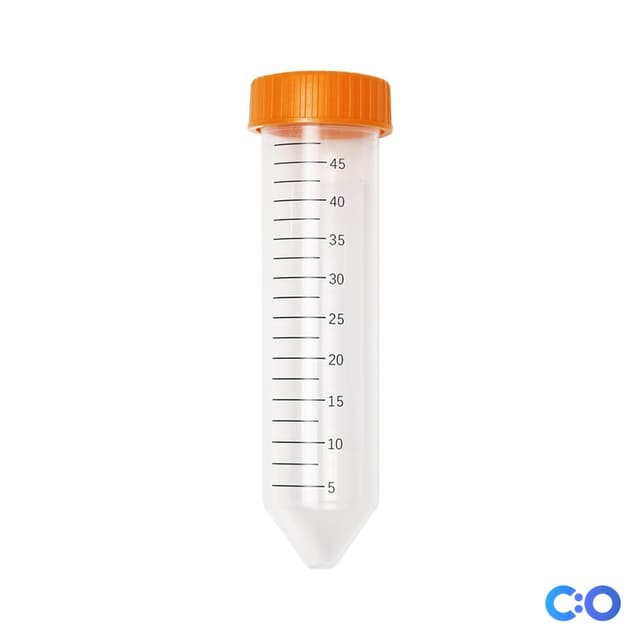
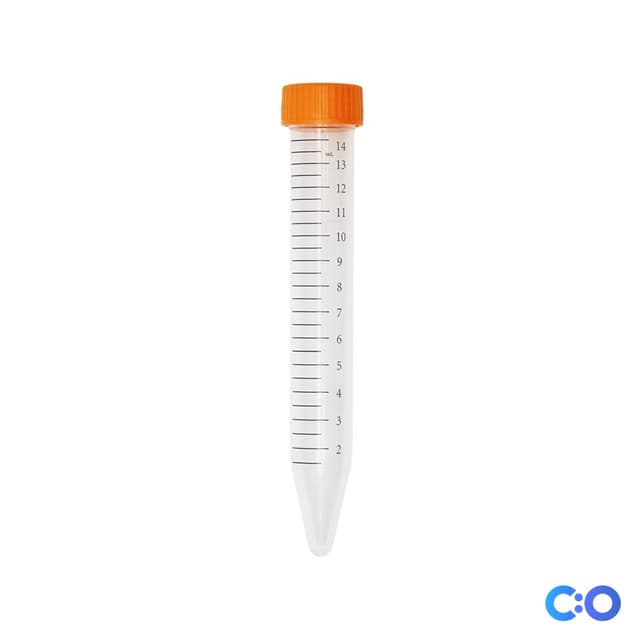
- 12-position rotor for 20 ml tubes
- Power cord
- User manual and operating instructions
- Rotor installation tools (typical)
- Warranty documentation (typical)
Warranty
ConductScience provides a one-year manufacturer warranty covering defects in materials and workmanship. Technical support is available for installation, operation, and maintenance guidance throughout the warranty period.
Compliance
What is the maximum sample volume and how many tubes can be processed simultaneously?
The centrifuge accommodates 12 tubes with maximum volume of 20 ml each, allowing batch processing of up to 240 ml total sample volume per run.
What centrifugal force is available and is it sufficient for cell pelletization?
Maximum RCF of 2250×g at 4000 rpm provides sufficient force for routine cell pelletization, protein precipitation, and phase separation applications.
How precise is the speed control and timing range?
Speed accuracy is maintained within ±10 rpm with programmable timing from 1 second to 99 minutes, enabling reproducible separation protocols.
What are the power requirements and voltage options?
Standard configuration operates on AC220V 50/60Hz with optional AC110V 50/60Hz available to accommodate different regional power standards.
What maintenance is required for optimal performance?
Routine maintenance includes rotor cleaning and inspection, balance verification, and periodic speed calibration verification. Consult product datasheet for detailed maintenance schedules.
How does this compare to refrigerated centrifuges?
This ambient temperature centrifuge is suitable for routine separations not requiring temperature control, offering simpler operation and lower cost compared to refrigerated models.
What safety features are included?
Safety features include lid interlock preventing operation with open lid, imbalance detection, and controlled deceleration. Noise levels are maintained at ≤60 dB for safe operation in shared spaces.
Can different tube sizes be used with this rotor configuration?
The standard rotor configuration accepts tubes up to 20 ml volume. For different tube sizes or alternative rotor configurations, consult product datasheet for available options.
Have a question about this product?
Have a question? Just ask.
Send it over and we'll email you a personalized answer — no call, no scheduling.
Prefer to talk it through?
Replacement Parts & Consumables