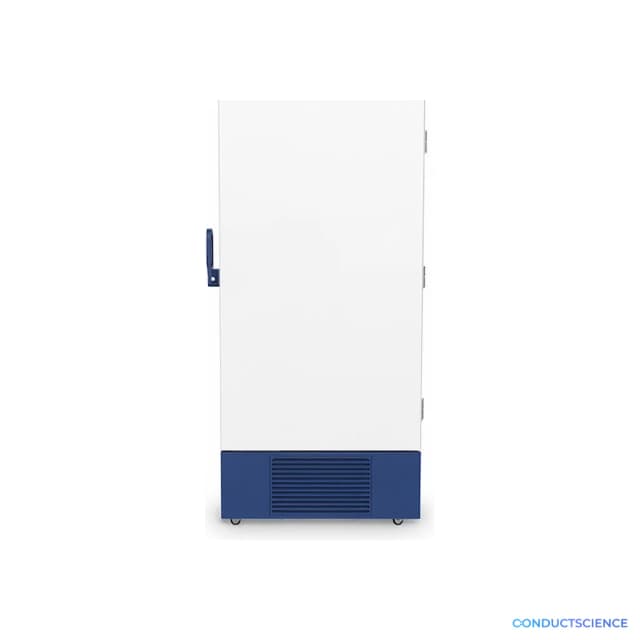
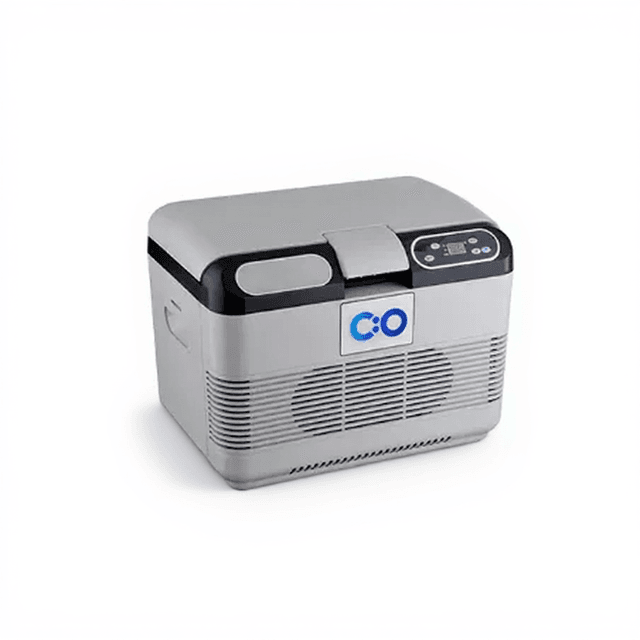
Ultra-Low Temperature Freezer -86°C, 408-838L, Digital Control
Intermediate-temperature laboratory freezer maintaining -86°C for biological sample storage and reagent preservation in research environments.

Louise Corscadden, PhD
Director of Science · ConductScience
Ask Louise about Ultra-Low Temperature Freezer -86°C, 408-838L, Digital Control fit, setup, configuration, or quote prep.
Already working with us? Sign in to connect this with My Scientist.
Key Specifications
Full details →- Model fit
- Configured during quote
- SKU family
- BIO-0102
- Shipping box
- 82.0 x 46.5 x 45.5 cm
- Ordering
- Online checkout and quote request available
- Category
- Lab Equipment
- Build notes
- Confirm accessories, station layout, and support needs before purchase
The 86℃ Freezer provides intermediate-temperature storage for laboratory samples requiring preservation below standard refrigeration temperatures but above ultra-low freezing conditions. This chest-style freezer maintains consistent -86°C storage temperatures for biological samples, reagents, and research materials that require long-term stability without the expense of ultra-low temperature systems.
The unit features a compact footprint suitable for laboratory environments while providing adequate storage volume for routine sample archiving. Temperature uniformity and recovery characteristics support sample integrity during storage and retrieval operations. The freezer accommodates standard laboratory storage containers and sample tubes commonly used in research protocols.
How It Works
The 86℃ Freezer operates using a vapor compression refrigeration system optimized for intermediate sub-zero temperatures. The compressor circulates refrigerant through evaporator coils positioned within the storage chamber, extracting heat from the internal environment to maintain the target -86°C temperature. Insulation properties of the chest design minimize heat transfer from ambient conditions.
Temperature regulation relies on electronic control systems that monitor internal conditions and cycle the compressor to maintain setpoint stability. The chest configuration provides thermal mass stability, reducing temperature fluctuations during door opening events. Heat exchange efficiency is optimized for continuous operation at the target temperature range.
Features & Benefits
Automation Level
- manual
Research Domain
- Analytical Chemistry
- Cell Biology
- Clinical Diagnostics
- Immunology
- Microbiology
- Pharmaceutical QC
Shipping weight
- 168.0 lb
Shipping box
- L: 82.0 cm
- W: 46.5 cm
- H: 45.5 cm
| Feature | This Product | Typical Alternative | Advantage |
|---|---|---|---|
| Operating Temperature | -86°C intermediate freezing | Ultra-low freezers typically operate at -80°C or lower | Provides adequate preservation for samples not requiring extreme temperatures while reducing energy consumption. |
| Footprint | 82.0 × 46.5 × 45.5 cm compact design | Larger units often require more floor space | Fits standard laboratory environments without extensive space allocation. |
| Configuration | Chest-style design | Many freezers use upright configurations | Minimizes cold air loss during sample access and provides better temperature stability. |
| Weight | 168 kg substantial construction | Lighter units may have less thermal mass | Greater thermal mass provides improved temperature stability and reduced fluctuations. |
This freezer provides intermediate-temperature storage at -86°C in a compact chest configuration, offering adequate preservation conditions for biological samples while minimizing energy requirements compared to ultra-low systems.
Practical Tips
Verify temperature accuracy using calibrated probe placed in center of storage chamber with samples present.
Why: Loaded conditions provide realistic temperature distribution assessment.
Clean condenser coils monthly to maintain efficient heat exchange and prevent temperature drift.
Why: Dust accumulation reduces cooling efficiency and increases energy consumption.
Pre-cool storage containers before loading samples to minimize temperature recovery time.
Why: Reduces thermal load on the system and maintains sample temperature during storage.
Ensure adequate ventilation around unit and avoid storing volatile solvents without proper containment.
Why: Prevents heat buildup and reduces risk of vapor accumulation in laboratory environment.
Implement continuous temperature monitoring with alarm systems for critical sample protection.
Why: Early detection of temperature excursions prevents sample loss and maintains research integrity.
Check door seals regularly for proper closure and replace if damaged or warped.
Why: Compromised seals allow heat infiltration and increase compressor cycling frequency.
Setup Guide
What’s in the Box
- 86℃ Freezer main unit
- Power cord (typical)
- User manual and documentation (typical)
- Sample storage baskets (typical)
- Temperature probe access port (typical)
Warranty
ConductScience provides standard one-year manufacturer warranty covering parts and labor, with technical support for installation and operation guidance.
Compliance
References
Background reading relevant to this product:
What sample volumes can be stored in this freezer?
Storage capacity depends on container types used. The 82.0 × 46.5 × 45.5 cm internal dimensions accommodate standard laboratory storage boxes, microcentrifuge tube racks, and cryogenic vials. Consult product datasheet for specific volume calculations.
How stable is the temperature during normal operation?
Temperature stability depends on ambient conditions, door opening frequency, and sample loading patterns. Electronic control systems maintain setpoint temperature, but specific tolerance ranges should be verified with calibrated monitoring equipment.
What maintenance is required for optimal performance?
Regular maintenance includes cleaning condenser coils, checking door seals, and verifying temperature calibration. Defrosting may be required depending on humidity conditions and usage patterns.
Can the freezer recover temperature quickly after door opening?
Chest design minimizes cold air loss during access compared to upright freezers. Recovery time depends on door opening duration and ambient conditions. Allow adequate time between accesses for temperature stabilization.
What power requirements does this freezer have?
Consult product datasheet for specific electrical requirements including voltage, amperage, and power consumption specifications for proper installation planning.
How does this compare to ultra-low temperature freezers?
This unit operates at -86°C, which is warmer than typical -80°C ultra-low freezers but suitable for samples not requiring extreme low temperatures. Lower operating temperature reduces energy costs compared to ultra-low systems.
Have a question about this product?
Have a question? Just ask.
Send it over and we'll email you a personalized answer — no call, no scheduling.
Prefer to talk it through?