Dimensions
| Rectangular or circular.
|
| The size may vary depending on the species of rodent
|
| 40×40 cm or 100×100 cm
|
Features
The Rodent Social Approach-Avoidance Test requires a specific type of arena to effectively measure social behaviors of rodents. Here’s a breakdown of the typical features of such an arena:
Environmental Controls
Conditions such as lighting, temperature, and noise should be controlled to minimize external influences on the animals’ behavior.
Adaptation Area
Some setups include an adaptation area where the rodent can acclimatize to the test environment before the actual observation starts, reducing stress and providing more natural behavior during the test.
Size and Shape
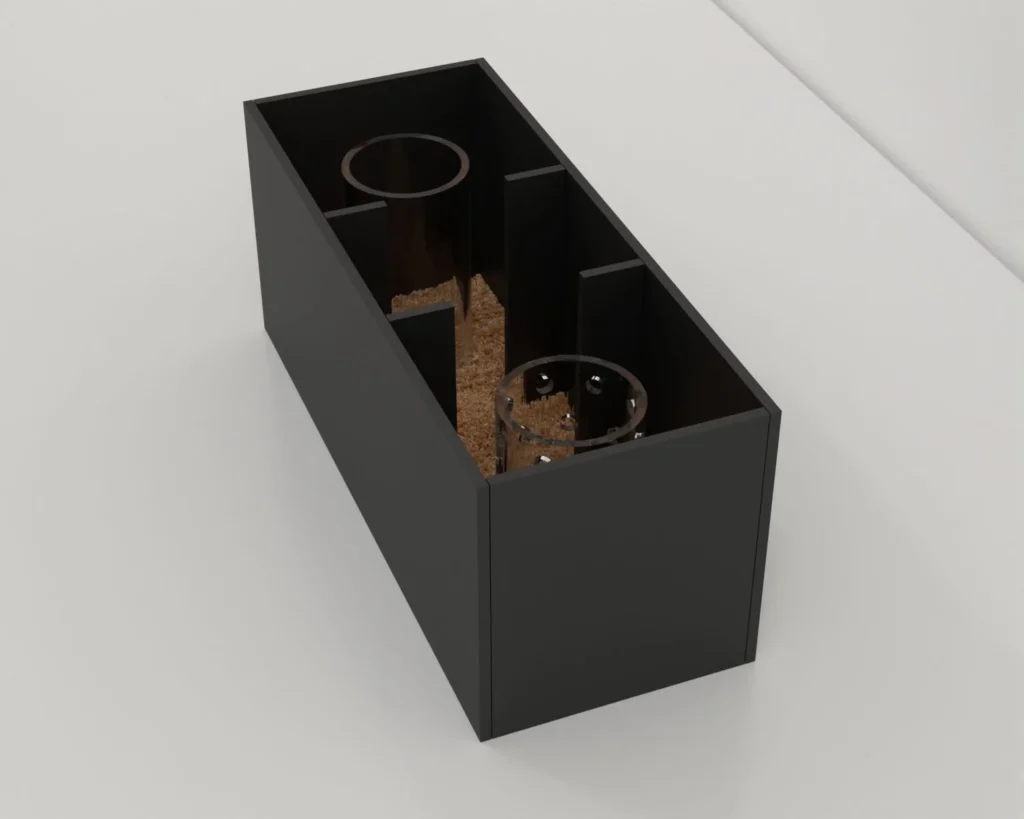
The arena should be spacious enough to allow free movement but not so large that the animals can avoid each other completely. A common shape is rectangular or circular. The size may vary depending on the species of rodent but typically ranges from 40×40 cm to 100×100 cm.
Compartments
Often, the arena is divided into compartments or sections. This can include a neutral middle area and separate zones where the social target (another rodent) and possibly an object (as a control) are placed. These compartments may be marked visually or separated by low barriers.
Materials
The arena is usually made from materials that are easy to clean and disinfect, such as smooth plastics or glass. This helps maintain hygienic conditions and minimizes the influence of olfactory cues from previous tests.
Visual Contact
The arena is usually made from materials that are easy to clean and disinfect, such as smooth plastics or glass. This helps maintain hygienic conditions and minimizes the influence of olfactory cues from previous tests.
Entry/Exit Points
There should be controlled entry and exit points to easily introduce and remove rodents without causing stress or disturbance to the ongoing observations.
Video Monitoring
The arena should be equipped with cameras or observation windows. Cameras are typically placed above the arena to capture an overhead view that allows for detailed behavioral analysis, including tracking movement and interactions.