x
[quotes_form]

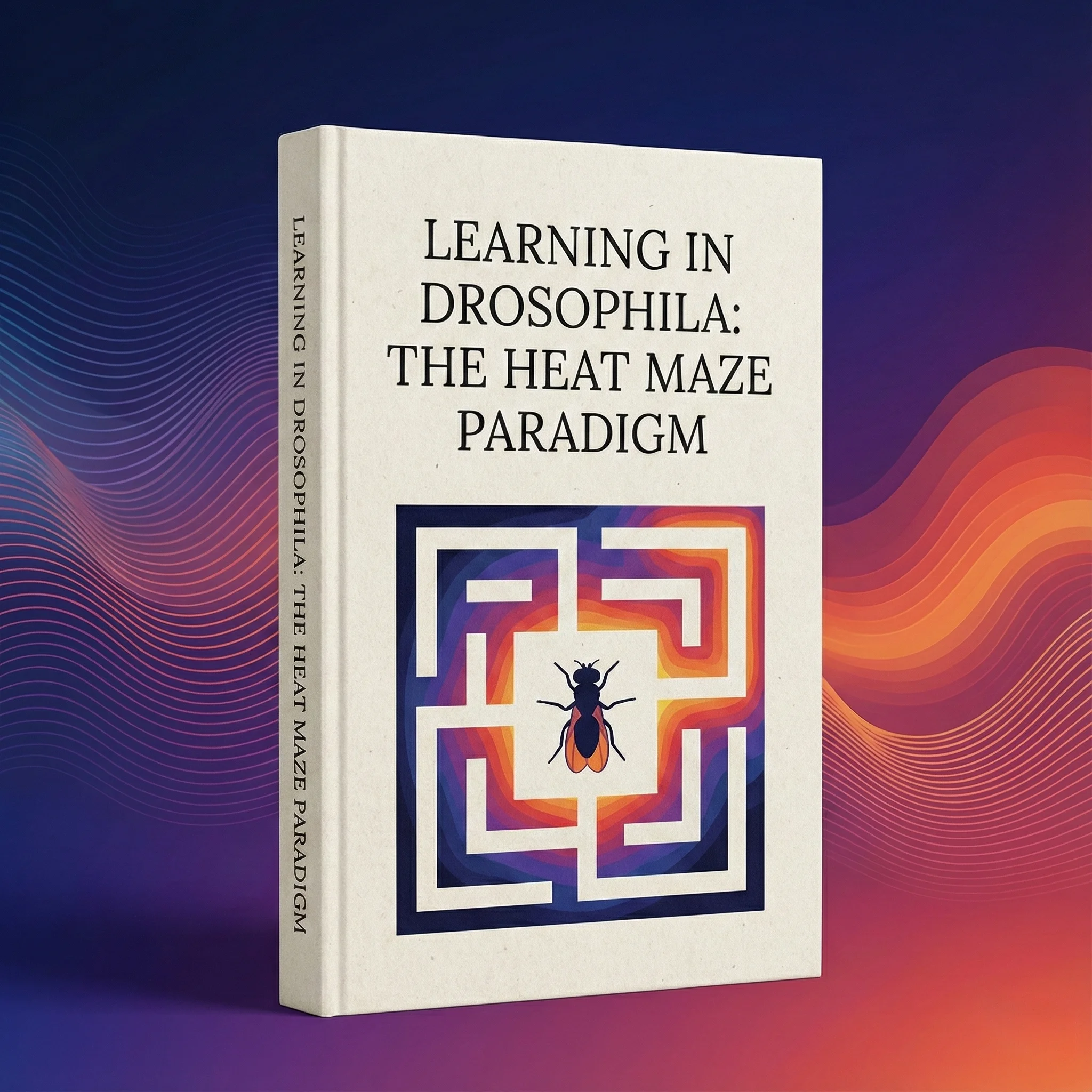
Learning in Drosophila: The Heat Maze Paradigm

Quick Guide

INTRODUCTION

The common fruit fly, Drosophila melanogaster, is widely used in neuroscience. Although minute in size, the brain of Drosophila melanogaster supports sophisticated behaviors, making it a powerful model for studying learning and memory [1].

One innovative method is the Heat Maze, which helps researchers analyze how flies adapt to their environment [2]. Although paradigms such as olfactory conditioning, courtship suppression, and the heat-box assay have been instrumental for studying associative and operant learning in Drosophila melanogaster [1,3], the Heat Maze provides a complementary approach by enabling precise quantification of spatial cognition and navigation under controlled thermal stimuli [2].Ā 

Due to its precise thermal control and ability to provide visual cues, the Heat Maze serves as a solid framework for investigating learning challenges in disease or genetic models.

THE CONCEPT OF THE HEAT MAZE

The Heat Maze is a setup used to study learning and memory in fruit flies (Drosophila melanogaster). It includes a temperature-controlled arena where certain areas are heated to act as aversive stimuli while only one area is maintained at a safe temperature for the fly. This setup enables researchers to test how flies learn to avoid dangerous areas and navigate toward safe zones [2].Ā Ā 

Foucaud et al. (2010) created the Heat Maze as a spatial learning method for Drosophila melanogaster. In this test, flies were trained in a circular arena where one area was kept at a safe temperature (20 °C) and the others were warmed (37 °C). Visual cues were placed either close to the floor (proximal) or on the surrounding walls (distal) to assist navigation. The authors showed that flies use distant visual markers to form spatial memories, establishing the Heat Maze as a reliable and flexible tool for studying spatial learning in Drosophila [2]. 

APPARATUS DESIGN

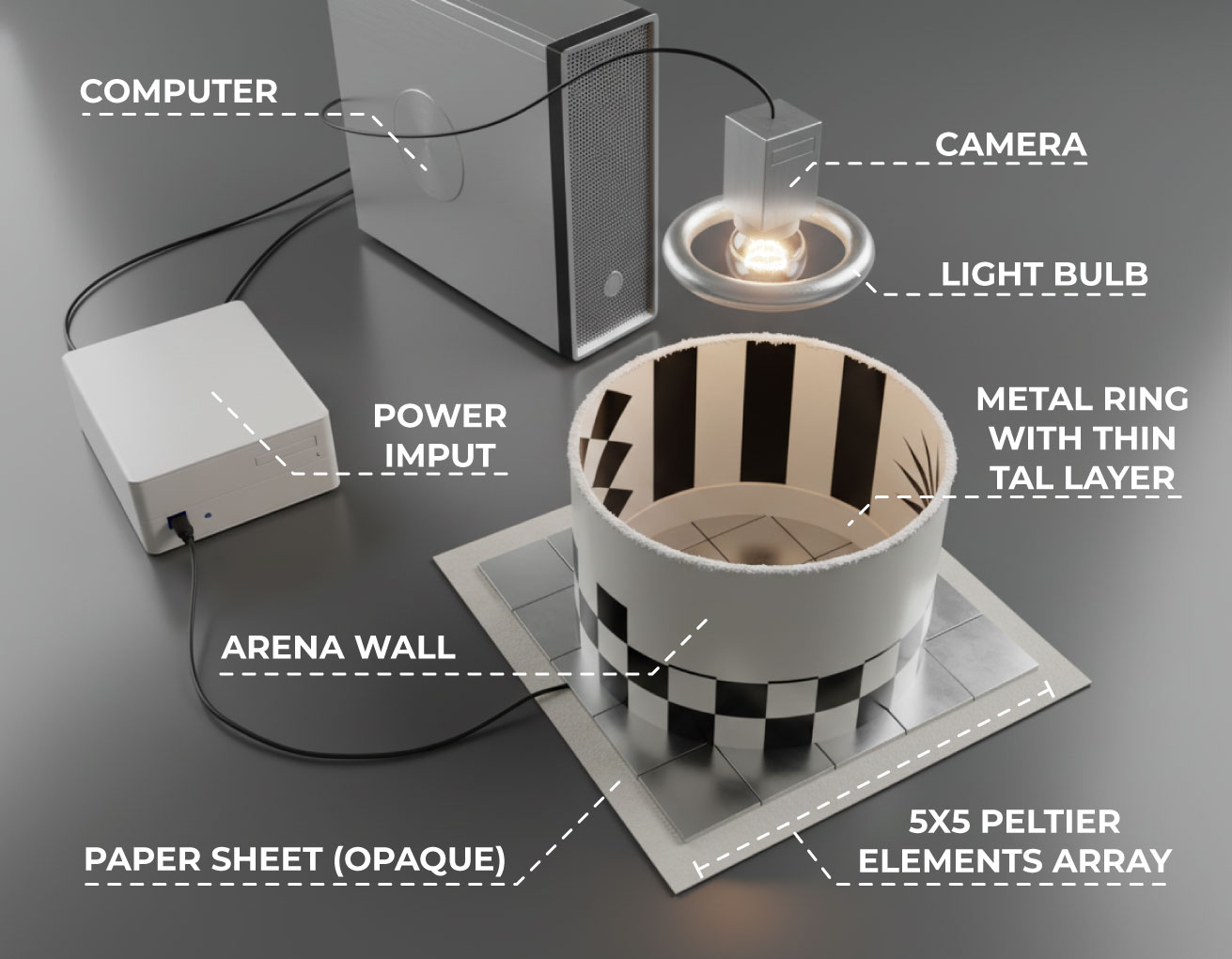
  1. Arena: circular (~18 cm diameter) on top of a 5Ɨ5 array of Peltier elementsĀ (individual dimensions: 4Ɨ4 cm) which is divided into one safe zone (20 °C) and aversive zones (37 °C).
  2. Walls: an outer blank paper sheet (20 cm high) and inner metal ring (5 cm) coated with talc to prevent escape.
  3. Visual Cues: specific environmental features that the subject uses to orient and navigate within an enclosure. They act as reference points in spatial learning, enabling the animal to establish spatial relationships and recognize particular locations. These cues can be categorized according to their distance from the subject into:
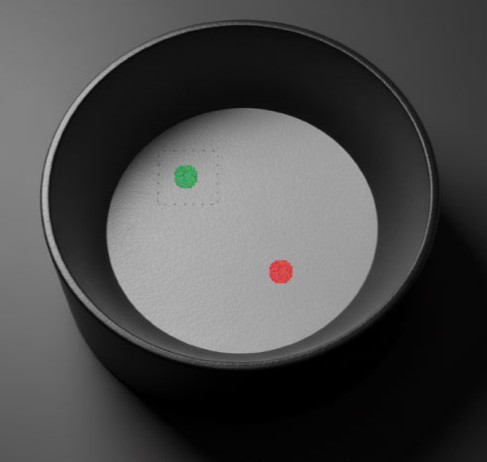
  • Proximal cues, located near or within the arena, provide local and immediate navigational information. For example, a green dot (0.8 cm) placed inside the safe zone and a red dot (0.8 cm) in the opposite unsafe quadrant. These ground-level signals act as visual beacons that flies can use to identify the safe area efficiently.
    • Ā 
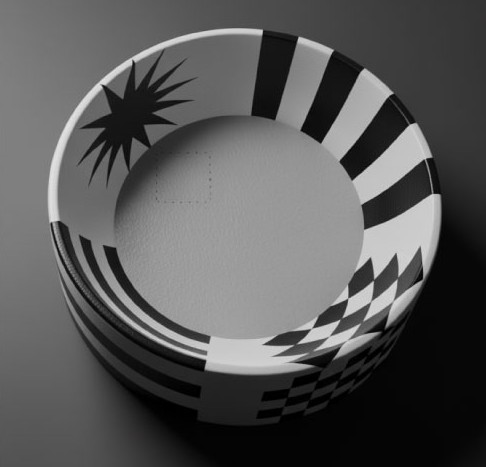
  • Distal cues are positioned farther away, such as on the surrounding walls, and offer global contextual information for spatial orientation.
    For example, the arena walls are covered with four large distal patterns (vertical stripes, horizontal stripes, diamonds, and a 16-branched star), each occupying a different quadrant, with one pattern corresponding to the safe zone to serve as a stable visual landmark. Because these cues are distant and fixed, they require flies to rely on spatial associations rather than simple visual discrimination.

4. Tracking: An overhead camera records movement for automated analysis.

Similar paradigms, such as the heat-box, have been used to dissect learning and memory processes and spatial preference [3].

SEARCH STRATEGIES IN HEAT MAZE EXPERIMENTS

The researchers used an algorithm to analyze the type of search strategy each fly employed during every trial.
Search patterns were classified into the following categories:

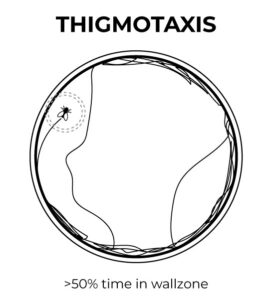
1.Ā  Thigmotaxis: The fly clings to the wall of the arena, a behavior that usually signals anxiety or uncertainty.

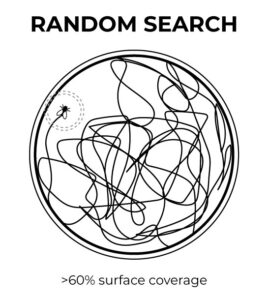
2.Ā  Random search: The fly appears to move without a defined strategy, wandering randomly without directing its movement toward any specific target.

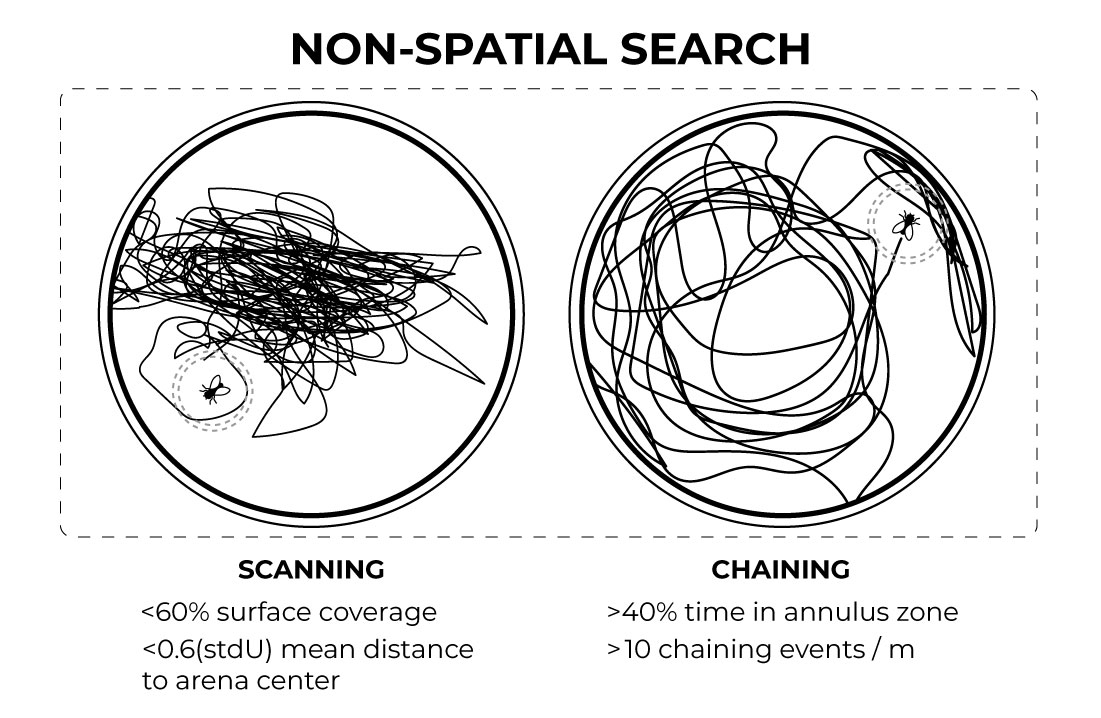
  1. Non-spatial search: organized searching without relying on spatial cues which can be categorized as the following:Ā 
  • Sometimes the fly explores only the central area with visual cues without truly learning the space, a search strategy known as “Scanning.”
  • The fly circles around a ring zone, about 3 cm from the safe spot. It’s still non-spatial, but more organized than random wandering, this strategy of searching is called “Chaining”
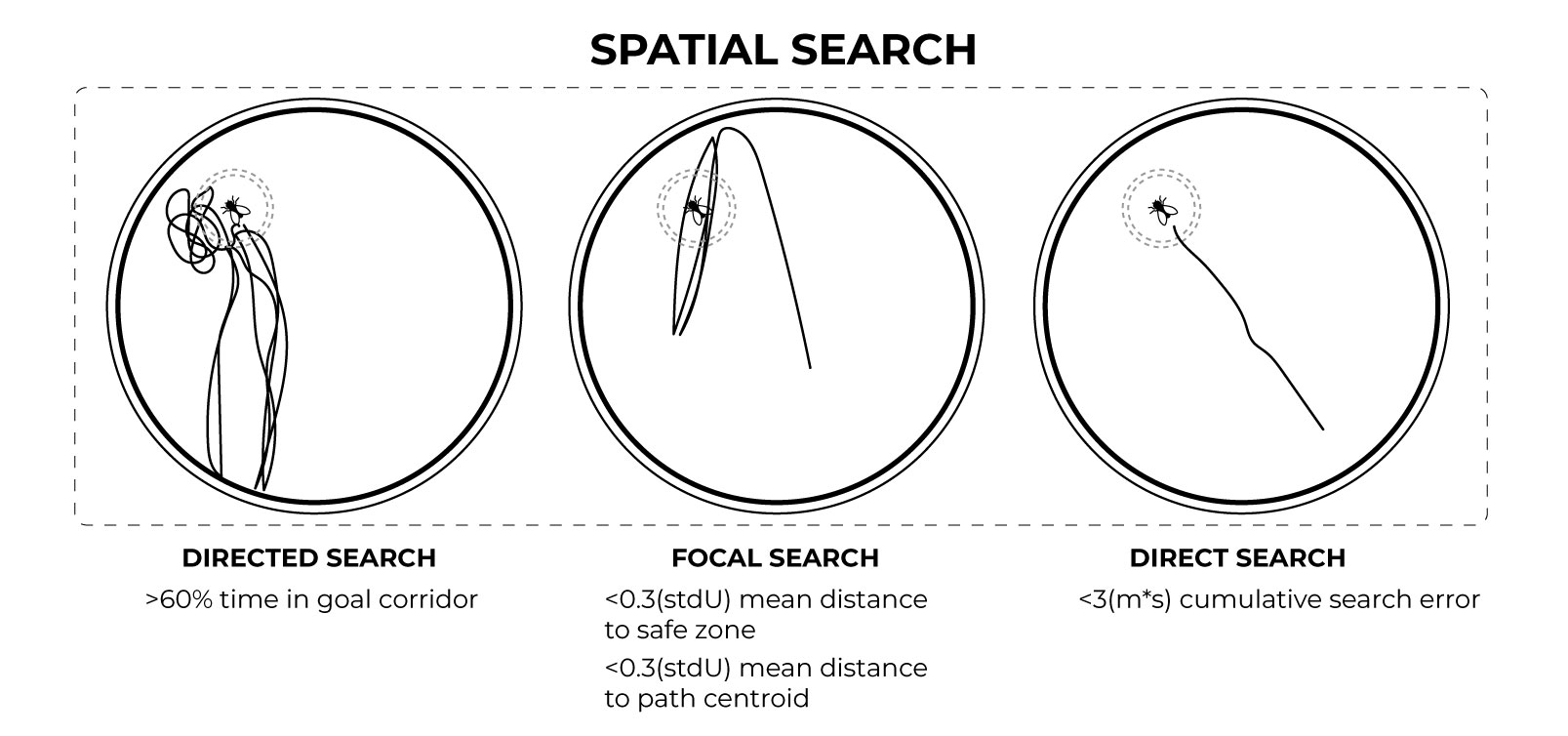
  1. Spatial search: precise searching guided by spatial cues which can be categorized as the following:Ā 
  • Moving within a defined path between the starting point and the safe zone, is also another way, it shows early use of spatial awareness, this strategy of searching is called “Directed Search”
  • The fly focuses the search directly around the safe zone, staying within a very short average distance of less than 3 cm, this strategy of searching is called “Focal Search”
  • The fly develops awareness to go straight to the target. It remembers and goes directly to the safe zone, the most efficient strategy and it is called “Direct Search”

ADVANTAGES AND LIMITATIONS

Advantages:

  • Precise temperature control with reproducible data.
  • Supports studies of both spatial and cue-based learning.
  • Compatible with automated tracking and high-throughput testing.

Ā 

Limitations:

  • Thermal stress in Drosophila melanogaster leads to a marked depletion of internal energy reserves, including glycogen, triacylglycerols, and free carbohydrates, as flies increase metabolic activity to maintain homeostasis under heat exposure also the prolonged or repeated exposure to such temperatures can reduce the flies’ endurance, locomotor capacity, and survival, potentially confounding behavioral performance measurements.
    In order to minimize these confounding effects, experimental protocols need to carefully titrate both the intensity and duration of the heat exposure. Strategies include minimizing trial durations, incorporating rest periods, or modestly lowering the aversive temperature (e.g., to 34–35 °C) while still preserving discrimination between safe and unsafe zones. Monitoring post-trial recovery behavior or metabolic markers can also ensure that learning effects seen are not secondary to thermal exhaustion [4].
  • Behavioral differences between male and female flies may require adjusted protocols.

CONCLUSION

The Heat Maze provides a straightforward, flexible, and affordable platform for studying how flies learn and remember. By looking at both performance and search strategies, researchers gain better insights into how spatial learning develops. With low rental costs and an easy-to-use design, it’s a useful tool for both beginner and advanced neuroscience labs.

REFERENCES

[1] Ofstad, T. A., Zuker, C. S., & Reiser, M. B. (2011). Visual place learning in Drosophila melanogaster. Nature, 474(7350), 204–207.

https://doi.org/10.1038/nature10131

[2] Foucaud, J., Burns, J. G., & Mery, F. (2010). Use of a spatial learning paradigm in Drosophila to study memory and brain function. PLoS ONE, 5(12), e15231. https://doi.org/10.1371/journal.pone.0015231

[3] Diegelmann, S., Zars, M., & Zars, T. (2006). Genetic dissociation of acquisition and memory strength in the heat-box spatial learning paradigm in Drosophila. Learning & Memory, 13(1), 72–83. https://doi.org/10.1101/lm.45506

[4] GÔlikovÔ, M., Klepsatel, P., Kühnlein, R. P., & Xu, Y. (2016). Thermal stress depletes energy reserves in Drosophila melanogaster. Scientific Reports, 6, 33667. https://doi.org/10.1038/srep33667

Written by researchers, for researchers — powered by Conduct Science.

Author:

Kritisha Karki

ConductScience Fellow, is a Nepali medical student exploring gait analysis, brain–machine interfaces, and AI-based behavioral assessment for neurological applications.

Related Posts

Female scientist pointing at molecular diagram during lab presentation with text "Call for Papers" for ConductScience.

Get access to top-tier research from scientists publishing today.

50% OFF for new subscribers