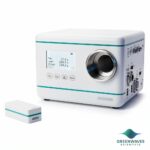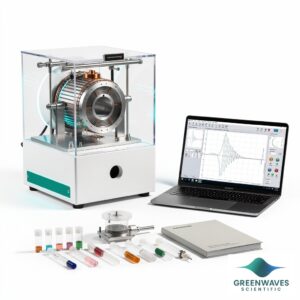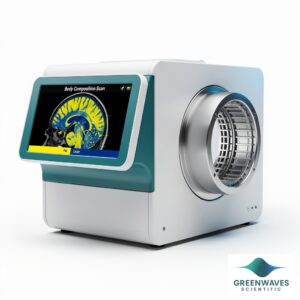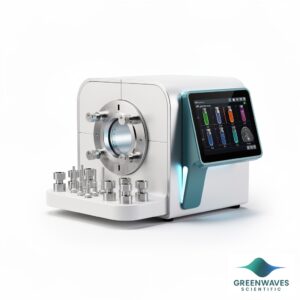
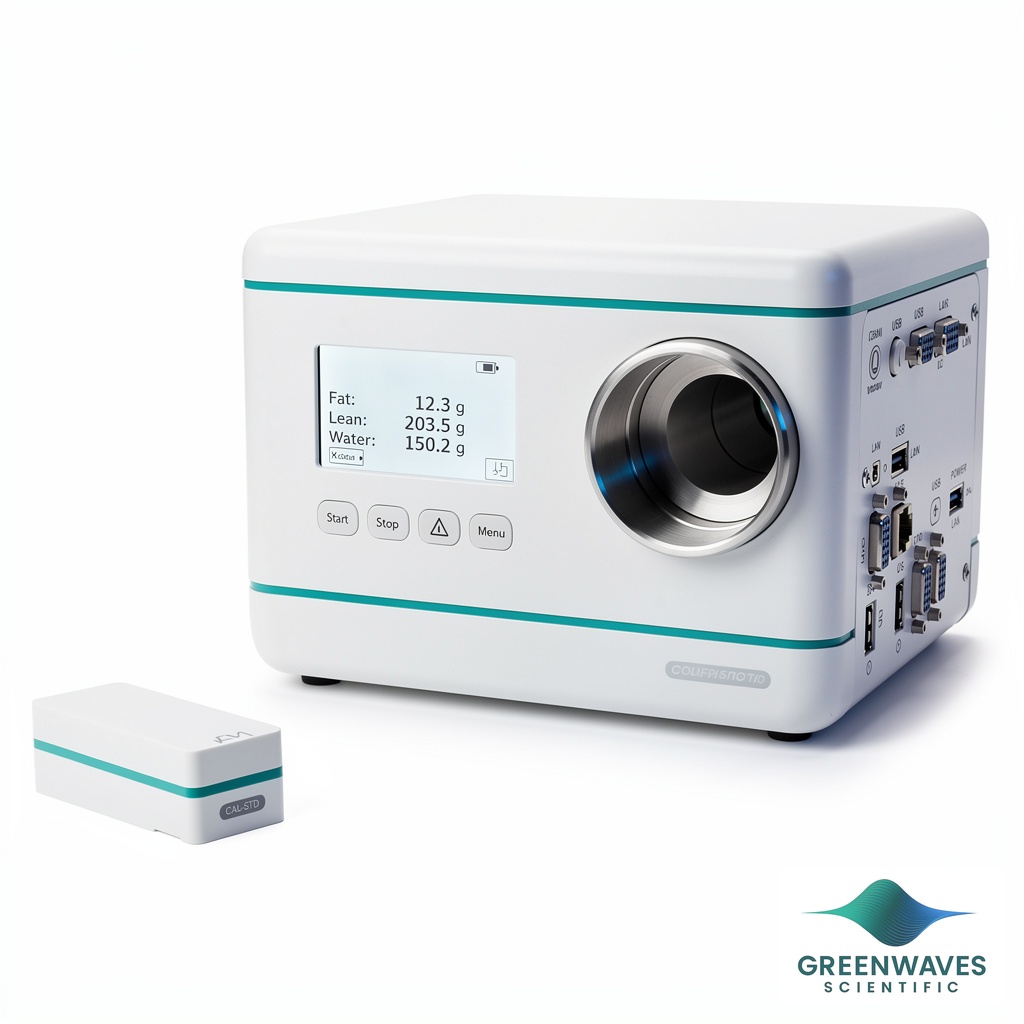
QMR-based body composition analyzer for conscious rats, providing fat mass, lean tissue, and free water measurements in under 2 minutes without anesthesia.
The Quantitative Body Composition Analyzer utilizes quantitative magnetic resonance (QMR) technology to measure fat mass, lean tissue mass, and free water content in conscious rats. Operating at 0.14 Tesla with a 6 MHz resonance frequency, this system performs non-invasive body composition analysis in under 2 minutes per animal without requiring anesthesia or restraint.
The 90 mm bore diameter accommodates rats comfortably while they remain awake and freely moving during measurement. This conscious animal approach eliminates anesthesia-related confounds that can alter metabolic parameters and body composition readings, providing more physiologically relevant data for longitudinal studies and metabolic research applications.
Quantitative magnetic resonance exploits the distinct nuclear magnetic resonance properties of hydrogen atoms in different tissue environments. The 0.14 Tesla permanent magnet generates a uniform magnetic field that aligns hydrogen nuclei in water, lipids, and proteins. Radiofrequency pulses at 6 MHz excite these nuclei, causing them to precess at characteristic frequencies that differ based on their molecular environment.
Fat tissue, lean tissue, and free water each produce distinct NMR signals based on their unique relaxation times (T1 and T2) and chemical shift properties. The system's algorithms analyze these signal differences to quantify the mass of each tissue compartment. Unlike other body composition methods that rely on assumptions about tissue density or hydration, QMR directly measures hydrogen content in each compartment.
The conscious animal measurement approach preserves normal physiological state during analysis. Animals enter a restraint tube within the 90 mm bore where they remain calm and motionless during the brief scan. This eliminates the metabolic perturbations, stress responses, and fluid shifts associated with anesthesia that can confound body composition measurements in traditional imaging approaches.
| Feature | This Product | Category Context |
|---|---|---|
| Animal State During Measurement | Conscious, awake animals | Anesthetized animals required for most imaging methods |
| Scan Duration | Under 2 minutes per animal | Longer acquisition times for comparable imaging methods |
| Magnetic Field Strength | 0.14 Tesla permanent magnet | Higher field strengths requiring active cooling |
| Measurement Output | Direct mass values in grams for three compartments | Percentage compositions or derived calculations |
| Sample Throughput | Rapid processing under 2 minutes | Lower throughput with traditional body composition methods |
This system combines conscious animal measurement, rapid scan acquisition, and direct mass quantification to provide physiologically relevant body composition data. The permanent magnet design offers stable operation without cryogenic requirements while maintaining precision suitable for metabolic research applications.
Perform daily calibration verification using the reference standards before beginning measurement sessions.
Maintains measurement accuracy and identifies any system drift that could affect data quality.
Allow animals to acclimate to the restraint tube for 3-5 minutes before measurement to reduce stress artifacts.
Minimizes movement during scanning and ensures consistent positioning for reliable measurements.
Keep the bore area clean and free from debris that could interfere with magnetic field homogeneity.
Prevents measurement artifacts and maintains the precision required for detecting small composition changes.
Record animal weight before QMR measurement to enable tissue percentage calculations and data validation.
Provides additional quality control metrics and enables comparison with historical body composition data.
If measurements appear inconsistent, check for ferromagnetic objects near the system and verify calibration status.
External magnetic interference can affect field uniformity and compromise measurement accuracy.
Ensure all personnel remove ferromagnetic objects before approaching the analyzer during operation.
Prevents safety hazards and protects the system's magnetic field stability required for accurate measurements.
ConductScience provides a standard one-year manufacturer warranty covering parts and labor, with technical support for installation, calibration, and troubleshooting assistance.
What is the measurement precision and reproducibility of the system?
The system provides consistent measurements through its permanent magnet design and standardized scan protocols. Daily calibration verification ensures measurement stability, though specific precision values should be consulted in the product datasheet.
How does conscious measurement compare to anesthetized imaging methods?
Conscious measurement eliminates anesthesia-induced changes in body temperature, metabolism, and fluid distribution that can alter body composition readings by several percent in traditional imaging approaches.
What is the age and weight range for rat measurements?
The 90 mm bore accommodates adult rats comfortably, though specific weight limits and age recommendations should be confirmed with the technical specifications.
Can the system detect small changes in body composition over time?
The direct mass measurement approach and elimination of anesthesia confounds makes the system suitable for detecting longitudinal changes, particularly in intervention studies lasting several weeks.
What data formats are provided for analysis?
The system outputs fat mass, lean mass, and free water as absolute values in grams. Specific data export formats and integration with analysis software should be verified in the technical documentation.
How frequently does the system require calibration?
Daily calibration verification using reference standards is recommended to maintain measurement accuracy, with full calibration procedures detailed in the operational manual.