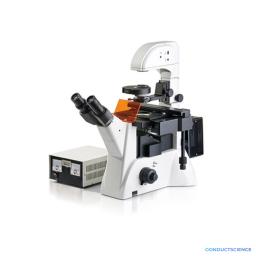
Small Capacity Thermostatic Shaking Incubator
From $2,490.00
Research data · Protein aggregation
From 2001 to 2026, 1,799 PubMed studies modeled huntingtin and polyglutamine repeat aggregation across yeast, C. elegans, Drosophila, zebrafish, mice and rats.
From 2021 to 2025, 342 studies examined polyglutamine aggregation, with 106 acknowledging National Institutes of Health grant support led by NINDS (45 papers).
Mice account for 1,118 of the 1,799 studies (62%), while 261 study rats, 248 study Drosophila, 237 study C. elegans, and 170 study yeast.
PubMed studies by experimental organism (2001 to 2026)
Share of all huntingtin and polyglutamine aggregation studies; multi-species papers count under each organism named.
| Organism | All years (2001 to 2026) | Recent (2021 to 2025) | Share of all studies |
|---|---|---|---|
| Budding and fission yeast | 170 | 26 | 9% |
| C. elegans | 237 | 72 | 13% |
| Drosophila | 248 | 56 | 14% |
| Zebrafish | 18 | 6 | 1% |
| Mouse | 1,118 | 192 | 62% |
| Rat | 261 | 24 | 15% |
Abstracts that state an explicit glutamine repeat length pair 16 long-repeat constructs (such as 103Q) against 7 short 25Q controls in yeast, whereas C. elegans papers favor threshold 40Q constructs (8 papers).
Studies naming explicit polyQ tract lengths, stacked by organism
Yeast screens pair 103Q with 25Q controls, C. elegans models favor threshold 40Q fusions, and rodent studies concentrate in 68Q to 150Q alleles.
| Repeat length bin | Yeast | C. elegans | Drosophila | Mouse | Rat | Studies |
|---|---|---|---|---|---|---|
| 20Q to 25Q non-aggregating control | 7 | 2 | 1 | 13 | 4 | 25 |
| 40Q to 53Q threshold repeat | 4 | 8 | 3 | 7 | 2 | 21 |
| 68Q to 82Q expanded repeat | 2 | 3 | 4 | 57 | 17 | 73 |
| 96Q to 150Q long repeat | 16 | 4 | 2 | 48 | 3 | 71 |
Annual counts of huntingtin and polyglutamine aggregation studies across all six model organisms and in yeast (2001 to 2026).
All model organisms (2001 to 2026)
PubMed original studies of huntingtin or polyglutamine aggregation in yeast, worm, fly, zebrafish, mouse or rat.
| Year | Huntingtin / polyQ studies | Baseline study articles | Per 10,000 |
|---|---|---|---|
| 2001 | 26 | 433,455 | 0.6 |
| 2002 | 43 | 443,905 | 1.0 |
| 2003 | 39 | 461,708 | 0.8 |
| 2004 | 47 | 491,243 | 1.0 |
| 2005 | 53 | 525,154 | 1.0 |
| 2006 | 66 | 549,957 | 1.2 |
| 2007 | 59 | 573,952 | 1.0 |
| 2008 | 75 | 610,456 | 1.2 |
| 2009 | 62 | 642,131 | 1.0 |
| 2010 | 75 | 675,539 | 1.1 |
| 2011 | 69 | 721,335 | 1.0 |
| 2012 | 96 | 778,022 | 1.2 |
| 2013 | 82 | 813,830 | 1.0 |
| 2014 | 81 | 846,565 | 1.0 |
| 2015 | 89 | 876,960 | 1.0 |
| 2016 | 87 | 899,876 | 1.0 |
| 2017 | 85 | 906,301 | 0.9 |
| 2018 | 91 | 943,260 | 1.0 |
| 2019 | 68 | 990,635 | 0.7 |
| 2020 | 82 | 1,126,727 | 0.7 |
| 2021 | 89 | 1,253,859 | 0.7 |
| 2022 | 63 | 1,275,200 | 0.5 |
| 2023 | 61 | 1,209,258 | 0.5 |
| 2024 | 67 | 1,251,083 | 0.5 |
| 2025 | 62 | 1,375,050 | 0.5 |
| 2026 | 82 | 1,390,865 | 0.6 |
Budding and fission yeast (2001 to 2026)
PubMed original studies expressing mutant huntingtin exon 1 or polyQ constructs in S. cerevisiae or S. pombe.
| Year | Yeast polyQ studies | Baseline study articles | Per 10,000 |
|---|---|---|---|
| 2001 | 1 | 433,455 | 0.0 |
| 2002 | 4 | 443,905 | 0.1 |
| 2003 | 3 | 461,708 | 0.1 |
| 2004 | 7 | 491,243 | 0.1 |
| 2005 | 4 | 525,154 | 0.1 |
| 2006 | 10 | 549,957 | 0.2 |
| 2007 | 6 | 573,952 | 0.1 |
| 2008 | 6 | 610,456 | 0.1 |
| 2009 | 5 | 642,131 | 0.1 |
| 2010 | 8 | 675,539 | 0.1 |
| 2011 | 7 | 721,335 | 0.1 |
| 2012 | 10 | 778,022 | 0.1 |
| 2013 | 7 | 813,830 | 0.1 |
| 2014 | 12 | 846,565 | 0.1 |
| 2015 | 9 | 876,960 | 0.1 |
| 2016 | 10 | 899,876 | 0.1 |
| 2017 | 9 | 906,301 | 0.1 |
| 2018 | 14 | 943,260 | 0.1 |
| 2019 | 4 | 990,635 | 0.0 |
| 2020 | 6 | 1,126,727 | 0.1 |
| 2021 | 8 | 1,253,859 | 0.1 |
| 2022 | 8 | 1,275,200 | 0.1 |
| 2023 | 5 | 1,209,258 | 0.0 |
| 2024 | 3 | 1,251,083 | 0.0 |
| 2025 | 2 | 1,375,050 | 0.0 |
| 2026 | 2 | 1,390,865 | 0.0 |
Among 342 huntingtin and polyglutamine aggregation studies from 2021 to 2025, 58 examine autophagy, 31 examine proteasomal turnover, and 14 examine Hsp70 chaperones.
| Pathway or chaperone | Role in aggregation assays | All organisms | Yeast |
|---|---|---|---|
| Autophagy and vacuolar clearance | ATG-dependent sequestration and lysosomal or vacuolar turnover | 58 | 6 |
| Ubiquitin-proteasome system | 26S proteasomal degradation of ubiquitinated soluble species | 31 | 6 |
| Hsp104 disaggregase | Hexameric AAA+ chaperone remodeling prion and polyQ seeds in yeast | 5 | 5 |
| Hsp70 (Ssa1 to Ssa4) | Cytosolic ATP-dependent chaperone binding misfolded polypeptides | 14 | 3 |
| Hsp40 / J-domain (Sis1, Ydj1) | Co-chaperones delivering amyloid substrates to Hsp70 and Hsp104 | 9 | 3 |
In ConductScience behavioral tracking records from 2021 to 2025, 97 Huntington disease animal papers name a behavioral test, led by the rotarod (51 papers) and open field (31 papers).
Behavioral tests named most often in Huntington disease papers (2021 to 2025)
| Behavioral test | Recent (2021 to 2025) | Share of HD papers |
|---|---|---|
| Rotarod | 51 | 53% |
| Open field | 31 | 32% |
| Grip strength | 20 | 21% |
| Beam walking | 15 | 15% |
| Morris water maze | 9 | 9% |
| Novel object recognition | 8 | 8% |
| Elevated plus maze | 7 | 7% |
| Wire hang and inverted grid | 4 | 4% |
Instruments spanning galactose-induced yeast spotting and GFP foci scoring through mouse and rat motor coordination tests.
Bench stage 1
Liquid synthetic dropout or YPD growth in shaking incubators, media sterilization, and five-fold or ten-fold serial-dilution spotting on agar plates.
Bench stage 5
Scoring cytoplasmic and intranuclear GFP, YFP or mCherry inclusion bodies per cell on fluorescence microscopes or high-throughput flow cytometers.
Bench stage 6
Testing candidate modifiers from yeast screens in C. elegans thrashing, Drosophila climbing, and R6/2, Q175 or YAC128 mouse rotarod, balance beam, grip strength and open-field assays.
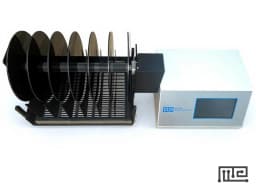
From $4,995.00

$2,900.00

From $540.00
Looking for reported yeast incubation temperatures, shaking speeds and OD600 values? Open yeast aggregation assays and reported settings.
Foundational and translational yeast studies ranked by NIH iCite citation count.
Therapeutic reduction of ataxin-2 extends lifespan and reduces pathology in TDP-43 mice.
Nature (2017) · PMID 28405022
461 citations
Amyloid fibers are water-filled nanotubes.
Proc Natl Acad Sci U S A (2002) · PMID 11960014
400 citations
Proc Natl Acad Sci U S A (2008) · PMID 18434538
360 citations
Yeast genes that enhance the toxicity of a mutant huntingtin fragment or alpha-synuclein.
Science (2003) · PMID 14657499
330 citations
Hum Mol Genet (2006) · PMID 16893904
311 citations
To download these files, add this data set to a ConductScience account. The data set and the account are free. Under the CC BY 4.0 license, you may reuse the files if you credit ConductScience. This release was built on 29 November 2026.