Small Capacity Thermostatic Shaking Incubator
From $2,490.00
Research data · Protein aggregation
Across 634 open-access yeast protein aggregation research articles from 2011 to 2025, Methods sections report seven core wet-lab assays alongside culture temperatures, shaking speeds and optical densities.
SDS-PAGE and Western immunoblotting appears in 394 Methods sections (62%), followed by fluorescence foci imaging in 341 (54%).
Of 634 open-access yeast aggregation Methods sections, 566 name at least one of the seven bench assays or culture parameters below, and a single paper often pairs immunoblotting with fluorescence foci microscopy and serial-dilution spotting.
Open-access yeast aggregation Methods sections naming each assay (2011 to 2025)
Within the 77 open-access yeast studies of huntingtin or polyglutamine repeats, fluorescence foci microscopy leads at 59 papers (77%), ahead of Western immunoblotting (52 papers) and serial-dilution spotting (27 papers).
| Assay family | Experimental readout | All (2011 to 2025) | Recent (2021 to 2025) | Huntingtin / polyQ |
|---|---|---|---|---|
| SDS-PAGE and Western immunoblotting | Total protein abundance and fraction distribution | 394 (62%) | 152 | 52 (68%) |
| Fluorescence and confocal foci microscopy | GFP, YFP or RFP puncta and inclusion bodies per cell | 341 (54%) | 145 | 59 (77%) |
| Glass-bead or ultrasonic lysis and centrifugal sedimentation | Soluble supernatant against pelleted insoluble aggregates | 187 (29%) | 78 | 28 (36%) |
| Serial-dilution spotting on selective agar plates | Five-fold or ten-fold colony growth under galactose induction | 185 (29%) | 78 | 27 (35%) |
| Thioflavin T fluorescence and microplate OD600 kinetics | Amyloid beta-sheet dye binding and liquid growth curves | 93 (15%) | 42 | 8 (10%) |
| SDD-AGE and filter-trap polymer assays | SDS-resistant high-molecular-weight amyloid polymers | 91 (14%) | 26 | 23 (30%) |
| Flow cytometry, DamFRET, and microfluidic traps | Single-cell aggregate sorting and mother-cell replicative aging | 89 (14%) | 38 | 10 (13%) |
Values extracted from yeast growth, galactose induction and spotting sentences in open-access Methods sections, excluding bacterial plasmid cloning, mammalian cell culture and biochemical slide incubations.
Across 317 open-access yeast Methods sections that state a single growth temperature, 30 °C appears in 264 papers (83%), with permissive 25 °C to 28 °C runs accounting for most of the rest.
| Reported value (°C) | Papers | Share of papers |
|---|---|---|
| 30 °C | 264 | 83% |
| 25 °C | 18 | 6% |
| 28 °C | 13 | 4% |
| 26 °C | 8 | 3% |
| 37 °C | 6 | 2% |
| 22 °C | 2 | 1% |
| 23 °C | 2 | 1% |
| 24 °C | 2 | 1% |
| 29 °C | 2 | 1% |
Among 57 open-access yeast Methods sections that state an orbital shaking speed, the median reported speed is 200 rpm (interquartile range 180 to 220 rpm), led by 200 rpm in 18 papers.
| Reported value (rpm) | Papers | Share of papers |
|---|---|---|
| 200 rpm | 18 | 32% |
| 180 rpm | 10 | 18% |
| 220 rpm | 6 | 11% |
| 250 rpm | 6 | 11% |
| 150 rpm | 3 | 5% |
| 145 rpm | 2 | 4% |
| 160 rpm | 2 | 4% |
| 170 rpm | 2 | 4% |
| 225 rpm | 2 | 4% |
| 300 rpm | 2 | 4% |
Across 180 open-access yeast Methods sections reporting optical density at 600 nm, values cluster at 0.1 to 0.2 for induction dilutions, 0.5 to 0.8 for mid-log harvests, and 1.0 for spotting.
| Reported value (OD600) | Papers | Share of papers |
|---|---|---|
| OD600 0.1 | 31 | 17% |
| OD600 1 | 31 | 17% |
| OD600 0.5 | 26 | 14% |
| OD600 0.2 | 19 | 11% |
| OD600 0.8 | 16 | 9% |
| OD600 0.4 | 14 | 8% |
| OD600 0.6 | 12 | 7% |
| OD600 0.3 | 6 | 3% |
| OD600 0.05 | 5 | 3% |
| OD600 2 | 5 | 3% |
| OD600 0.25 | 3 | 2% |
| OD600 1.5 | 3 | 2% |
Open-access yeast protein aggregation research articles with Methods sections in PubMed Central (2011 to 2025).
Open-access yeast aggregation articles with Methods (2011 to 2025)
Normalized against all open-access research articles with a Methods section in PubMed Central each year.
| Year | Yeast Methods articles | Baseline study articles | Per 10,000 |
|---|---|---|---|
| 2011 | 38 | 118,227 | 3.2 |
| 2012 | 34 | 143,766 | 2.4 |
| 2013 | 31 | 172,984 | 1.8 |
| 2014 | 44 | 193,265 | 2.3 |
| 2015 | 50 | 215,564 | 2.3 |
| 2016 | 37 | 239,055 | 1.5 |
| 2017 | 49 | 261,199 | 1.9 |
| 2018 | 39 | 283,493 | 1.4 |
| 2019 | 32 | 323,645 | 1.0 |
| 2020 | 51 | 414,951 | 1.2 |
| 2021 | 46 | 508,958 | 0.9 |
| 2022 | 48 | 573,194 | 0.8 |
| 2023 | 58 | 524,733 | 1.1 |
| 2024 | 38 | 553,710 | 0.7 |
| 2025 | 39 | 642,320 | 0.6 |
Benchtop instruments and consumables matched to each stage of a budding or fission yeast proteinopathy workflow.
Bench stage 1
Liquid synthetic dropout or YPD growth in shaking incubators, media sterilization, and five-fold or ten-fold serial-dilution spotting on agar plates.
Bench stage 2
Mechanical glass-bead beating or ultrasonic disruption through the yeast cell wall, followed by refrigerated centrifugation into soluble supernatant and insoluble pellet fractions.

From $2,751.99

$4,679.99

Price on request
Bench stage 3
Resolving SDS-resistant amyloid polymers on semi-denaturing agarose gels or membrane filter traps alongside SDS-PAGE Western blots of total and fractionated extracts.

$1,890.00

$10,767.99

$2,499.99
Bench stage 4
Tracking amyloid fibril assembly with Thioflavin T fluorescence, normalizing culture optical density at 600 nm, and trapping mother cells in microfluidic chambers.

$17,999.00

From $5,690.00

From $2,499.99
Bench stage 5
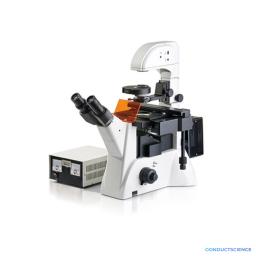
Scoring cytoplasmic and intranuclear GFP, YFP or mCherry inclusion bodies per cell on fluorescence microscopes or high-throughput flow cytometers.
Translating yeast hits into worm, fly or rodent Huntington models? Compare huntingtin and polyglutamine models across species.
To download these files, add this data set to a ConductScience account. The data set and the account are free. Under the CC BY 4.0 license, you may reuse the files if you credit ConductScience. This release was built on 29 November 2026.