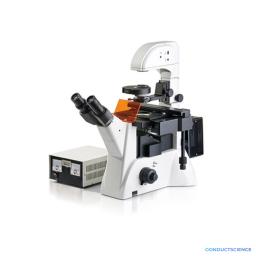
Small Capacity Thermostatic Shaking Incubator
From $2,490.00
Research data · Protein aggregation
From 2001 to 2026, 20,520 PubMed studies examined intracellular or amyloid protein aggregation across budding and fission yeast, worms, flies, zebrafish, mice and rats.
Open-access Methods sections from 634 yeast studies (2011 to 2025) map the wet-lab bench from shaking culture to animal motor tests.
Focused datasets on huntingtin polyglutamine models across species and wet-lab yeast assay parameters.
From 2021 to 2025, 5,314 studies modeled protein misfolding across six experimental organisms, including 339 in yeast and 3,716 in mice.
PubMed studies by proteinopathy target and experimental organism (2001 to 2026)
Circle area scales logarithmically with paper count so invertebrate and yeast screens remain visible beside mouse models. A multi-species paper counts under each organism it studies.
| Protein target | Yeast | C. elegans | Drosophila | Zebrafish | Mouse | Rat | All studies |
|---|---|---|---|---|---|---|---|
| Amyloid-beta and tau | 97 | 370 | 225 | 43 | 5,531 | 1,871 | 7,473 |
| Alpha-synuclein | 152 | 276 | 134 | 30 | 2,286 | 841 | 3,384 |
| Huntingtin and polyglutamine | 170 | 237 | 248 | 18 | 1,118 | 261 | 1,799 |
| TDP-43 and FUS | 63 | 58 | 116 | 35 | 599 | 81 | 855 |
| Cu/Zn superoxide dismutase (SOD1) | 16 | 16 | 6 | 9 | 505 | 44 | 558 |
| Native yeast prions | 665 | 3 | 7 | 0 | 43 | 5 | 670 |
Across all years, 125 yeast aggregation papers also test mice in the same study, 37 also test C. elegans, and 37 also test Drosophila.
Annual publication counts across all six experimental organisms alongside budding and fission yeast studies (2001 to 2026).
All six model organisms (2001 to 2026)
Original PubMed research articles studying intracellular or amyloid protein aggregation in at least one model organism.
| Year | Model-organism studies | Baseline study articles | Per 10,000 |
|---|---|---|---|
| 2001 | 237 | 433,455 | 5.5 |
| 2002 | 302 | 443,905 | 6.8 |
| 2003 | 315 | 461,708 | 6.8 |
| 2004 | 417 | 491,243 | 8.5 |
| 2005 | 408 | 525,154 | 7.8 |
| 2006 | 517 | 549,957 | 9.4 |
| 2007 | 520 | 573,952 | 9.1 |
| 2008 | 608 | 610,456 | 10.0 |
| 2009 | 654 | 642,131 | 10.2 |
| 2010 | 792 | 675,539 | 11.7 |
| 2011 | 719 | 721,335 | 10.0 |
| 2012 | 814 | 778,022 | 10.5 |
| 2013 | 837 | 813,830 | 10.3 |
| 2014 | 898 | 846,565 | 10.6 |
| 2015 | 925 | 876,960 | 10.5 |
| 2016 | 946 | 899,876 | 10.5 |
| 2017 | 999 | 906,301 | 11.0 |
| 2018 | 998 | 943,260 | 10.6 |
| 2019 | 1,047 | 990,635 | 10.6 |
| 2020 | 1,132 | 1,126,727 | 10.0 |
| 2021 | 1,189 | 1,253,859 | 9.5 |
| 2022 | 991 | 1,275,200 | 7.8 |
| 2023 | 945 | 1,209,258 | 7.8 |
| 2024 | 1,047 | 1,251,083 | 8.4 |
| 2025 | 1,142 | 1,375,050 | 8.3 |
| 2026 | 1,121 | 1,390,865 | 8.1 |
Budding and fission yeast (2001 to 2026)
Original PubMed research articles modeling protein misfolding, prions or human amyloid proteins in S. cerevisiae or S. pombe.
| Year | Yeast studies | Baseline study articles | Per 10,000 |
|---|---|---|---|
| 2001 | 42 | 433,455 | 1.0 |
| 2002 | 29 | 443,905 | 0.7 |
| 2003 | 31 | 461,708 | 0.7 |
| 2004 | 42 | 491,243 | 0.9 |
| 2005 | 44 | 525,154 | 0.8 |
| 2006 | 62 | 549,957 | 1.1 |
| 2007 | 52 | 573,952 | 0.9 |
| 2008 | 62 | 610,456 | 1.0 |
| 2009 | 67 | 642,131 | 1.0 |
| 2010 | 71 | 675,539 | 1.1 |
| 2011 | 90 | 721,335 | 1.2 |
| 2012 | 81 | 778,022 | 1.0 |
| 2013 | 66 | 813,830 | 0.8 |
| 2014 | 101 | 846,565 | 1.2 |
| 2015 | 85 | 876,960 | 1.0 |
| 2016 | 80 | 899,876 | 0.9 |
| 2017 | 94 | 906,301 | 1.0 |
| 2018 | 83 | 943,260 | 0.9 |
| 2019 | 75 | 990,635 | 0.8 |
| 2020 | 82 | 1,126,727 | 0.7 |
| 2021 | 84 | 1,253,859 | 0.7 |
| 2022 | 83 | 1,275,200 | 0.7 |
| 2023 | 72 | 1,209,258 | 0.6 |
| 2024 | 48 | 1,251,083 | 0.4 |
| 2025 | 52 | 1,375,050 | 0.4 |
| 2026 | 51 | 1,390,865 | 0.4 |
Labs screen aggregation modifiers in 1,729 yeast studies before testing candidate pathways in worm, fly and rodent behavioral assays.
Bench stage 1
Liquid synthetic dropout or YPD growth in shaking incubators, media sterilization, and five-fold or ten-fold serial-dilution spotting on agar plates.
Bench stage 2
Mechanical glass-bead beating or ultrasonic disruption through the yeast cell wall, followed by refrigerated centrifugation into soluble supernatant and insoluble pellet fractions.

From $2,751.99

$4,679.99

Price on request
Bench stage 3
Resolving SDS-resistant amyloid polymers on semi-denaturing agarose gels or membrane filter traps alongside SDS-PAGE Western blots of total and fractionated extracts.

$1,890.00

$10,767.99

$2,499.99
Bench stage 4
Tracking amyloid fibril assembly with Thioflavin T fluorescence, normalizing culture optical density at 600 nm, and trapping mother cells in microfluidic chambers.

$17,999.00

From $5,690.00

From $2,499.99
Bench stage 5
Scoring cytoplasmic and intranuclear GFP, YFP or mCherry inclusion bodies per cell on fluorescence microscopes or high-throughput flow cytometers.
Bench stage 6
Testing candidate modifiers from yeast screens in C. elegans thrashing, Drosophila climbing, and R6/2, Q175 or YAC128 mouse rotarod, balance beam, grip strength and open-field assays.
From $4,995.00

$2,900.00
From $540.00
Recent budding and fission yeast studies ranked by NIH iCite citation count.
Ageing exacerbates ribosome pausing to disrupt cotranslational proteostasis.
Nature (2022) · PMID 35046576
208 citations
Dynamic 3D proteomes reveal protein functional alterations at high resolution in situ.
Cell (2021) · PMID 33357446
132 citations
Ribosome biogenesis and the cellular energy economy.
Curr Biol (2022) · PMID 35728540
98 citations
High and stable ATP levels prevent aberrant intracellular protein aggregation in yeast.
Elife (2022) · PMID 35438635
56 citations
α-Synuclein fibril-specific nanobody reduces prion-like α-synuclein spreading in mice.
Nat Commun (2022) · PMID 35853942
54 citations
To download these files, add this data set to a ConductScience account. The data set and the account are free. Under the CC BY 4.0 license, you may reuse the files if you credit ConductScience. This release was built on 29 November 2026.