12-Channel Constant Pressure Microfluidic Pump
12-channel pressure pump with 0.001 MPa accuracy for precise microfluidic device operation and droplet generation.
| Number of Channels | 12 (10 positive + 2 negative) |
| Positive Pressure | 0-0.7 MPa |
| Negative Pressure | -100 to -1 kPa |
| Pressure Accuracy | 0.001 MPa |
| Automation Level | semi-automated |
| Brand | ConductScience |

The 12-Channel Constant Pressure Microfluidic Pump provides precise pressure control for microfluidic device operation, featuring 10 positive and 2 negative pressure channels with independent pressure regulation. The system delivers positive pressures from 0-0.7 MPa with 0.001 MPa accuracy, enabling precise fluid manipulation in droplet generation, cell sorting, and particle synthesis applications.
The integrated 7-inch touchscreen interface allows real-time monitoring and adjustment of all 12 channels simultaneously. This multi-channel architecture supports complex microfluidic protocols requiring multiple fluid streams with different pressure profiles, commonly used in organ-on-chip studies, drug screening platforms, and materials synthesis research.
How It Works
The pump operates using pneumatic pressure regulation principles, where compressed air or inert gas is precisely controlled through electronic pressure regulators connected to each channel. The system applies constant pressure to sealed sample reservoirs, creating steady fluid flow through microfluidic channels based on the pressure differential and channel resistance.
Independent pressure control across 12 channels enables complex flow patterns including co-flow, cross-flow, and counter-flow configurations. The positive pressure channels (0-0.7 MPa) drive forward flow and droplet formation, while the two negative pressure channels (-100 to -1 kPa) provide suction for collection and flow stabilization. Real-time pressure feedback maintains accuracy within 0.001 MPa through closed-loop control algorithms.
Flow rates are determined by the applied pressure and microfluidic channel geometry, following Poiseuille's law for laminar flow in rectangular microchannels. This pressure-driven approach provides more stable flow compared to syringe pump systems, particularly important for droplet generation where flow rate fluctuations affect droplet size uniformity.
Features & Benefits
Number of Channels
- 12 (10 positive + 2 negative)
Positive Pressure
- 0-0.7 MPa
Negative Pressure
- -100 to -1 kPa
Pressure Accuracy
- 0.001 MPa
Automation Level
- semi-automated
Brand
- ConductScience
Display Type
- 7-inch touchscreen
Research Domain
- Analytical Chemistry
- Cell Biology
- Clinical Diagnostics
- Materials Science
- Microbiology
- Pharmaceutical QC
Weight
- 3.0 kg
Dimensions
- L: 350.0 mm
- W: 300.0 mm
- H: 110.0 mm
Comparison Guide
| Feature | This Product | Typical Alternative | Advantage |
|---|---|---|---|
| Number of Pressure Channels | 12 independent channels (10 positive + 2 negative) | Entry-level systems often provide 2-4 channels | Enables complex multi-component experiments without requiring multiple pump units or external manifolds. |
| Pressure Accuracy | 0.001 MPa precision | Standard systems typically offer 0.01 MPa accuracy | Provides more precise flow control for consistent droplet formation and reproducible experimental results. |
| Negative Pressure Capability | -100 to -1 kPa suction range | Many systems offer positive pressure only | Enables collection protocols and back-pressure control not possible with positive-only systems. |
| User Interface | 7-inch touchscreen with real-time monitoring | Basic digital displays or computer-only control | Allows immediate pressure adjustments and visual feedback without requiring separate computer control. |
| Maximum Pressure Range | 0-0.7 MPa positive pressure | Lower-end models may limit to 0.1-0.3 MPa | Accommodates high-resistance microfluidic devices and packed bed reactors requiring elevated pressures. |
| Form Factor | 350×300×110 mm compact design | Multi-channel systems often require larger rack-mount configurations | Provides 12-channel capability while maintaining benchtop compatibility for space-constrained laboratories. |
This system combines high-accuracy pressure control with extensive channel capability in a compact package. The integration of both positive and negative pressure channels with touchscreen operation provides comprehensive microfluidic control typically requiring multiple instruments.
Practical Tips
Verify pressure accuracy monthly using a certified pressure gauge connected to each channel output.
Why: Maintains measurement traceability and ensures experimental reproducibility over time.
Purge all pressure lines with clean nitrogen weekly to prevent moisture accumulation and contamination.
Why: Prevents pressure fluctuations and sample contamination from accumulated particulates or water vapor.
Start experiments at 10% of target pressure and gradually increase while monitoring flow stability.
Why: Prevents device damage from pressure spikes and allows optimization of flow conditions.
If pressure readings fluctuate, check for leaks at tubing connections and ensure adequate gas supply pressure.
Why: Pressure instability typically results from system leaks or insufficient input pressure rather than pump malfunction.
Allow 2-3 minutes for pressure stabilization after setting changes before beginning data collection.
Why: Ensures steady-state flow conditions and eliminates transient effects that could affect experimental results.
Install pressure relief valves downstream of the pump when working with fragile microfluidic devices.
Why: Protects expensive microfluidic chips from damage due to unexpected pressure surges or blockages.
Use dedicated pressure lines for each application to prevent cross-contamination between experiments.
Why: Eliminates sample carryover and maintains experimental integrity in multi-user environments.
Clean the touchscreen weekly with isopropanol and lint-free cloth to maintain interface responsiveness.
Why: Prevents buildup of fingerprints and laboratory residues that can interfere with touch sensitivity.
Setup Guide
What’s in the Box
- 12-Channel Constant Pressure Microfluidic Pump main unit
- Power cable and adapter (typical)
- Pressure tubing connectors and fittings (typical)
- User manual and quick start guide (typical)
- Calibration certificate (typical)
Warranty
ConductScience provides a standard one-year manufacturer warranty covering defects in materials and workmanship. Technical support includes troubleshooting assistance and calibration guidance for optimal system performance.
Compliance
What flow rate range can this pump achieve with typical microfluidic devices?
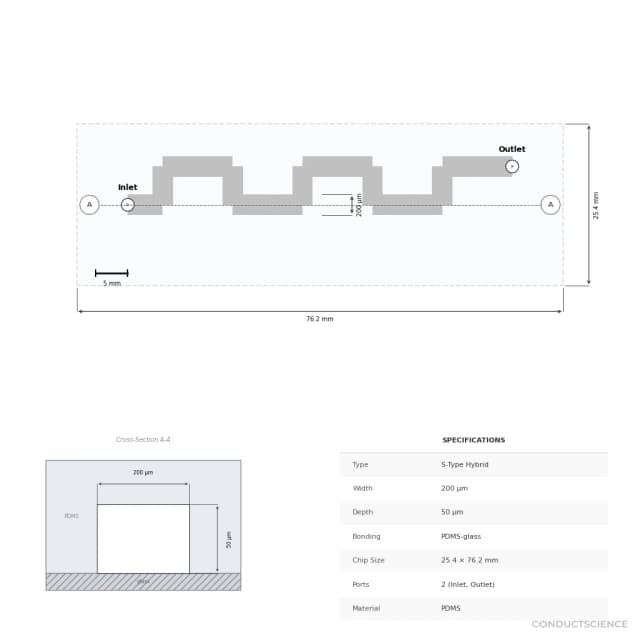
Flow rates depend on channel resistance and applied pressure. For standard PDMS devices with 50×50 μm channels, expect 1-1000 μL/min per channel across the 0-0.7 MPa range. Consult device specifications for pressure-flow relationships.
Can I use this pump for oil-water droplet generation experiments?
Yes, the multi-channel design is ideal for droplet generation with separate control of continuous and dispersed phase pressures. Use positive channels for both phases and negative channels for collection or back-pressure control.
What gas supply requirements does this system need?
Requires clean compressed air or inert gas (nitrogen recommended) at minimum 0.8 MPa supply pressure. Ensure gas is dry and particle-free to prevent contamination of microfluidic samples.
How stable are the pressure outputs during long experiments?
Electronic feedback control maintains ±0.001 MPa accuracy with minimal drift over time. Stability is superior to syringe pumps for extended runs requiring consistent flow rates over hours.
Can I save and recall pressure protocols for repeated experiments?
Consult product datasheet for protocol memory capabilities. The touchscreen interface suggests programmable operation, but specific memory functions depend on software features.
What type of tubing and connectors work best with this pump?
Use pressure-rated tubing appropriate for your maximum pressure settings. PTFE, PEEK, or reinforced polymer tubing with luer-lock or threaded fittings provide reliable connections for microfluidic applications.
How does this compare to syringe pump systems for microfluidics?
Pressure-driven flow provides more stable flow rates without pulsations common in syringe pumps. Better suited for droplet generation and applications requiring steady flow over extended periods.
Have a question about this product?
Frequently Bought Together
Upgrade Options