Industrial Stainless Steel Micromixer Platform
Industrial-grade stainless steel micromixer platform for continuous pharmaceutical and chemical processing applications requiring precise mixing control and cleanroom compatibility.

Louise Corscadden, PhD
Director of Science · ConductScience
Ask Louise about Industrial Stainless Steel Micromixer Platform fit, setup, configuration, or quote prep.
Already working with us? Sign in to connect this with My Scientist.
Key Specifications
Full details →- Model fit
- Configured during quote
- SKU family
- WHM-0064
- Shipping box
- 400.0 x 300.0 x 250.0 cm
- Ordering
- Online checkout and quote request available
- Category
- Lab Equipment
- Build notes
- Stainless Steel
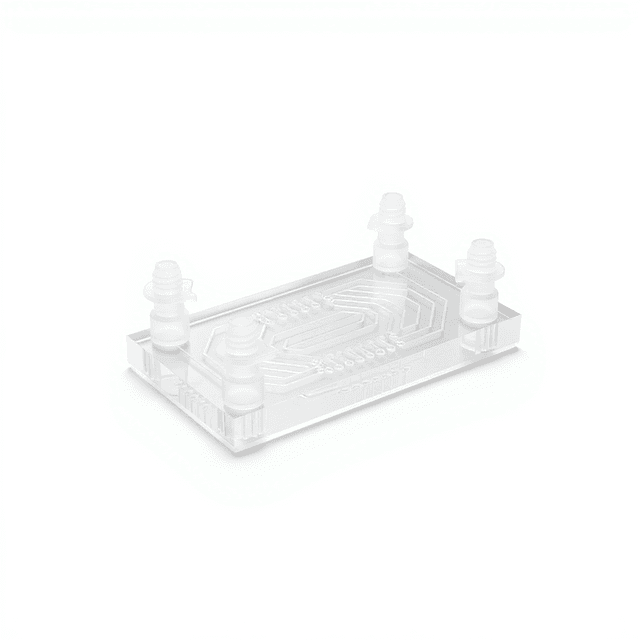
The Industrial Stainless Steel Micromixer Platform is a robust mixing system designed for continuous processing applications in pharmaceutical manufacturing and industrial chemical production. Constructed entirely from stainless steel, this platform provides corrosion resistance and cleanability required in controlled manufacturing environments. The unit operates on microfluidic principles to achieve consistent mixing of small-volume streams with precise control over residence time and mixing efficiency.
The 400×300×250 mm footprint accommodates integration into existing production lines while maintaining accessibility for cleaning validation and maintenance procedures. The platform's industrial scale design supports continuous operation protocols typical in pharmaceutical batch processing and specialty chemical synthesis workflows.
How It Works
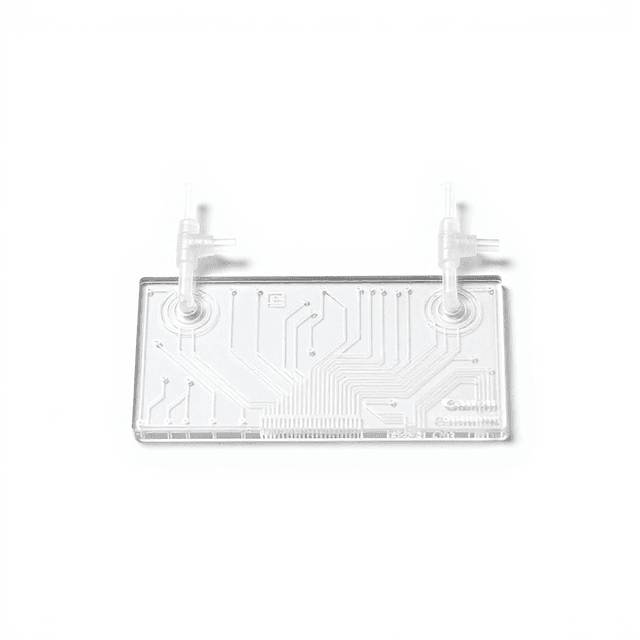
The micromixer platform operates through laminar flow mixing principles within precisely engineered microchannels. Fluid streams enter the mixing chamber at controlled flow rates, creating predictable flow patterns that promote molecular-level mixing through diffusion and convection. The stainless steel construction provides smooth, non-reactive surfaces that minimize dead volumes and prevent cross-contamination between batches.
The platform's geometry creates optimal Reynolds number conditions for laminar mixing, typically in the range of 10-1000, ensuring reproducible mixing performance across different fluid viscosities and densities. Temperature control through the steel body maintains consistent mixing kinetics, while the compact design minimizes residence time variation that could affect product quality.
Features & Benefits
Scale
- Industrial
Automation Level
- semi-automated
Brand
- ConductScience
Material
- Stainless Steel
Research Domain
- Analytical Chemistry
- Food Science
- Industrial Hygiene
- Materials Science
- Microbiology
- Pharmaceutical QC
Shipping weight
- 20.0 lb
Shipping box
- L: 400.0 cm
- W: 300.0 cm
- H: 250.0 cm
| Feature | This Product | Typical Alternative | Advantage |
|---|---|---|---|
| Construction Material | Stainless steel throughout | Plastic or glass components common in laboratory-scale mixers | Enables validation cleaning and compatibility with aggressive pharmaceutical cleaning agents. |
| Platform Scale | Industrial scale design | Laboratory bench-scale units typically used for development work | Supports production-volume throughput while maintaining microfluidic mixing precision. |
| Operating Environment | Designed for pharmaceutical and industrial applications | Research-grade mixers often limited to laboratory environments | Meets the material and design requirements for regulated manufacturing environments. |
| Footprint Efficiency | Compact 400×300×250 mm dimensions | Traditional mixers often require larger installation space | Enables integration into space-constrained cleanroom and production environments. |
This industrial micromixer platform combines the precision of microfluidic mixing with the durability and compliance requirements of pharmaceutical manufacturing equipment. The stainless steel construction and industrial scale design distinguish it from typical laboratory microfluidic devices.
Practical Tips
Establish flow rate baselines using precision volumetric measurements before each production campaign.
Why: Consistent flow rates are critical for reproducible mixing performance and product quality.
Implement regular inspection of mixing channels for any buildup or fouling that could affect flow patterns.
Why: Even small obstructions can significantly impact mixing uniformity in microfluidic systems.
Document mixing performance with each new formulation using visual or analytical methods before production scale-up.
Why: Mixing behavior can vary significantly with different fluid properties and chemical interactions.
If mixing appears incomplete, verify that inlet pressures are balanced and there are no partial blockages in the flow paths.
Why: Uneven flow distribution is the most common cause of poor mixing performance in parallel channel systems.
Monitor residence time consistency by measuring the time from inlet to outlet for tracer solutions.
Why: Residence time variation directly impacts mixing completeness and reaction kinetics in continuous processes.
Always verify chemical compatibility of your specific solvents and cleaning agents with stainless steel before use.
Why: Some chemical combinations can cause unexpected corrosion or material degradation even with stainless steel.
Setup Guide
What’s in the Box
- Micromixer platform main unit
- Inlet port fittings (typical)
- Outlet port fittings (typical)
- Mounting hardware (typical)
- Operating manual
- Material certification documentation (typical)
Warranty
ConductScience provides a standard one-year manufacturer warranty covering defects in materials and workmanship, with technical support available for installation and operation guidance.
Compliance
What flow rate ranges can this micromixer accommodate?
Flow rate capability depends on your pump system and application requirements. Consult product datasheet for recommended operating parameters with your specific fluid properties.
How do I validate cleaning effectiveness for pharmaceutical applications?
The smooth stainless steel surfaces support standard cleaning validation protocols using swab sampling and rinse water analysis according to your facility's established procedures.
What mixing efficiency can I expect with this platform?
Mixing performance varies with fluid properties, flow rates, and residence time. Conduct mixing studies with your specific formulations to establish performance baselines.
Is this platform compatible with organic solvents?
Stainless steel construction provides broad chemical compatibility, but verify compatibility with your specific solvents and operating conditions before use.
How often does the platform require maintenance?
Maintenance frequency depends on operating conditions and fluid properties. Implement preventive maintenance based on your facility's risk assessment and validation requirements.
Can this unit be integrated with automated systems?
The platform can be incorporated into automated workflows when combined with appropriate pump systems and process control equipment for flow management.
Have a question about this product?
Have a question? Just ask.
Send it over and we'll email you a personalized answer — no call, no scheduling.
Prefer to talk it through?