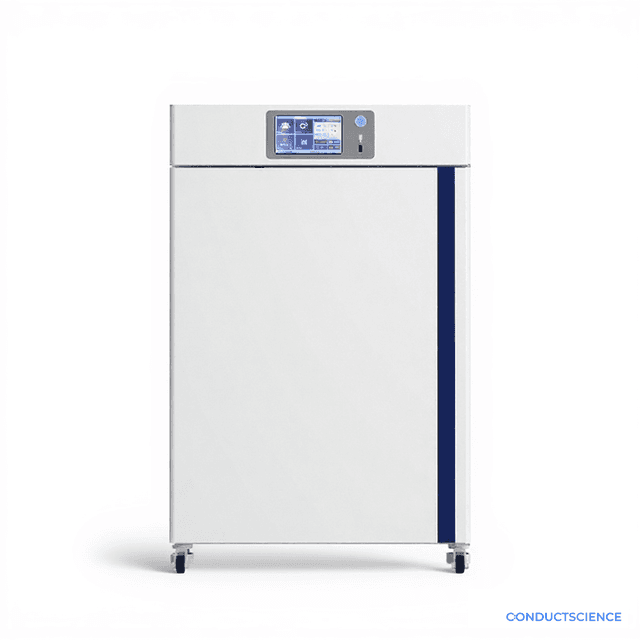
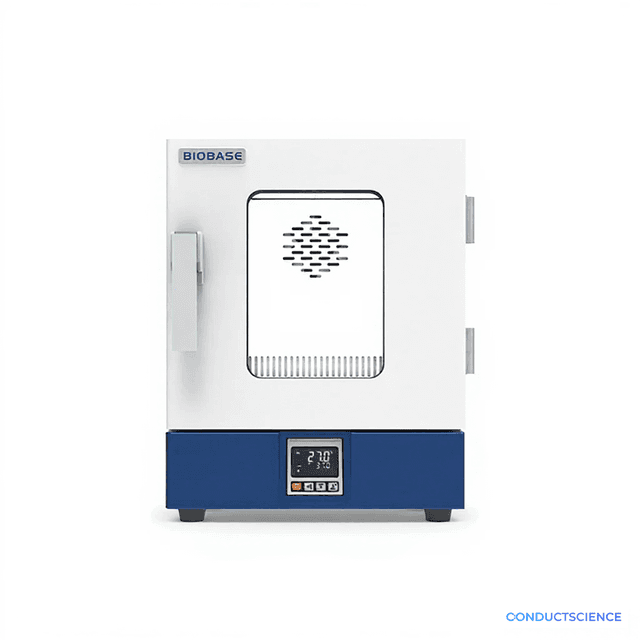
Biological Indicator Incubator Bit1000/Bit1000-S
Laboratory incubator designed for biological indicator processing and sterilization validation testing in pharmaceutical and research environments.

Louise Corscadden, PhD
Director of Science · ConductScience
Ask Louise about Biological Indicator Incubator Bit1000/Bit1000-S fit, setup, configuration, or quote prep.
Already working with us? Sign in to connect this with My Scientist.
Key Specifications
Full details →- Model fit
- 2 selectable configurations
- SKU family
- Assigned during quote
- Shipping box
- 46.5 x 44.0 x 35.5 cm
- Ordering
- Online checkout and quote request available
- Category
- Laboratory Incubators
- Build notes
- Confirm accessories, station layout, and support needs before purchase
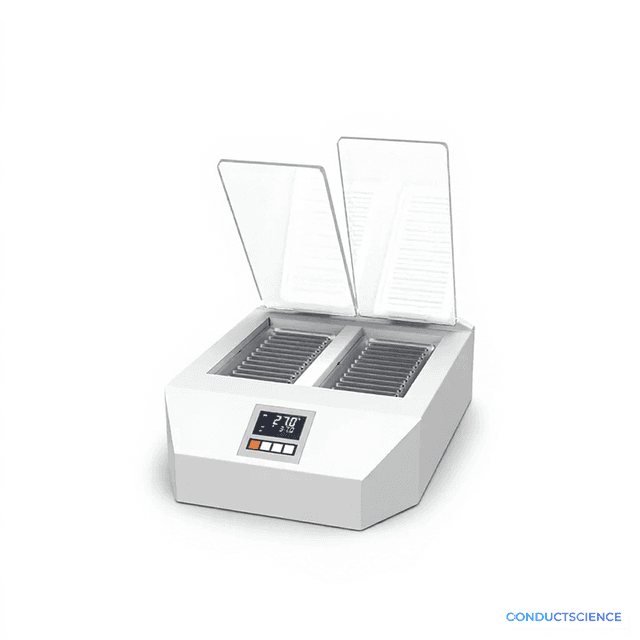
The Biological Indicator Incubator Bit1000/Bit1000-S provides controlled temperature incubation for biological indicator processing in microbiology and sterilization validation workflows. This laboratory incubator maintains precise environmental conditions required for spore germination and growth assessment during sterilization efficacy testing protocols.
Designed for pharmaceutical, medical device, and research laboratory environments, the unit supports standard biological indicator testing procedures used to validate autoclave, dry heat, and chemical sterilization processes. The incubator accommodates various biological indicator formats and provides consistent temperature control for reliable spore viability determination.
How It Works
The biological indicator incubator operates through precise temperature control to create optimal conditions for spore germination and vegetative growth. Following exposure to sterilization processes, biological indicator spores require specific temperature and time parameters to demonstrate viability through growth or color change indicators.
The unit maintains uniform temperature distribution throughout the chamber, ensuring consistent incubation conditions across all biological indicator positions. Temperature sensors monitor chamber conditions while heating elements respond to maintain setpoint temperatures typically required for spore growth assessment, commonly 55-60°C for steam sterilization indicators.
Features & Benefits
Shipping weight
- 29.98 lb
Shipping box
- L: 46.5 cm
- W: 44.0 cm
- H: 35.5 cm
| Feature | This Product | Typical Alternative | Advantage |
|---|---|---|---|
| Temperature Control Method | Dry heat incubation system | Entry-level models may use water bath systems | Eliminates water contamination risks and provides cleaner incubation environment for biological indicators |
| Chamber Design | Dedicated biological indicator incubator | General-purpose laboratory incubators with broader applications | Optimized specifically for biological indicator processing workflows and spore germination requirements |
| Temperature Monitoring | Digital temperature display | Analog temperature indicators on basic models | Provides precise temperature readouts for quality assurance documentation and regulatory compliance |
| Laboratory Integration | Compact benchtop design | Larger floor-standing units with higher capacity | Fits standard laboratory workflows while providing adequate capacity for routine biological indicator testing |
The Biological Indicator Incubator offers specialized dry heat incubation with digital temperature monitoring in a compact laboratory-friendly design. The unit provides dedicated biological indicator processing capabilities with precise temperature control optimized for spore viability assessment.
| Model | SKU | Listed price | Status | Shipping box |
|---|---|---|---|---|
| Standard | BIO-0246 | $1,390.00 | Available | 46.5 x 44.0 x 35.5 cm |
| Bit1000/Bit1000-S | BIO-0247 | $1,390.00 | Available | 46.5 x 44.0 x 35.5 cm |
Practical Tips
Verify temperature accuracy using multiple calibrated sensors placed throughout the chamber before routine use.
Why: Ensures uniform temperature distribution and validates incubation conditions for reliable biological indicator results.
Clean chamber surfaces with appropriate disinfectant after each use cycle to prevent cross-contamination.
Why: Maintains sterile conditions and prevents interference with biological indicator growth assessment.
Allow adequate spacing between biological indicators for proper air circulation during incubation.
Why: Ensures uniform temperature exposure and prevents localized temperature variations that could affect results.
Document temperature readings throughout incubation periods for quality assurance records.
Why: Provides verification of proper incubation conditions required for regulatory compliance and result validation.
Verify door seal integrity if temperature stability issues occur during incubation cycles.
Why: Compromised door seals can cause temperature fluctuations affecting biological indicator processing reliability.
Handle biological indicators with appropriate personal protective equipment during loading and retrieval.
Why: Prevents exposure to potentially viable spores and maintains laboratory biosafety protocols.
Setup Guide
What’s in the Box
- Biological Indicator Incubator main unit (typical)
- Power cord (typical)
- User manual and operating instructions (typical)
- Temperature calibration certificate (typical)
- Chamber cleaning instructions (typical)
Warranty
ConductScience provides standard one-year manufacturer warranty covering defects in materials and workmanship. Technical support includes troubleshooting assistance and calibration guidance for optimal performance.
Compliance
What temperature range is suitable for different biological indicator types?
Consult product datasheet for specific temperature range. Most biological indicator incubators accommodate 55-60°C for steam sterilization indicators and ambient to 70°C for various spore types.
How many biological indicators can be processed simultaneously?
Chamber capacity varies by model. Consult product specifications for exact dimensions and recommended loading density to ensure proper air circulation.
Is temperature uniformity validated throughout the chamber?
Temperature distribution should be verified during installation using multiple calibrated sensors. Uniformity specifications are available in the technical documentation.
What calibration procedures are required for regulatory compliance?
Regular temperature calibration using NIST-traceable standards is recommended. Calibration frequency depends on usage and regulatory requirements, typically annually or semi-annually.
Can the unit accommodate both self-contained and strip biological indicators?
Most biological indicator incubators accept various formats. Verify chamber dimensions and accessories needed for specific biological indicator types being processed.
How does this compare to water bath incubation methods?
Dry heat incubation eliminates contamination risks associated with water baths and provides more precise temperature control for biological indicator processing.
Have a question about this product?
Have a question? Just ask.
Send it over and we'll email you a personalized answer — no call, no scheduling.
Prefer to talk it through?