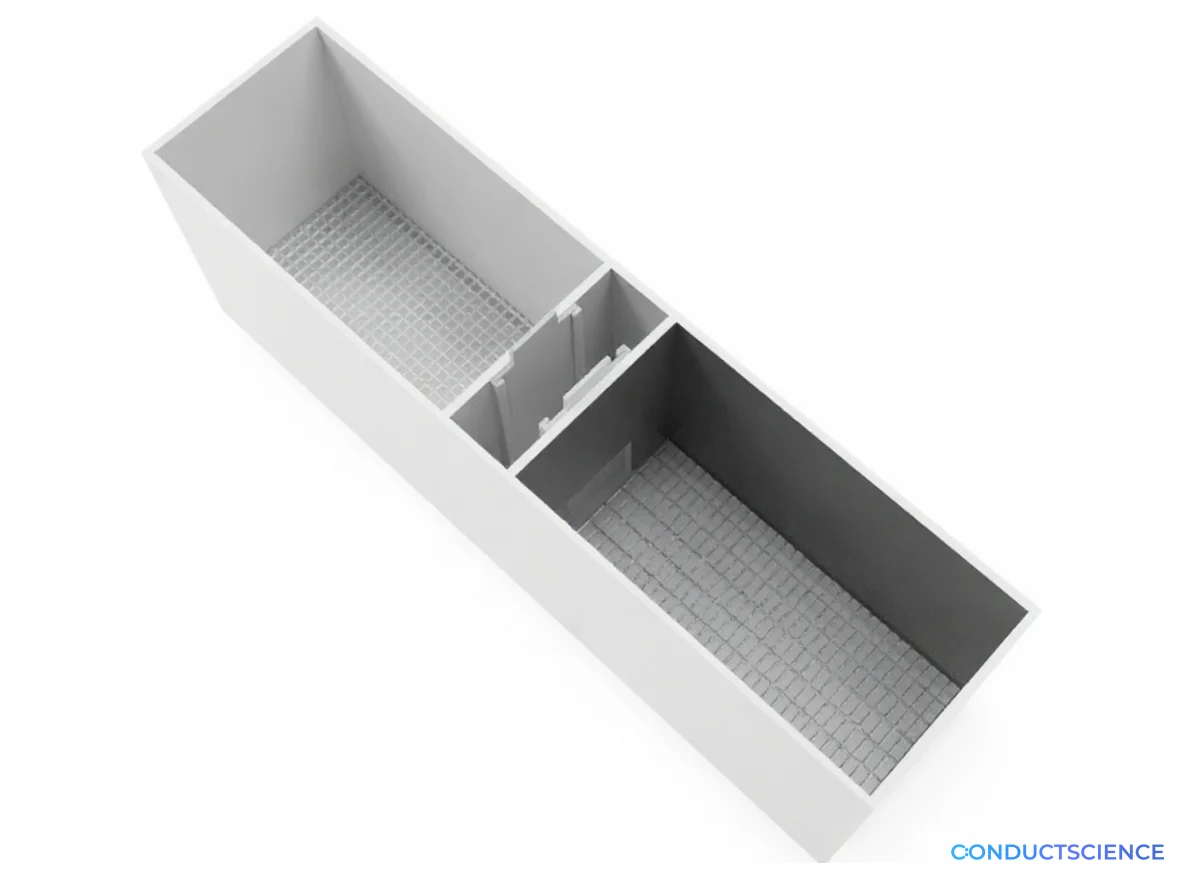
Conditioned Place Preference Rossi 1976
SKU CS-958267
$1,830.00
IncludesStandard care
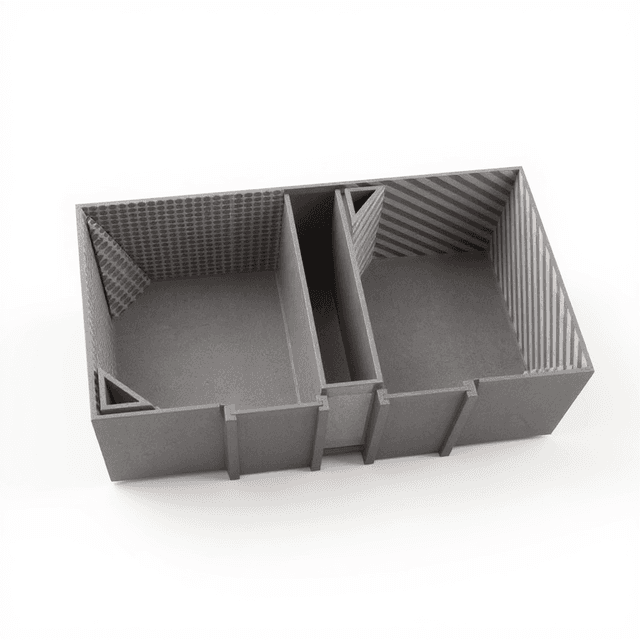
Behavioral apparatus for measuring conditioned place preference based on Rossi’s 1976 methodology, used to assess the rewarding or aversive properties of drugs, stimuli, or environmental manipulations.
CE MarkedBAA available
Scientist guidance

Louise Corscadden, PhD
Director of Science · ConductScience
Ask Louise about Conditioned Place Preference Rossi 1976 fit, setup, configuration, or quote prep.
Already working with us? Sign in to connect this with My Scientist.
Key Specifications
Full details →- Model fit
- Mouse, Rat
- SKU family
- CS-958267
- Shipping box
- 65.0 x 36.0 x 27.0 cm
- Ordering
- Online checkout and quote request available
- Category
- Behavioral Mazes
- Build notes
- Confirm accessories, station layout, and support needs before purchase
The Conditioned Place Preference (CPP) test based on Rossi's 1976 methodology is a behavioral paradigm used to assess the rewarding or aversive properties of environmental stimuli, drugs, or experimental interventions. This approach measures an animal's preference for environments previously associated with specific treatments by quantifying time spent in different compartments during a drug-free test session.
The apparatus typically consists of distinct compartments with different visual, tactile, or olfactory cues that allow researchers to create distinguishable environmental contexts. Animals are conditioned by pairing specific treatments with particular compartments, then tested for their spontaneous preference in the absence of the conditioning stimulus. This paradigm provides a reliable measure of the motivational properties of experimental manipulations and is widely used in addiction research, behavioral pharmacology, and learning studies.
How It Works
The conditioned place preference paradigm operates on principles of classical conditioning, where neutral environmental cues become associated with the physiological or psychological effects of experimental treatments. During conditioning sessions, animals receive specific treatments while confined to distinct compartments, creating learned associations between environmental contexts and treatment effects.
The apparatus design ensures that animals can distinguish between compartments through different sensory cues while preventing access between areas during conditioning. Following conditioning phases, animals are placed in the apparatus with free access to all compartments during drug-free test sessions. Time spent in each compartment is measured, typically through automated tracking systems or manual observation.
The preference score is calculated by comparing time spent in treatment-paired compartments versus control-paired compartments. Increased time in treatment-paired areas indicates conditioned place preference (rewarding properties), while avoidance suggests conditioned place aversion (aversive properties). This behavioral readout provides a quantitative measure of the motivational significance of experimental manipulations.
Features & Benefits
Multi-compartment design with distinct environmental cues
Enables reliable discrimination between treatment and control environments for robust conditioning
Free access configuration during test phases
Allows natural expression of learned preferences without experimenter intervention
Standardized compartment dimensions
Ensures consistent spatial parameters across experiments for reliable data comparison
Compatible with automated tracking systems
Enables objective, high-resolution measurement of positional data and movement patterns
Removable barrier systems
Facilitates easy switching between conditioning and test configurations within the same apparatus
Neutral compartment option
Provides unbiased starting zone for test sessions and enables three-compartment experimental designs
Behavioral Construct
- Place preference
- Conditioned place preference
- Reward learning
- Associative learning
- Drug reward
- Environmental conditioning
Automation Level
- manual
Research Domain
- Addiction Research
- Anxiety and Depression
- Behavioral Pharmacology
- Learning and Memory
- Neuroscience
- Pain Research
Species
- Mouse
- Rat
Compatible Tracking Software
- ConductVision
Shipping weight
- 6.06 lb
Shipping box
- L: 65.0 cm
- W: 36.0 cm
- H: 27.0 cm
| Feature | This Product | Typical Alternative | Advantage |
|---|---|---|---|
| Compartment Configuration | Multi-compartment design based on validated Rossi 1976 methodology | Custom-built two-chamber systems with varying designs | Standardized configuration ensures methodological consistency and cross-laboratory reproducibility |
| Environmental Cue Systems | Integrated cue presentation matching historical specifications | Ad-hoc cue arrangements with inconsistent parameters | Validated cue parameters optimize discrimination learning while maintaining historical protocol fidelity |
| Barrier Management | Removable barrier system for conditioning/test phase transitions | Fixed separations requiring animal transfers between apparatus | Reduces handling stress and maintains environmental context throughout experimental phases |
| Protocol Documentation | Includes detailed methodology based on original Rossi publication | Generic instructions requiring literature consultation | Streamlines protocol implementation and ensures adherence to validated parameters |
This apparatus provides standardized implementation of the validated Rossi 1976 methodology with integrated environmental cues and flexible barrier systems. The design prioritizes methodological consistency and historical protocol fidelity for reliable place preference conditioning.
Addiction Research
Evaluating the rewarding properties of drugs of abuse by measuring preference for environments previously paired with drug administration.
Behavioral Pharmacology
Assessing the motivational effects of novel compounds by quantifying place preference conditioning following repeated drug-environment pairings.
Learning and Memory
Investigating associative learning mechanisms by measuring how animals form and express preferences for environments associated with positive or negative experiences.
Neuroscience
Examining neural circuits involved in reward processing and memory formation through pharmacological or optogenetic manipulations during conditioning phases.
Anxiety and Depression
Testing the efficacy of antidepressant compounds by measuring their ability to condition place preference in animal models of depression.
Pain Research
Evaluating pain relief efficacy by assessing place preference for environments associated with analgesic treatments in chronic pain models.
Practical Tips
Best Practices
Conduct habituation sessions before conditioning to reduce novelty stress and establish baseline exploration patterns.
Why: Habituation improves data quality by separating learning effects from stress-induced behavior changes.
Calibration
Validate compartment discrimination by testing naive animals for inherent preferences before beginning conditioning protocols.
Why: Baseline testing identifies apparatus bias that could confound interpretation of conditioning effects.
Maintenance
Clean all compartments with identical solutions between subjects to eliminate olfactory cues that could influence behavior.
Why: Residual odors from previous subjects can create unintended conditioning cues affecting place preference formation.
Data Quality
Record total locomotor activity during test sessions to distinguish preference changes from general activity effects.
Why: Treatment effects on overall activity can confound preference measurements and should be monitored separately.
Troubleshooting
If animals show no conditioning after standard protocols, verify cue distinctiveness and consider extending conditioning duration.
Why: Insufficient environmental discrimination or inadequate conditioning time are common causes of failed place preference formation.
Best Practices
Use counterbalanced assignment of treatments to compartments across subjects to control for spatial biases.
Why: Counterbalancing ensures that treatment effects are not confounded with inherent compartment preferences.
Safety
Monitor animals during conditioning sessions for signs of distress or adverse reactions to experimental treatments.
Why: Early detection of welfare issues ensures ethical treatment and prevents data contamination from stressed subjects.
Setup Guide
Apparatus Assembly
Assemble the multi-compartment apparatus ensuring all chambers are properly connected and environmental cues (textures, patterns, lighting) are distinct between compartments.
Environmental Validation
Verify that compartment cues are sufficiently distinct by conducting pilot sessions to ensure animals can discriminate between environments.
Baseline Testing
Conduct preconditioning sessions with naive animals having free access to all compartments to establish baseline preferences and identify any inherent bias.
Conditioning Protocol Setup
Establish conditioning schedule alternating treatment and vehicle sessions while confining animals to designated compartments for specified durations.
Tracking System Calibration
Calibrate automated tracking software or establish standardized manual observation protocols for accurate measurement of time spent in each compartment.
Test Session Execution
Conduct drug-free test sessions allowing free access to all compartments while recording positional data for preference analysis.
Data Analysis Protocol
Calculate preference scores by comparing time spent in treatment-paired versus control-paired compartments, accounting for baseline preferences.
What’s in the Box
- Multi-compartment behavioral apparatus (typical)
- Removable barrier inserts (typical)
- Environmental cue panels (typical)
- Setup and protocol guide (typical)
- Data recording sheets (typical)
Warranty
ConductScience provides a standard one-year manufacturer warranty covering defects in materials and workmanship, with technical support for protocol optimization and troubleshooting.
Compliance
IACUC GuidelinesApparatus design supports behavioral protocols requiring institutional animal care committee approval and oversight
ARRIVE GuidelinesStandardized design facilitates reproducible methodology reporting for animal research publication requirements
Q
What conditioning schedule is most effective for establishing reliable place preference?
A
Typically 4-8 conditioning sessions with alternating treatment/vehicle days, 15-30 minute confinement periods, though optimal parameters depend on the specific treatment and species being studied.
Q
How do you control for inherent chamber bias in the apparatus?
A
Conduct preconditioning baseline sessions to identify any innate preferences, then use a counterbalanced design assigning treatments to initially non-preferred or neutral compartments.
Q
What environmental cues are most effective for compartment discrimination?
A
Visual patterns (stripes vs dots), tactile flooring (smooth vs textured), and lighting differences are commonly used, with effectiveness varying by species and sensory capabilities.
Q
How long should test sessions be for reliable preference measurement?
A
Standard test sessions range from 15-30 minutes, allowing sufficient time for exploration while maintaining animal attention and reducing habituation effects.
Q
Can the apparatus accommodate different species and age groups?
A
Design specifications should be verified for species-appropriate dimensions, with considerations for locomotor capabilities and sensory acuity of the experimental subjects.
Q
What data analysis methods are recommended for preference scores?
A
Calculate difference scores (time in drug-paired minus control-paired compartments) or percentage preference, controlling for baseline bias and total exploration time.
Q
How do you distinguish true conditioning from non-specific behavioral effects?
A
Include appropriate control groups receiving vehicle treatments in both compartments and compare with groups showing established conditioning effects.
Have a question about this product?
Track rodents with ConductVision
ConductVision is our video-tracking software. Record your sessions on video, and it scores standard rodent tests, such as those listed below.
Examples of tests it scores
To check whether ConductVision scores your protocol in this apparatus, ask in your quote request.
Ask a question
Have a question? Just ask.
Send it over and we'll email you a personalized answer — no call, no scheduling.
Personalized email reply
Usually within one business day
Helpful answers published here
Prefer to talk it through?
Accessories
Enhance your setup with compatible accessories
Total: $0.00

Conditioned Place Preference Rossi 1976
$1,830.00
Added to quoteView Quote