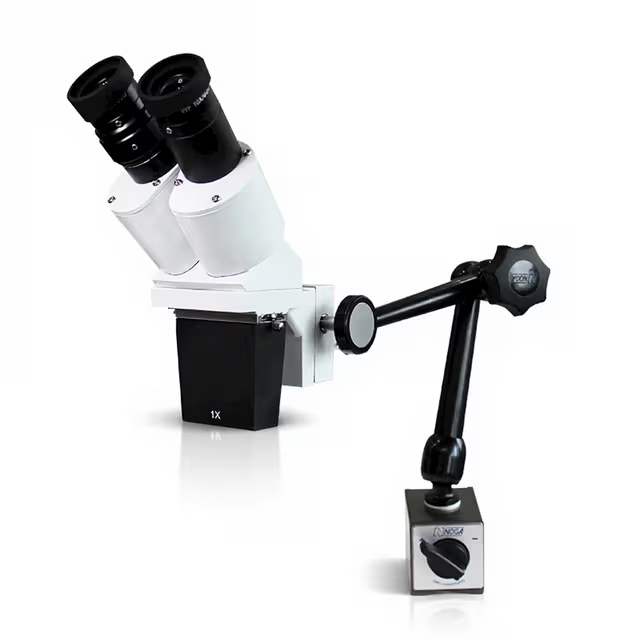
Integrated 4K Full-Automatic Focus Measuring Digital Microscope Camera with Measuring Software & Adjustable LED Light
Integrated 4K digital microscope camera with automated focus, measurement software, and LED illumination for quantitative microscopy and dimensional analysis across 1-28X magnification range.

Louise Corscadden, PhD
Director of Science · ConductScience
Ask Louise about Integrated 4K Full-Automatic Focus Measuring Digital Microscope Camera with Measuring Software & Adjustable LED Light fit, setup, configuration, or quote prep.
Already working with us? Sign in to connect this with My Scientist.
Key Specifications
Full details →- Model fit
- Configured during quote
- SKU family
- MCX-0032
- Shipping box
- 4.9 x 6.6 x 6.6 cm
- Ordering
- Online checkout and quote request available
- Category
- Microscopy
- Build notes
- Confirm accessories, station layout, and support needs before purchase
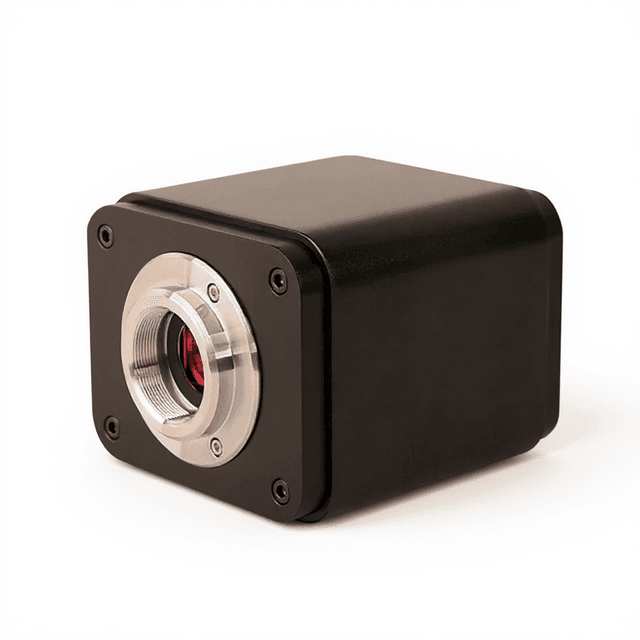
The Integrated 4K Full-Automatic Focus Measuring Digital Microscope Camera represents a complete digital imaging solution for quantitative microscopy applications. Built around an 8MP/4K color CMOS sensor with 1/2.8" format, this system integrates automated focus control, calibrated measurement software, and adjustable LED illumination in a single platform designed for laboratory workflows requiring precise dimensional analysis and high-resolution documentation.
The camera operates across a 1-28X optical magnification range with working distances from 10 cm to infinity, accommodating diverse specimen types and mounting configurations. Progressive scanning at 4K@30fps or 1080P@60fps through HDMI output provides real-time imaging for live observations, while the integrated measurement software enables calibrated dimensional analysis directly within the digital interface. Mouse-controlled operation and full digital UI design streamline workflow integration in research environments.
How It Works
The system employs a 1/2.8" color CMOS sensor with 8-megapixel resolution to capture high-definition images across the visible spectrum. Automated focus algorithms continuously analyze image contrast and edge definition to maintain optimal focus positioning throughout the magnification range, eliminating manual focus adjustments during extended observation periods. The integrated LED illumination system provides controlled, uniform lighting with adjustable intensity to optimize contrast and minimize shadows across varying specimen types.
Digital signal processing converts optical information into 4K video streams transmitted via HDMI interface at 30fps or 1080P at 60fps for real-time display. The measurement software utilizes pixel-to-distance calibration algorithms to enable precise dimensional analysis directly from captured images. Progressive scanning technology ensures complete image capture without interlacing artifacts, maintaining measurement accuracy across the full field of view.
The mouse-controlled interface integrates imaging, focus control, and measurement functions within a single digital environment, allowing researchers to capture, analyze, and document specimens without transitioning between separate software platforms.
Features & Benefits
Automation Level
- semi-automated
Product Type
- Microscope
Microscope Type
- Digital
Application
- General Laboratory
Skill Level
- Intermediate
Brand
- ConductScience
Research Domain
- Analytical Chemistry
- Environmental Monitoring
- Food Science
- Industrial Hygiene
- Materials Science
- Microbiology
- Pharmaceutical QC
Shipping weight
- 1.9 lb
Shipping box
- L: 4.9 cm
- W: 6.6 cm
- H: 6.6 cm
| Feature | This Product | Typical Alternative | Advantage |
|---|---|---|---|
| Sensor Resolution | 8MP/4K color CMOS with 1/2.8" format | Entry-level systems often provide 2-5MP resolution with smaller sensor formats | Higher resolution enables more detailed imaging and improved measurement precision for smaller features. |
| Frame Rate Options | 4K@30fps or 1080P@60fps selectable output | Basic systems typically offer single frame rate operation | Dual rate capability allows optimization between resolution and real-time observation smoothness based on application needs. |
| Magnification Range | 1-28X optical magnification | Fixed magnification or limited zoom range common in entry systems | Wide magnification range accommodates diverse specimen sizes within a single system, reducing equipment requirements. |
| Focus Control | Automated focus with manual override capability | Manual focus adjustment standard in basic systems | Automated focusing reduces operator fatigue and maintains consistency during extended measurement sessions. |
| Integrated Software | Measurement software included with calibration functions | Separate measurement software often required with additional licensing | Complete system integration eliminates software compatibility issues and reduces total implementation cost. |
| Connectivity Options | HDMI and LAN interface support | USB connectivity typical in basic models | HDMI provides direct display connection while LAN enables network integration for laboratory data management. |
This system integrates high-resolution 4K imaging, automated focus control, and measurement software in a single platform optimized for quantitative microscopy applications. The combination of wide magnification range and dual-rate video output provides flexibility for both detailed analysis and real-time observation workflows.
Practical Tips
Perform measurement calibration at each magnification setting using certified reference standards with traceable dimensions.
Why: Magnification-specific calibration ensures measurement accuracy across the full zoom range and maintains traceability to recognized standards.
Recalibrate the measurement system if the working distance changes significantly from the original calibration setup.
Why: Working distance variations can affect the pixel-to-distance relationship and introduce systematic measurement errors.
Clean LED illumination surfaces regularly with appropriate optical cleaning materials to maintain uniform light distribution.
Why: Dust accumulation on LED surfaces creates uneven illumination that can affect image quality and automated focus performance.
Verify HDMI and LAN connections periodically to ensure stable data transmission and prevent signal degradation.
Why: Loose connections can cause intermittent signal loss or reduced image quality that may not be immediately apparent during routine use.
Allow the LED illumination system to stabilize for several minutes before beginning critical measurements to ensure consistent color temperature.
Why: LED output characteristics change slightly during initial warm-up, affecting color balance and potentially measurement calibration.
Use the manual exposure control for specimens with extreme contrast ranges to optimize image quality beyond automatic settings.
Why: Manual exposure allows fine-tuning for challenging specimens that may not be optimally handled by automatic exposure algorithms.
If automated focus fails to achieve sharp images, verify specimen contrast is adequate and illumination is properly adjusted.
Why: Automated focus systems require sufficient edge contrast to function effectively and may need manual intervention for transparent specimens.
Document all calibration parameters and working distance settings when archiving measurement data for future reference.
Why: Complete documentation enables measurement verification and ensures data integrity for regulatory or quality compliance requirements.
Setup Guide
What’s in the Box
- Digital microscope camera with integrated LED illumination
- DC12V power adapter and cable
- HDMI output cable
- Measurement software installation media
- LAN network cable
- User manual and calibration procedures
- Mounting hardware kit (typical)
- Calibration reference standard (typical)
Warranty
ConductScience provides a standard one-year manufacturer warranty covering defects in materials and workmanship, with technical support for software installation and calibration procedures.
Compliance
References
Background reading relevant to this product:
What is the measurement accuracy of the integrated software across the magnification range?
Measurement accuracy depends on proper calibration at each magnification setting using certified reference standards. Consult product datasheet for specific accuracy specifications and calibration procedures.
Can the system operate in network environments for remote access and data sharing?
Yes, the LAN interface enables network connectivity for computer-based operation, though specific network protocols and security features should be confirmed in the technical documentation.
How does the automated focus system perform with transparent or low-contrast specimens?
The automated focus relies on contrast detection algorithms. Low-contrast specimens may require manual focus adjustment or enhanced illumination techniques to achieve optimal performance.
What image formats and data export options are available through the measurement software?
Consult the software documentation for supported file formats and measurement data export capabilities, as these vary depending on the specific software package included.
Can the system be integrated with existing laboratory information management systems?
Integration capabilities depend on the specific LIMS platform and available data interfaces. The LAN connectivity and standard image formats facilitate most integration scenarios.
What maintenance procedures are required for the LED illumination system?
LED systems typically require minimal maintenance beyond periodic cleaning of optical surfaces. Consult the user manual for specific maintenance schedules and LED replacement procedures.
How does this system compare to traditional optical microscopes for quantitative analysis?
Digital systems offer integrated measurement software and electronic documentation but may have different optical characteristics than traditional microscopes. Evaluate based on specific magnification and resolution requirements.
Have a question about this product?
Have a question? Just ask.
Send it over and we'll email you a personalized answer — no call, no scheduling.
Prefer to talk it through?
Frequently Bought Together
Upgrade Options
Related Products