Mini-Lid – Smartlid for Optimice & Small Cages
Compact smart monitoring system with full IR tracking and edge analytics for Optimice cages and small animal housing formats under 15 inches.

Louise Corscadden, PhD
Director of Science · ConductScience
Ask Louise about Mini-Lid – Smartlid for Optimice & Small Cages fit, setup, configuration, or quote prep.
Already working with us? Sign in to connect this with My Scientist.
Key Specifications
Full details →- Model fit
- Optimice cages and other formats under 15 inches
- SKU family
- CS-958358
- Shipping box
- 65.0 x 36.0 x 27.0 cm
- Ordering
- Online checkout and quote request available
- Category
- Husbandry Accessories
- Build notes
- Confirm accessories, station layout, and support needs before purchase
The Mini-Lid is a compact smart monitoring system designed specifically for Optimice cages and other small animal housing formats under 15 inches. This drop-in device provides full infrared tracking capabilities with integrated edge analytics processing, enabling continuous behavioral monitoring without requiring external computing infrastructure.
The system is optimized for high-density laboratory setups where space constraints and scalability are primary considerations. The edge analytics processing allows for real-time data analysis directly within the housing environment, reducing data transmission requirements and enabling immediate behavioral assessment. The compact form factor makes it particularly suitable for large-scale phenotyping studies requiring multiple simultaneous monitoring points.
How It Works
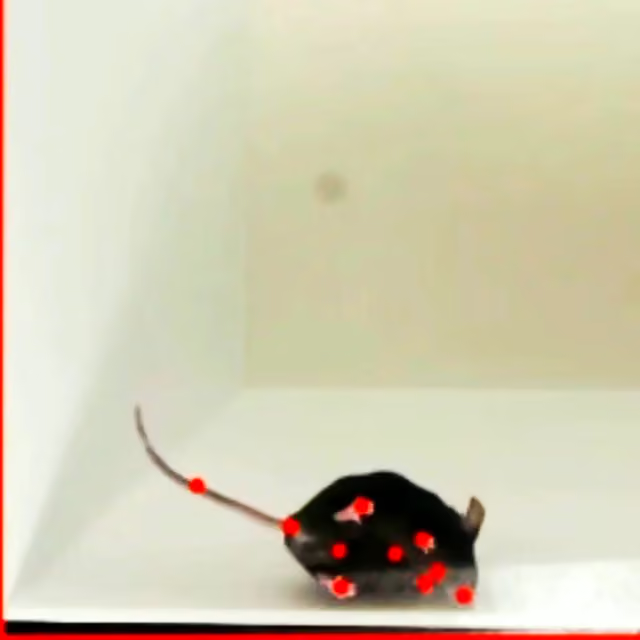
The Mini-Lid operates using infrared detection technology to track animal movement and position within the cage environment. The system emits infrared light and detects reflections from the animal's body, creating position coordinates that are processed in real-time by the integrated edge analytics system.
The edge analytics processing eliminates the need for external computing by performing behavioral analysis algorithms directly within the device. This approach reduces latency, minimizes data storage requirements, and provides immediate behavioral metrics. The drop-in design integrates seamlessly with existing cage infrastructure without requiring modifications to standard housing protocols.
Data processing occurs continuously, with the system capable of distinguishing between different types of movement patterns and generating behavioral parameters such as distance traveled, zone preferences, and activity profiles. The compact form factor allows multiple units to operate simultaneously in high-density housing arrangements without interference.
Features & Benefits
Cage Compatibility
- Optimice cages and other formats under 15 inches
Design Type
- Drop-in design
Tracking Capability
- Full IR tracking
Analytics
- Edge analytics
Suitable for
- High-density setups and scalable studies
Behavioral Construct
- locomotor activity
- spatial preference
- exploration behavior
- circadian activity
- home cage behavior
Automation Level
- fully-automated
Research Domain
- Aging Research
- Anxiety and Depression
- Behavioral Pharmacology
- Learning and Memory
- Motor Function
- Neuroscience
Species
- Mouse
- Rat
Shipping weight
- 6.06 lb
Shipping box
- L: 65.0 cm
- W: 36.0 cm
- H: 27.0 cm
| Feature | This Product | Typical Alternative | Advantage |
|---|---|---|---|
| Processing Architecture | Integrated edge analytics processing | External computer-based processing systems | Eliminates infrastructure dependencies and reduces system complexity for research facilities. |
| Installation Method | Drop-in design | Systems requiring cage modifications or custom mounting | Enables rapid deployment without disrupting existing housing infrastructure. |
| Tracking Technology | Full IR tracking coverage | Video-based systems with lighting dependencies | Provides consistent tracking performance regardless of ambient lighting conditions. |
| Form Factor | Compact design for formats under 15 inches | Larger systems with space requirements | Optimizes laboratory space utilization in high-density research environments. |
| Scalability | Designed for high-density and scalable deployments | Systems with interference limitations | Supports large-scale phenotyping studies with multiple simultaneous monitoring points. |
The Mini-Lid combines compact design with integrated edge analytics for efficient behavioral monitoring in space-constrained research environments. The drop-in installation and full IR tracking provide practical advantages for facilities requiring multiple monitoring points without infrastructure modifications.
Practical Tips
Perform calibration with empty cage first, then verify tracking accuracy with test animal to establish optimal sensitivity settings.
Why: Proper baseline calibration ensures accurate behavioral measurements throughout the experimental period.
Clean IR sensors weekly using appropriate cleaning materials to prevent dust accumulation that could affect tracking accuracy.
Why: Sensor cleanliness directly impacts tracking quality and data reliability in long-term studies.
Allow 24-hour habituation period after installation before beginning data collection to minimize installation-related behavioral changes.
Why: Habituation ensures behavioral measurements reflect normal activity patterns rather than responses to environmental changes.
Position cages consistently relative to room lighting and traffic patterns to minimize external influences on behavior.
Why: Standardized environmental conditions improve data reproducibility across experimental groups.
Monitor edge analytics output regularly during initial deployment to verify data collection meets experimental requirements.
Why: Early detection of data quality issues prevents loss of valuable experimental data in longitudinal studies.
If tracking accuracy decreases, check for bedding material interference with IR detection and adjust cage setup accordingly.
Why: Bedding depth and material can affect IR reflection patterns and compromise position tracking accuracy.
Ensure power connections are secure and protected from animal contact to prevent equipment damage or safety hazards.
Why: Proper electrical safety protects both equipment integrity and animal welfare in research environments.
Setup Guide
What’s in the Box
- Mini-Lid monitoring device
- Power adapter (typical)
- USB cable for data access (typical)
- Installation guide
- User manual
- Calibration procedures documentation (typical)
Warranty
ConductScience provides a one-year manufacturer warranty covering defects in materials and workmanship. Technical support includes installation guidance, calibration assistance, and troubleshooting for optimal system performance.
Compliance
What cage dimensions are compatible with the Mini-Lid system?
The system is designed for Optimice cages and other formats under 15 inches. Exact compatibility should be verified against specific cage models to ensure proper drop-in fit and tracking coverage.
How does edge analytics processing affect data latency and storage requirements?
Edge analytics eliminates processing delays by performing behavioral analysis directly within the device, providing real-time metrics without external computing dependencies. This reduces data transmission and storage requirements compared to raw video-based systems.
Can multiple Mini-Lid units operate simultaneously in the same facility?
Yes, the system is designed for scalable deployment in high-density setups. Multiple units can operate without interference, making it suitable for large-scale phenotyping studies.
What behavioral parameters can be measured with the IR tracking system?
The full IR tracking capability can monitor position, movement patterns, zone preferences, and activity levels. Specific behavioral metrics depend on the edge analytics configuration and experimental requirements.
How is the system calibrated for different cage environments?
Initial calibration establishes baseline tracking parameters specific to cage dimensions and environmental conditions. The system adapts to the physical setup during installation to optimize tracking accuracy.
What maintenance is required for continuous operation?
Routine maintenance involves keeping IR sensors clean, verifying power connections, and periodic recalibration. Specific maintenance schedules should be established based on facility environmental conditions.
How does this compare to video-based monitoring systems?
The Mini-Lid offers compact installation with integrated processing, while video systems typically require external computing infrastructure. IR tracking provides consistent performance regardless of lighting conditions.
What data output formats are available for analysis?
Data output formats and connectivity options should be confirmed in the product datasheet. The edge analytics system processes raw tracking data into behavioral metrics suitable for research analysis.
Have a question about this product?
Have a question? Just ask.
Send it over and we'll email you a personalized answer — no call, no scheduling.
Prefer to talk it through?
Accessories
Enhance your setup with compatible accessories
Frequently Bought Together