Radial Arm Water Maze
SKU ME-3111/ME-3112/ME-3115/ME-3116
$2,290.00
IncludesStandard care
Radial arm insert for Morris water maze systems, enabling spatial memory assessment through 6-arm configuration with central zone navigation protocols.
CE MarkedBAA available
Scientist guidance

Louise Corscadden, PhD
Director of Science · ConductScience
Ask Louise about Radial Arm Water Maze fit, setup, configuration, or quote prep.
Already working with us? Sign in to connect this with My Scientist.
Key Specifications
Full details →- Model fit
- Mouse, Rat
- SKU family
- ME-3111/ME-3112/ME-3115/ME-3116
- Shipping box
- 43.2 x 38.0 x 27.9 cm
- Ordering
- Online checkout and quote request available
- Category
- Behavioral Mazes
- Build notes
- Aluminum, Metal, Plastic
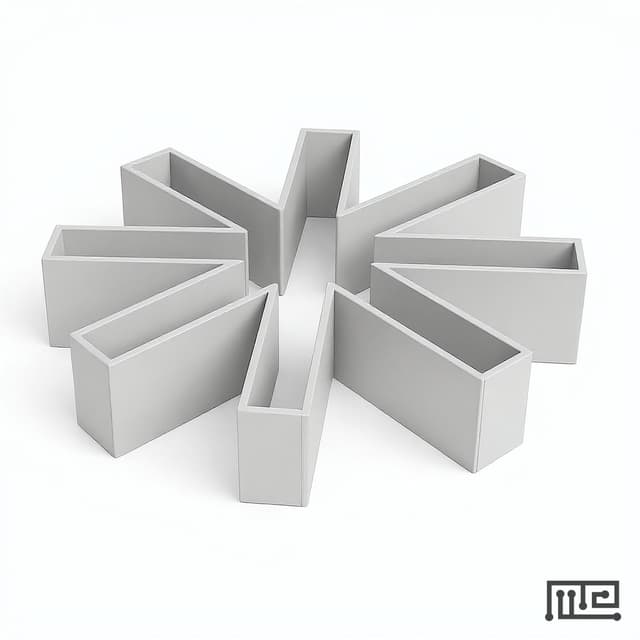
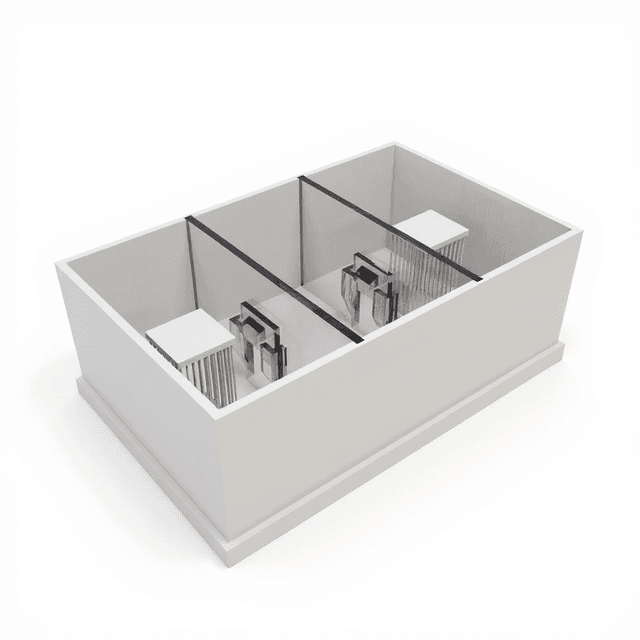
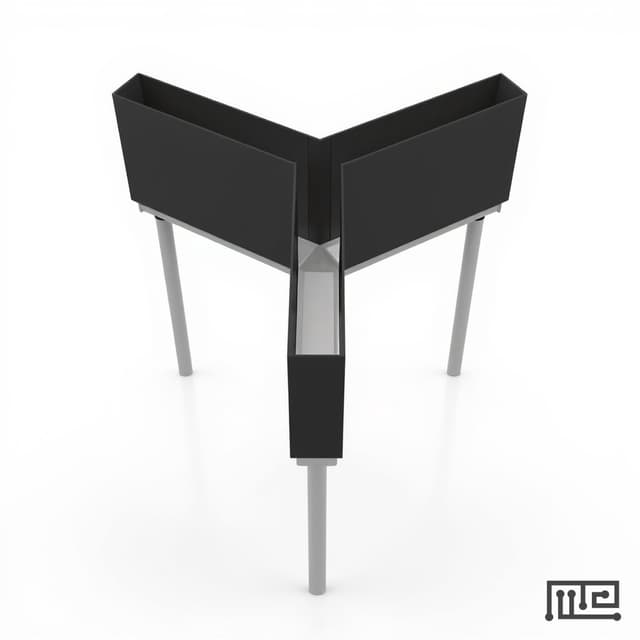
The Radial Arm Water Maze is a spatial memory testing apparatus designed as an insert for standard Morris water mazes. This aluminum and plastic construction features 6 radiating arms extending from a central zone, creating distinct spatial locations for memory assessment protocols. The insert transforms a circular water maze into a radial configuration, enabling researchers to assess both reference memory and working memory components in rodent subjects.
The apparatus accommodates pool diameters from 0.9 to 1.2 meters and maintains specific dimensional relationships critical for spatial navigation tasks. Arms extend 60 to 75 centimeters from the central zone, with 60-degree separation angles providing equal spatial distribution. The design incorporates escape platforms positioned at arm termini, with water levels precisely controlled to maintain platform submersion at approximately 0.5 centimeters below surface level.
How It Works
The radial arm water maze operates on principles of spatial memory formation and hippocampal-dependent navigation. Animals must learn the spatial location of submerged escape platforms positioned at specific arm termini, using distal visual cues for orientation. The radial configuration allows assessment of both reference memory (consistent platform locations across sessions) and working memory (trial-specific information within sessions).
During testing protocols, subjects navigate from the central starting zone to locate hidden platforms, with performance measured through latency, path length, and error quantification. The 60-degree arm separation provides sufficient spatial discrimination while maintaining cognitive load appropriate for rodent subjects. Water temperature and depth are controlled to ensure motivation for platform seeking without introducing thermal stress variables.
The apparatus enables differentiation between spatial memory components through protocol variations. Reference memory assessment uses consistent platform locations across multiple sessions, while working memory evaluation employs changing platform positions within session blocks. This dual capability allows comprehensive characterization of hippocampal-dependent cognitive function.
Features & Benefits
6-arm radial configuration
Provides multiple spatial locations for comprehensive memory assessment while maintaining manageable cognitive load
60-degree arm separation
Ensures sufficient spatial discrimination for accurate memory encoding and retrieval assessment
Central zone diameter 36-40 centimeters
Allows proper starting position standardization and equal access probability to all arms
Aluminum and plastic construction
Provides durability for repeated use while maintaining easy cleaning and sterilization protocols
Compatibility with 0.9-1.2 meter pools
Adapts to existing Morris water maze systems without requiring dedicated apparatus investment
20-25 centimeter passage width
Accommodates natural swimming behavior for both mice and rats without spatial constraint artifacts
Precise water level specifications
Maintains optimal platform visibility conditions for consistent motivation and performance measurement
Standardized testing protocols
Enables 15-trial assessment over minimum 2-day duration with established inter-trial intervals
Arm Insert
- 6 Arms
Pool Internal Diameter
- 0.9 to 1.2 meters
Minimum Pool Depth
- 23 to 25 centimeters
Insert Height
- 20 to 30 centimeters
Insert Arm Length
- 60 to 75 centimeters
Central Zone Diameter
- 36 to 40 centimeters
Passage Width
- 20 to 25 centimeters
Escape Platform Diameter
- 10 centimeters
Arm Configurations
- 4 to 12 arms
Six Arm Separation Angle
- 60 degrees
Water Level Below Rim
- approximately 10 centimeters
Water Level Below Arms
- 6 centimeters
Hidden Platform Submersion
- approximately 0.5 centimeters
Session Duration
- minimum 1 minute
Platform Rest Time
- 10 to 15 seconds
Total Trials
- 15 trials
Trial Intervals
- 3-hour intervals
Testing Duration
- at least 2 days
Behavioral Construct
- spatial memory
- reference memory
- working memory
- spatial navigation
- hippocampal function
- cognitive assessment
Automation Level
- manual
Species
- Mouse
- Rat
Material
- Aluminum
- Metal
- Plastic
Research Domain
- Aging Research
- Anxiety and Depression
- Behavioral Pharmacology
- Learning and Memory
- Neurodegeneration
- Neuroscience
Compatible Tracking Software
- ConductVision
Shipping weight
- 21.0 lb
Shipping box
- L: 43.2 cm
- W: 38.0 cm
- H: 27.9 cm
| Feature | This Product | Typical Alternative | Advantage |
|---|---|---|---|
| Arm Configuration | 6-arm radial design with 60-degree separation | Standard designs often use 4 or 8-arm configurations | Provides optimal balance between spatial complexity and cognitive load for comprehensive memory assessment |
| Central Zone Diameter | 36-40 centimeter central zone | Smaller central areas in compact designs | Allows proper starting position standardization and reduces spatial bias in arm selection |
| Pool Compatibility | Accommodates 0.9-1.2 meter pool diameters | Fixed-size systems require specific pool dimensions | Adapts to existing Morris water maze infrastructure without requiring new pool investment |
| Arm Length Range | 60-75 centimeter arm extension | Shorter arms in space-constrained designs | Provides sufficient spatial separation for clear memory discrimination while accommodating standard laboratory spaces |
| Material Construction | Aluminum and plastic composite | Single-material construction in budget models | Combines durability for repeated use with easy cleaning and sterilization maintenance |
This 6-arm radial insert offers flexible pool compatibility and standardized testing protocols for comprehensive spatial memory assessment. The design balances spatial complexity with practical laboratory implementation requirements while maintaining established protocol validity.
Neuroscience
Assessment of hippocampal-dependent spatial memory formation and retrieval in rodent models of neurological disorders.
Behavioral Pharmacology
Evaluation of cognitive enhancing or impairing effects of pharmacological compounds on spatial navigation and memory consolidation.
Learning and Memory
Investigation of reference memory versus working memory components through radial arm spatial navigation paradigms.
Aging Research
Documentation of age-related decline in spatial cognitive function through longitudinal testing protocols.
Neurodegeneration
Characterization of progressive spatial memory deficits in transgenic models of Alzheimer's disease and other neurodegenerative conditions.
Anxiety and Depression
Assessment of stress-related impacts on hippocampal function through spatial memory performance measures.
Practical Tips
Calibration
Verify water level precisely at 6 centimeters below arm surfaces using multiple measurement points around the insert perimeter.
Why: Consistent water levels ensure standardized platform accessibility and prevent spatial bias artifacts.
Maintenance
Clean arm surfaces and central zone with laboratory-grade disinfectant between animal groups to prevent olfactory cue contamination.
Why: Residual scent marks can influence navigation behavior and compromise spatial memory assessment validity.
Best Practices
Position distinct visual cues at consistent locations around the testing room to provide stable spatial reference points.
Why: Distal cue stability is essential for hippocampal-dependent spatial navigation and memory formation.
Data Quality
Record arm entry sequences and dwell times in addition to platform latency measures for comprehensive behavioral analysis.
Why: Multiple performance metrics provide detailed characterization of spatial memory strategies and cognitive flexibility.
Troubleshooting
If animals show arm preference bias, verify insert centering and check for asymmetric lighting or visual cue placement.
Why: Spatial bias can mask true memory performance and reduce protocol sensitivity to experimental manipulations.
Safety
Monitor water temperature between 22-26°C and provide adequate recovery time between trials to prevent thermal stress.
Why: Temperature extremes can influence swimming motivation and confound cognitive performance measurements.
Best Practices
Standardize animal starting positions in the central zone using consistent release procedures across all trials.
Why: Starting position variability can introduce performance artifacts unrelated to spatial memory capabilities.
Setup Guide
Pool Preparation
Verify pool internal diameter compatibility (0.9-1.2 meters) and ensure minimum depth of 23-25 centimeters for proper insert positioning.
Insert Positioning
Center the radial arm insert within the pool, ensuring 60-degree arm separation and proper central zone alignment.
Water Level Calibration
Fill pool to maintain water level 6 centimeters below arm surfaces and 10 centimeters below pool rim.
Platform Installation
Position 10-centimeter diameter escape platforms at designated arm termini, submerged 0.5 centimeters below water surface.
Environmental Control
Establish consistent lighting conditions and position distal visual cues around testing area for spatial orientation.
Protocol Validation
Conduct preliminary trials to verify arm accessibility, platform detectability, and timing system functionality.
Data Collection Setup
Configure tracking software parameters for central zone definition, arm entry detection, and performance metrics recording.
What’s in the Box
- 6-arm radial insert assembly
- Escape platform set (typical)
- Installation hardware (typical)
- Setup guide and protocol manual (typical)
Warranty
ConductScience provides standard manufacturer warranty coverage with technical support for setup optimization and protocol development assistance.
Compliance
ARRIVE Guidelines 2.0Supports standardized reporting of animal research methodology in spatial cognition studies
Guide for Care and Use of Laboratory AnimalsCommonly used in facilities following NIH guidelines for animal welfare in behavioral research
OECD Test GuidelinesSupports behavioral assessment protocols in neurotoxicology testing frameworks
References
Background reading relevant to this product:
1.Richard Morris (1984) “Developments of a water-maze procedure for studying spatial learning in the rat” Journal of Neuroscience Methods doi:10.1016/0165-0270(84)90007-4
2.Charles V. Vorhees et al. (2006) “Morris water maze: procedures for assessing spatial and related forms of learning and memory” Nature Protocols doi:10.1038/nprot.2006.116
3.Rudi D'Hooge et al. (2001) “Applications of the Morris water maze in the study of learning and memory” Brain Research Reviews doi:10.1016/s0165-0173(01)00067-4
4.Robert J. McDonald et al. (1994) “Parallel information processing in the water maze: Evidence for independent memory systems involving dorsal striatum and hippocampus” Behavioral and Neural Biology doi:10.1016/s0163-1047(05)80009-3
Q
What pool dimensions are required for proper insert function?
A
The insert accommodates pools with internal diameters from 0.9 to 1.2 meters and requires minimum depth of 23-25 centimeters for proper arm positioning and water level maintenance.
Q
How does the 6-arm configuration compare to 8-arm radial mazes?
A
The 6-arm design provides sufficient spatial complexity for memory assessment while reducing cognitive load compared to 8-arm configurations, making it suitable for studies requiring moderate difficulty levels.
Q
What are the standard testing protocol parameters?
A
Standard protocols specify 15 trials with 3-hour inter-trial intervals, minimum 1-minute session duration, 10-15 second platform rest periods, and testing duration of at least 2 days.
Q
Can the insert accommodate different platform configurations?
A
The design supports flexible platform positioning at arm termini with standardized 10-centimeter diameter platforms submerged 0.5 centimeters below water surface.
Q
What maintenance procedures are required?
A
Regular cleaning with laboratory-grade disinfectants, inspection of arm stability, and verification of water level calibration ensure consistent performance across testing sessions.
Q
How is spatial memory differentiated from working memory?
A
Reference memory assessment uses consistent platform locations across sessions, while working memory evaluation employs changing platform positions within session blocks.
Q
What tracking systems are compatible?
A
The insert works with standard video tracking systems capable of defining central zones, detecting arm entries, and recording navigation parameters for performance analysis.
Have a question about this product?
Track rodents with ConductVision
ConductVision is our video-tracking software. Record your sessions on video, and it scores standard rodent tests, such as those listed below.
Examples of tests it scores
To check whether ConductVision scores your protocol in this apparatus, ask in your quote request.
Ask a question
Have a question? Just ask.
Send it over and we'll email you a personalized answer — no call, no scheduling.
Personalized email reply
Usually within one business day
Helpful answers published here
Prefer to talk it through?
Accessories
Enhance your setup with compatible accessories
Total: $0.00
Frequently Bought Together
Total: $2,080.00

Radial Arm Water Maze
$2,290.00
Added to quoteView Quote