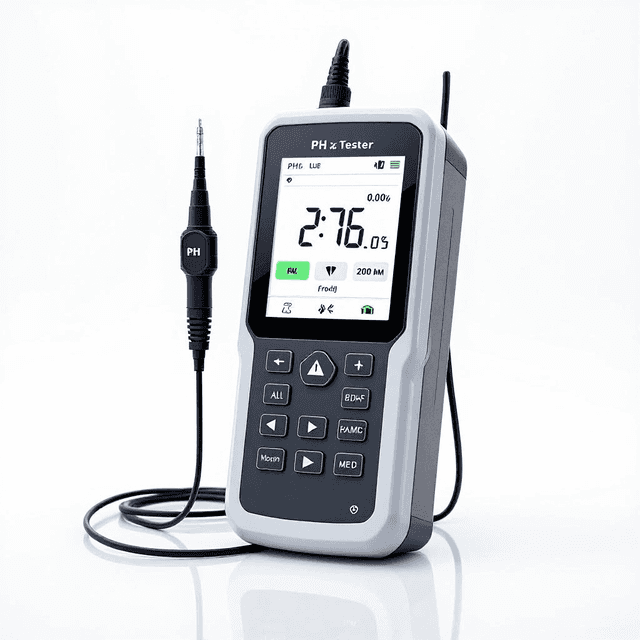
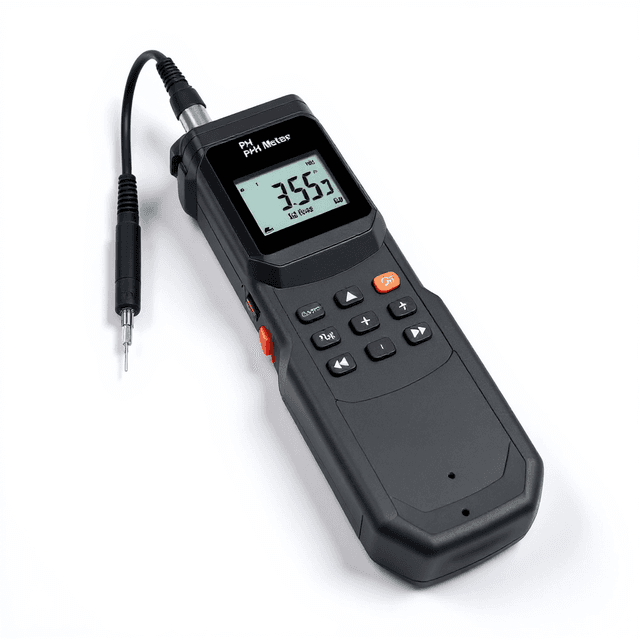
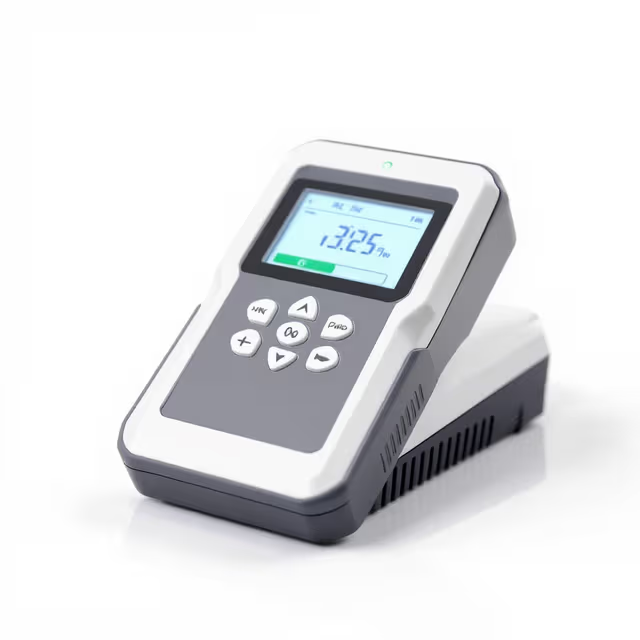
pH Sensor
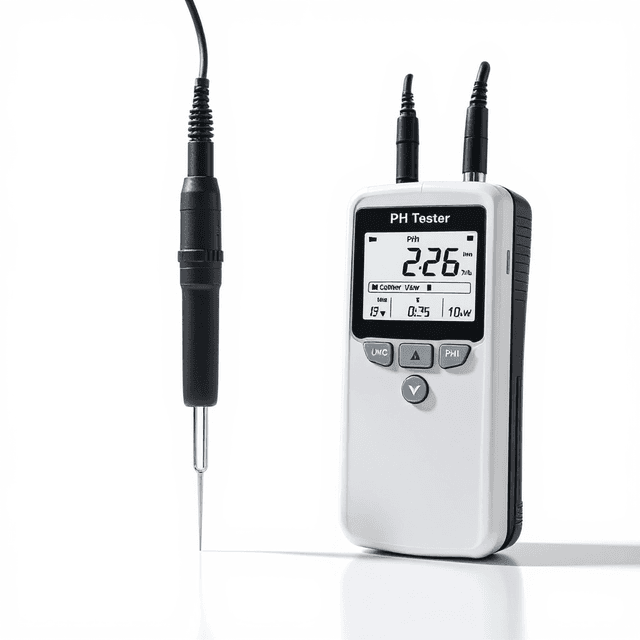
Glass electrode pH sensor with 0-14 pH range, BNC connector, and sub-second response time for precise aqueous pH measurement in laboratory and field applications.

Louise Corscadden, PhD
Director of Science · ConductScience
Ask Louise about pH Sensor fit, setup, configuration, or quote prep.
Already working with us? Sign in to connect this with My Scientist.
Key Specifications
Full details →- Model fit
- Configured during quote
- SKU family
- CS-LH-ELC006
- Shipping box
- 20.0 x 10.0 x 5.0 cm
- Ordering
- Online checkout and quote request available
- Category
- pH Meters
- Build notes
- Confirm accessories, station layout, and support needs before purchase
The Sensor Ph (E-201) is a glass electrode pH sensor designed for precise pH measurement across the full 0-14 pH range. This BNC-connected sensor utilizes ion-selective glass membrane technology to provide accurate pH determination in aqueous solutions with response times under 1 second after stirring. The sensor features low internal impedance (≤250MΩ at 25°C) and maintains theoretical slope performance ≥97% at 25°C for reliable measurements.
The glass electrode incorporates specialized ion-sensitive glass formulations optimized for hydrogen ion detection, with minimal alkaline error (≤15 mV at 25°C) and precise zero point calibration (7±0.25 pH at 25°C). Multiple connector options are available including BNC (standard), Y blade, and pin connectors to accommodate different measurement systems and data acquisition equipment used in research environments.
How It Works
The pH sensor operates through ion-selective glass membrane technology, where a specialized glass electrode develops an electrical potential proportional to hydrogen ion activity in solution. The glass membrane contains metal oxides that create selective binding sites for hydrogen ions, generating a measurable voltage difference across the membrane that correlates directly with pH according to the Nernst equation.
When immersed in aqueous solution, hydrogen ions interact with the glass surface, creating an electrochemical potential that varies logarithmically with pH. The sensor's internal reference system maintains stable potential measurement, while the BNC connector transmits the electrical signal to pH meters or data acquisition systems for conversion to pH units. The low impedance design (≤250MΩ) ensures signal stability and compatibility with standard pH measurement electronics.
Features & Benefits
E-201
- 0-14 pH
E-6501
- 0-14 pH
E-6503
- 0-14 PH
E-901 Flat Surface
- 0-14 pH
501
- 5-60â
Automation Level
- manual
Brand
- ConductScience
Research Domain
- Analytical Chemistry
- Cell Biology
- Environmental Monitoring
- Food Science
- Industrial Hygiene
- Pharmaceutical QC
Shipping weight
- 0.26 lb
Shipping box
- L: 20.0 cm
- W: 10.0 cm
- H: 5.0 cm
| Feature | This Product | Typical Alternative | Advantage |
|---|---|---|---|
| pH Measurement Range | 0-14 pH full scale | Entry-level sensors often limited to 2-12 pH range | Complete pH scale coverage eliminates range limitations for diverse sample types |
| Response Time | ≤1 second with stirring | Basic electrodes typically require 30-60 seconds for stable readings | Rapid response enables efficient sample throughput and real-time monitoring |
| Slope Performance | ≥97% theoretical slope | Standard electrodes often show 95-96% slope performance | Higher slope percentage indicates superior electrode sensitivity and accuracy |
| Internal Impedance | ≤250MΩ at 25°C | Basic glass electrodes may have higher impedance values | Lower impedance provides more stable signal transmission and meter compatibility |
| Connector Options | BNC, Y blade, pin connectors available | Most electrodes offer single connector type | Multiple connector options ensure compatibility with diverse measurement systems |
The E-201 pH sensor combines full-range pH measurement capability with rapid response characteristics and high slope performance. The multiple connector configurations and low impedance design provide versatile integration options for laboratory and field measurement applications.
Practical Tips
Always use fresh buffer solutions for calibration and replace buffers if pH values drift from nominal specifications.
Why: Buffer degradation leads to calibration errors that propagate through all subsequent measurements.
Clean glass bulb weekly with dilute HCl solution followed by distilled water rinse to remove protein deposits and surface contamination.
Why: Protein fouling and surface deposits can slow response time and reduce measurement accuracy.
Allow temperature equilibration between electrode and sample before taking measurements, especially when temperature differences exceed 10°C.
Why: Temperature gradients create thermal potentials that can introduce measurement errors until equilibrium is reached.
If electrode shows slow response or drift, soak glass bulb in 0.1M HCl for 10 minutes then recalibrate.
Why: Acid treatment removes surface contamination and reactivates ion-exchange sites in the glass membrane.
Record calibration slope percentage with each measurement session to monitor electrode performance degradation over time.
Why: Slope monitoring provides early warning of electrode aging before accuracy becomes compromised.
Handle glass electrode carefully and inspect for cracks before each use, especially after temperature cycling or chemical exposure.
Why: Cracked glass electrodes can leak internal electrolyte and provide unstable or inaccurate readings.
Setup Guide
What’s in the Box
- pH electrode with BNC connector
- Protective cap (typical)
- User manual (typical)
- Calibration certificate (typical)
Warranty
ConductScience provides standard 1-year manufacturer warranty covering defects in materials and workmanship, with technical support for calibration and measurement protocols.
Compliance
References
Background reading relevant to this product:
What calibration frequency is recommended for accurate pH measurements?
Daily two-point calibration using pH 4.0 and 7.0 buffers is recommended for routine use. More frequent calibration may be needed for critical applications or when measuring extreme pH values.
How should the electrode be stored between measurements?
Store in pH 4 buffer solution or 3M KCl solution to maintain glass membrane hydration. Never store in deionized water as this can damage the glass membrane.
What is the expected electrode lifespan under normal use?
Glass pH electrodes typically provide 1-2 years of reliable service with proper care and storage. Slope degradation below 95% indicates need for replacement.
Can this sensor measure pH in organic solvents or non-aqueous media?
This glass electrode is designed for aqueous solutions. Non-aqueous measurements require specialized electrode designs due to different ion activities and glass membrane behavior.
What temperature compensation is required for accurate measurements?
Automatic temperature compensation (ATC) through the pH meter is recommended. Manual temperature correction can be applied using Nernst equation calculations if ATC is unavailable.
How does sample volume affect measurement accuracy?
Minimum sample volume should exceed electrode bulb dimensions by several millimeters. Insufficient volume can cause junction potential errors and unstable readings.
Have a question about this product?
Have a question? Just ask.
Send it over and we'll email you a personalized answer — no call, no scheduling.
Prefer to talk it through?
Accessories
Enhance your setup with compatible accessories