Soil Nutrient Tester
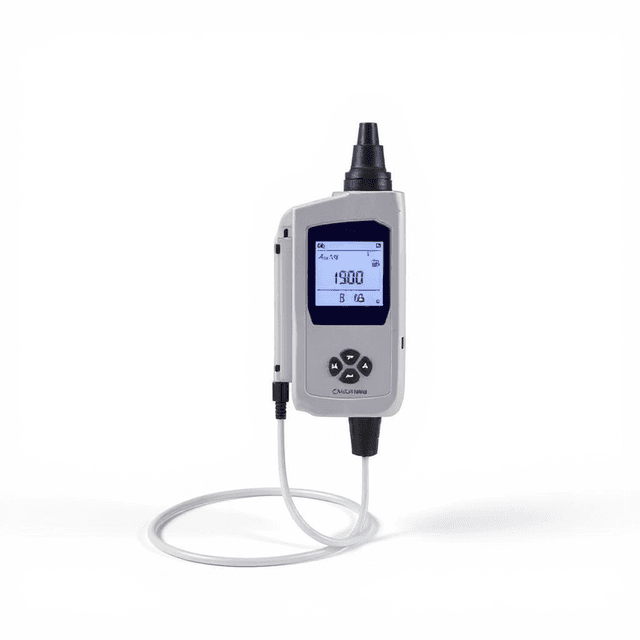
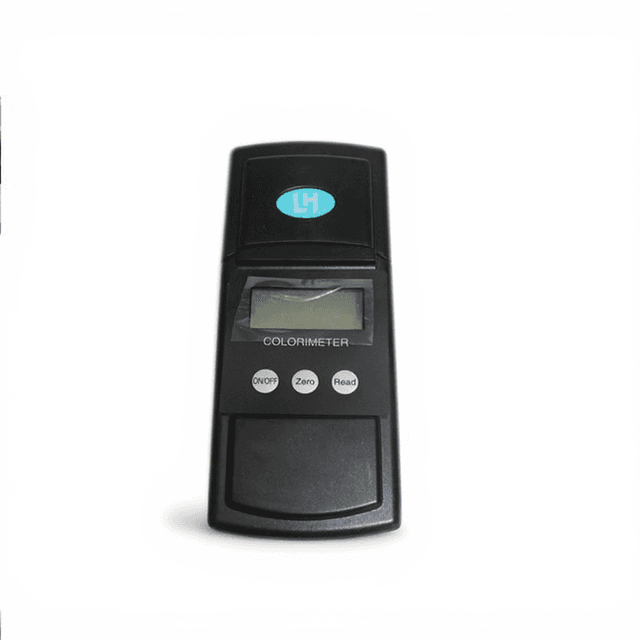
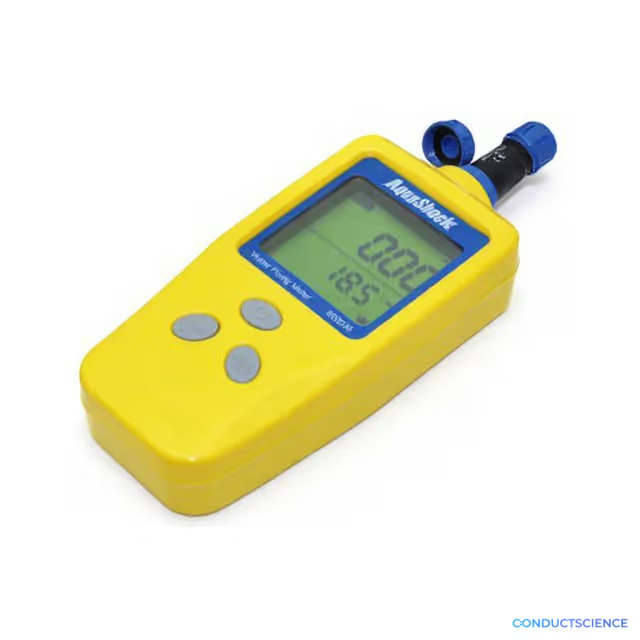
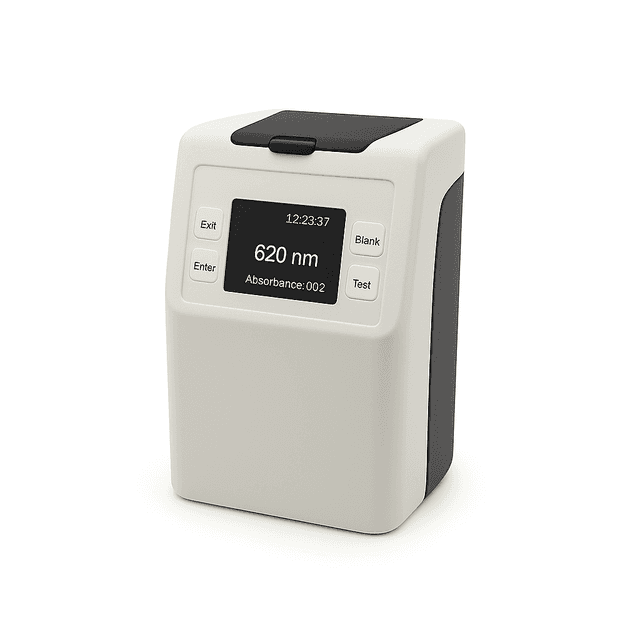
Portable multi-parameter soil analyzer providing simultaneous pH, moisture, and nutrient measurements with four-wavelength optical detection and integrated thermal printing.

Louise Corscadden, PhD
Director of Science · ConductScience
Ask Louise about Soil Nutrient Tester fit, setup, configuration, or quote prep.
Already working with us? Sign in to connect this with My Scientist.
Key Specifications
Full details →- Model fit
- Configured during quote
- SKU family
- BIO-0001
- Shipping box
- 21.65 x 14.57 x 9.84 cm
- Ordering
- Online checkout and quote request available
- Category
- Portable Analyzers
- Build notes
- Confirm accessories, station layout, and support needs before purchase
The Soil Nutrient Tester is a portable analytical instrument designed for comprehensive soil chemistry assessment in field and laboratory environments. This multi-parameter analyzer provides simultaneous measurement of soil pH, moisture content, and nutrient levels using four discrete wavelength channels (680nm, 420nm, 510nm, and 590nm) with a measurement range of 0.001-9999 units.
The instrument features integrated thermal printing capabilities for immediate documentation of results and maintains measurement stability with drift less than 0.1% within 30 minutes. With pH measurement accuracy of ±0.1 and soil moisture determination with less than 0.5% error, this analyzer supports quantitative soil assessment protocols across agricultural research, environmental monitoring, and ecological studies.
How It Works
The Soil Nutrient Tester employs multi-wavelength optical analysis to quantify soil chemical parameters through spectrophotometric measurement. Four discrete wavelength channels (red 680±2nm, blue 420±2nm, green 510±2nm, orange 590±4nm) enable selective detection of different soil constituents based on their characteristic absorption spectra.
pH measurement utilizes electrochemical detection with a range of 1-14 pH units and 0.01 resolution. Soil moisture content is determined gravimetrically with measurement expressed as percentage (g/100g) across the full 0-100% range. The instrument's optical system maintains measurement stability through temperature compensation and drift correction algorithms that limit baseline drift to less than 0.1% over 30-minute measurement periods.
Results are processed through the integrated measurement system and can be immediately documented using the built-in thermal printer, providing permanent records for analytical protocols requiring documented measurement traceability.
Features & Benefits
Automation Level
- semi-automated
Range and Resolution
- 0.001-9999
Stability
- Drift less than 0.1% (0.001, transmittance measurement) within 30 minutes.
Wavelength Range
- Red: 680 ± 2nm; blue: 420 ± 2nm; green: 510 ± 2nm; Orange: 590 ± 4nm
PH Value (PH)
- Test range: 1~14; Accuracy: 0.01 (3) error: ± 0.1 (Extended)
Soil Moisture
- Moisture unit: % (g/100g); Moisture content test range: 0-100%; Error less than 0.5%
Data Printing
- Built in high-grade one button thermal printer
Package Size(L*W*H) mm
- 550*250*370+550*410*290
Gross Weight (kg)
- 13.6
Brand
- ConductScience
Research Domain
- Analytical Chemistry
- Environmental Monitoring
- Food Science
- Materials Science
Shipping weight
- 29.98 lb
Shipping box
- L: 21.65 cm
- W: 14.57 cm
- H: 9.84 cm
| Feature | This Product | Typical Alternative | Advantage |
|---|---|---|---|
| Optical Wavelength Channels | Four discrete wavelengths (680±2nm, 420±2nm, 510±2nm, 590±4nm) | Entry-level instruments often provide 1-2 wavelengths | Multiple wavelengths enable comprehensive soil constituent analysis through selective absorption measurement. |
| pH Measurement Range | Full 1-14 pH range with ±0.1 accuracy | Basic soil pH meters may offer limited range or lower accuracy | Covers complete agricultural pH spectrum with precision suitable for research protocols. |
| Moisture Content Precision | 0-100% range with <0.5% error | Portable moisture meters often show higher measurement uncertainty | High precision moisture determination essential for accurate soil chemistry interpretation. |
| Measurement Stability | Drift <0.1% within 30 minutes | Field instruments may exhibit higher drift rates | Maintains consistent results during extended measurement sessions and multi-sample protocols. |
| Data Documentation | Built-in thermal printer for immediate results | Many portable analyzers lack integrated printing | Provides immediate hard-copy documentation for analytical record-keeping and protocol compliance. |
| Measurement Range | 0.001-9999 units dynamic range | Limited-range instruments may require dilutions or concentration steps | Single-instrument capability for both trace-level and concentrated soil constituents. |
This multi-parameter analyzer combines four-wavelength optical detection with precise pH and moisture measurement in a portable platform. The integrated thermal printing and wide dynamic range provide comprehensive soil analysis capabilities suitable for field and laboratory research protocols requiring documented analytical results.
Practical Tips
Perform pH buffer calibration using fresh standard solutions at ambient temperature and verify optical calibration with certified reference materials.
Why: Temperature-equilibrated calibration standards ensure measurement accuracy across the instrument's analytical range.
Clean optical surfaces with appropriate solvents after each use and store the instrument in a controlled environment to prevent moisture condensation.
Why: Contaminated optics and environmental moisture can introduce measurement drift and reduce analytical precision.
Allow 30-minute stabilization time for critical measurements and maintain consistent sample preparation protocols across analytical sessions.
Why: Full thermal and electronic equilibration minimizes measurement drift and ensures reproducible results.
If measurements show unexpected drift, verify sample chamber cleanliness and check for residual moisture from previous samples.
Why: Cross-contamination and residual moisture are common sources of measurement variability in multi-parameter analyzers.
Document environmental conditions (temperature, humidity) during measurements and maintain calibration logs for analytical traceability.
Why: Environmental factors affect both instrument performance and soil sample chemistry, requiring documentation for quality assurance.
Handle soil samples with appropriate personal protective equipment and ensure proper ventilation when analyzing samples from unknown sources.
Why: Soil samples may contain biological or chemical hazards requiring standard laboratory safety protocols.
Print measurement results immediately after analysis to prevent data loss and maintain chronological analytical records.
Why: The thermal printer provides permanent documentation essential for analytical protocol compliance and data integrity.
Setup Guide
What’s in the Box
- Soil Nutrient Tester main unit
- Power adapter and cables
- Thermal printer paper rolls
- Sample preparation accessories (typical)
- User manual and protocol guides
- Calibration reference materials (typical)
- Maintenance kit (typical)
Warranty
ConductScience provides a standard one-year manufacturer warranty covering instrument defects and technical support. Extended warranty options and calibration service contracts are available for ongoing analytical quality assurance.
Compliance
What is the measurement precision for pH determination and how does it compare to laboratory pH meters?
The instrument provides pH measurement with ±0.1 accuracy and 0.01 resolution across the 1-14 pH range. While laboratory benchtop meters may achieve slightly higher precision, this level of accuracy is suitable for most soil chemistry protocols and field applications requiring documented pH determination.
How long does the measurement stabilization period require for accurate results?
The system achieves measurement stability with less than 0.1% drift within 30 minutes of operation. For critical measurements requiring maximum accuracy, allow this full stabilization period, though routine measurements may be performed with shorter equilibration times.
What soil sample preparation is required for consistent measurements?
Consult product datasheet for specific sample preparation protocols. Standard soil analysis typically requires consistent particle size distribution and moisture equilibration prior to measurement to ensure reproducible optical and electrochemical results.
Can the instrument store measurement data electronically or only print results?
The system includes integrated thermal printing for immediate hard-copy documentation. Consult product datasheet for electronic data storage and transfer capabilities, which may vary depending on instrument configuration.
What calibration standards are required for maintaining measurement accuracy?
The instrument requires pH buffer standards for electrochemical calibration and optical reference materials for spectrophotometric measurements. Consult product datasheet for specific calibration intervals and reference standard specifications.
How does the four-wavelength system improve nutrient analysis compared to single-wavelength instruments?
Multiple wavelengths (680nm, 420nm, 510nm, 590nm) enable selective detection of different soil constituents based on characteristic absorption spectra, providing more comprehensive nutrient profiling than single-wavelength systems limited to one parameter type.
What is the typical measurement throughput for soil sample analysis?
Measurement throughput depends on required stabilization time and sample preparation protocols. With 30-minute stabilization for maximum accuracy, plan analytical sessions accordingly, though routine measurements may achieve higher throughput with acceptable precision.
Have a question about this product?
Have a question? Just ask.
Send it over and we'll email you a personalized answer — no call, no scheduling.
Prefer to talk it through?
Accessories
Enhance your setup with compatible accessories
Frequently Bought Together