ConductVision Enterprise

Fire & Smoke Detection

Detect visible flames and smoke early, a visual layer that complements existing fire alarm systems, available for pilot.

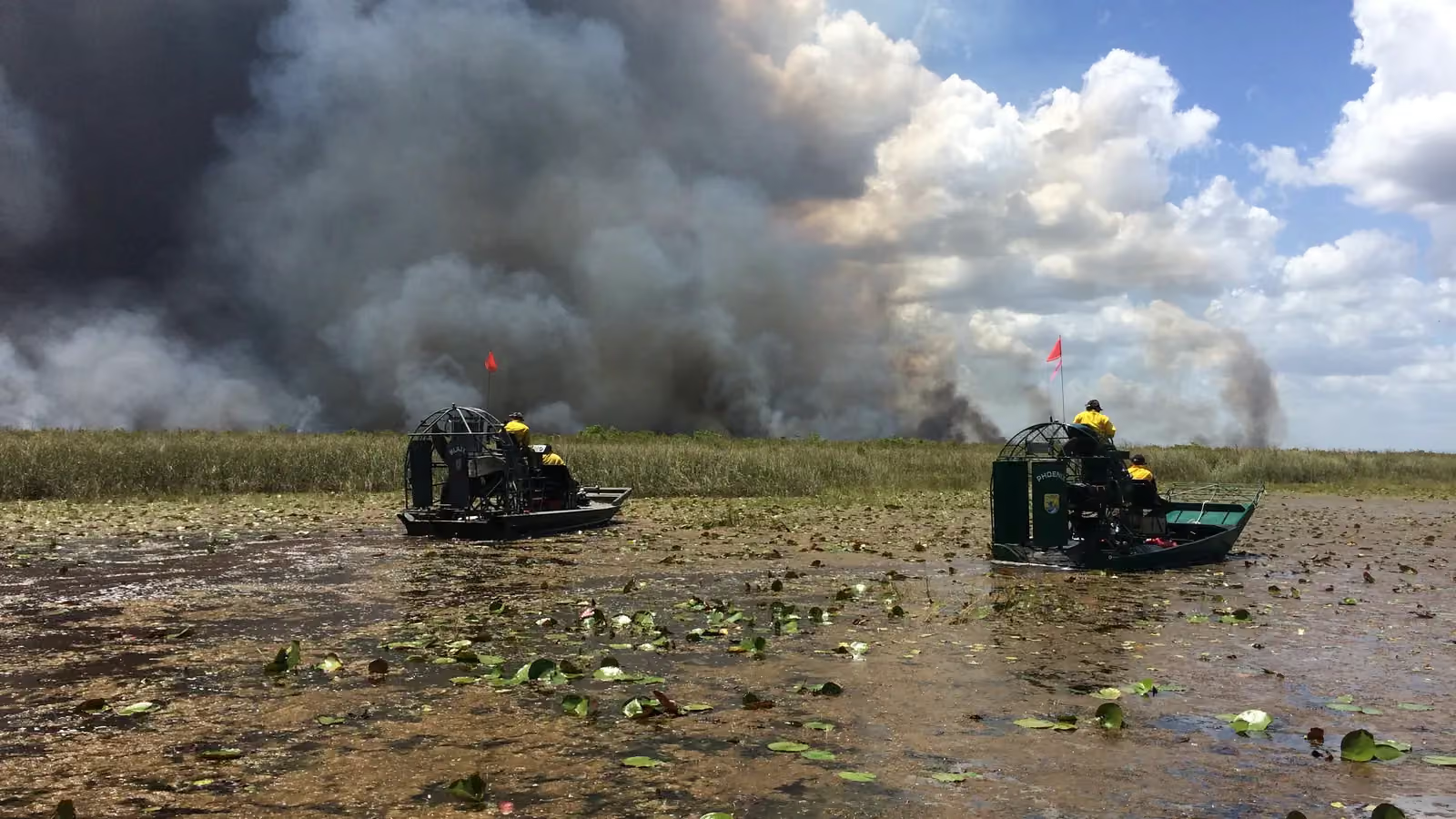
Example fire & smoke detection scene with an illustrative detection overlay
Illustrative detection overlay, drawn for demonstration. Not model output.

Fire & Smoke Detection uses computer vision to identify visible flames and smoke plumes in video feeds, providing an early warning layer that complements existing fire alarm systems. The system is designed to flag the first visible sign of flame or smoke for human review. The models distinguish between smoke from fire, steam, dust, and vehicle exhaust to minimize false alarms. This capability is particularly effective in warehouses, forests, construction sites, and other environments where traditional sensor placement is impractical.

How it works

Fire & Smoke Detection in three steps

Connect

Connect Monitoring Cameras

Use existing surveillance cameras or add purpose-mounted cameras covering high-risk areas. PTZ cameras can be configured to sweep zones on a schedule, maximizing coverage area per camera.

Analyze

Visual Flame and Smoke Analysis

Dual-path models analyze both texture/color signatures of flames and the motion characteristics of smoke plumes. Temporal analysis across multiple frames reduces false triggers from transient events like reflections or fog.

Act

Alert Response Teams Immediately

Confirmed detections trigger multi-channel alerts, sirens, SMS, email, and integration with building management systems. Each alert includes a snapshot, camera location, and confidence score for rapid triage.

Features

Flame Detection

Identifies visible flames by analyzing color, texture, and flicker frequency. Effective on fires ranging from small incipient flames to fully developed blazes.

Smoke Plume Detection

Detects smoke by analyzing semi-transparent, rising visual patterns. Distinguishes smoke from steam, fog, and dust through motion trajectory and opacity analysis.

Wildfire Early Warning

Mountaintop and tower-mounted cameras scan vast areas for distant smoke columns. The system can detect smoke plumes from fires over 5 km away under clear conditions.

False Positive Suppression

Multi-frame temporal analysis, environmental context (sun position, weather), and classification models suppress common false triggers including headlights, reflections, and steam.

Zone-Based Sensitivity

Configure different sensitivity levels for different zones within a camera view, high sensitivity near flammable storage, reduced sensitivity near steam vents or kitchens.

Integration with Fire Panels

Outputs integrate with building fire alarm control panels via dry contact relays, Modbus, or BACnet. Video verification assists fire departments in pre-arrival assessment.

Outdoor and Open-Space Coverage

Designed for spaces where ceiling-mounted sensors are impractical: open-air storage yards, forests, construction sites, and agricultural land.

Use cases

Warehouse Fire Prevention

High-rack warehouses have ceilings too tall for conventional detectors to respond quickly. Camera-based detection at rack level can identify fire in seconds, before smoke reaches the ceiling.

logisticsmanufacturingretail

Wildfire Perimeter Monitoring

Forestry agencies need early detection of fires in remote areas. Tower-mounted cameras with long-range lenses can scan the horizon continuously, detecting smoke columns before they become visible to ground observers.

governmentconservationutilities

Construction Site Safety

Hot work, welding, and exposed materials create fire risk on construction sites. Visual detection can provide alerts when sparks or flames appear outside designated hot-work zones.

construction

Solar Farm Monitoring

Electrical faults in solar panels can cause fires across large, unmanned sites. Camera drones or fixed cameras can detect flames and smoke across the array, triggering shutdown protocols.

energyutilities

Industrial Process Monitoring

Chemical plants and refineries contain high-risk areas where fires can escalate rapidly. Video-based detection can provide a redundant layer alongside gas detectors and heat sensors.

manufacturingenergychemical

Historic Building Protection

Heritage structures often cannot accommodate modern fire suppression systems without damage. Non-invasive camera-based detection can provide early warning without physical modification to the building.

governmenthospitalitycultural

Fire and Smoke Early Warning

The challenge: Traditional smoke detectors rely on particulate reaching the sensor, which can take minutes in large spaces like warehouses, atriums, or outdoor areas.

How ConductVision helps: ConductVision can detect visible smoke and flame in camera feeds, even in large open environments. Alerts can include the precise location and a video snapshot, enabling fire response teams to mobilize before conventional alarms activate.

manufacturinglogisticsconstruction

Evacuation Monitoring

The challenge: During evacuations, incident commanders lack real-time data on which areas have been cleared, where people are stuck, and whether all exits are functional.

How ConductVision helps: The platform can provide a live occupancy overlay during evacuations, showing remaining population by zone, exit flow rates, and blockage points. This situational awareness can enable commanders to direct resources to areas that need assistance most urgently.

smart cityhealthcaremanufacturing

Crowd Crush Prevention

The challenge: Dangerous crowd densities develop rapidly at events, transit stations, and venues, and by the time security recognizes the danger, injuries may already be occurring.

How ConductVision helps: ConductVision can monitor crowd density in real time and trigger escalating alerts as density approaches dangerous thresholds. Early warnings can give security teams time to open additional exits, halt inflow, or make public address announcements before conditions become critical.

smart cityentertainmentinfrastructure

Medical Emergency Detection

The challenge: Individuals who collapse or experience medical emergencies in public spaces may go unnoticed for critical minutes, especially in less-trafficked areas.

How ConductVision helps: The platform can detect people who collapse, fall, or remain motionless in unusual positions, triggering alerts to security and medical teams. Faster detection means faster response, which is critical for cardiac events, seizures, and other time-sensitive conditions.

healthcaresmart cityentertainment

Active Threat Response

The challenge: Active threat events demand immediate lockdown and law enforcement notification, but initial reports are often delayed and inaccurate about the threat location.

How ConductVision helps: ConductVision can detect visible weapons in camera feeds and trigger immediate lockdown alerts with the threat location. Real-time tracking of the threat can provide law enforcement with situational awareness as they approach, and evacuation guidance can be customized by zone.

smart cityhealthcareeducation

Technical overview

Models
Dual-path architecture: flame classifier (EfficientNet-B4) + smoke segmentation (U-Net variant)
Input formats
RTSP, ONVIF, MP4, HLS, PTZ control integration
Output formats
JSON, MQTT, Webhooks, BACnet, Modbus, dry contact relay triggers
Edge support
NVIDIA Jetson, hardened outdoor enclosures, solar-powered remote units

Accuracy and latency are measured against your footage and cameras during pilot scoping; we publish figures only with the conditions they were measured under.

Evaluate Fire & Smoke Detection on your footage

One prioritized outcome, your cameras, a structured results review.