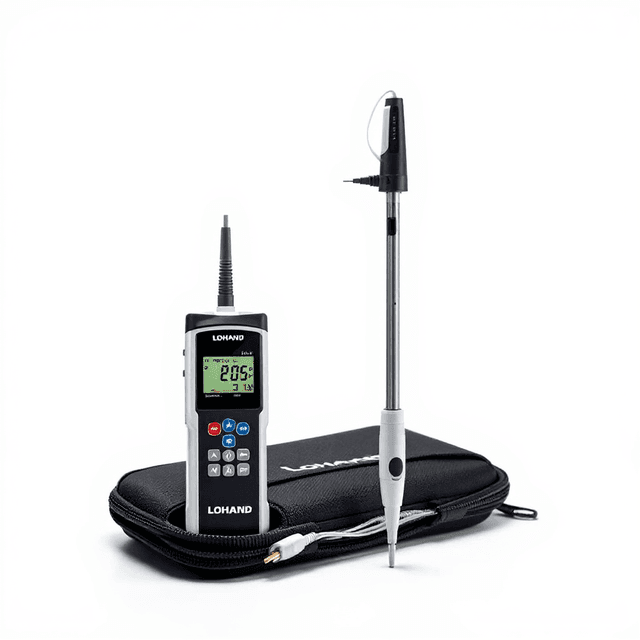
EC Probe
Laboratory conductivity electrode with platinum-platinum black configuration, available in three cell constants for precise electrical conductivity measurements in aqueous solutions.

Louise Corscadden, PhD
Director of Science · ConductScience
Ask Louise about EC Probe fit, setup, configuration, or quote prep.
Already working with us? Sign in to connect this with My Scientist.
Key Specifications
Full details →- Model fit
- Configured during quote
- SKU family
- CS-LH-ELC007
- Shipping box
- 20.0 x 10.0 x 5.0 cm
- Ordering
- Online checkout and quote request available
- Category
- Portable Analyzers
- Build notes
- Confirm accessories, station layout, and support needs before purchase
The EC Probe is a laboratory-grade conductivity electrode designed for precise electrical conductivity measurements in aqueous solutions. This bipolar electrode features a platinum-platinum black configuration that effectively minimizes polarization effects in high conductivity solutions, ensuring accurate measurements across a wide range of sample types.
Available in three cell constants (0.1±0.02, 1.0±0.2, and 10±2), this electrode accommodates diverse measurement requirements from low to high conductivity samples. The electrode utilizes sintered platinum plates on parallel glass substrates, with platinum-black coating to enhance measurement stability and reduce electrode drift during extended use.
How It Works
The EC Probe operates on the principle of electrical conductivity measurement through a bipolar electrode configuration. When immersed in an aqueous solution, the electrode applies an alternating current between two platinum surfaces and measures the resulting conductance, which correlates directly with the concentration of dissolved ions in the solution.
The platinum-platinum black surface coating provides enhanced electrode performance by increasing the effective surface area and reducing polarization effects that can compromise measurement accuracy. The black platinum coating creates microscopic surface roughness that improves electrode-solution interface stability, particularly important when measuring high conductivity solutions where polarization artifacts are most problematic.
Cell constant selection (0.1, 1.0, or 10) determines the measurement range optimization, with lower constants suited for high conductivity solutions and higher constants appropriate for low conductivity samples. The ratio of electrode separation distance to surface area defines the cell constant, allowing researchers to select the optimal configuration for their specific conductivity range requirements.
Features & Benefits
DJS-0.1
- 0.1±0.02
DJS-1
- 1.0±0.2
DJS-10
- 10±2
Automation Level
- manual
Brand
- ConductScience
Research Domain
- Analytical Chemistry
- Environmental Monitoring
- Food Science
- Industrial Hygiene
- Microbiology
- Pharmaceutical QC
Shipping weight
- 0.26 lb
Shipping box
- L: 20.0 cm
- W: 10.0 cm
- H: 5.0 cm
| Feature | This Product | Typical Alternative | Advantage |
|---|---|---|---|
| Cell Constant Options | Three cell constants available: 0.1±0.02, 1.0±0.2, and 10±2 | Many electrodes offer single fixed cell constants | Allows researchers to select optimal measurement range without purchasing multiple electrodes for different applications. |
| Electrode Surface Treatment | Platinum-platinum black coating for reduced polarization | Standard platinum surfaces without specialized coatings | Provides enhanced measurement stability and accuracy in high conductivity solutions where polarization effects are problematic. |
| Connector Interface | BNC standard with Y blades and pins connectors available upon request | Limited connector options requiring adapter purchases | Eliminates need for additional adapters and ensures compatibility with diverse laboratory conductivity meter configurations. |
| Electrode Construction | Sintered platinum plates on glass substrate | Wire or rod electrode configurations | Provides consistent electrode geometry and enhanced durability compared to wire-based designs prone to mechanical damage. |
The EC Probe combines multiple cell constant options with platinum-black surface treatment and flexible connector configurations. The sintered platinum-on-glass construction provides measurement stability and mechanical durability for routine laboratory conductivity measurements.
Practical Tips
Use conductivity standards that bracket your expected sample range and store standards in sealed containers to prevent evaporation and concentration changes.
Why: Standard solution concentration drift leads to calibration errors and measurement inaccuracy over time.
Rinse electrode with deionized water immediately after each measurement series and store in deionized water or as manufacturer recommends.
Why: Prevents sample residue buildup on platinum surfaces that can affect subsequent measurement accuracy and electrode response time.
Allow electrode and sample to reach thermal equilibrium before taking readings, and use temperature compensation when available on your meter.
Why: Conductivity measurements are highly temperature-dependent, and thermal equilibration ensures accurate and reproducible results.
If readings appear unstable or drift excessively, check for air bubbles on electrode surfaces and ensure complete immersion of both platinum areas.
Why: Air bubbles or partial immersion creates inconsistent electrode-solution contact leading to measurement instability and false readings.
Record ambient temperature with conductivity measurements and check calibration stability by re-measuring a standard solution after sample analysis.
Why: Temperature documentation enables post-analysis correction if needed, while standard re-measurement verifies measurement system stability throughout the analysis session.
Handle electrode glass components carefully and inspect for cracks before use, as damaged glass may affect measurement accuracy and pose safety risks.
Why: Cracked glass can alter electrode geometry and cell constant, compromising measurement validity while potentially exposing sharp edges.
Setup Guide
What’s in the Box
- EC Probe electrode with selected cell constant
- BNC connector (standard) or specified alternative connector
- User manual and specifications sheet (typical)
- Electrode storage recommendations (typical)
Warranty
ConductScience provides standard one-year manufacturer warranty covering electrode construction defects and performance specifications. Technical support includes calibration guidance and measurement troubleshooting assistance.
Compliance
How do I select the appropriate cell constant for my conductivity range?
Use DJS-0.1 (0.1) for high conductivity samples >10 mS/cm, DJS-1 (1.0) for moderate conductivity 100 μS/cm to 10 mS/cm, and DJS-10 (10) for low conductivity samples <1 mS/cm. The cell constant should be chosen to keep readings in the optimal range of your conductivity meter.
What is the significance of the platinum-black coating?
Platinum-black coating increases effective surface area and reduces polarization effects that can cause measurement drift and inaccuracy, particularly important in high ionic strength solutions where standard platinum electrodes may exhibit instability.
How frequently should the electrode be calibrated?
Calibration frequency depends on measurement accuracy requirements and sample characteristics. For critical measurements, daily calibration with appropriate standard solutions is recommended. Routine applications may require weekly to monthly calibration verification.
Can this electrode measure conductivity in non-aqueous solutions?
The electrode is designed for aqueous solutions. Non-aqueous solvents may affect electrode performance and measurement accuracy. Consult product datasheet for specific solvent compatibility information.
What maintenance is required for the platinum surfaces?
Clean electrode surfaces with deionized water between measurements. For contaminated surfaces, gentle cleaning with appropriate electrode cleaning solutions may be necessary. Avoid abrasive cleaning that could damage the platinum-black coating.
How does temperature affect conductivity measurements?
Conductivity is temperature-dependent, typically increasing ~2% per degree Celsius. Use temperature compensation features on your conductivity meter or measure at controlled temperature for highest accuracy.
What is the expected electrode lifespan?
Electrode lifespan depends on usage frequency, sample types, and maintenance practices. With proper care, platinum electrodes typically provide reliable service for years, though the platinum-black coating may gradually degrade with use.
Are there limitations on sample volume or container size?
Ensure sufficient sample volume to fully immerse both electrode surfaces without touching container walls. Minimum sample volumes typically range from 50-100 mL depending on electrode dimensions and measurement requirements.
Have a question about this product?
Have a question? Just ask.
Send it over and we'll email you a personalized answer — no call, no scheduling.
Prefer to talk it through?
Accessories
Enhance your setup with compatible accessories
Frequently Bought Together