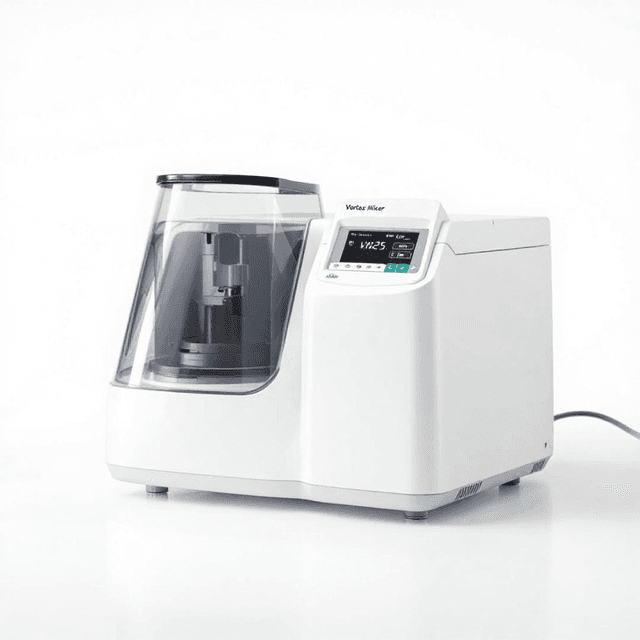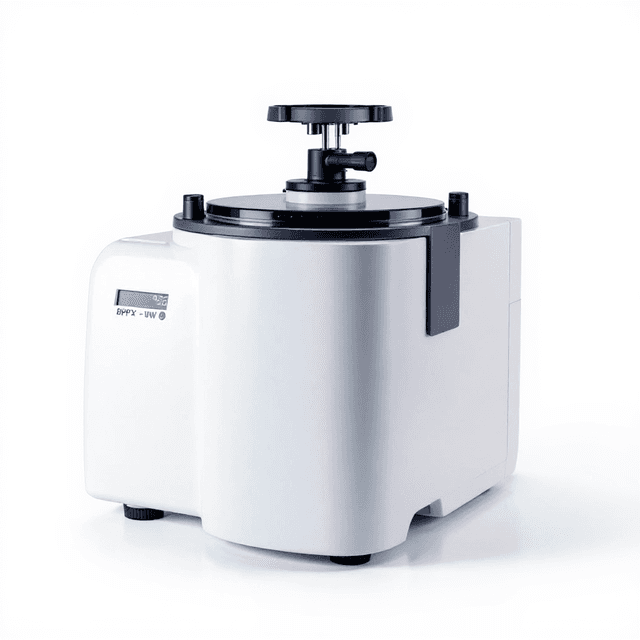
Mini Vortex Mixer
Compact touch-activated vortex mixer operating at fixed 3000 rpm with 4.8mm orbital diameter for efficient sample mixing in space-limited laboratory environments.

Louise Corscadden, PhD
Director of Science · ConductScience
Ask Louise about Mini Vortex Mixer fit, setup, configuration, or quote prep.
Already working with us? Sign in to connect this with My Scientist.
Key Specifications
Full details →- Model fit
- Configured during quote
- SKU family
- BIO-0606
- Shipping box
- 7.9 x 10.0 x 10.0 cm
- Ordering
- Online checkout and quote request available
- Category
- Benchtop Instruments
- Build notes
- Confirm accessories, station layout, and support needs before purchase
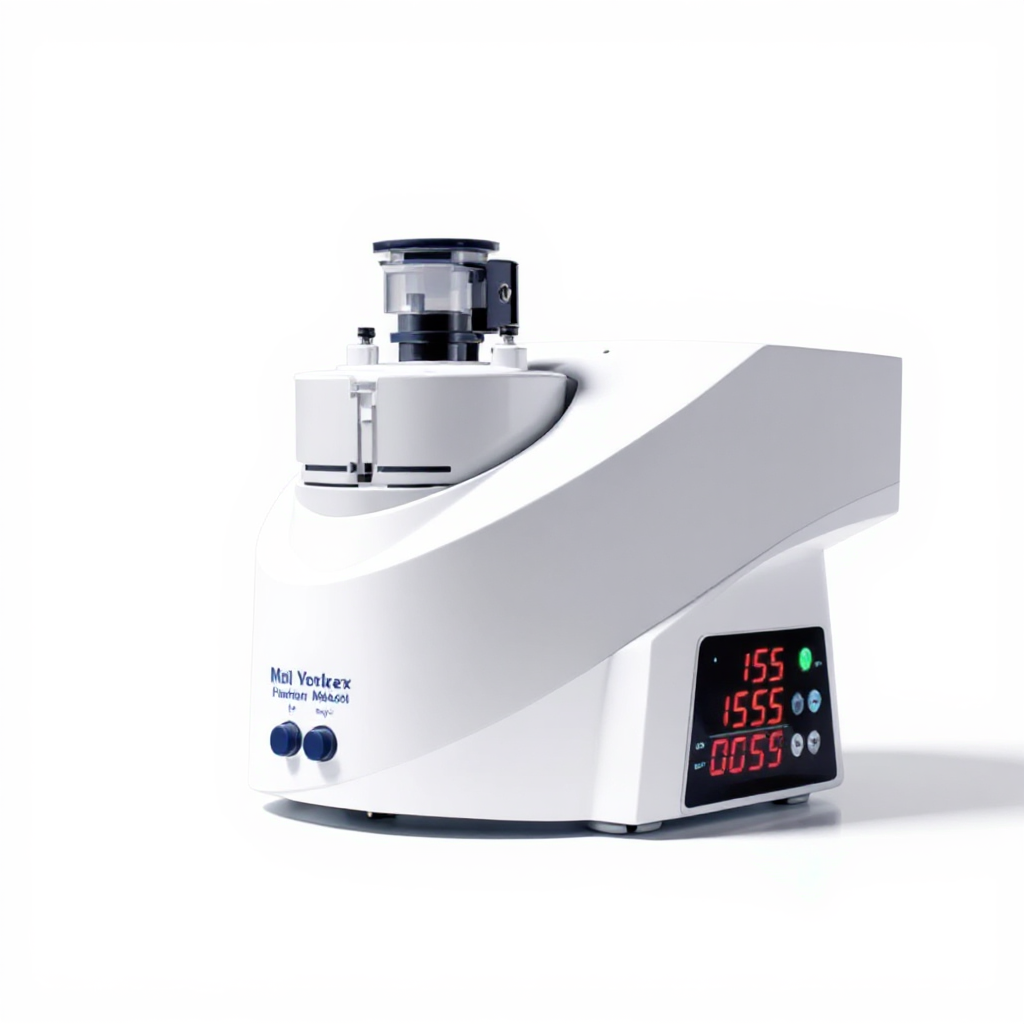
The Mini Vortex Mixer is a compact benchtop instrument designed for efficient sample mixing in laboratory environments. Operating with a fixed 3000 rpm orbital motion and 4.8mm orbital diameter, this mixer utilizes a DC brushless motor to provide consistent vortex action for tubes, vials, and small containers. The touch operation mode enables immediate activation when vessels are pressed against the mixing head, making it suitable for routine sample preparation tasks.
With external dimensions of 100×100×79mm and weighing 0.5 kg, this mixer fits into space-constrained laboratory settings while maintaining the mechanical performance required for thorough sample homogenization. The IP21 protection class provides resistance to solid particles and water ingress, supporting use in typical laboratory conditions.
How It Works
The Mini Vortex Mixer employs orbital motion to create turbulent flow patterns within sample containers. The DC brushless motor drives an eccentric mechanism that produces circular motion with a 4.8mm diameter orbit at 3000 rpm. This orbital action generates three-dimensional mixing through a combination of vertical lifting and horizontal circular motion of the sample liquid.
When a sample tube or vial is pressed against the mixing head, the touch operation mode activates the motor, initiating the orbital motion. The eccentric mounting of the mixing platform creates centrifugal forces that drive fluid circulation patterns, ensuring thorough mixing throughout the container volume. The fixed speed operation eliminates the need for speed adjustment, providing consistent mixing parameters across all samples.
Features & Benefits
Automation Level
- manual
Item No.
- 4076001000
Shaking Mode
- Orbital
Orbital Diameter
- 4.8mm
Motor Type
- DC brushless motor
Operation Mode
- Touch
Protection Class
- IP21
Consumption
- 12W
Rated Motor Output Consumption
- 10W
External Size(W*D*H)
- 100*100*79mm
Packing Size(W*D*H)
- 290*240*220mm
Brand
- ConductScience
Research Domain
- Analytical Chemistry
- Cell Biology
- Clinical Diagnostics
- Materials Science
- Microbiology
- Pharmaceutical QC
Speed/RPM
- 3000rpm(Fixed)
Power/Voltage
- AC100~240V, 50/60Hz
Weight
- 1kg
Shipping weight
- 0.5 lb
Shipping box
- L: 7.9 cm
- W: 10.0 cm
- H: 10.0 cm
| Feature | This Product | Typical Alternative | Advantage |
|---|---|---|---|
| Motor Type | DC brushless motor | Entry-level models often use brushed motors | Brushless design provides longer service life and reduced maintenance requirements in continuous laboratory use. |
| Operation Mode | Touch activation | Basic models may require manual switches | Touch activation streamlines workflow by eliminating separate switch operations during repetitive mixing tasks. |
| Power Supply | Universal AC100-240V, 50/60Hz | Some models require specific voltage ranges | Universal power compatibility eliminates the need for voltage converters in international laboratory settings. |
| Protection Rating | IP21 protection class | Basic models may lack ingress protection | IP21 rating provides protection against laboratory spills and particle contamination during routine use. |
| Size and Weight | 100×100×79mm, 0.5kg | Larger mixers often exceed 150×150×100mm | Compact footprint maximizes available bench space while maintaining full mixing functionality. |
This mini vortex mixer emphasizes reliable operation through DC brushless motor technology, convenient touch activation, and universal power compatibility. The compact design and IP21 protection rating make it suitable for space-constrained laboratory environments requiring consistent sample mixing performance.
Practical Tips
Verify mixing effectiveness with test samples of known viscosity to establish appropriate mixing durations for different sample types.
Why: Fixed speed operation requires duration adjustment rather than speed modification for optimal results.
Clean the mixing head regularly with appropriate laboratory solvents and inspect for wear or damage.
Why: Contaminated or damaged mixing heads can affect mixing efficiency and introduce sample cross-contamination.
Apply consistent downward pressure when using touch activation to ensure reliable motor engagement.
Why: Uniform pressure ensures consistent mixing initiation and prevents intermittent operation during sample processing.
Ensure sample containers are properly sealed before mixing to prevent spills and aerosol generation.
Why: The orbital motion can cause unsealed containers to leak, creating safety hazards and sample loss.
Record mixing duration and observe sample homogeneity to establish standardized protocols for different sample types.
Why: Documented mixing parameters ensure reproducible sample preparation across experimental replicates.
If touch activation becomes inconsistent, check the mixing head alignment and contact surface cleanliness.
Why: Misaligned or contaminated contact surfaces can interfere with the pressure-sensitive activation mechanism.
Position the mixer on a stable, vibration-free surface to prevent unwanted movement during operation.
Why: External vibrations can interfere with the orbital motion and reduce mixing effectiveness.
Setup Guide
What’s in the Box
- Mini Vortex Mixer main unit
- Power adapter (typical)
- Mixing head attachment (typical)
- User manual (typical)
- Warranty documentation (typical)
Warranty
ConductScience provides a standard one-year manufacturer warranty covering defects in materials and workmanship. Technical support is available for installation, operation, and troubleshooting assistance.
Compliance
References
Background reading relevant to this product:
What is the maximum sample volume that can be effectively mixed?
Sample volume capacity depends on tube size and mixing head attachment. Consult product datasheet for specific volume recommendations with different container types.
Can the mixing speed be adjusted for different sample types?
No, the mixer operates at a fixed 3000 rpm speed. Mixing duration should be adjusted based on sample viscosity and desired homogenization level.
What maintenance is required for the DC brushless motor?
The brushless motor design requires minimal maintenance. Regular cleaning of the mixing head and periodic inspection of power connections are typically sufficient.
How does the touch activation sensitivity perform with different tube materials?
Touch activation responds to physical contact pressure rather than material properties. Both plastic and glass tubes activate the system when pressed against the mixing head.
Is the mixer suitable for temperature-sensitive samples?
The 12W power consumption generates minimal heat. For temperature-critical samples, monitor sample temperature during extended mixing periods.
What are the noise levels during operation?
The DC brushless motor and compact design minimize operational noise, though specific decibel ratings should be confirmed in the product datasheet.
Can the mixer handle viscous solutions effectively?
The fixed 3000 rpm speed and 4.8mm orbital diameter provide adequate mixing force for moderately viscous solutions. Highly viscous samples may require longer mixing times.
Have a question about this product?
Have a question? Just ask.
Send it over and we'll email you a personalized answer — no call, no scheduling.
Prefer to talk it through?