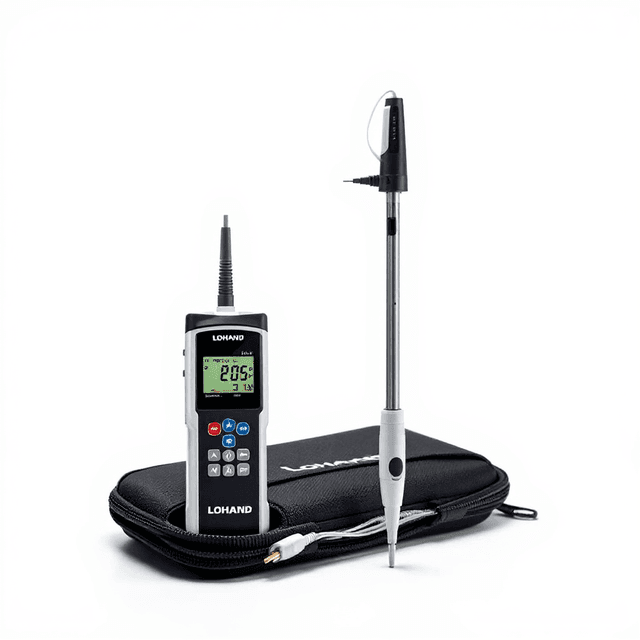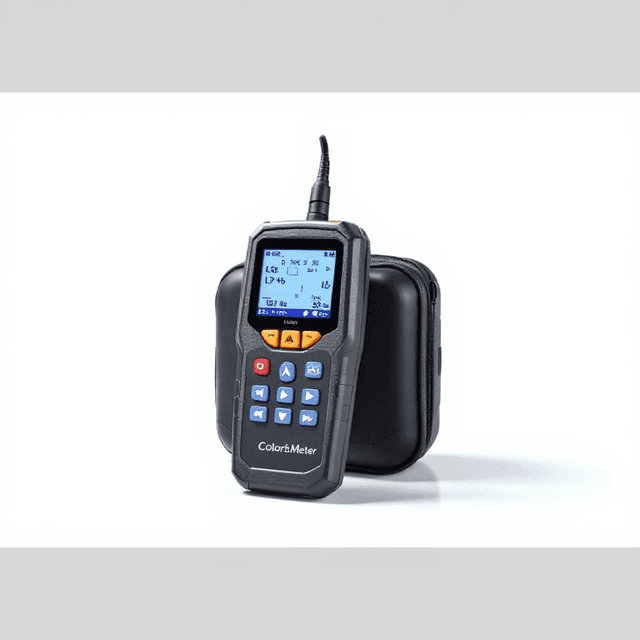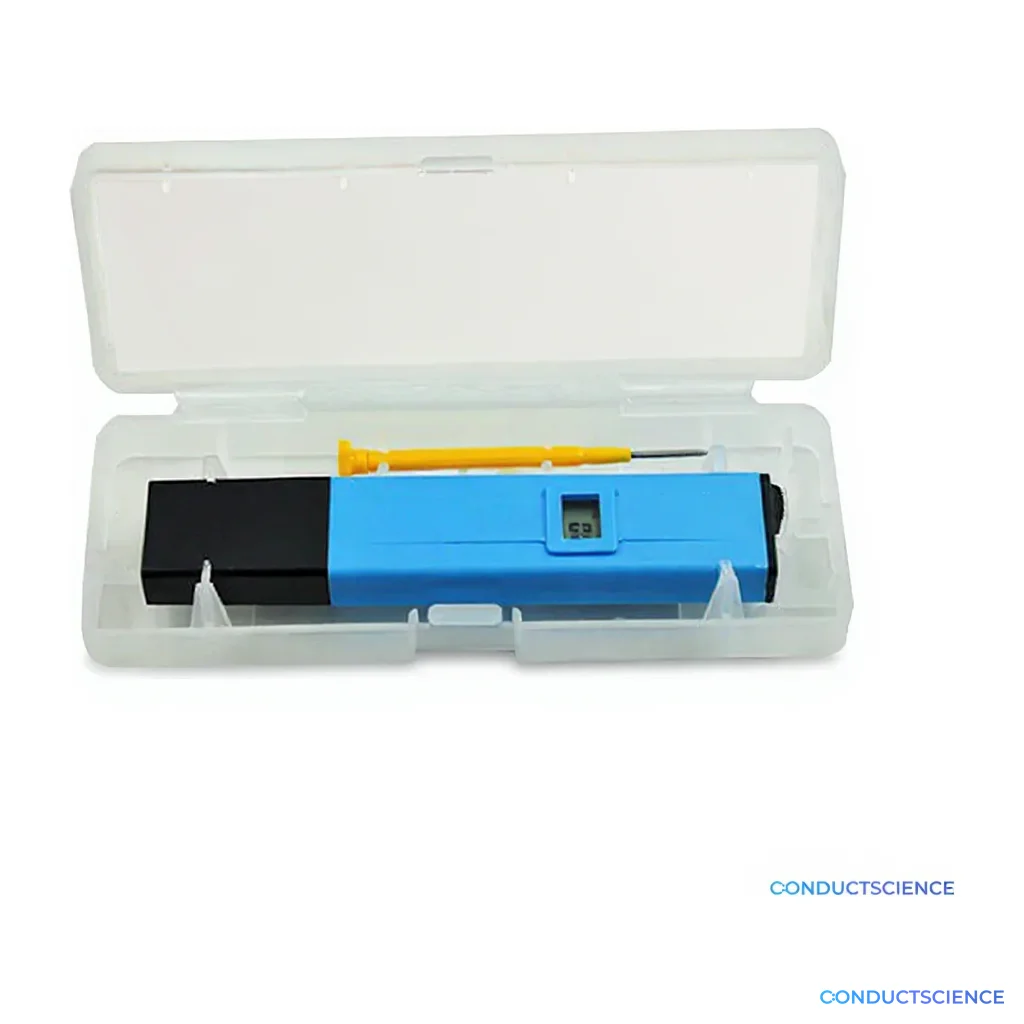
pH And EC Meter
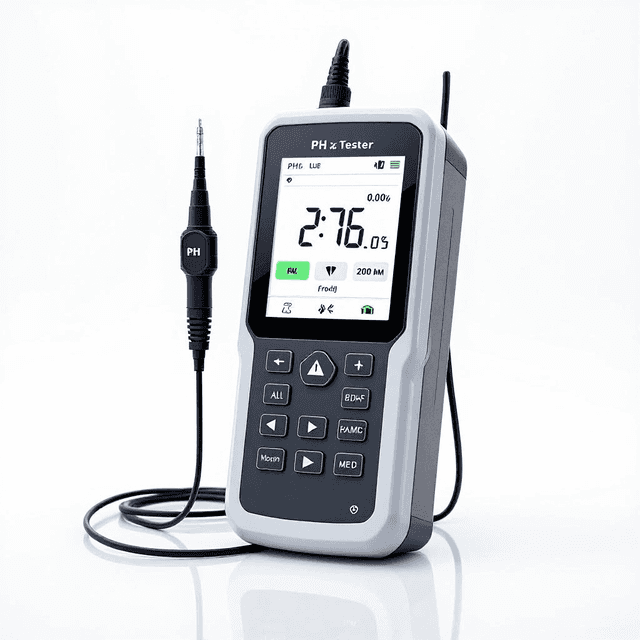
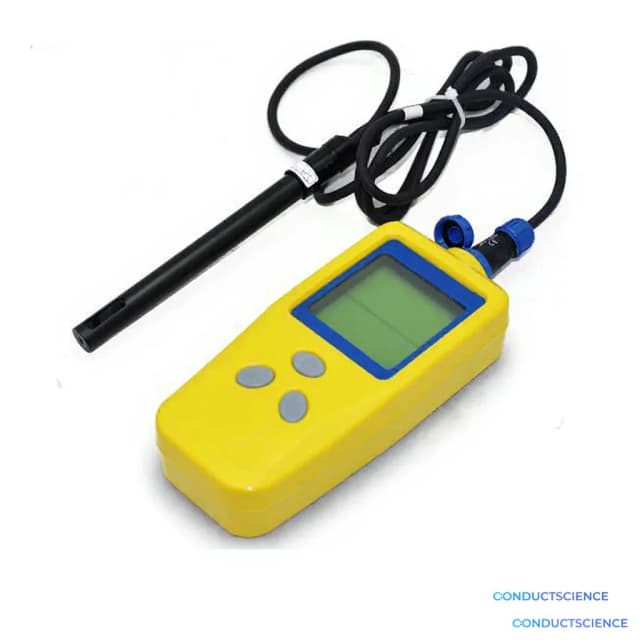
Handheld conductivity meter measuring 0.1-19.9 mS/cm for water quality monitoring and industrial process control applications.

Louise Corscadden, PhD
Director of Science · ConductScience
Ask Louise about pH And EC Meter fit, setup, configuration, or quote prep.
Already working with us? Sign in to connect this with My Scientist.
Key Specifications
Full details →- Model fit
- Configured during quote
- SKU family
- CS-LH-EC009
- Shipping box
- 18 x 6.5 x 3.3 cm
- Ordering
- Online checkout and quote request available
- Category
- Portable Analyzers
- Build notes
- Confirm accessories, station layout, and support needs before purchase
The CD-304 is a handheld conductivity meter designed for electrical conductivity measurement in aqueous solutions across industrial and research applications. The instrument measures conductivity from 0.1 to 19.9 mS/cm with 0.1 mS/cm resolution and ±2% full scale accuracy, making it suitable for water quality monitoring, chemical process control, and environmental assessment workflows.
The meter operates on four 1.5V lithium batteries and features single-point calibration for field use. Its compact form factor (180×65×33 mm, 117g) enables portable conductivity assessment in laboratory, field, and industrial settings where solution ionic concentration monitoring is required.
How It Works
Electrical conductivity measurement operates on the principle that ionic solutions conduct electricity proportionally to their dissolved ion concentration. The CD-304 applies an alternating current between two electrodes immersed in the test solution and measures the resulting current flow. Higher ion concentrations produce greater conductivity values, enabling quantitative assessment of total dissolved solids.
The instrument uses a two-electrode conductivity cell configuration where the measured conductance is converted to conductivity by accounting for the cell geometry factor. Temperature compensation may be required for accurate measurements, as conductivity varies approximately 2% per degree Celsius in most aqueous solutions. The 0.1 mS/cm resolution enables detection of conductivity changes relevant to most industrial and environmental monitoring applications.
Features & Benefits
Model No.
- CD-304
Measuring range
- 0.1-19.9ms/cm
Research Domain
- Analytical Chemistry
- Food Science
- Industrial Hygiene
- Materials Science
- Pharmaceutical QC
- Water Quality & Environmental Monitoring
Product name
- electrical conductivity testing equipment
Calibration
- 1 point
Working condition
- 0-50°C (32-122°F)
Automation Level
- manual
Brand
- ConductScience
Accuracy
- ±2%F·S
Power/Voltage
- 4Ã1.5V lithium batteries
Dimensions
- 180Ã65Ã33mm
Weight
- 117g
Shipping weight
- 0.18 lb
Shipping box
- L: 18 cm
- W: 6.5 cm
- H: 3.3 cm
| Feature | This Product | Typical Alternative | Advantage |
|---|---|---|---|
| Measurement Range | 0.1-19.9 mS/cm | Entry-level models often offer narrower ranges or multiple range switching | Single wide range eliminates manual range selection and covers most water quality applications without switching. |
| Resolution | 0.1 mS/cm | Basic meters may offer 1.0 mS/cm or coarser resolution | Finer resolution enables detection of smaller conductivity changes important for process control and quality assessment. |
| Calibration Method | Single-point calibration | Multi-point calibration may be required on some instruments | Simplified calibration reduces field setup time while maintaining adequate accuracy for routine monitoring. |
| Operating Temperature | 0-50°C (32-122°F) | Temperature ranges vary by model and application focus | Covers typical laboratory and field ambient conditions without requiring environmental control. |
| Portability | 117g, 180×65×33mm, battery powered | Benchtop models offer higher precision but require AC power | Enables measurements at sampling locations without sample transport or laboratory access requirements. |
The CD-304 provides practical conductivity measurement capability for field and routine applications, offering wide measurement range with simplified calibration in a portable format suitable for water quality monitoring and process control applications.
Practical Tips
Use conductivity standards that bracket your expected sample range for optimal accuracy.
Why: Calibration accuracy is highest when samples fall near the calibration point value.
Allow electrode to equilibrate in calibration standard for 1-2 minutes before adjustment.
Why: Electrode response time ensures stable readings and accurate calibration.
Rinse electrode thoroughly with distilled water between samples to prevent contamination.
Why: Cross-contamination from previous samples affects measurement accuracy.
Store electrode in appropriate storage solution when not in use for extended periods.
Why: Proper storage maintains electrode surface condition and response characteristics.
Ensure adequate sample volume to fully immerse the electrode sensing area.
Why: Incomplete immersion leads to erroneous readings and poor repeatability.
Allow samples to reach consistent temperature before measurement when possible.
Why: Conductivity varies approximately 2% per degree Celsius, affecting measurement accuracy.
Check for air bubbles on electrode surface if readings appear unstable or drift.
Why: Air bubbles disrupt electrical contact and cause measurement variability.
Record sample temperature alongside conductivity values for data interpretation.
Why: Temperature documentation enables post-measurement corrections and trend analysis.
Setup Guide
What’s in the Box
- CD-304 conductivity meter
- Conductivity electrode (typical)
- Calibration standard solution (typical)
- 4×1.5V lithium batteries
- User manual and calibration certificate (typical)
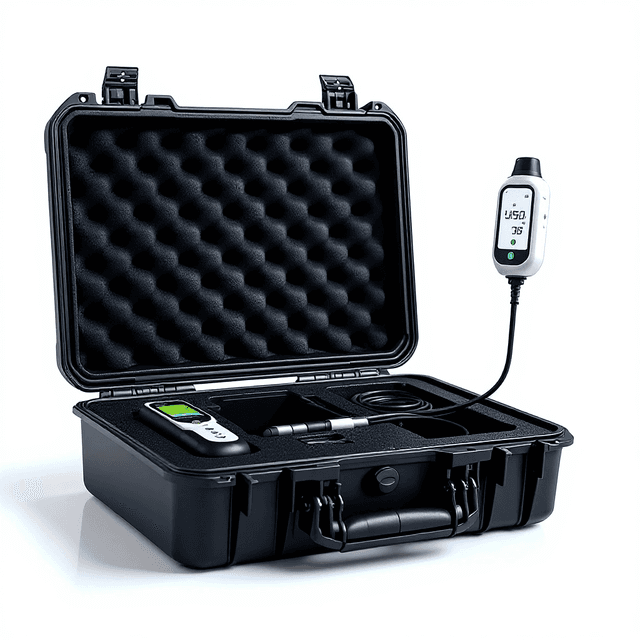
- Protective carrying case (typical)
Warranty
ConductScience provides standard one-year manufacturer warranty covering defects in materials and workmanship, with technical support for calibration and operational questions.
Compliance
References
Background reading relevant to this product:
What conductivity range does the CD-304 cover and is it suitable for drinking water analysis?
The CD-304 measures 0.1-19.9 mS/cm with 0.1 mS/cm resolution. This range covers drinking water (typically 0.1-1.0 mS/cm), wastewater, and industrial solutions, making it suitable for most water quality applications.
How is the instrument calibrated and how often should calibration be performed?
The meter uses single-point calibration with a known conductivity standard. Calibration frequency depends on usage intensity and accuracy requirements - typically daily for critical applications or weekly for routine monitoring.
Does the product name suggest pH capability, and are pH specifications provided?
While the product name includes 'pH', only conductivity measurement specifications are provided in the technical data. Consult product datasheet for complete parameter specifications if dual-parameter functionality is required.
What temperature compensation is available for conductivity measurements?
Temperature compensation specifications are not detailed in the provided technical data. The instrument operates from 0-50°C, but consult product datasheet for automatic temperature compensation features.
Is the instrument suitable for field measurements in environmental sampling?
Yes, the portable design (117g, battery powered) and measurement range make it appropriate for field conductivity assessment in environmental monitoring applications.
What electrode maintenance is required for optimal performance?
Rinse electrode with distilled water between samples and store according to manufacturer recommendations. Regular calibration verification ensures continued measurement accuracy.
How does measurement accuracy compare to laboratory-grade conductivity meters?
The ±2% full scale accuracy is suitable for field and routine applications. Laboratory reference instruments typically offer higher precision for critical analytical work.
Have a question about this product?
Have a question? Just ask.
Send it over and we'll email you a personalized answer — no call, no scheduling.
Prefer to talk it through?
Accessories
Enhance your setup with compatible accessories