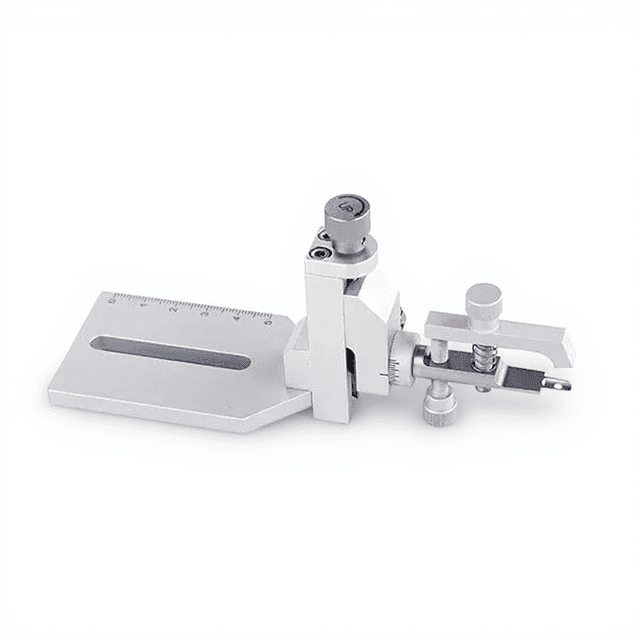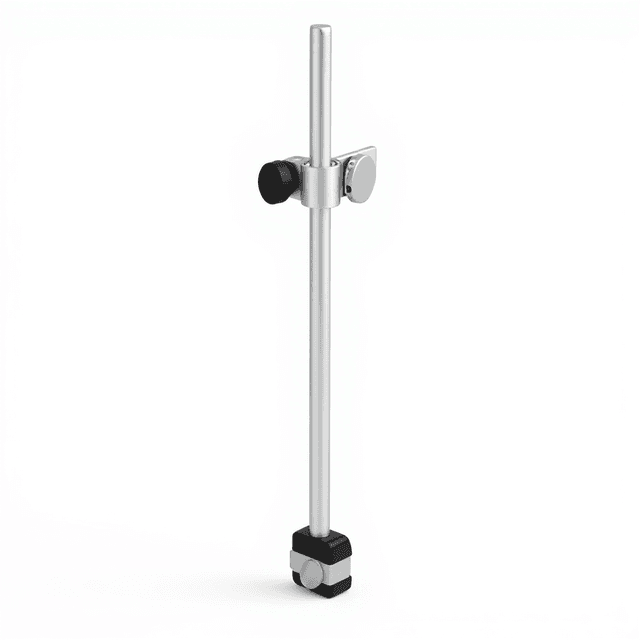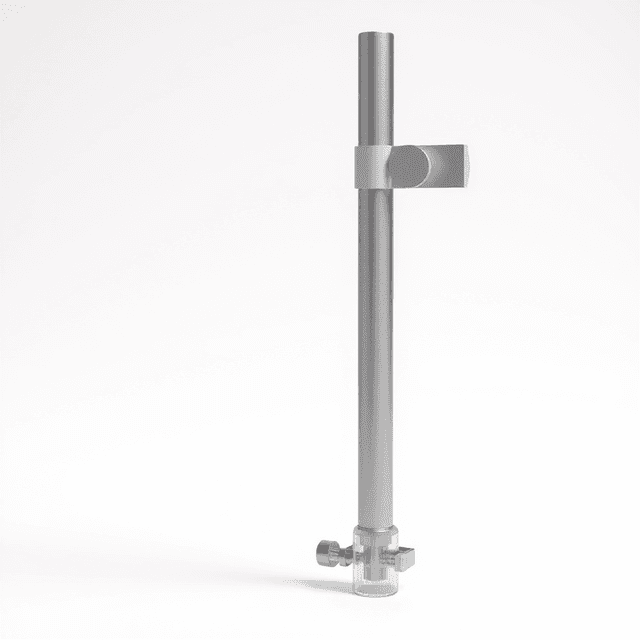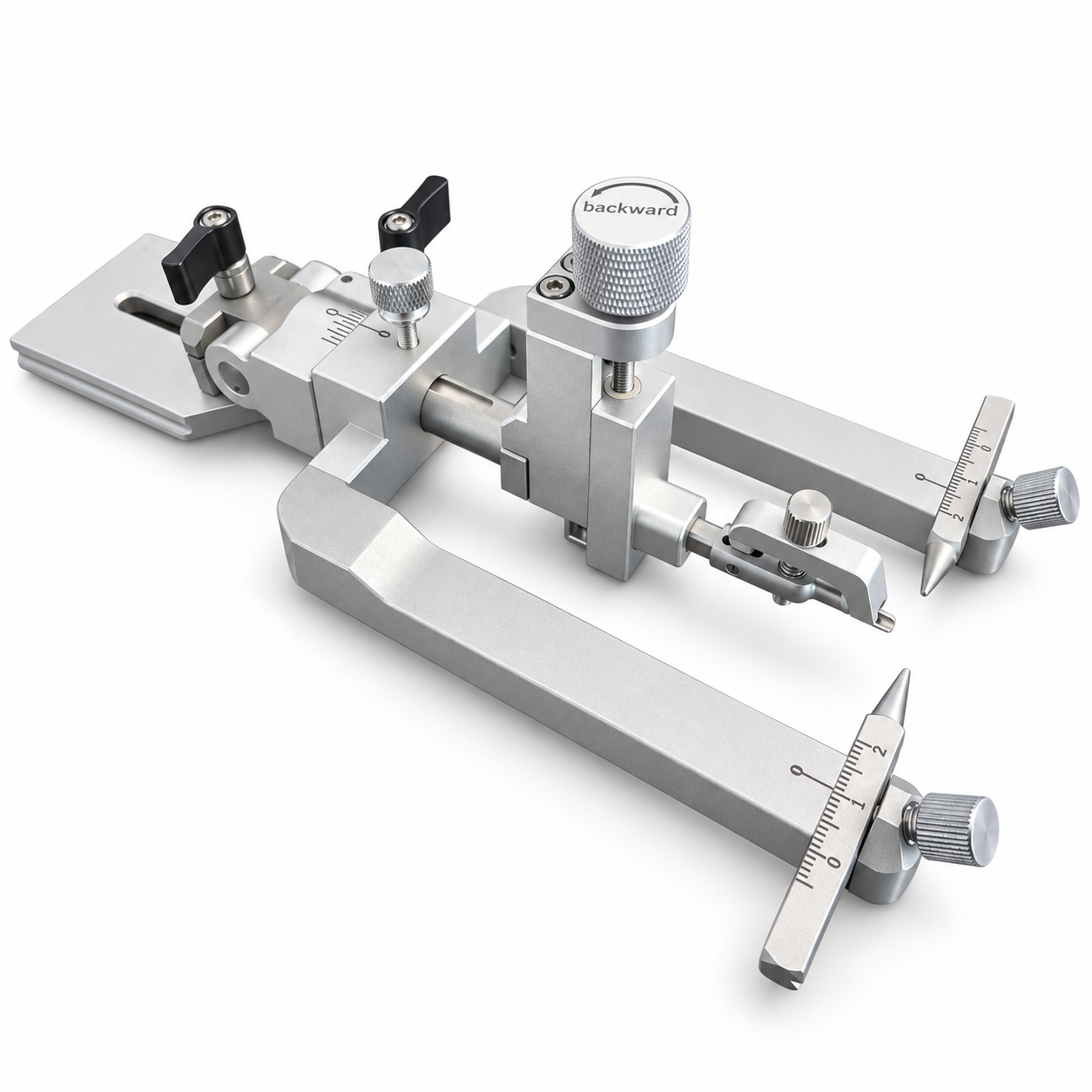
Rotational Mouse Adaptor (60°Ear Bars Included)
The ear bars of this adaptor are made of resin and the tips are specially treated, which ensures that the head is held firmly without damage to the skull..
There are scales on the incisor and the earbars.

Louise Corscadden, PhD
Director of Science · ConductScience
Ask Louise about Rotational Mouse Adaptor (60°Ear Bars Included) fit, setup, configuration, or quote prep.
Already working with us? Sign in to connect this with My Scientist.
Key Specifications
Full details →- Model fit
- Mouse
- SKU family
- RWD-68065
- Shipping box
- 34.0 x 39.0 x 33.0 cm
- Ordering
- Online checkout and quote request available
- Category
- Stereotaxic Accessories
- Build notes
- Confirm accessories, station layout, and support needs before purchase
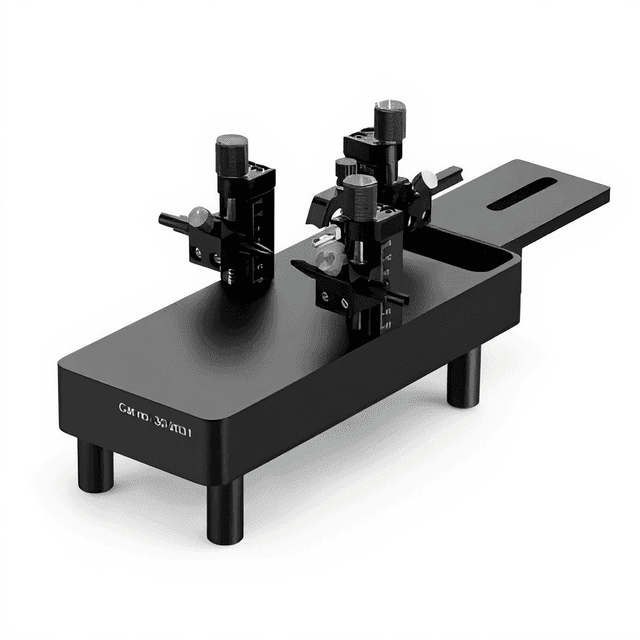
This adaptor is specifically designed for some special applications. The head of the mouse will be fixed by a pair of ear bars, nose, and incisors, and can be rotated according to the experimental requirements to facilitate the operation of different parts of the mouse head in different directions. The vertical adjustable range of the adaptor is 30mm (-20mm ~ +10mm), the adjustment accuracy is 100um; Horizontal adjustable range of the adaptor is 43.5mm; the rotation angle of the head is 60° (-30° ~ +30°)
How It Works
The rotational adaptor functions through a precision mechanical positioning system that integrates with standard stereotaxic frames. The mouse head is secured using three-point fixation: bilateral ear bars engage the external auditory meatus, while nose and incisor clamps provide anterior stabilization. This tri-point fixation maintains rigid head positioning during rotational movements.
The rotation mechanism operates through a calibrated angular adjustment system providing 60° of total rotation (-30° to +30° from center position). Vertical positioning utilizes a threaded adjustment mechanism with 100 μm precision over a 30 mm range, while horizontal translation spans 43.5 mm. These multi-axis adjustments enable precise targeting of brain coordinates that would be difficult or impossible to access with standard vertical approaches, particularly for deep structures or regions obscured by surface anatomy.
Features & Benefits
Vertical Adjustable Range
- 30mm (-20mm ~ +10mm)
Horizontal Adjustable Range
- 43.5mm
Rotation Angle
- 60° (-30° ~ +30°)
Adjustment Accuracy
- 100um
Included Accessories
- 60° Ear Bars
Fixation Points
- ear bars, nose, and incisors
Automation Level
- manual
Accuracy
- 100um
Species
- Mouse
Brand
- RWD
Research Domain
- Addiction Research
- Behavioral Pharmacology
- Learning and Memory
- Motor Function
- Neurodegeneration
- Neuroscience
Shipping weight
- 8.27 lb
Shipping box
- L: 34.0 cm
- W: 39.0 cm
- H: 33.0 cm
| Feature | This Product | Typical Alternative | Advantage |
|---|---|---|---|
| Rotational Range | 60° total range (-30° to +30°) | Fixed-angle adaptors offer no rotation, while adjustable models often provide limited angular range | Broader angular access enables targeting of brain regions that would be anatomically inaccessible with fixed positioning |
| Positioning Accuracy | 100 μm precision across all axes | Entry-level adaptors may offer lower precision or limited multi-axis control | Sub-millimeter accuracy ensures reproducible targeting of small brain nuclei and precise coordinate verification |
| Adjustment Range | 30 mm vertical (-20 to +10 mm), 43.5 mm horizontal | Standard adaptors typically offer more limited positioning ranges | Extended adjustment ranges accommodate different mouse sizes and enable bilateral targeting from single mounting position |
| Fixation System | Three-point fixation with specialized 60° ear bars | Standard ear bars may not maintain stability during rotation | Optimized fixation geometry maintains head stability throughout rotational movements without tissue damage |
| Multi-axis Control | Combined rotational, vertical, and horizontal positioning | Basic adaptors often provide single-axis adjustment only | Comprehensive three-dimensional positioning control enables complex surgical approaches and precise coordinate targeting |
The RWD-68065 combines precision positioning (100 μm accuracy) with unique rotational capability (60° range) and multi-axis adjustment, providing experimental flexibility not available in standard fixed-position stereotaxic accessories. The specialized three-point fixation system maintains stability throughout the full range of positioning adjustments.
Practical Tips
Recalibrate coordinate zero points after any rotational adjustment to maintain targeting accuracy, and document angle-specific coordinate transformations for reproducible targeting.
Why: Rotational positioning changes the relationship between frame coordinates and anatomical landmarks.
Apply light lubrication to adjustment mechanisms monthly and verify positioning accuracy using calibration standards to detect wear in precision components.
Why: Regular maintenance prevents mechanical drift that could compromise sub-millimeter targeting accuracy.
Test full range of motion and fixation stability with anesthetized animal before beginning procedures, ensuring no binding or coordinate drift during positioning.
Why: Pre-procedure verification prevents mid-surgery positioning problems that could compromise experimental outcomes.
If positioning accuracy decreases, check for debris in adjustment mechanisms and verify that all mounting hardware remains properly tightened.
Why: Mechanical loosening or contamination are the most common causes of positioning accuracy degradation.
Ensure ear bar engagement is secure but not over-tightened to avoid tissue damage, and monitor animal physiological parameters during extended positioning procedures.
Why: Proper fixation balance maintains animal welfare while ensuring stable positioning for precise procedures.
Document exact rotational angles and coordinate positions for each procedure to enable accurate data correlation and experimental replication.
Why: Precise positioning documentation is essential for correlating anatomical targeting with experimental results.
Plan surgical approaches to minimize the number of rotational adjustments during procedures, positioning the head optimally for primary and secondary targets.
Why: Minimizing repositioning reduces procedure time and maintains coordinate accuracy throughout the experimental session.
Use anatomical landmarks visible at multiple angles to verify coordinate accuracy after rotational positioning, particularly for deep brain targets.
Why: Multiple reference points confirm that rotational adjustments have not introduced systematic coordinate errors.
Setup Guide
What’s in the Box
- Rotational mouse adaptor assembly
- 60° ear bars (pair)
- Mounting hardware
- User manual with coordinate references
- Calibration verification protocol (typical)
Warranty
ConductScience provides a standard 1-year manufacturer warranty covering mechanical components and precision adjustment mechanisms, with technical support for installation and calibration procedures.
Compliance
What is the positioning accuracy and how does it compare to standard stereotaxic frames?
The adaptor provides 100 μm positioning accuracy across all axes, matching the precision of high-quality stereotaxic frames while adding rotational capability not available in standard systems.
Can this adaptor be used with existing stereotaxic frames from different manufacturers?
The adaptor is designed for compatibility with standard stereotaxic mounting systems, though specific mounting hardware compatibility should be verified with your frame manufacturer.
How stable is head fixation during rotation, particularly for chronic implant procedures?
The three-point fixation system (ear bars, nose, and incisors) maintains rigid positioning throughout the 60° rotation range, suitable for precision procedures including chronic electrode implantation.
What are the anatomical limitations for the rotational range in mouse procedures?
The ±30° rotation range is designed to accommodate mouse anatomical constraints while providing access to brain regions requiring angled approaches, such as deep structures or areas with overlying vasculature.
How do you maintain coordinate accuracy when switching between rotational positions?
Coordinate systems must be recalibrated after rotational adjustments, with the precision adjustment mechanisms allowing accurate targeting at any angle within the operational range.
Is the adaptor suitable for both acute and chronic experimental procedures?
Yes, the precision positioning and stable fixation make it appropriate for both acute procedures and chronic implant surgeries requiring precise coordinate targeting.
What maintenance is required to preserve positioning accuracy over time?
Regular calibration verification and lubrication of adjustment mechanisms as specified in the user manual will maintain positioning accuracy and smooth operation.
Can bilateral procedures be performed with this single adaptor?
The 43.5 mm horizontal adjustment range and rotational capability enable targeting of bilateral structures, though bilateral simultaneous procedures would require careful coordinate planning.
Have a question about this product?
Have a question? Just ask.
Send it over and we'll email you a personalized answer — no call, no scheduling.
Prefer to talk it through?
Frequently Bought Together