Zebrafinch Two-Compartment Cage
Specialized dual-compartment housing system for controlled zebra finch behavioral studies and social interaction research.

Louise Corscadden, PhD
Director of Science · ConductScience
Ask Louise about Zebrafinch Two-Compartment Cage fit, setup, configuration, or quote prep.
Already working with us? Sign in to connect this with My Scientist.
Key Specifications
Full details →- Model fit
- Bird
- SKU family
- CS-958152
- Shipping box
- 65.0 x 36.0 x 27.0 cm
- Ordering
- Online checkout and quote request available
- Category
- Behavioral Mazes
- Build notes
- Confirm accessories, station layout, and support needs before purchase
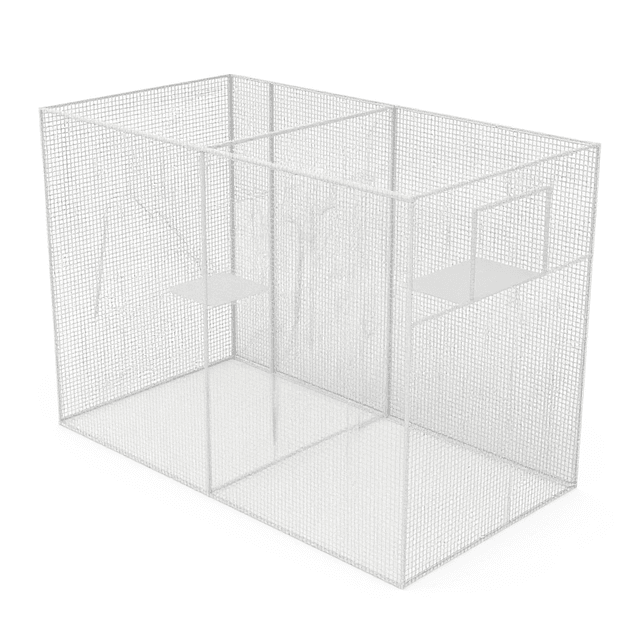
The Zebrafinch Two-Compartment Cage is a specialized housing system designed for controlled behavioral studies and social interaction research with zebra finches. This cage configuration features two separate compartments that can be connected or isolated, enabling researchers to study territorial behavior, mate selection, social dynamics, and communication patterns in a controlled laboratory environment.
The dual-compartment design allows for systematic manipulation of social contexts, making it particularly valuable for studies examining vocal learning, pair bonding, and territorial responses. The cage supports both individual housing and controlled social interactions, providing researchers with flexibility in experimental design for avian behavioral research.
How It Works
The two-compartment system operates on the principle of controlled environmental manipulation, allowing researchers to regulate social contact between individual birds or groups. Each compartment functions as an independent housing unit with the ability to connect or separate subjects through removable barriers or controlled access points.
The compartmentalization enables systematic study of behavioral responses to social isolation, reunion, territorial intrusion, and mate introduction. Researchers can manipulate variables such as visual contact, acoustic communication, and physical access between compartments to examine specific aspects of zebra finch behavior under controlled conditions.
Features & Benefits
Behavioral Construct
- social behavior
- territorial behavior
- vocal learning
- mate selection
- pair bonding
Automation Level
- manual
Research Domain
- Behavioral Pharmacology
- Developmental Biology
- Learning and Memory
- Neuroscience
- Social Behavior
Species
- Bird
Compatible Tracking Software
- ConductVision
Shipping weight
- 6.06 lb
Shipping box
- L: 65.0 cm
- W: 36.0 cm
- H: 27.0 cm
| Feature | This Product | Typical Alternative | Advantage |
|---|---|---|---|
| Compartment Configuration | Dual independent compartments with controlled access | Single compartment housing systems | Enables systematic manipulation of social contexts for controlled behavioral studies. |
| Experimental Flexibility | Variable barrier and access control options | Fixed housing configurations | Supports diverse experimental protocols within single cage system. |
| Housing Capacity | Multi-bird housing with compartmentalized separation | Individual bird cages require multiple units | Reduces space requirements while maintaining experimental control over social interactions. |
The two-compartment system provides specialized functionality for zebra finch behavioral research with controlled social interaction capabilities and flexible experimental configurations.
Practical Tips
Allow minimum 48-hour acclimation period in individual compartments before initiating social interaction protocols.
Why: Reduces stress-related behavioral artifacts and establishes baseline behavior patterns.
Clean and disinfect removable barriers between experimental groups to prevent cross-contamination.
Why: Maintains experimental validity and prevents transmission of pathogens between subjects.
Document all barrier configurations and timing of access changes throughout experimental protocols.
Why: Ensures reproducibility and enables accurate correlation of behavioral changes with social manipulations.
Monitor birds continuously during initial social introductions to prevent aggressive interactions.
Why: Protects animal welfare and maintains data quality by preventing injury-related behavioral changes.
Standardize environmental conditions including lighting and temperature across both compartments.
Why: Eliminates confounding variables that could affect behavioral responses attributed to social manipulations.
Verify proper barrier function and security before each experimental session.
Why: Prevents uncontrolled access between compartments that would compromise experimental protocols.
Setup Guide
What’s in the Box
- Two-compartment cage assembly (typical)
- Removable divider system (typical)
- Perch assemblies (typical)
- Feeding and watering attachments (typical)
- Assembly hardware (typical)
- Setup instructions (typical)
Warranty
ConductScience provides standard warranty coverage for manufacturing defects and technical support for proper setup and operation protocols.
Compliance
How do researchers control access between compartments during experiments?
The cage includes removable barrier systems that can be manipulated to allow visual, acoustic, or physical contact between compartments according to experimental protocols.
What behavioral parameters can be studied with this dual-compartment system?
The system enables study of territorial responses, social interactions, vocal learning, mate selection, and spatial behavior through controlled manipulation of social contexts.
How many birds can be housed in each compartment?
Compartment capacity depends on experimental requirements and animal welfare considerations; consult product specifications for recommended housing densities.
Can the cage be used for long-term housing studies?
Yes, the system is designed to support both short-term behavioral assays and extended housing protocols while maintaining animal welfare standards.
What environmental enrichment options are compatible with this cage?
The compartments accommodate standard avian enrichment items including perches, nesting materials, and foraging opportunities within each section.
How is the cage cleaned and maintained between experiments?
Each compartment can be accessed independently for routine cleaning, and removable components facilitate thorough sanitation between experimental groups.
Have a question about this product?
Have a question? Just ask.
Send it over and we'll email you a personalized answer — no call, no scheduling.
Prefer to talk it through?
Accessories
Enhance your setup with compatible accessories
Upgrade Options