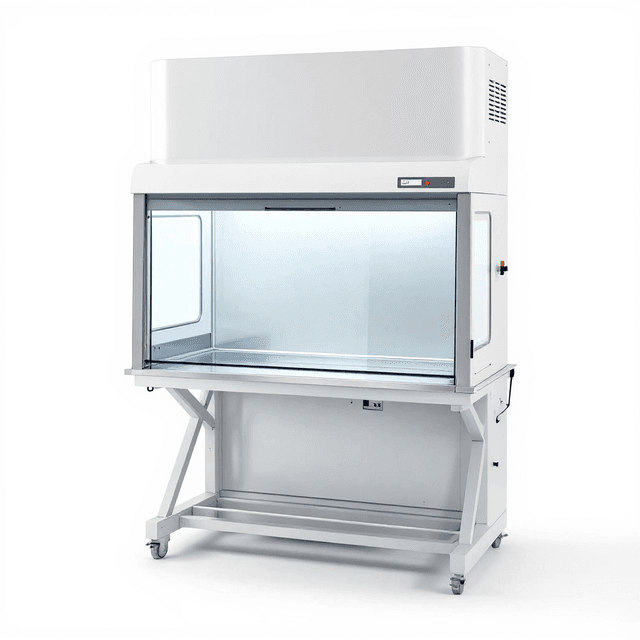
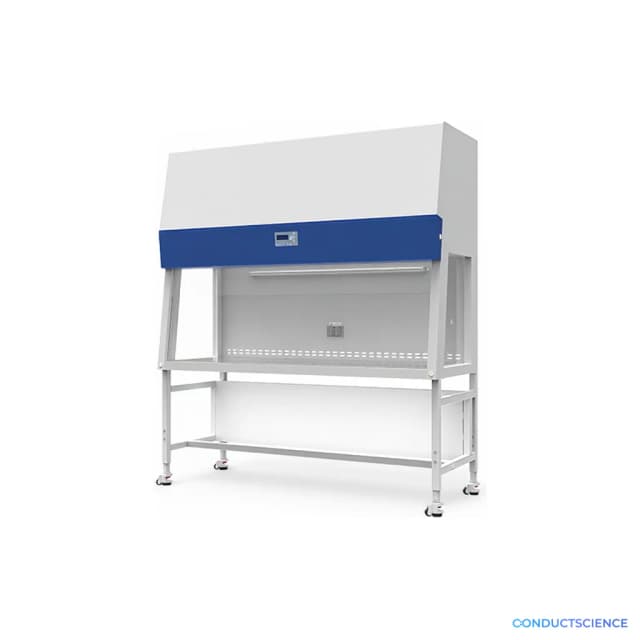
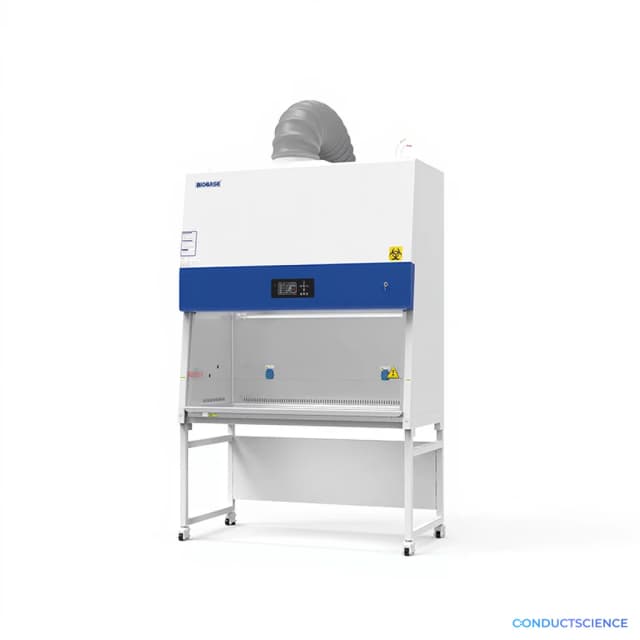
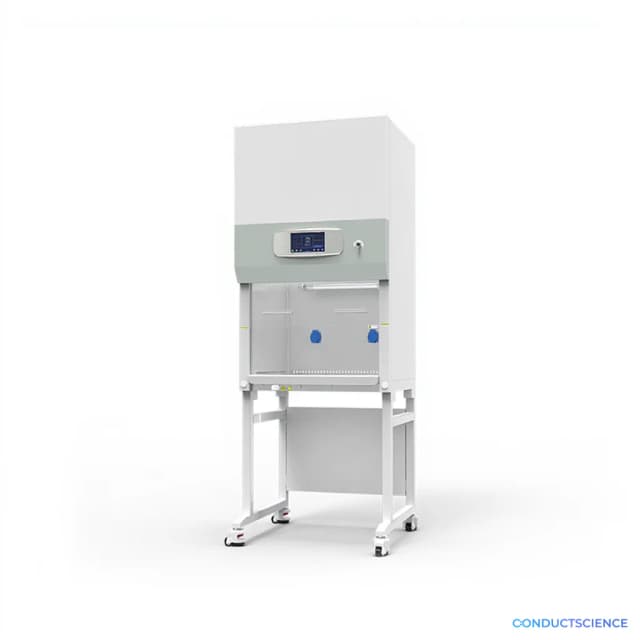
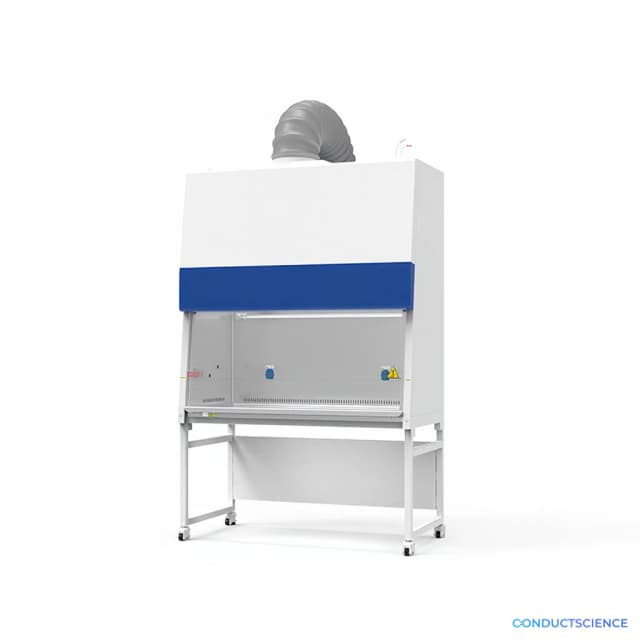
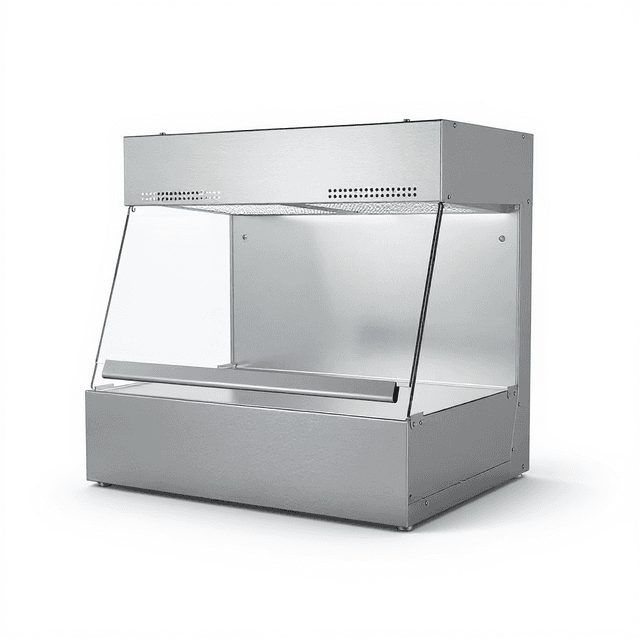
Horizontal Laminar Flow Cabinet
Horizontal laminar flow cabinet with ISO Class 100 clean air, motorized front window, and 99.995% HEPA filtration for sterile laboratory work applications.
A laminar flow clean bench protects only the sample. It blows filtered air toward the user, so it is not for infectious or toxic work.

Louise Corscadden, PhD
Director of Science · ConductScience
Ask Louise about Horizontal Laminar Flow Cabinet fit, setup, configuration, or quote prep.
Already working with us? Sign in to connect this with My Scientist.
Key Specifications
Full details →- Model fit
- Configured during quote
- SKU family
- BIO-0040
- Shipping box
- 194.0 x 130.0 x 82.0 cm
- Ordering
- Online checkout and quote request available
- Category
- Clean Benches & Fume Hoods
- Build notes
- Confirm accessories, station layout, and support needs before purchase
The Horizontal Laminar Flow Cabinet (BIO-0040) provides ISO Class 100 (ISO level 5) clean air protection for sterile work applications in research and analytical laboratories. This horizontal airflow design features a motorized front window, HEPA filtration with 99.995% efficiency at 0.3μm, and an internal work area measuring 1200×520×570mm with 750mm working height.
The cabinet maintains airflow velocity between 0.30-0.5 m/s while operating at noise levels ≤65dB(A) with minimal vibration (≤5μm rms). The integrated LCD display provides operational monitoring, while LED illumination delivers ≥300lx for clear visibility during procedures. The system incorporates polyester fiber pre-filtration and achieves colony counts ≤0.5 CFU/30min for sterile work environments.
How It Works
The horizontal laminar flow cabinet operates by drawing ambient air through a polyester fiber pre-filter to remove larger particles before passing through a high-efficiency particulate air (HEPA) filter. The HEPA filter removes 99.995% of particles ≥0.3μm in diameter, creating a sterile air environment within the work chamber.
Filtered air flows horizontally across the work surface at controlled velocities between 0.30-0.5 m/s, creating a unidirectional airflow pattern that sweeps contaminants away from the work area toward the operator. The continuous laminar airflow maintains positive pressure within the work chamber, preventing entry of unfiltered air and maintaining ISO Class 100 cleanliness levels.
The motorized front window allows variable opening heights up to 430mm, enabling operator access while maintaining controlled airflow patterns. The LCD display monitors system parameters including airflow velocity and filter status, while integrated LED lighting provides ≥300lx illumination for clear visibility during sterile procedures.
Features & Benefits
Automation Level
- semi-automated
External Size(W*D*H)
- 1300*820*1940mm
Internal Size(W*D*H)
- 1200*520*570mm
Work Surface Height
- 750mm
Max Opening
- 430mm
Airflow Velocity
- 0.30~0.5m/s
Pre-Filter
- Polyester fiber
HEPA Filter
- One, 99.995% efficiency at 0.3μm
Front Window
- Motorized
Noise
- ≤65dB(A)
Illumination
- ≥300lx
Vibration
- ≤5μm(rms)
Safety
- Colonies number≤0.5CFU/30min
Clean Level
- ISO level 5(Class 100)
Brand
- ConductScience
Research Domain
- Analytical Chemistry
- Cell Biology
- Clinical Diagnostics
- Food Science
- Microbiology
- Pharmaceutical QC
Display Type
- LCD display
Shipping weight
- 255.0 lb
Shipping box
- L: 194.0 cm
- W: 130.0 cm
- H: 82.0 cm
| Feature | This Product | Typical Alternative | Advantage |
|---|---|---|---|
| HEPA Filter Efficiency | 99.995% at 0.3μm | Entry-level models often provide 99.97% efficiency | Higher filtration efficiency provides greater assurance of sterile conditions for critical applications |
| Window Control | Motorized front window with 430mm max opening | Manual sliding windows with limited height adjustment | Motorized control allows precise airflow management while maintaining ergonomic access |
| Display System | LCD display for system monitoring | Basic analog gauges or no display | Digital monitoring enables better tracking of system performance and maintenance scheduling |
| Work Area Dimensions | 1200×520×570mm internal space | Smaller work areas in compact models | Larger work area accommodates multiple items and equipment while maintaining laminar flow |
| Noise Level | ≤65dB(A) operation | Higher noise levels in less refined designs | Quieter operation improves laboratory comfort during extended use periods |
| Contamination Control | ≤0.5 CFU/30min colony count specification | Higher contamination levels or unspecified performance | Quantified contamination control provides measurable assurance for sterile work requirements |
This cabinet combines high-efficiency HEPA filtration with motorized window control and digital monitoring in a spacious work area. The specified contamination performance and quiet operation make it suitable for research environments requiring reliable sterile conditions with user-friendly operation.
Practical Tips
Verify airflow velocity quarterly using a calibrated anemometer at multiple points across the work surface to ensure uniform flow patterns.
Why: Consistent airflow velocity across the work area is critical for maintaining sterile conditions and preventing contamination
Replace polyester pre-filters monthly or when visibly loaded to protect the HEPA filter and maintain optimal airflow.
Why: Regular pre-filter replacement extends HEPA filter life and prevents system performance degradation
Allow the cabinet to operate for 15-30 minutes before beginning work to ensure stable airflow and temperature conditions.
Why: System stabilization ensures consistent performance and reduces the risk of air turbulence during critical procedures
Keep the front window at minimum opening necessary for work access to maintain optimal airflow protection.
Why: Excessive window opening can disrupt laminar flow patterns and compromise sterile conditions
Document airflow measurements and contamination testing results to establish performance trends and predict maintenance needs.
Why: Regular performance documentation enables proactive maintenance and ensures consistent sterile conditions
If airflow drops below specification, first check pre-filter condition before assuming HEPA filter replacement is needed.
Why: Clogged pre-filters are the most common cause of reduced airflow and are less expensive to replace than HEPA filters
Position frequently used items in the center of the work area where airflow protection is most consistent.
Why: Central positioning takes advantage of the most stable laminar flow region for maximum contamination protection
Clean the LCD display weekly with appropriate electronics cleaner to maintain visibility of system parameters.
Why: Clear display visibility is essential for monitoring system performance and identifying maintenance needs promptly
Setup Guide
What’s in the Box
- Horizontal laminar flow cabinet main unit
- HEPA filter (installed)
- Polyester fiber pre-filter (installed)
- Power cord
- User manual and operation guide
- Performance verification certificate (typical)
- Cleaning and maintenance supplies (typical)
Warranty
ConductScience provides a standard one-year manufacturer warranty covering parts and labor, with technical support available for installation guidance and operational questions. Extended warranty options may be available for critical-use applications.
Compliance
What is the filter replacement schedule and how do I monitor filter status?
Monitor the LCD display for filter status indicators and track operational hours. HEPA filters typically require replacement annually or when airflow velocity falls below specification, while pre-filters need more frequent replacement based on environmental conditions.
How do I verify that the cabinet maintains ISO Class 100 conditions?
Perform regular particle counting using a calibrated particle counter, conduct settle plate testing for microbial contamination (should achieve ≤0.5 CFU/30min), and verify airflow velocity remains within 0.30-0.5 m/s specification.
Can this cabinet accommodate standard laboratory equipment like microscopes or small instruments?
The 1200×520×570mm internal work area and 750mm working height can accommodate small to medium laboratory instruments, provided they do not obstruct airflow patterns or exceed the cabinet's load capacity.
What cleaning and disinfection protocols are recommended?
Clean work surfaces with laboratory-grade disinfectants compatible with stainless steel surfaces. Avoid harsh chemicals that could damage the work surface or affect air quality. Wipe down weekly or between different sample types.
How does this horizontal flow design compare to vertical flow cabinets?
Horizontal flow directs air toward the operator, making it suitable for product protection but not operator protection. It provides easier access to work areas and better visibility compared to vertical flow designs.
What are the electrical and installation requirements?
Consult product datasheet for specific electrical requirements. The unit requires stable power supply and should be positioned away from air currents and vibration sources for optimal performance.
How do I troubleshoot low airflow or contamination issues?
Check filter condition and sealing, verify window position is not restricting airflow, and ensure pre-filter is not clogged. If problems persist, contact technical support for filter replacement or system recertification.
Have a question about this product?
Have a question? Just ask.
Send it over and we'll email you a personalized answer — no call, no scheduling.
Prefer to talk it through?
Upgrade Options