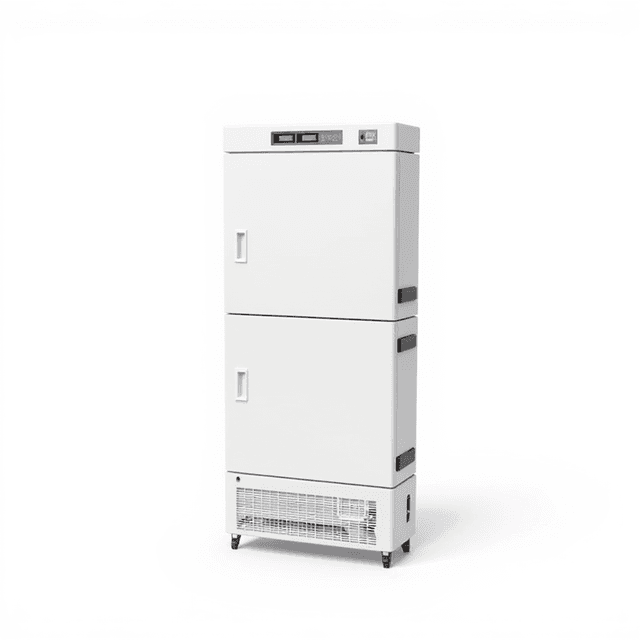
Microfluidic Chip Temperature Controller
Compact temperature controller for microfluidic chips and microscope slides, enabling precise thermal management during on-chip PCR and temperature-controlled reactions.

Louise Corscadden, PhD
Director of Science · ConductScience
Ask Louise about Microfluidic Chip Temperature Controller fit, setup, configuration, or quote prep.
Already working with us? Sign in to connect this with My Scientist.
Key Specifications
Full details →- Model fit
- Configured during quote
- SKU family
- WHM-0047
- Shipping box
- 200.0 x 150.0 x 80.0 cm
- Ordering
- Online checkout and quote request available
- Category
- Lab Equipment
- Build notes
- Confirm accessories, station layout, and support needs before purchase
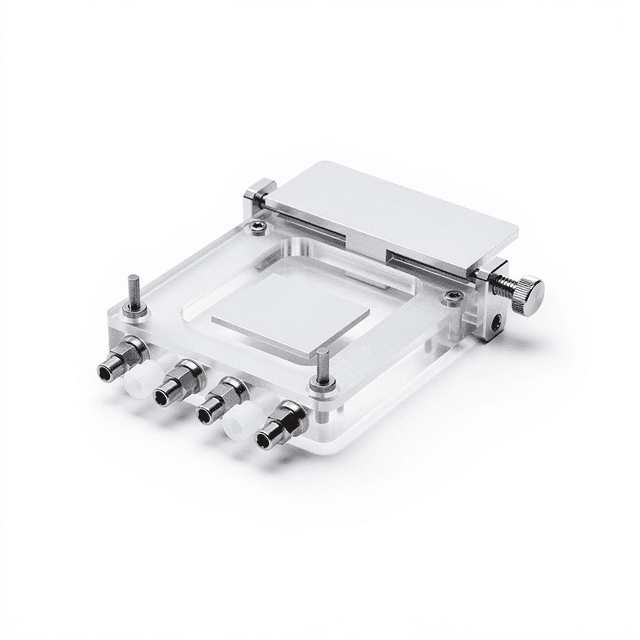
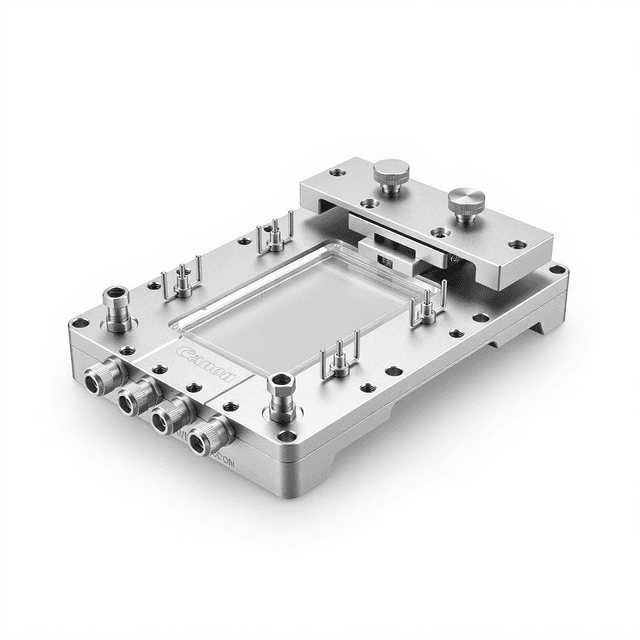
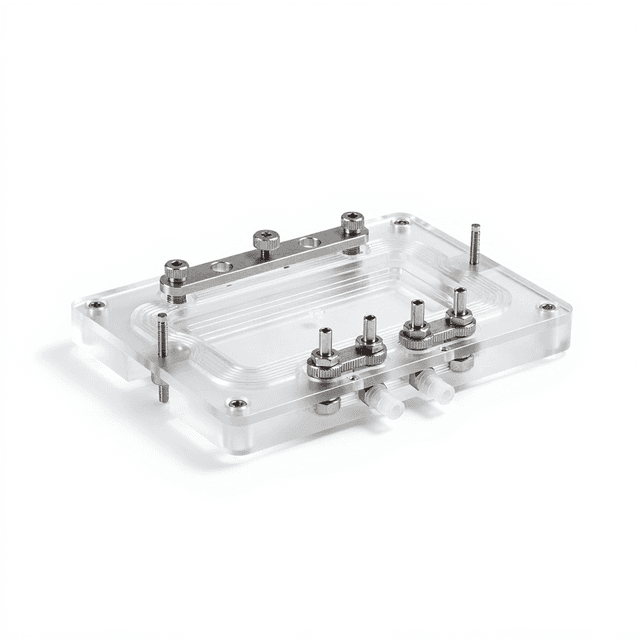
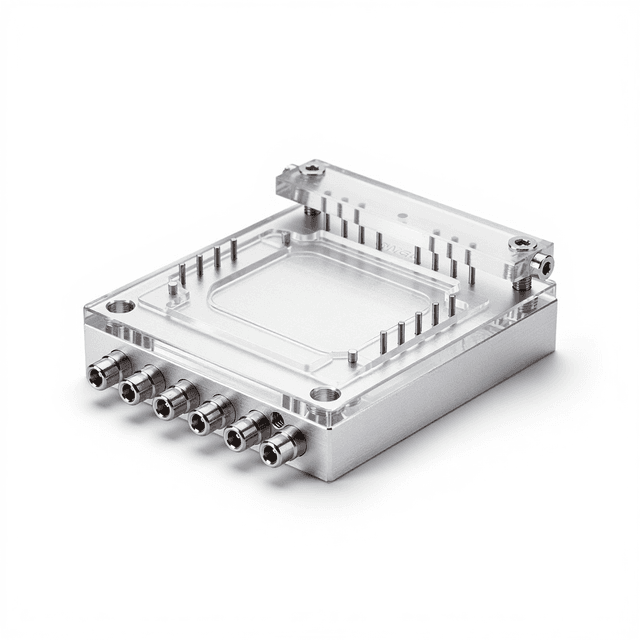
The Microfluidic Chip Temperature Controller provides precise thermal management for microfluidic applications requiring temperature-controlled reactions. This compact benchtop unit enables researchers to maintain stable temperature conditions across microfluidic chips and microscope slides during on-chip PCR and other temperature-sensitive assays.
The controller's 200mm × 150mm platform accommodates standard microfluidic devices while providing uniform temperature distribution essential for consistent reaction kinetics. With an 80mm profile, the unit integrates seamlessly into microscopy setups and laboratory workflows requiring real-time thermal control.
How It Works
The temperature controller operates through direct contact heating of the microfluidic platform surface. Thermal elements provide uniform heat distribution across the 200mm × 150mm working area, ensuring consistent temperature profiles throughout the device under test.
Temperature regulation is achieved through feedback control systems that monitor and adjust heating output to maintain set temperatures. The controller's thermal mass and contact design minimize temperature gradients that could affect reaction uniformity in microfluidic channels.
The compact design allows integration with standard microscopy systems while providing the thermal stability required for temperature-sensitive biological and chemical processes in microfluidic environments.
Features & Benefits
Compatible With
- Microfluidic chips, microscope slides
Automation Level
- semi-automated
Brand
- ConductScience
Research Domain
- Analytical Chemistry
- Cell Biology
- Clinical Diagnostics
- Materials Science
- Molecular Biology
- Pharmaceutical QC
Shipping weight
- 5.0 lb
Shipping box
- L: 200.0 cm
- W: 150.0 cm
- H: 80.0 cm
| Feature | This Product | Typical Alternative | Advantage |
|---|---|---|---|
| Platform Size | 200mm × 150mm working area | Entry-level models often provide smaller working areas | Accommodates multiple chip formats and larger experimental setups |
| Height Profile | Compact 80mm height | Standard units typically have larger vertical profiles | Enables integration with microscopy systems in confined spaces |
| Application Range | On-chip PCR and temperature-controlled reactions | Basic models may be limited to simple heating applications | Supports complex thermal cycling protocols for molecular biology |
| Chip Compatibility | Microfluidic chips and microscope slides | Some controllers are restricted to specific chip formats | Provides flexibility for various experimental platforms and slide-based assays |
This temperature controller combines a generous working platform with compact design for versatile microfluidic applications. The dual compatibility with chips and slides, along with PCR capabilities, provides researchers with a flexible thermal management solution for various experimental protocols.
Practical Tips
Verify temperature accuracy using an independent thermometer placed on the platform surface before critical experiments.
Why: Ensures measurement accuracy and identifies any calibration drift over time.
Clean the thermal contact surface regularly with appropriate solvents to remove residue buildup.
Why: Maintains optimal thermal transfer efficiency and prevents contamination between samples.
Allow thermal equilibration time before starting temperature-sensitive protocols.
Why: Ensures uniform temperature distribution across the entire platform before sample loading.
Use thermal interface materials when working with chips that have poor thermal contact.
Why: Improves heat transfer uniformity and reduces temperature gradients across the sample.
Check for air gaps between the chip and platform surface if temperature response is slow.
Why: Air gaps act as thermal insulators and can significantly impact temperature control performance.
Monitor temperature stability during long experiments to ensure consistent reaction conditions.
Why: Temperature fluctuations can affect reaction kinetics and experimental reproducibility.
Allow the platform to cool to room temperature before handling or changing samples.
Why: Prevents thermal burns and protects temperature-sensitive samples during manipulation.
Setup Guide
What’s in the Box
- Temperature controller main unit
- Power adapter and cable (typical)
- User manual and operation guide (typical)
- Calibration certificate (typical)
- Thermal interface materials (typical)
Warranty
ConductScience provides a standard one-year manufacturer warranty covering defects in materials and workmanship. Technical support is available for setup, operation, and troubleshooting assistance.
Compliance
What temperature range and accuracy can this controller achieve?
Consult the product datasheet for specific temperature range, accuracy specifications, and thermal stability parameters for your application requirements.
Can this unit perform thermal cycling for PCR protocols?
Yes, the controller is specifically designed for on-chip PCR applications and can accommodate thermal cycling protocols required for DNA amplification.
What types of microfluidic chips are compatible?
The 200mm × 150mm platform accommodates most standard microfluidic chip formats. Compatibility depends on chip dimensions and thermal requirements.
How is temperature uniformity across the platform?
The direct contact heating design provides uniform temperature distribution, though specific uniformity specifications should be verified in the product datasheet.
Can this be integrated with microscopy systems?
Yes, the compact 80mm height profile is designed for integration with standard microscopy setups while maintaining temperature control.
What maintenance is required for optimal performance?
Regular calibration checks and cleaning of the thermal contact surface are recommended. Specific maintenance intervals are detailed in the user manual.
Is external temperature monitoring possible?
Consult the product specifications for available temperature monitoring interfaces and data logging capabilities.
Have a question about this product?
Have a question? Just ask.
Send it over and we'll email you a personalized answer — no call, no scheduling.
Prefer to talk it through?
Accessories
Enhance your setup with compatible accessories