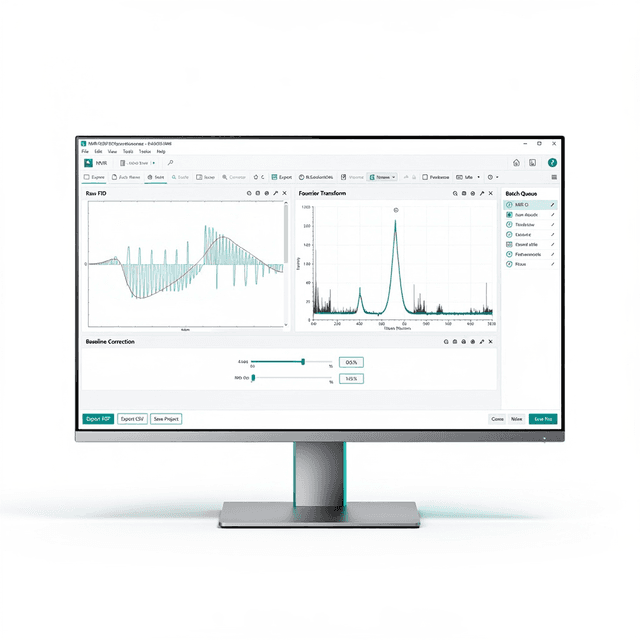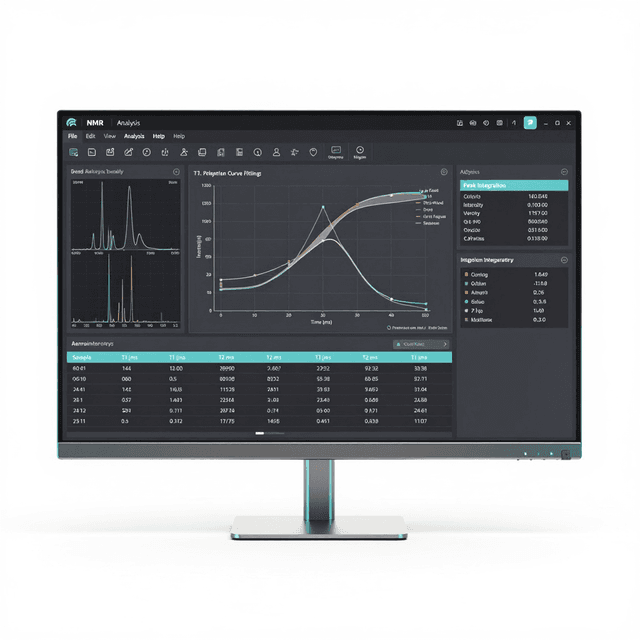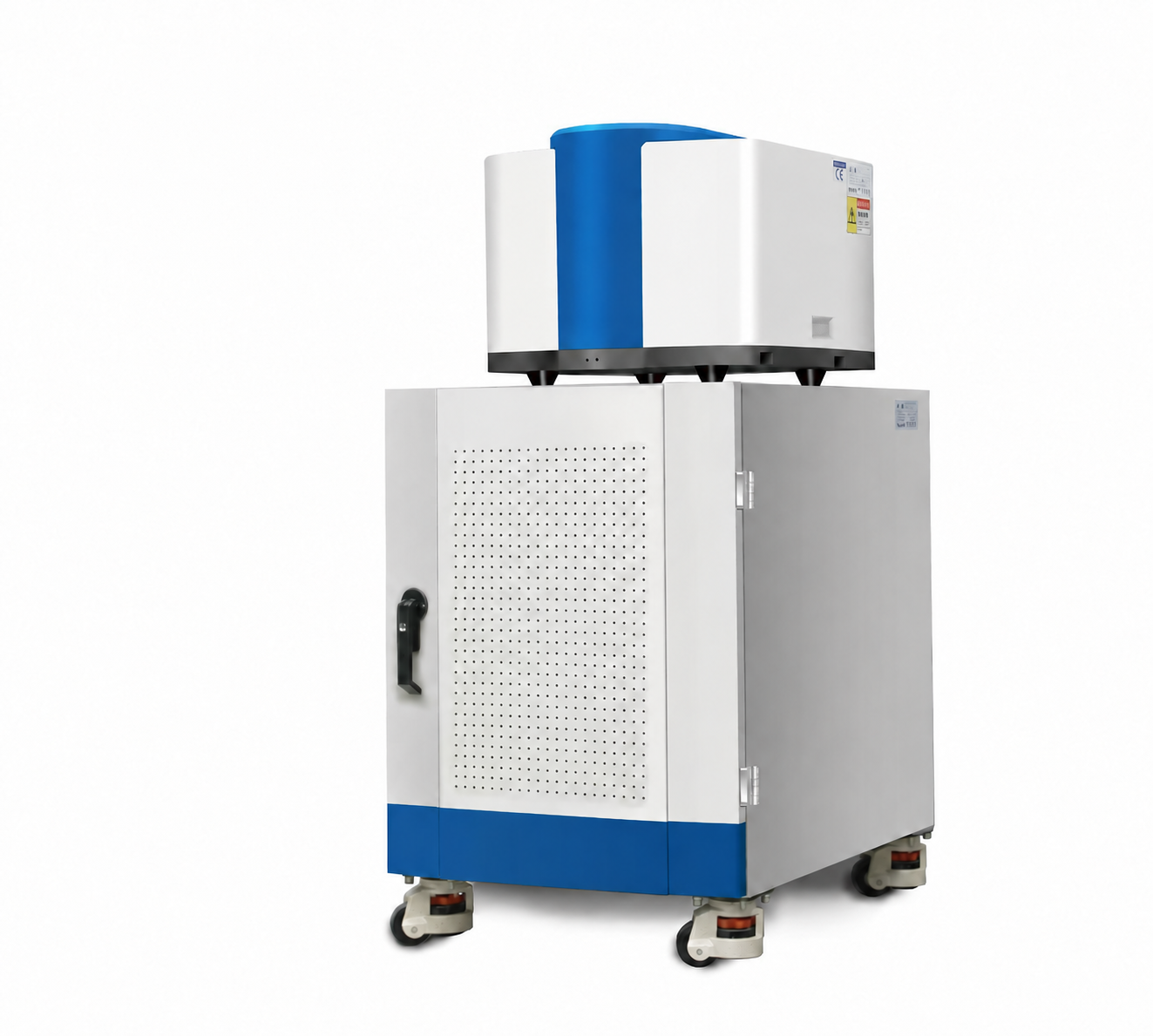
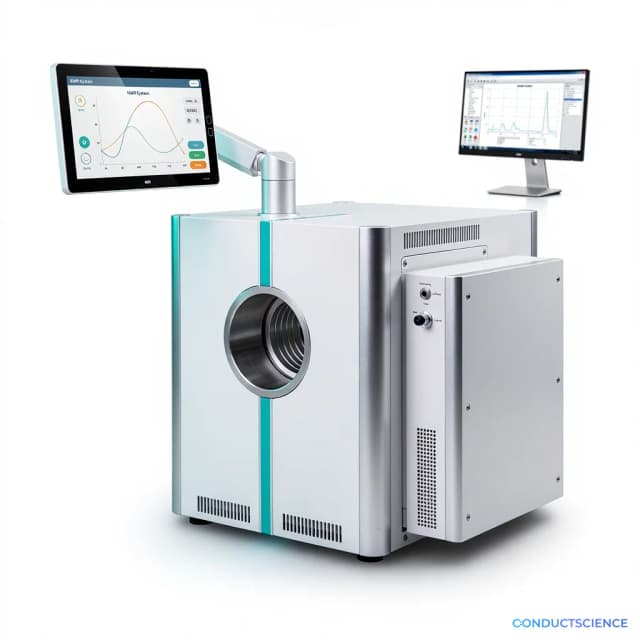
NMR Cement Hydration Analyzer
Specialized NMR system for quantitative cement hydration analysis with integrated temperature compensation, enabling continuous monitoring from mixing through full cure.

Louise Corscadden, PhD
Director of Science · ConductScience
Ask Louise about NMR Cement Hydration Analyzer fit, setup, configuration, or quote prep.
Already working with us? Sign in to connect this with My Scientist.
Key Specifications
Full details →- Model fit
- Configured during quote
- SKU family
- NMS-PQ001-PP
- Shipping box
- 80.0 x 60.0 x 80.0 cm
- Ordering
- Online checkout and quote request available
- Category
- NMR Spectroscopy
- Build notes
- Confirm accessories, station layout, and support needs before purchase
The NMR Cement Hydration Analyzer is a specialized nuclear magnetic resonance system designed for quantitative analysis of cementitious materials during hydration processes. The instrument addresses the fundamental challenge of cement NMR analysis—exothermic heat generation during hydration reactions—through an integrated temperature equilibrium system that maintains measurement stability throughout the curing process.
This analyzer enables continuous monitoring of cement hydration from initial mixing through complete cure, providing researchers with real-time insights into pore structure evolution, water mobility, and hydration kinetics. The system quantitatively distinguishes between free and bound water phases, offering critical data for understanding cement chemistry and optimizing concrete formulations.
How It Works
Nuclear magnetic resonance analysis of cement systems relies on detecting hydrogen nuclei in water molecules present during hydration. The NMR signal provides information about water molecular mobility and chemical environment, distinguishing between free water in pores and bound water in hydrated cement phases. T2 relaxation measurements reveal pore size distribution and connectivity as the cement microstructure evolves.
The critical challenge in cement NMR is thermal management. Cement hydration is highly exothermic, with temperature rises of 20-50°C common during early hydration. This thermal variation affects NMR signal characteristics and can compromise measurement accuracy. The integrated temperature equilibrium system maintains stable measurement conditions by controlling sample temperature throughout the hydration process.
Continuous monitoring capability allows researchers to track hydration progress in real-time, capturing the dynamic changes in water distribution and pore structure that occur during cement setting and hardening. This temporal resolution provides insights into hydration kinetics that cannot be obtained through endpoint measurements alone.
Features & Benefits
Special Feature
- Temperature equilibrium system
Automation Level
- semi-automated
Brand
- Greenwaves Scientific
Research Domain
- Analytical Chemistry
- Environmental Monitoring
- Industrial Hygiene
- Materials Science
Shipping weight
- 150.0 lb
Shipping box
- L: 80.0 cm
- W: 60.0 cm
- H: 80.0 cm
| Feature | This Product | Typical Alternative | Advantage |
|---|---|---|---|
| Temperature Management | Integrated temperature equilibrium system for hydration analysis | Basic environmental chambers or no temperature control | Maintains measurement accuracy during exothermic cement hydration reactions that can cause significant thermal drift. |
| Measurement Continuity | Continuous monitoring from mixing through full cure | Discrete time-point measurements or endpoint analysis | Captures complete hydration kinetics and identifies critical transition periods in cement setting. |
| Application Focus | Purpose-built for cementitious materials | General-purpose NMR systems requiring method development | Optimized protocols and analysis algorithms specifically designed for cement chemistry applications. |
| Water Phase Analysis | Quantitative free and bound water measurement | Qualitative or semi-quantitative water analysis | Enables precise characterization of hydration state and pore structure development in cement systems. |
This analyzer offers specialized temperature management and continuous monitoring capabilities specifically designed for cement hydration analysis. The integrated temperature equilibrium system and purpose-built protocols provide advantages over general-purpose NMR systems for cementitious materials research.
Practical Tips
Perform reference calibration at the beginning of each measurement session using the provided standard.
Why: Ensures quantitative accuracy and compensates for any drift in magnetic field or electronics.
Begin measurements immediately after cement mixing to capture early hydration kinetics.
Why: Critical hydration processes occur within the first hours after water addition and cannot be retroactively measured.
Clean the measurement chamber thoroughly between samples to prevent cross-contamination.
Why: Residual cement particles can affect subsequent measurements and interfere with temperature control.
Monitor temperature stability indicators throughout extended measurements.
Why: Temperature fluctuations during hydration can introduce artifacts in relaxation time measurements.
Verify sample homogeneity if unexpected signal variations occur during early hydration.
Why: Inadequate mixing can create heterogeneous hydration patterns that affect NMR signal characteristics.
Allow proper ventilation around cement samples during measurement to manage humidity and chemical vapors.
Why: Cement hydration produces heat and releases water vapor that can affect instrument performance and laboratory conditions.
Setup Guide
What’s in the Box
- NMR Cement Hydration Analyzer main unit
- Temperature control system
- Sample measurement chamber
- Power cables and adapters
- Data acquisition software
- User manual and protocols
- Calibration reference standard (typical)
- USB interface cable (typical)
Warranty
ConductScience provides a comprehensive 1-year manufacturer warranty covering parts and labor, along with technical support for installation, calibration, and method development assistance.
Compliance
How does the temperature control system maintain measurement accuracy during exothermic hydration?
The integrated temperature equilibrium system actively manages sample temperature to prevent thermal drift that would affect NMR signal characteristics and relaxation measurements during cement hydration.
What is the typical measurement duration for complete hydration monitoring?
Monitoring typically extends from minutes after mixing through several days or weeks of curing, depending on cement type and environmental conditions. Consult product datasheet for specific timing capabilities.
Can the system analyze different cement types and admixture formulations?
Yes, the analyzer is designed for various cementitious materials including Portland cement, blended cements, and formulations with admixtures. Measurement protocols may require optimization for specific cement chemistry.
What data formats are provided for analysis and export?
Consult product datasheet for specific data output formats and compatibility with analysis software packages commonly used in cement research.
How frequently does the system require calibration?
Regular calibration using reference standards is recommended to maintain measurement accuracy. Calibration frequency depends on usage intensity and environmental conditions.
What sample sizes and preparation methods are supported?
The system accommodates standard cement paste samples prepared according to established mixing protocols. Consult product documentation for specific volume requirements and sample preparation guidelines.
Can the analyzer operate in high-temperature laboratory environments?
The instrument includes environmental controls to maintain measurement stability. Consult specifications for operating temperature range and environmental requirements.
Have a question about this product?
Have a question? Just ask.
Send it over and we'll email you a personalized answer — no call, no scheduling.
Prefer to talk it through?
Accessories
Enhance your setup with compatible accessories
Frequently Bought Together