1 / 4
Olfactory Hole Board
SKU CS-958224
$3,499.99
IncludesStandard care
Behavioral testing apparatus combining hole-board exploration with controlled odor presentation for investigating olfactory perception and emotional behavior in laboratory animals.
CE MarkedBAA available
Scientist guidance

Louise Corscadden, PhD
Director of Science · ConductScience
Ask Louise about Olfactory Hole Board fit, setup, configuration, or quote prep.
Already working with us? Sign in to connect this with My Scientist.
Key Specifications
Full details →- Model fit
- Mouse, Rat
- SKU family
- CS-958224
- Sizing
- Mouse: Length of boxes 34.3 cm · Width of boxes 34.3 cm; Rat: Length of boxes 51.5 cm · Width of boxes 51.5 cm
- Ordering
- Online checkout and quote request available
- Category
- Behavioral Mazes
- Build notes
- Confirm accessories, station layout, and support needs before purchase
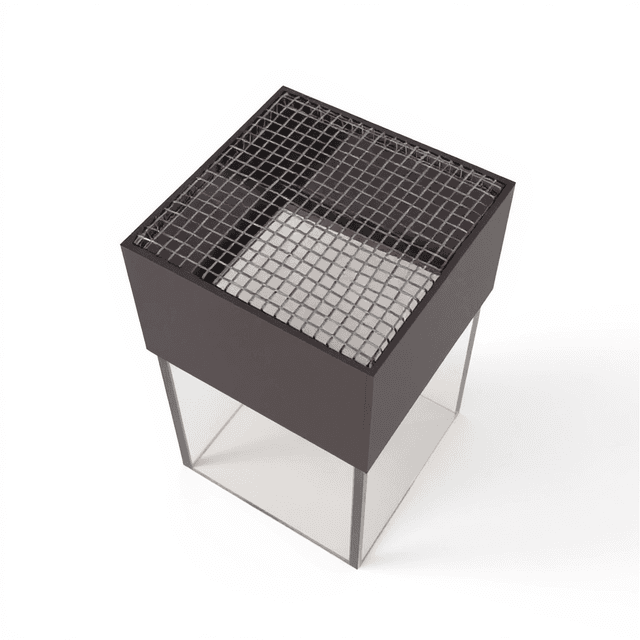
The Olfactory Hole Board is a specialized behavioral apparatus designed for investigating olfactory perception, emotional behavior, and exploratory activity in laboratory animals. This instrument combines traditional hole-board exploration testing with controlled odor presentation, enabling researchers to assess how olfactory stimuli influence animal behavior and emotional responses.
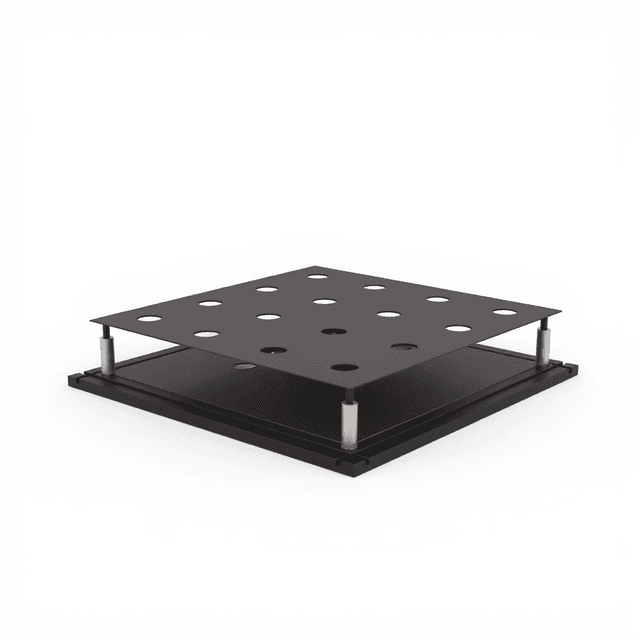
The apparatus features a standardized platform with multiple holes that can be equipped with odor sources, allowing for systematic evaluation of olfactory preferences, aversions, and recognition capabilities. Research applications include studies of olfactory function following experimental manipulations, assessment of emotional behavior in animal models of psychiatric disorders, and evaluation of drug effects on exploratory behavior and olfactory processing.
How It Works
The Olfactory Hole Board operates on the principle that laboratory animals exhibit natural exploratory behavior when presented with novel environments and stimuli. Animals typically investigate holes in the apparatus through head-dipping behavior, which can be quantified and analyzed. When odor sources are placed within or beneath the holes, animals' exploration patterns reflect their olfactory preferences, aversions, and recognition capabilities.
The behavioral paradigm relies on measuring head-dipping frequency, duration, and latency to investigate specific holes containing different odor stimuli. Changes in exploration patterns indicate the animal's olfactory perception and emotional response to the presented stimuli. This approach allows researchers to assess both the sensory aspects of olfaction and the emotional or motivational responses elicited by specific odors.
Features & Benefits
Multiple hole configuration
Allows simultaneous presentation of different odor stimuli for comparative assessment of olfactory preferences and discrimination abilities
Standardized platform design
Ensures reproducible testing conditions and enables comparison of results across studies and laboratories
Compatible with odor delivery systems
Supports controlled presentation of various olfactory stimuli including pure compounds, mixtures, and biological odors
Video tracking compatibility
Integrates with automated behavioral analysis systems for objective measurement of exploration patterns and head-dipping behavior
Easy cleaning and maintenance
Facilitates thorough decontamination between subjects to prevent odor contamination and ensure experimental validity
Adaptable hole spacing
Accommodates different animal species and experimental designs through adjustable or interchangeable hole configurations
Durable construction materials
Withstands repeated use and cleaning protocols while maintaining structural integrity and dimensional stability
Sizes by model
| Measurement | Mouse | Rat |
|---|---|---|
| Length of boxes | 34.3 cm | 51.5 cm |
| Width of boxes | 34.3 cm | 51.5 cm |
- Mouse: Heigth of boxes: 27cm
- Mouse: Diameter of holes of the grid: 2cm
- Rat: Heigth of boxes: 41cm
- Rat: Diameter of holes of the grid: 3cm
Behavioral Construct
- Exploratory behavior
- Olfactory perception
- Anxiety-like behavior
- Emotional response
- Preference behavior
Automation Level
- manual
Research Domain
- Addiction Research
- Aging Research
- Anxiety and Depression
- Behavioral Pharmacology
- Learning and Memory
- Neuroscience
Species
- Mouse
- Rat
Compatible Tracking Software
- ConductVision
Shipping weight
- 6.06 lb
Shipping box
- L: 65.0 cm
- W: 36.0 cm
- H: 27.0 cm
| Feature | This Product | Typical Alternative | Advantage |
|---|---|---|---|
| Behavioral Paradigm | Combines hole-board exploration with controlled odor presentation | Basic hole boards without odor capability or dedicated olfactometers with limited behavioral assessment | Enables simultaneous evaluation of both exploratory behavior and olfactory function in a single test session |
| Stimulus Presentation | Multiple holes allow simultaneous presentation of different odor stimuli | Single stimulus presentation systems require multiple test sessions for comparison studies | Reduces testing time and allows direct comparison of olfactory preferences within subjects |
| Species Compatibility | Designed for standard laboratory rodents | Some systems limited to specific species or require extensive modification | Provides standardized testing conditions suitable for common research models |
| Data Collection | Compatible with video tracking and manual observation methods | Specialized systems may require proprietary software or hardware | Offers flexibility in data collection methods to match laboratory capabilities and experimental needs |
This apparatus provides a versatile platform for olfactory behavioral research, combining the established hole-board paradigm with controlled odor presentation capabilities. The design supports multiple concurrent stimuli and flexible data collection approaches suitable for various research applications.
Neuroscience
Evaluating olfactory function and emotional behavior in animal models of neurological disorders, including assessment of olfactory bulb lesion effects on exploratory behavior.
Behavioral Pharmacology
Testing drug effects on olfactory perception and anxiety-related behaviors by measuring exploration patterns and odor preferences in treated animals.
Learning and Memory
Investigating olfactory memory formation and recognition by assessing animals' ability to discriminate between familiar and novel odors during exploration.
Anxiety and Depression
Measuring emotional behavior and exploratory activity in animal models of mood disorders using odorized stimuli as environmental enrichment or stressors.
Addiction Research
Studying olfactory cue-induced behaviors in addiction models by presenting drug-associated odors and measuring approach or avoidance responses.
Aging Research
Assessing age-related decline in olfactory function by comparing exploration patterns and odor discrimination abilities between young and aged animals.
Practical Tips
Calibration
Test odor distribution patterns before experiments to ensure consistent stimulus presentation across holes.
Why: Uneven odor distribution can introduce confounding variables and affect behavioral responses.
Maintenance
Clean apparatus thoroughly between subjects using ethanol or appropriate solvent, followed by air drying.
Why: Residual odors from previous subjects can influence subsequent animal behavior and compromise experimental validity.
Best Practices
Allow animals to habituate to the testing environment before introducing odor stimuli.
Why: Habituation reduces stress-related behaviors and provides baseline exploration patterns for comparison.
Data Quality
Record both frequency and duration of head-dipping behavior for comprehensive behavioral analysis.
Why: Different measures provide complementary information about olfactory processing and behavioral responses.
Troubleshooting
If animals show no exploration, verify lighting conditions and check for environmental stressors.
Why: Excessive lighting or noise can suppress natural exploratory behavior and affect experimental outcomes.
Safety
Ensure adequate ventilation when using volatile odorants to prevent researcher and animal exposure.
Why: Some olfactory compounds can be toxic or irritating at high concentrations.
Best Practices
Randomize hole positions for different odor stimuli across test sessions to control for position preferences.
Why: Animals may develop spatial biases that could confound interpretation of olfactory preferences.
Setup Guide
Unpack and Inspect
Remove the apparatus from packaging and inspect all components for damage. Verify that the platform surface is clean and all holes are unobstructed.
Position Apparatus
Place the hole board on a stable surface in a quiet testing environment with controlled lighting. Ensure adequate space around the apparatus for animal placement and observation.
Prepare Odor Sources
Select and prepare appropriate odor stimuli according to experimental protocol. Place odor sources in designated positions beneath or within holes as required.
Set Recording System
Position video recording equipment or configure automated tracking system to capture animal behavior throughout the testing arena. Test recording quality and coverage.
Calibrate Environment
Allow odor stimuli to equilibrate for appropriate time period before testing. Verify consistent odor presentation across designated holes.
Conduct Habituation
Allow test animals to acclimate to the testing environment without odor stimuli to establish baseline exploration patterns. Record habituation session for comparison.
Begin Testing Protocol
Introduce animals to the apparatus following standardized protocol. Monitor and record exploration behavior for predetermined session duration.
What’s in the Box
- Olfactory hole board platform (typical)
- User manual and protocol guide (typical)
- Assembly hardware (typical)
- Cleaning instructions (typical)
Warranty
ConductScience provides a standard one-year manufacturer warranty covering defects in materials and workmanship, along with technical support for setup and operational questions.
Compliance
Guide for the Care and Use of Laboratory AnimalsUsed in behavioral studies that must adhere to institutional animal care guidelines and ethical review processes
ARRIVE GuidelinesSupports standardized reporting of animal research through reproducible behavioral testing protocols
References
Background reading relevant to this product:
1.Akiyoshi Saitoh et al. (2006) “Changes in Emotional Behavior of Mice in the Hole-Board Test After Olfactory Bulbectomy” Journal of Pharmacological Sciences doi:10.1254/jphs.fp0060837
2.Nathalie Mandairon et al. (2009) “A computer-assisted odorized hole-board for testing olfactory perception in mice” Journal of Neuroscience Methods doi:10.1016/j.jneumeth.2009.04.008
3.Junzo Kamei et al. (2007) “Effects of Methylphenidate on the Hyperemotional Behavior in Olfactory Bulbectomized Mice by Using the Hole-Board Test” Journal of Pharmacological Sciences doi:10.1254/jphs.fp0061021
4.Kerstin E.A. Wernecke et al. (2015) “The olfactory hole-board test in rats: a new paradigm to study aversion and preferences to odors” Frontiers in Behavioral Neuroscience doi:10.3389/fnbeh.2015.00223
Protocol and background
Introduction
The Olfactory Hole Board test is an adaptation of the classic Hole Board Test that is often used in the assessment of unconditioned behavior, cognition, and social interaction. The Olfactory Hole Board apparatus combines the advantages of the conventional Hole Board Test with that of the Open-Field Test apparatus. The task adds the element of odor to evaluate their effect on the rodent’s behavioral responses.
Odors play a crucial role in molding basic survival behaviors. In the wild, odors help animals identify and distinguish threats and communicate information such as gender, reproductive state, social status, and identity. Pheromones are odors that are associated with individuals of the same species and accompany mediation of different social behaviors within the species. On the other hand, kairomones are odors that are usually associated with predators. Kairomones evoke defensive behaviors in preys and thus are beneficial to the preys while being disadvantageous to the animals releasing them (Brennan and Kendrick, 2006; Fortes-Marco et al., 2013).
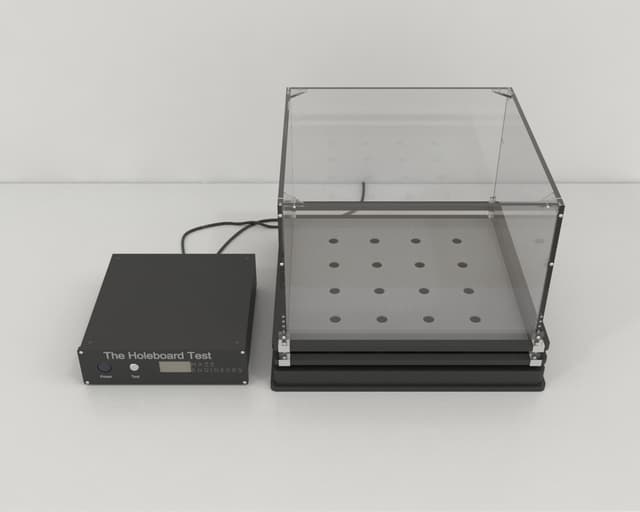
The apparatus is similar in construction to the classic Hole Board Test apparatus. It comprises a transparent box with a perforated floor. The holes can be closed with lids to create different configurations of open and closed holes. Other similar tests and apparatuses include the Attentional Set Shifting (IDED) Chamber, the Odor Span Test, the Dig Task, and the Fear Conditioning Chamber.
Apparatus and Equipment
The Olfactory Hole Board test consists of three testing transparent acrylic boxes of dimension 51.5 x 51.5 x 41 cm and a removable grid-patterned hole board. The holes of the grid are 3 cm in diameter and come equipped with lids to allow closing of holes to create variations in the grid configuration.
Training Protocol
Prior to the experiment clean the apparatus thoroughly. Since the task deals with odor, apparatus should be cleaned between trials or animals. Appropriately illuminate the apparatus. Tracking and video recording can be done using a tracking system such as the Noldus EthoVision XT. Infrared detectors can be used to monitor head-dipping behavior.
Olfactory Hole Board Task
Prior to introducing the subject into the apparatus, collect sample odors and place them in small containers under the holes of the hole board floor. Ensure that the samples are placed such that the subject can only smell it but not access it. Use the lids to close the holes that are not required in the experiment. Place the subject in the center of the apparatus and observe its response to the odor(s) for at least 20 minutes. Repeat the trial as required.
Investigation of behavioral responses to the simultaneous presentation of attractive and aversive odors
Male Sprague-Dawley rats were evaluated for their responses to being presented with attractive odors and aversive odors. Urine samples of fox, bobcat and female rat along with water were used as the odors in the experiment. Each sample was kept under one of the four corner holes, thus creating an environment wherein all the odors existed simultaneously. As expected, the subjects preferred the hole containing the female urine significantly more than the other three samples. The subjects showed avoidance behavior towards the holes containing the aversive stimuli. (Wernecke and Fendt, 2015)
Investigation of behavioral responses to predator versus non-predator odors
Male Sprague-Dawley rats were tested for their ability to distinguish between odors associated with a predator from harmless species. For this experiment, urine samples of a carnivorous puma, an omnivorous mona monkey, and a herbivorous elk were used with water as the control odor. The odors were simultaneously used in the trial. Percentage hole visit showed that the subjects avoided the holes containing the puma or the mona monkey urine while the elk urine evoked a neutral response similar to the water sample. (Wernecke and Fendt, 2015)
Evaluation of anxiolytic treatment on aversive odor avoidance behavior
Male Sprague Dawley rats received intraperitoneal injections of either saline or 5-HT1A receptor agonist buspirone (0.1, 1 mg/kg), 20 minutes before being tested in the Olfactory Hole Board test. Fox urine, coyote urine, female rat urine, and water as control odor were placed under one of the four corner holes. Based on the data obtained from the trials it was concluded that buspirone led to decreased avoidance response towards the aversive stimuli at both doses. However, at 1 mg/kg buspirone, the percentage of hole visits for different corner holes did not differ much from the water odor hole. (Wernecke and Fendt, 2015)
Data Analysis
The following parameters are usually recorded during the Olfactory Hole Board Task.
- Number of head dips (nose pokes)
- Frequency of visits
- Percentage of total hole visits
- Total hole visits
- Hole preference
Strengths and Limitations
Strengths
The Olfactory Hole Board apparatus combines the advantages of the conventional Hole Board with that of the Open Field task. The apparatus is simple to construct and easy to use. The apparatus is also highly modifiable to enable different modes of investigation. The removable hole board allows the use of different configurations of open and closed holes by using lids. Placing different odors simultaneously during the task creates a more naturalistic olfactory environment. Testing protocols can be varied as per needs of the investigation such as using a single odor per task or multiple odors. The task can be used to access the effects of pharmacological manipulations and lesions on olfactory-based behavioral responses.
Limitations
In the Olfactory Hole Board task, placing odors too close to one another can lead to an infusion of the odors consequently influencing performances. The subjects also tend to have a preference for corner holes over the central holes (Wernecke and Fendt, 2015). Subjects that tend to be inactive or highly active are not recommended for the Olfactory Hole Board task. Presence of unwanted olfactory, auditory and visual cues can impact task performance. Handling and habituation processes can also affect the performance. When evaluating drug effects care must be taken to consider their effect on the olfactory and motor abilities of the subject.
Summary
- Olfactory Hole Board Test is used in the assessment of behavioral responses to odors.
- Olfactory Hole Board task combines the advantages of the Open Field Test and the classic Hole Board test.
- Animals tend to have a preference for corner holes than the central holes.
- The configuration of the hole grid can be changed by covering holes with lids.
- Simultaneous use of different odors in the Olfactory Hole Board test creates a natural olfactory environment.
- Attractive odors result in frequent hole visits and head dips. The converse is true for aversive odors.
- Certain drugs and pharmacological compounds can dull the olfactory and motor abilities of the subject.
References
- Brennan P. A., Kendrick K. M. (2006). Mammalian social odours: attraction and individual recognition. Trans. R. Soc. B 361 2061–2078. 10.1098/rstb.2006.1931
- Fortes-Marco L., Lanuza E., Martinez-Garcia F. (2013). Of pheromones and kairomones: what receptors mediate innate emotional responses? Rec. 296 1346–1363. 10.1002/ar.22745
- Wernecke KE, Fendt M (2015). The olfactory hole-board test in rats: a new paradigm to study aversion and preferences to odors. Front Behav Neurosci. 9:223. doi: 10.3389/fnbeh.2015.00223.
From the Maze Engineers documentation for this apparatus.
Q
What species can be tested with this apparatus?
A
The apparatus is primarily designed for mice and rats, though hole dimensions and platform size should be verified for compatibility with specific strains and age groups.
Q
How do I prevent odor contamination between test sessions?
A
Thoroughly clean the apparatus with appropriate solvents between sessions and allow adequate ventilation time. Consider using removable inserts for holes to facilitate cleaning.
Q
What types of odor stimuli can be presented?
A
The apparatus can accommodate various odor sources including liquid odorants, scent-marked materials, food odors, and commercial olfactory compounds depending on the experimental design.
Q
How long should testing sessions typically last?
A
Session duration varies by research question but commonly ranges from 5-15 minutes to allow sufficient exploration while minimizing habituation effects.
Q
Can this apparatus be used with automated tracking systems?
A
Yes, the standardized design is compatible with video tracking software that can analyze head-dipping behavior and spatial exploration patterns.
Q
What behavioral measures are typically recorded?
A
Common measures include head-dipping frequency, duration of investigation at each hole, latency to first investigation, and overall exploration patterns across the apparatus.
Q
How do I establish baseline behavior before odor testing?
A
Conduct habituation sessions without odor stimuli to establish individual exploration patterns and account for apparatus-specific behavioral responses.
Have a question about this product?
Track rodents with ConductVision
ConductVision is our video-tracking software. Record your sessions on video, and it scores standard rodent tests, such as those listed below.
Examples of tests it scores
To check whether ConductVision scores your protocol in this apparatus, ask in your quote request.
Ask a question
Have a question? Just ask.
Send it over and we'll email you a personalized answer — no call, no scheduling.
Personalized email reply
Usually within one business day
Helpful answers published here
Prefer to talk it through?
Accessories
Enhance your setup with compatible accessories

Total: $0.00
Frequently Bought Together
Total: $590.00

Olfactory Hole Board
$3,499.99
Added to quoteView Quote