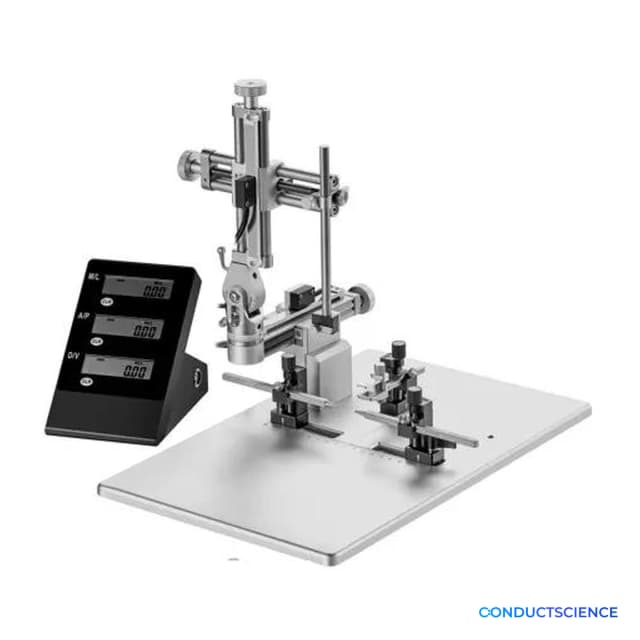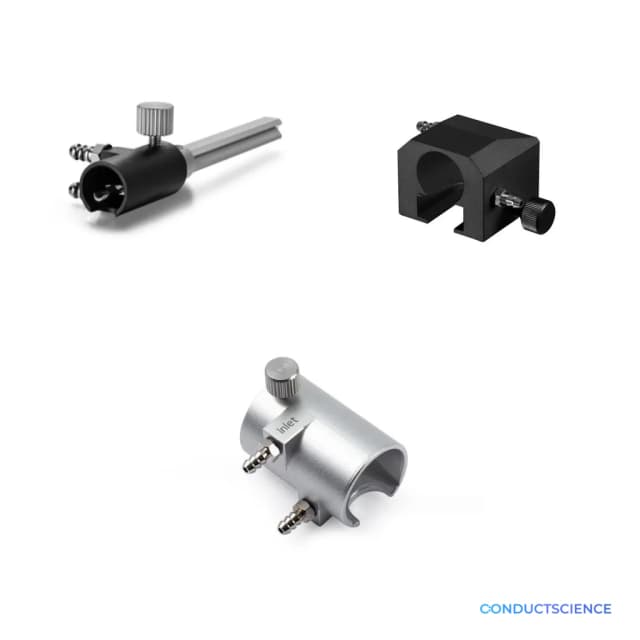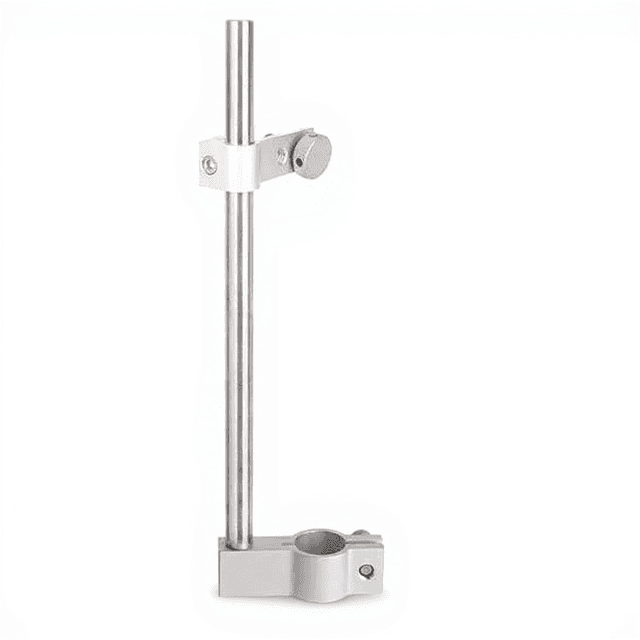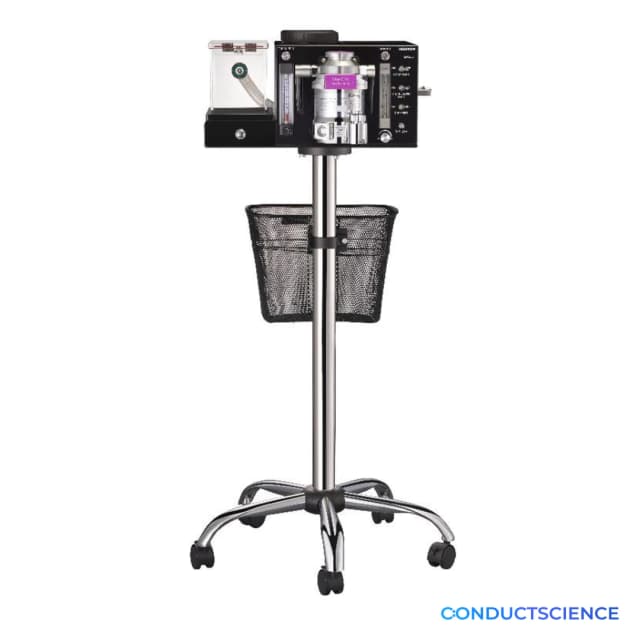
Stereotaxic Nose Cone Masks
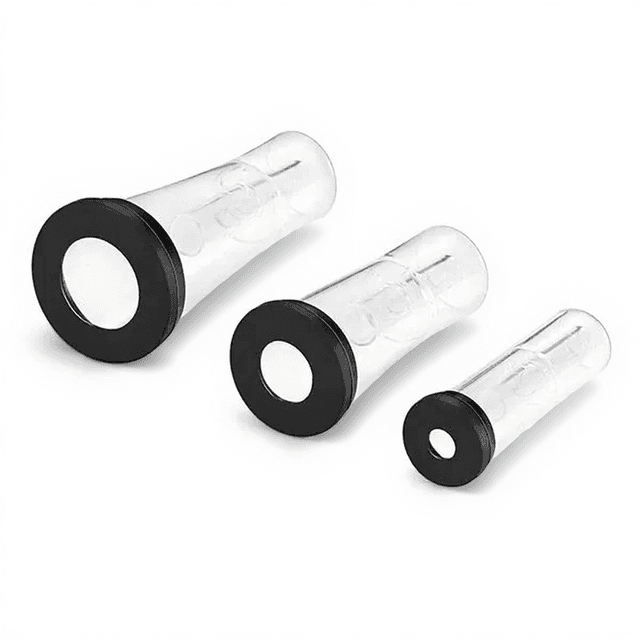
Mouse and rat stereotaxic nose cone masks for gas-anesthesia delivery during stereotaxic surgery, with active inlet/outlet scavenging support, compact mouse and rat mask bodies, incisor/head-stability features, and selectable configurations for below-18 g mice, 18-45 g mice, below-300 g rats, and above-300 g rats.

Louise Corscadden, PhD
Director of Science · ConductScience
Ask Louise about Stereotaxic Nose Cone Masks fit, setup, configuration, or quote prep.
Already working with us? Sign in to connect this with My Scientist.
Key Specifications
Full details →- Model fit
- mast type, Mouse, Rat
- SKU family
- CS-N-30-2001/2002/2063/2065/2066/2067
- Shipping box
- 30.0 x 25.0 x 25.0 cm
- Ordering
- Online checkout and quote request available
- Category
- Anesthesia & Ventilation
- Build notes
- Confirm accessories, station layout, and support needs before purchase
Overview
The Stereotaxic Nose Cone Masks family provides compact mouse and rat anesthesia interfaces for stereotaxic surgery and other frame-based workflows where gas delivery, head stability, and cranial working access have to be planned together. The family includes mouse options for below-18 g and 18-45 g animals, plus rat options for below-300 g and above-300 g workflows.
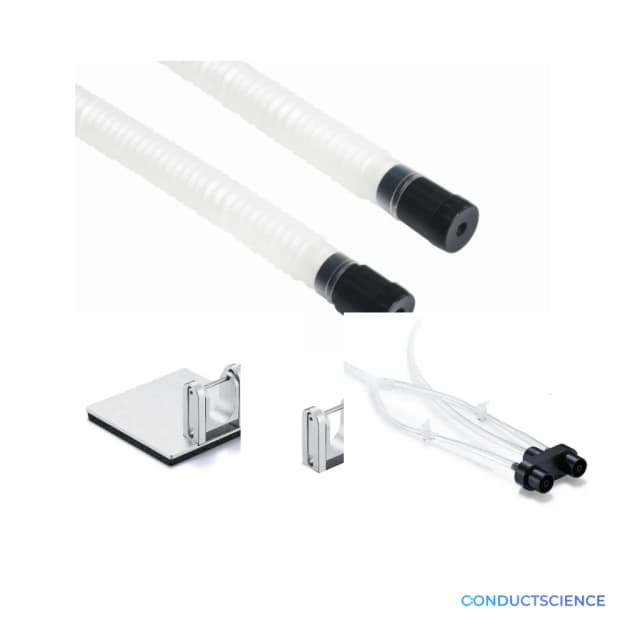
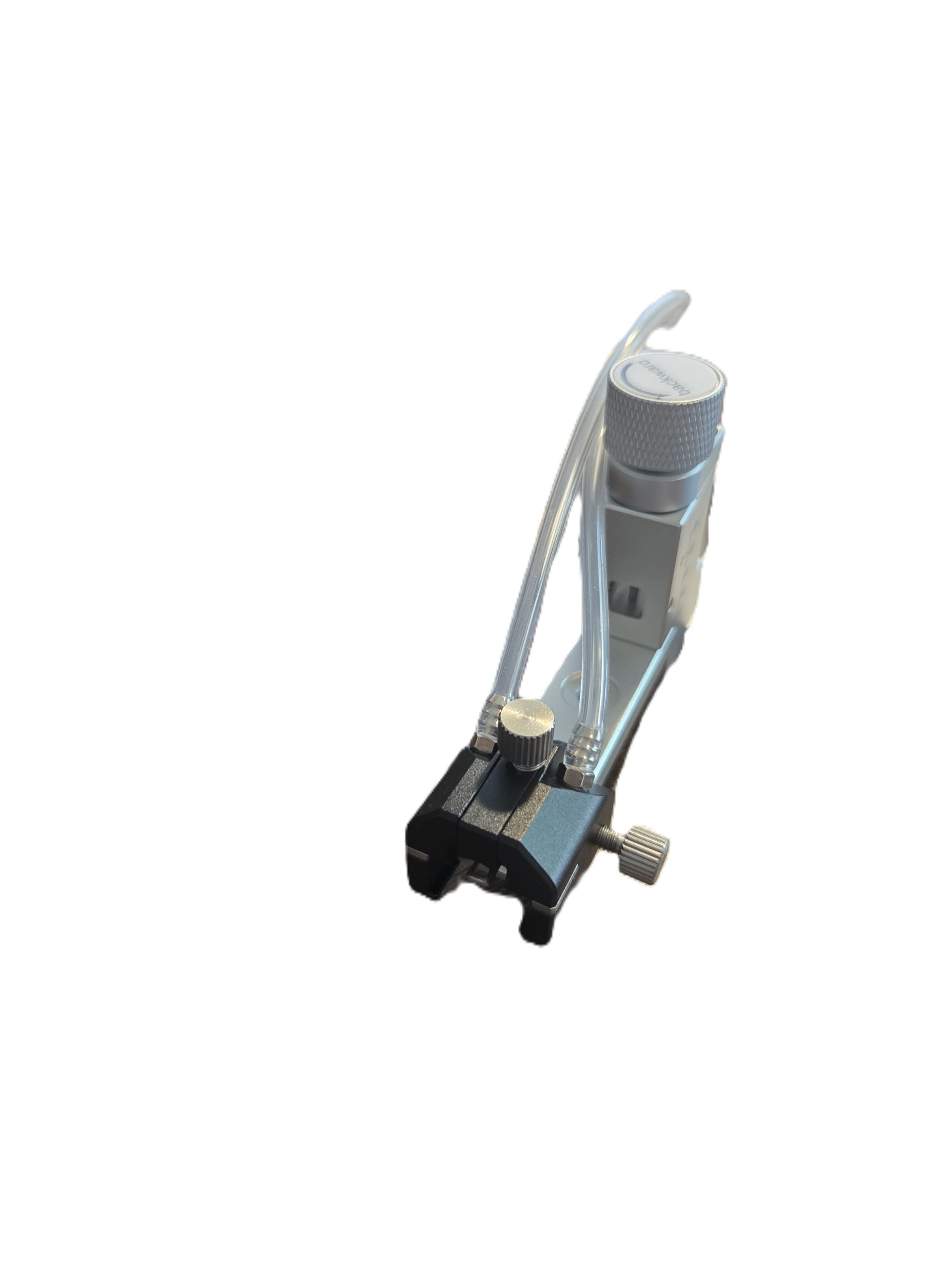
Unlike a general bench cone mask, this mask family is designed around stereotaxic positioning. The inlet and outlet paths support an active anesthesia workflow, letting the outlet connect toward evacuation or scavenging so anesthetic delivery and waste-gas routing can be planned at the frame. The compact mask bodies help preserve access around the head during cranial surgery, injection, imaging preparation, or microscope-guided work.
The source design also addresses head stability at the mask. Mouse configurations use an incisor-support path in the conical nose cavity with an added spring block for head stabilization. Rat configurations use an adaptor opening for incisor fixation while the mask cavity supports the nasal bridge. That makes the mask selection part of the animal-positioning decision, not only a gas-delivery accessory.
Scientific Use
Stereotaxic procedures often require a stable head, a clear cranial field, steady inhalation anesthesia, and a practical scavenging path in the same small workspace. These masks are useful when labs are coordinating stereotaxic surgery, intracranial injection, cranial window preparation, viral delivery, cannula implantation, electrode or fiber placement, or microscope-adjacent preparation around mouse and rat head geometry.
Buying Fit
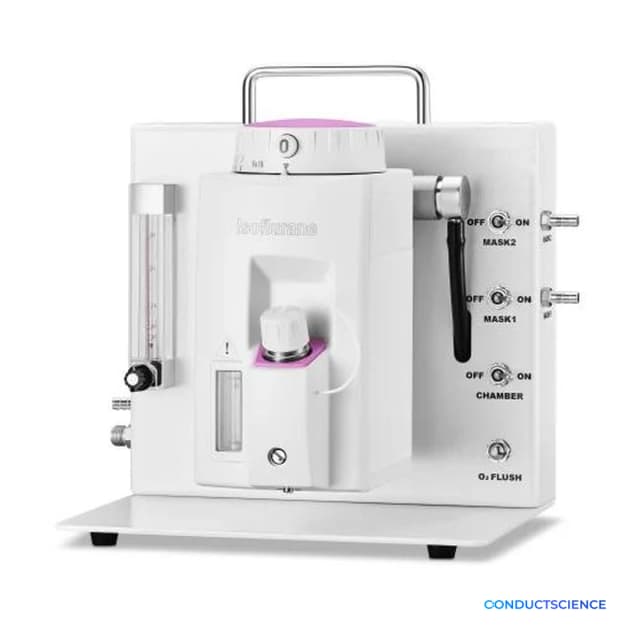
Choose this page when the lab needs an anesthesia mask that works at the stereotaxic frame. Choose general cone masks for non-frame bench maintenance, and choose concentric tubing masks when flexible pad or table-top positioning is more important than frame-mounted nose-cone geometry. Complete the station with a compatible anesthesia machine, vaporizer, flowmeter, active scavenger or absorber path, warming, monitoring, and the selected stereotaxic frame or holder set.
How It Works
Features & Benefits
Model fit
- Mouse and rat stereotaxic anesthesia workflows
Gas path
- Separate inlet and outlet routing for active delivery and evacuation/scavenging planning
Mouse stabilization
- Conical nose cavity with incisor support and curved spring-block head stabilization
Rat stabilization
- Adaptor opening for incisor fixation with mask cavity support at the nasal bridge
Mask body size
- Mouse mask 28 x 24 x 20 mm; rat mask 28 x 30 x 25 mm
Plan with
- Anesthesia machine, vaporizer, flowmeter, tubing, active scavenger, warming, monitoring, frame, and holders
Shipping weight
- 17.64 lb
Shipping box
- L: 30.0 cm
- W: 25.0 cm
- H: 25.0 cm
| Feature | This Product | Typical Alternative | Advantage |
|---|---|---|---|
| Scavenging Options | Both passive (collinear ports) and active (separate non-collinear ports) configurations available | Many models offer only single scavenging type | Allows laboratories to select masks matching their existing ventilation infrastructure without system modifications. |
| Species-Specific Sizing | Five distinct size ranges from neonatal rats under 30g to adult rats over 300g | Universal sizing or limited size options | Ensures proper seal and gas delivery efficiency across different research animal sizes. |
| Frame Integration | Designed specifically for stereotaxic frame compatibility with proper cone orientation | Generic masks requiring custom mounting solutions | Maintains stereotaxic coordinate accuracy while simplifying setup and reducing positioning errors. |
| Port Configuration | Collinear ports in passive masks, separate non-collinear ports in active masks | Standard inlet/outlet arrangements | Optimizes gas flow patterns for each scavenging method to improve safety and anesthetic delivery consistency. |
This mask system provides comprehensive species sizing and dual scavenging options specifically engineered for stereotaxic frame integration. The design maintains coordinate system accuracy while accommodating different laboratory safety requirements through passive and active gas management configurations.
| Model | SKU | Listed price | Status | Shipping box |
|---|---|---|---|---|
| Rat | CS 30-2028 | $1,099.00 | Available | 30.0 x 25.0 x 25.0 cm |
| Rat | CS 30-2027 | $999.00 | Available | 30.0 x 25.0 x 25.0 cm |
| Mouse | CS 30-2026 | $899.00 | Available | 30.0 x 25.0 x 25.0 cm |
| Mouse | CS 30-2025 | $799.00 | Available | 30.0 x 25.0 x 25.0 cm |
Practical Tips
Select the mask by species and weight range before finalizing the frame setup.
Why: The source family separates below-18 g mouse, 18-45 g mouse, below-300 g rat, and above-300 g rat options.
Plan the outlet path with the active scavenger or absorber at the same time as the mask.
Why: The mask value depends on pairing anesthesia delivery with practical waste-gas collection at the frame.
Check that the selected mask leaves enough cranial access for drilling, injection, holder approach, or microscope clearance.
Why: The source design emphasizes compact mask dimensions for head surgery workflows.
Setup Guide
What’s in the Box
- Selected stereotaxic nose cone mask configuration
- Mouse mask option for 18-45 g animals
- Mouse mask option for animals below 18 g
- Rat mask option for animals below 300 g, M2 style
- Rat mask option for animals below 300 g, M1 style
- Rat mask option for animals above 300 g, M1 style
- Gas delivery, scavenging, warming, frame, and holder accessories configured around the final stereotaxic station
Warranty
Support, replacement, and fulfillment terms are confirmed with the final quote and institutional purchasing requirements.
Compliance
Which animal sizes are supported?
The source family includes mouse masks for below-18 g and 18-45 g animals, plus rat masks for below-300 g and above-300 g animals.
Why use a stereotaxic nose cone instead of a general cone mask?
Use a stereotaxic nose cone when the mask needs to work at the frame while preserving cranial access, head stability, and inlet/outlet gas routing.
How does the active gas path help the station?
The inlet supplies anesthetic gas while the outlet can be routed toward evacuation or scavenging, helping the anesthesia and waste-gas path stay organized at the frame.
What should be ordered with these masks?
Plan the anesthesia machine, vaporizer, flowmeter, tubing, active scavenger or absorber path, warming, monitoring, stereotaxic frame, and holder accessories around the final setup.
How do I choose between the mouse and rat styles?
Select by species, weight range, and how the frame supports incisors, nasal bridge positioning, ear bars, and cranial working access.
Have a question about this product?
Have a question? Just ask.
Send it over and we'll email you a personalized answer — no call, no scheduling.
Prefer to talk it through?
Accessories
Enhance your setup with compatible accessories
Frequently Bought Together