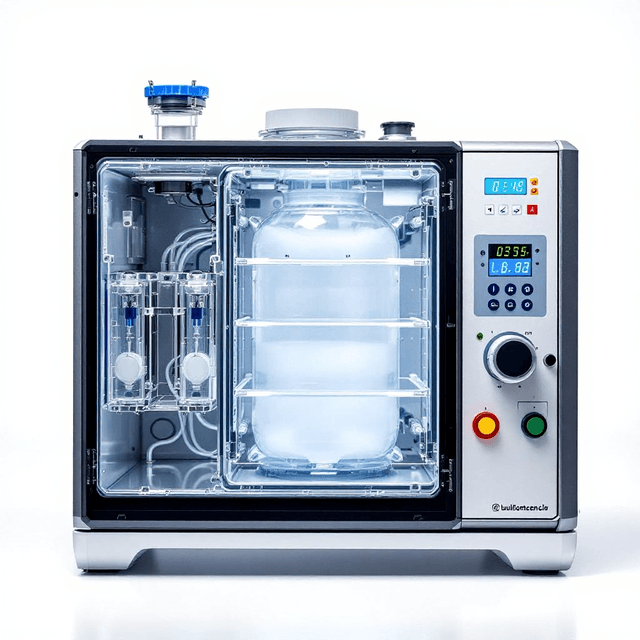
Telos Microdroplet Mass Production Module
Modular microfluidics platform for high-throughput generation of monodisperse microdroplets in research applications, compatible with Telos modular ecosystem.

Louise Corscadden, PhD
Director of Science · ConductScience
Ask Louise about Telos Microdroplet Mass Production Module fit, setup, configuration, or quote prep.
Already working with us? Sign in to connect this with My Scientist.
Key Specifications
Full details →- Model fit
- Configured during quote
- SKU family
- WHM-0072
- Shipping box
- 300.0 x 200.0 x 150.0 cm
- Ordering
- Online checkout and quote request available
- Category
- Lab Equipment
- Build notes
- Confirm accessories, station layout, and support needs before purchase
The Telos Microdroplet Mass Production Module is a modular microfluidics platform designed for high-throughput generation of monodisperse microdroplets in research and development applications. This system enables researchers to scale droplet production from proof-of-concept to larger experimental volumes while maintaining precise control over droplet size and generation frequency.
The module integrates with the Telos modular ecosystem to provide consistent droplet formation across extended production runs. Its compact 300×200×150mm footprint accommodates bench-top installation while the 8kg mass ensures stable operation during continuous use. The system supports various fluid combinations and enables researchers to produce droplets for applications ranging from single-cell encapsulation to materials synthesis.
How It Works
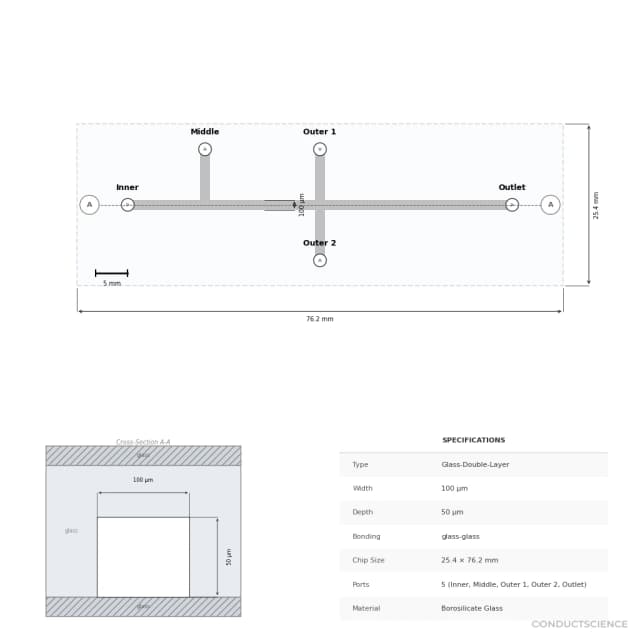
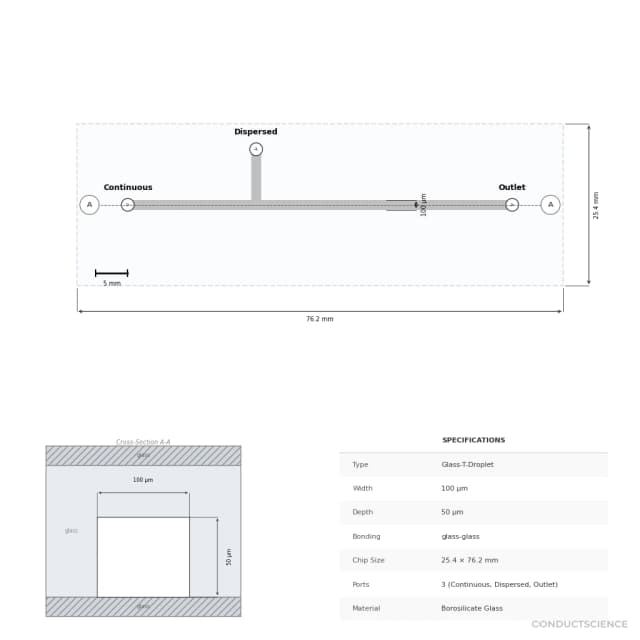
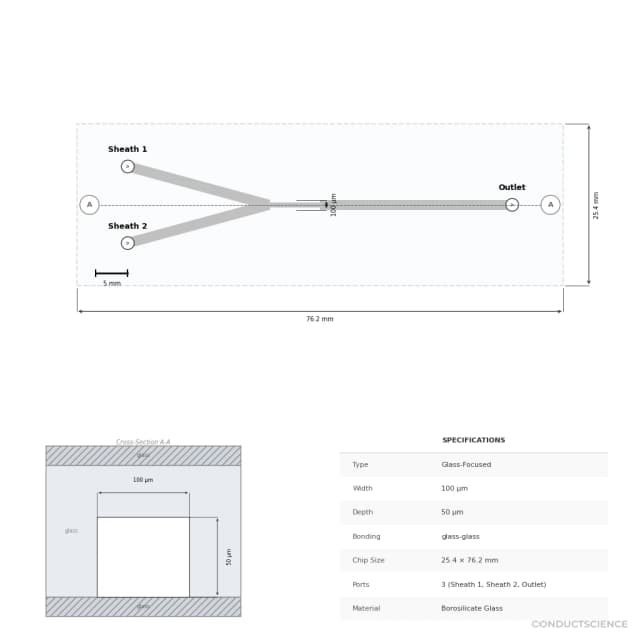
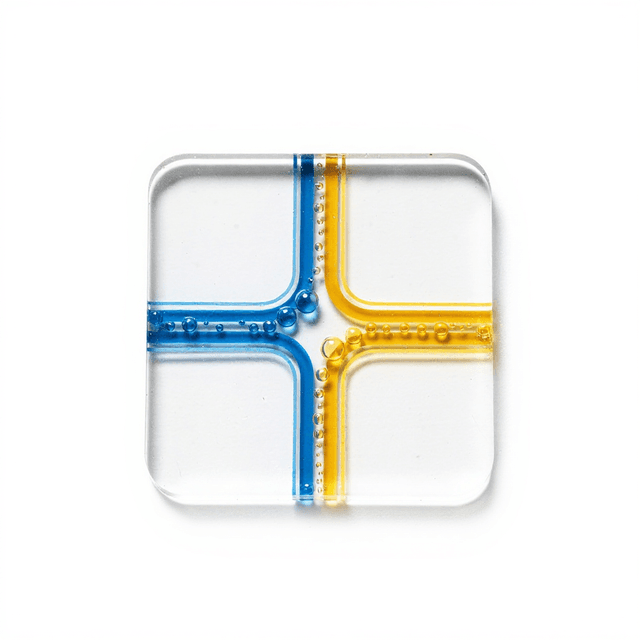
The Telos Microdroplet Mass Production Module operates on flow-focusing microfluidics principles to generate monodisperse droplets through precise fluid dynamics control. The system uses controlled pressure differentials to direct a dispersed phase fluid through a constriction where it encounters an immiscible continuous phase, causing droplet formation through surface tension forces and shear stress.
Flow channels are designed to maintain laminar flow conditions, ensuring consistent droplet formation. The modular design allows for interchangeable components to accommodate different fluid viscosities and surface tensions. Droplet size is controlled through adjustment of flow rate ratios between dispersed and continuous phases, with higher continuous phase flow rates producing smaller droplets.
The mass production capability is achieved through parallel channel configurations and optimized channel geometries that maintain droplet uniformity across extended operation periods. Temperature control and pressure stability features ensure consistent performance during long production runs.
Features & Benefits
Design
- Telos modular
Automation Level
- semi-automated
Brand
- ConductScience
Research Domain
- Analytical Chemistry
- Cell Biology
- Food Science
- Materials Science
- Microbiology
- Pharmaceutical QC
Shipping weight
- 8.0 lb
Shipping box
- L: 300.0 cm
- W: 200.0 cm
- H: 150.0 cm
| Feature | This Product | Typical Alternative | Advantage |
|---|---|---|---|
| Production Throughput | Mass production capability with Telos modular scaling | Entry-level systems often limited to proof-of-concept volumes | Enables researchers to scale from development to larger experimental requirements within the same platform. |
| System Integration | Telos modular ecosystem compatibility | Standalone units with limited expansion options | Allows workflow automation through integration with control and analysis modules. |
| Platform Stability | 8kg mass with 300×200×150mm stable footprint | Lighter systems may require additional stabilization | Provides inherent vibration dampening for consistent droplet formation during extended runs. |
| Modularity | Interchangeable components for different applications | Fixed configurations requiring separate systems for different droplet sizes | Reduces equipment costs and bench space requirements for multi-application laboratories. |
This module combines mass production capabilities with modular integration options, providing researchers a scalable platform for droplet generation. The stable mechanical design and Telos ecosystem compatibility support both development and production-scale microfluidics workflows.
Practical Tips
Establish baseline flow parameters with known fluid pairs before switching to experimental formulations.
Why: Reference conditions enable faster optimization when working with new fluid combinations.
Flush channels thoroughly with appropriate solvents between different fluid systems to prevent cross-contamination.
Why: Residual materials can affect surface properties and droplet formation consistency.
Filter all fluids through 0.22μm filters before use to remove particles that could block microchannels.
Why: Particle contamination is a common cause of system downtime and inconsistent droplet formation.
If droplet size varies during production, check pressure line stability and temperature fluctuations first.
Why: These are the most common causes of production variability in microfluidics systems.
Monitor the first 100 droplets of each run to verify size consistency before beginning extended production.
Why: Early detection of formation issues prevents waste of experimental materials and time.
Use appropriate personal protective equipment when handling organic solvents and verify ventilation for volatile compounds.
Why: Many microfluidics applications involve chemicals that require proper handling protocols.
Setup Guide
What’s in the Box
- Telos Microdroplet Mass Production Module (main unit)
- Modular mounting hardware
- Fluidic connection fittings (typical)
- User manual and setup guide (typical)
- Calibration documentation (typical)
Warranty
ConductScience provides a one-year manufacturer warranty covering defects in materials and workmanship, with technical support for setup and operational guidance.
Compliance
What droplet size range can this module produce?
Droplet size is controlled through flow rate ratios and channel geometry. Specific size ranges depend on fluid properties and operating conditions - consult product datasheet for detailed specifications.
How do I optimize droplet monodispersity?
Maintain stable pressure conditions, ensure proper channel priming, and adjust flow rate ratios systematically. Temperature control and vibration isolation improve consistency.
What types of fluids are compatible with this system?
The system accommodates various aqueous and organic phases with different viscosities. Material compatibility depends on channel construction - verify chemical compatibility before use.
How does this integrate with other Telos modules?
The module uses standard Telos mounting interfaces and can be combined with control, imaging, and analysis modules for complete workflow automation.
What maintenance is required for continuous operation?
Regular channel cleaning between fluid changes, pressure line inspection, and periodic calibration verification. Avoid particle contamination that could clog microchannels.
Can I collect and analyze droplets downstream?
Yes, the module output can be directed to collection vessels or downstream analysis systems. Collection protocols depend on droplet stability and analysis requirements.
Have a question about this product?
Have a question? Just ask.
Send it over and we'll email you a personalized answer — no call, no scheduling.
Prefer to talk it through?
Replacement Parts & Consumables