Category

Behavioral neuroscience

Methods and tools for studying behavior and brain function across animal and human research models, including experimental design, analysis, and interpretation.

Articles in category
96
Categories
42
IRB and Participant Privacy in Human-Centered Computer Vision Research: A Practical Guide for Early Investigators
Behavioral neuroscience11 min read

IRB and Participant Privacy in Human-Centered Computer Vision Research: A Practical Guide for Early Investigators

ABSTRACT Computer vision (CV) studies involving human participants raise unique ethical and regulatory challenges because video and image data are inherently identifiable. For new investigators, navigating Institutional Review Board (IRB) review can feel opaque and intimidating. This guide offers plug-and-play tools such as boilerplate protocol language, checklists, and case exercises, while clarifying the risks most […]


Read article
Designing Translational Research Computer Vision That Conforms to Gold-Standard Science and Open Access Mandates
Behavioral neuroscience8 min read

Designing Translational Research Computer Vision That Conforms to Gold-Standard Science and Open Access Mandates

ABSTRACT Computer vision (CV) methods are increasingly central to both preclinical animal studies and human clinical research. These technologies have the potential to generate high-resolution, continuous, and reproducible measures of behavior that can bridge laboratory findings in rodents with diagnostic or therapeutic applications in humans. However, the translational promise of CV can only be realized […]

Designing Ethical and Safe Computer Vision Software for Human Research
Behavioral neuroscience7 min read

Designing Ethical and Safe Computer Vision Software for Human Research

ABSTRACT Computer vision tools are becoming increasingly common in human-subject research, with applications ranging from gait analysis to language acquisition. As these technologies move into sensitive domains, investigators have a responsibility to ensure that the software itself provides strong protections for privacy, fairness, and participant safety. This article emphasizes practical technology choices rather than regulatory […]

From Rodent Tracks to Human Steps: Why We Need a Common Language for Movement Data
Behavioral neuroscience19 min read

From Rodent Tracks to Human Steps: Why We Need a Common Language for Movement Data

Introduction Quantitative gait analysis is considered a keystone for diagnosis and development of therapies for neurological disorders —including Parkinson’s disease (PD), Huntington disease (HD), and spinal cord injury (SCI) —because it provides objective, reliable and rater-independent measures of mobility.1 Brain damage often results in impairment in gait and balance. These impairments are a leading cause […]

Learning in Drosophila: The Heat Maze Paradigm
Behavioral neuroscience6 min read

Learning in Drosophila: The Heat Maze Paradigm

INTRODUCTION The common fruit fly, Drosophila melanogaster, is widely used in neuroscience. Although minute in size, the brain of Drosophila melanogaster supports sophisticated behaviors, making it a powerful model for studying learning and memory [1]. One innovative method is the Heat Maze, which helps researchers analyze how flies adapt to their environment [2]. Although paradigms […]

Deep Learning for Stroke Recovery: A Practical Guide to Behavioral Profiling in Rodent Models
Behavioral neuroscience16 min read

Deep Learning for Stroke Recovery: A Practical Guide to Behavioral Profiling in Rodent Models

INTRODUCTION Stroke is a leading cause of disability and death worldwide, with over 13.9 million new cases occurring each year.1 Although timely interventions such as thrombolysis and thrombectomy have significantly reduced mortality, acute treatments are limited by narrow therapeutic windows, leaving millions with long-term disabilities.2 Conventional behavioral tests in rodents are widely used to assess […]

.amz Files and NIH Compliance: What AnyMaze Users Need to Know
Behavioral neuroscience6 min read

.amz Files and NIH Compliance: What AnyMaze Users Need to Know

If your lab uses AnyMaze by Stoelting, your projects are almost certainly stored in a proprietary .amz file. That works fine inside AnyMaze, but it creates problems when you need to share results, archive experiments, or comply with the NIH Data Management and Sharing (DMS) Policy. ConductVision .amz file NIH data conversion solves this challenge […]

Correct Response Latency in the Zebrafish 5-Choice Maze: A Precision Metric for Cognitive Processing Speed
Behavioral neuroscience8 min read

Correct Response Latency in the Zebrafish 5-Choice Maze: A Precision Metric for Cognitive Processing Speed

In the quest to quantify cognition, timing is everything. Among the metrics that define executive performance in behavioral neuroscience, Correct Response Latency (CRL), the time it takes to make the right choice after a stimulus—is a powerful and revealing tool. In the context of the Zebrafish 5-Choice Maze, this metric offers a real-time readout of […]

Accuracy Rate in the Zebrafish 5-Choice Maze: A Behavioral Biomarker of Cognitive Precision
Behavioral neuroscience9 min read

Accuracy Rate in the Zebrafish 5-Choice Maze: A Behavioral Biomarker of Cognitive Precision

The Zebrafish 5-Choice Maze stands at the frontier of translational neuroscience. Modeled after the Five-Choice Serial Reaction Time Task (5-CSRTT), this maze is a precision-engineered platform for evaluating core cognitive functions such as sustained attention, learning, stimulus recognition, and inhibitory control. At the heart of this complex behavioral assay lies a deceptively simple yet profoundly […]

Trial-to-Trial Improvement in Zebrafish: A Dynamic Marker of Learning in the Visual Water Maze
Behavioral neuroscience14 min read

Trial-to-Trial Improvement in Zebrafish: A Dynamic Marker of Learning in the Visual Water Maze

Understanding how learning unfolds is just as important as proving that learning occurs. In the field of behavioral neuroscience, trial-to-trial improvement offers a window into the process of memory acquisition, attention, and task engagement. Especially in zebrafish studies using the Visual Water Maze, tracking performance across sequential trials provides invaluable insight into the moment-by-moment progression […]

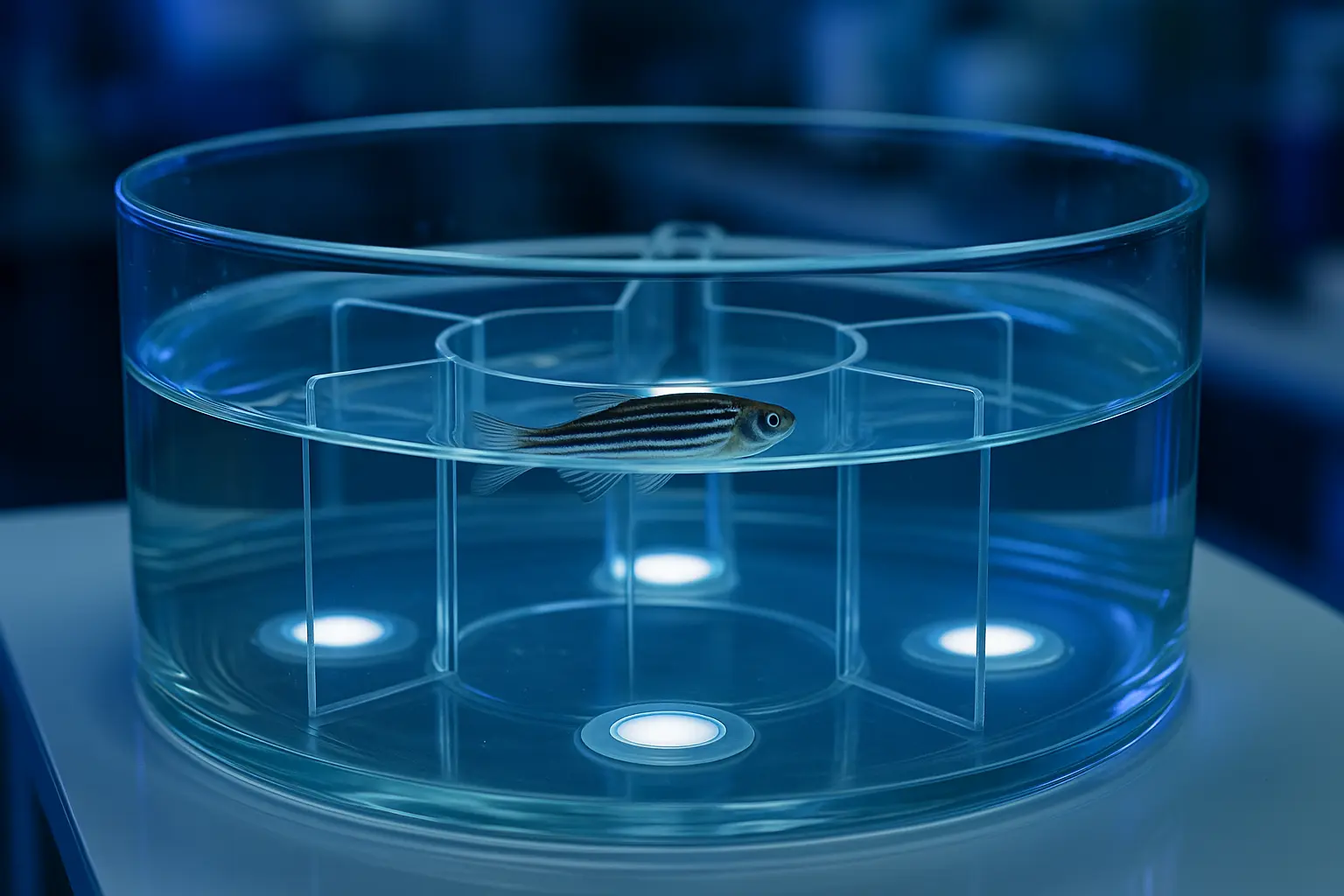
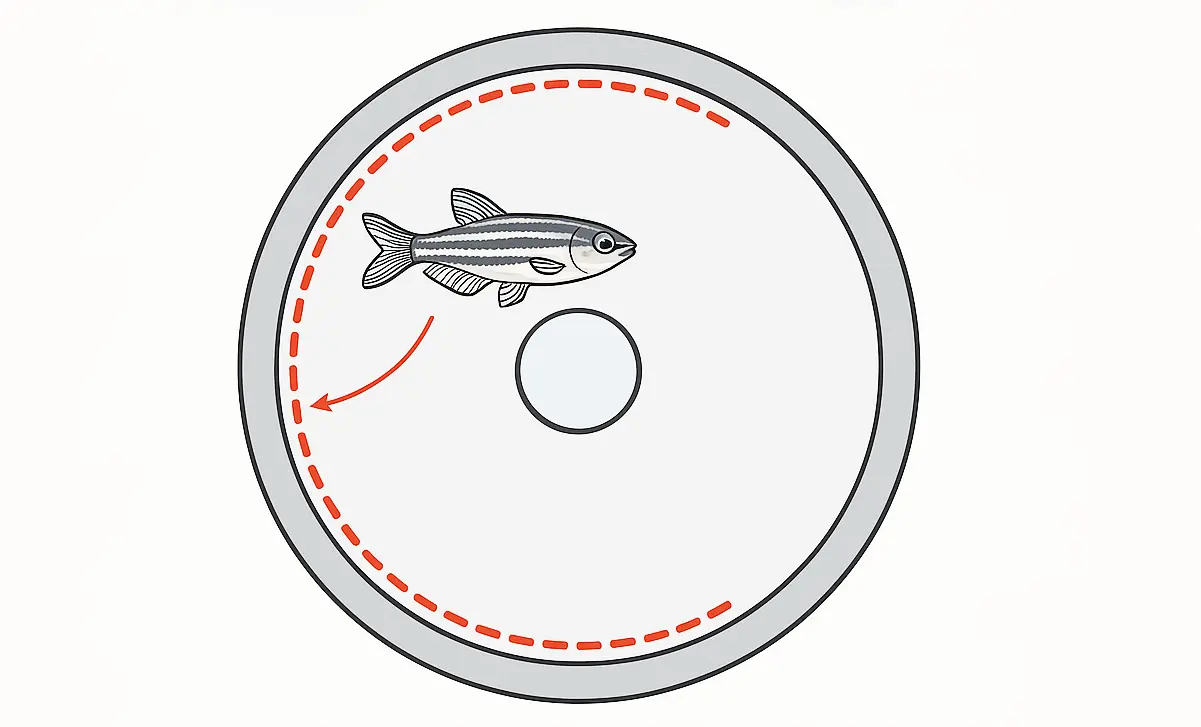
Thigmotaxis in Zebrafish: Emotional Insight from Wall-Hugging
Behavioral neuroscience15 min read

Thigmotaxis in Zebrafish: Emotional Insight from Wall-Hugging

What Wall-Hugging Behavior Reveals About Anxiety and Cognitive Performance In behavioral neuroscience, the path a subject avoids is often as telling as the path it chooses. Within the context of zebrafish research using the Visual Water Maze, one such behavior—thigmotaxis, or wall-hugging—is especially revealing. Although sometimes dismissed as an artifact or a peripheral behavioral quirk, […]

Looking for Behavioral neuroscience equipment?

Browse the ConductScience catalog — all apparatus, software, and services in one place.

Browse the catalog