Category

Behavioral neuroscience

Methods and tools for studying behavior and brain function across animal and human research models, including experimental design, analysis, and interpretation.

Articles in category
96
Categories
42
Time in the Corners: A Sensitive Metric for Evaluating Shelter-Seeking and Risk Assessment in Open Field Analysis
Behavioral neuroscience11 min read

Time in the Corners: A Sensitive Metric for Evaluating Shelter-Seeking and Risk Assessment in Open Field Analysis

Learn More about our Services and how can we help you with your research! Click here Introduction Measurement Significance Relevance Considerations Interpretation Applications System Introduction The Open Field Test (OFT) is a foundational assay in behavioral neuroscience used to assess locomotion, anxiety-like behavior, and exploratory drive in rodent models. While commonly measured variables include total […]

Read article
Vertical Vigilance: Exploring Supported and Unsupported Rearing in Rodents
Behavioral neuroscience13 min read

Vertical Vigilance: Exploring Supported and Unsupported Rearing in Rodents

Learn More about our Services and how can we help you with your research! Click here Introduction Importance Types Neural Mechanisms Environmental Conclusion References Introduction Rearing behavior is a fundamental aspect of rodent behavior characterized by the vertical raising of the forelimbs, allowing the rodent to explore its environment, investigate objects, and maintain vigilance. Rearing […]
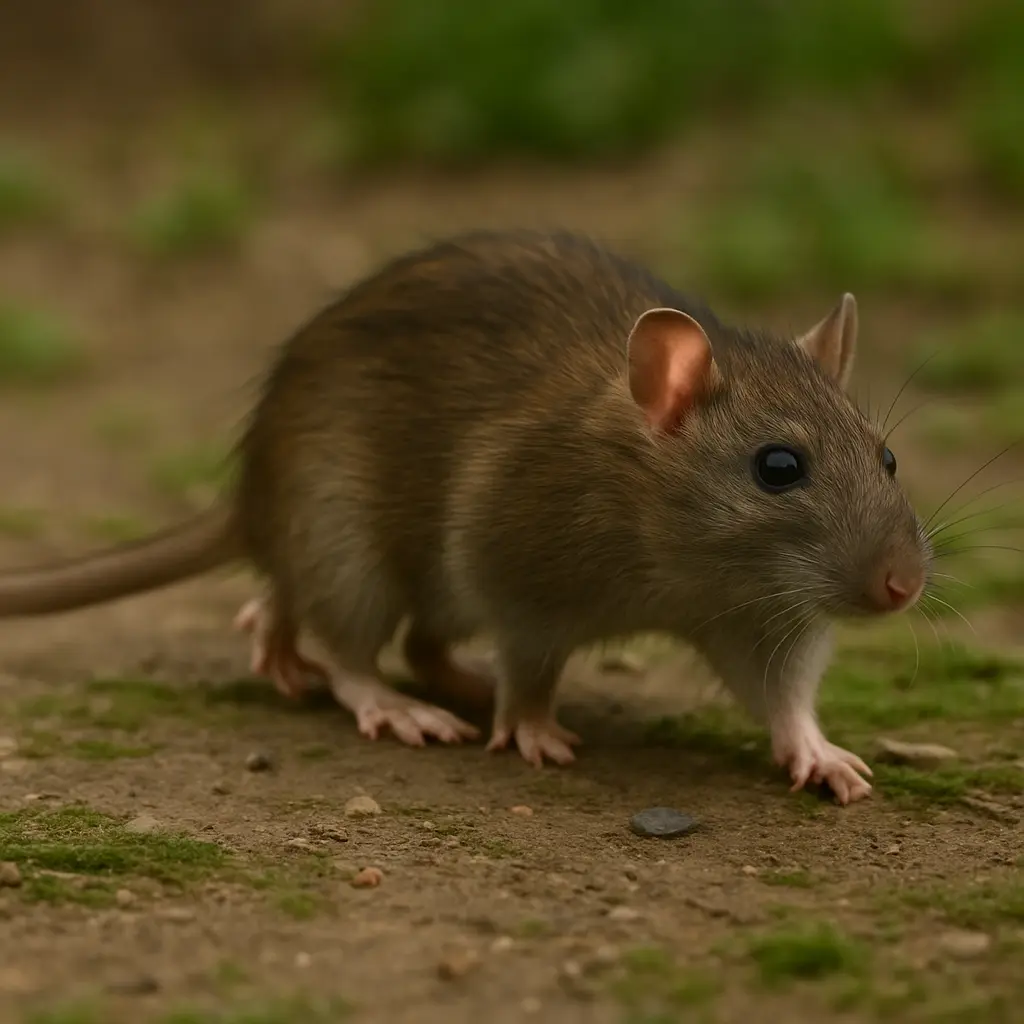
Walking in Rodents: Movement, Gait, and Motor Control
Behavioral neuroscience13 min read

Walking in Rodents: Movement, Gait, and Motor Control

Learn More about our Services and how can we help you with your research! Click here Introduction Neuromechanical Walking Reflection Cognitive Load Walking as a Tool Environment & Circadian Timing Conclusion References Introduction: When Movement Becomes Message In behavioral neuroscience, walking is often viewed as a background behavior—a default mode of movement that serves as […]

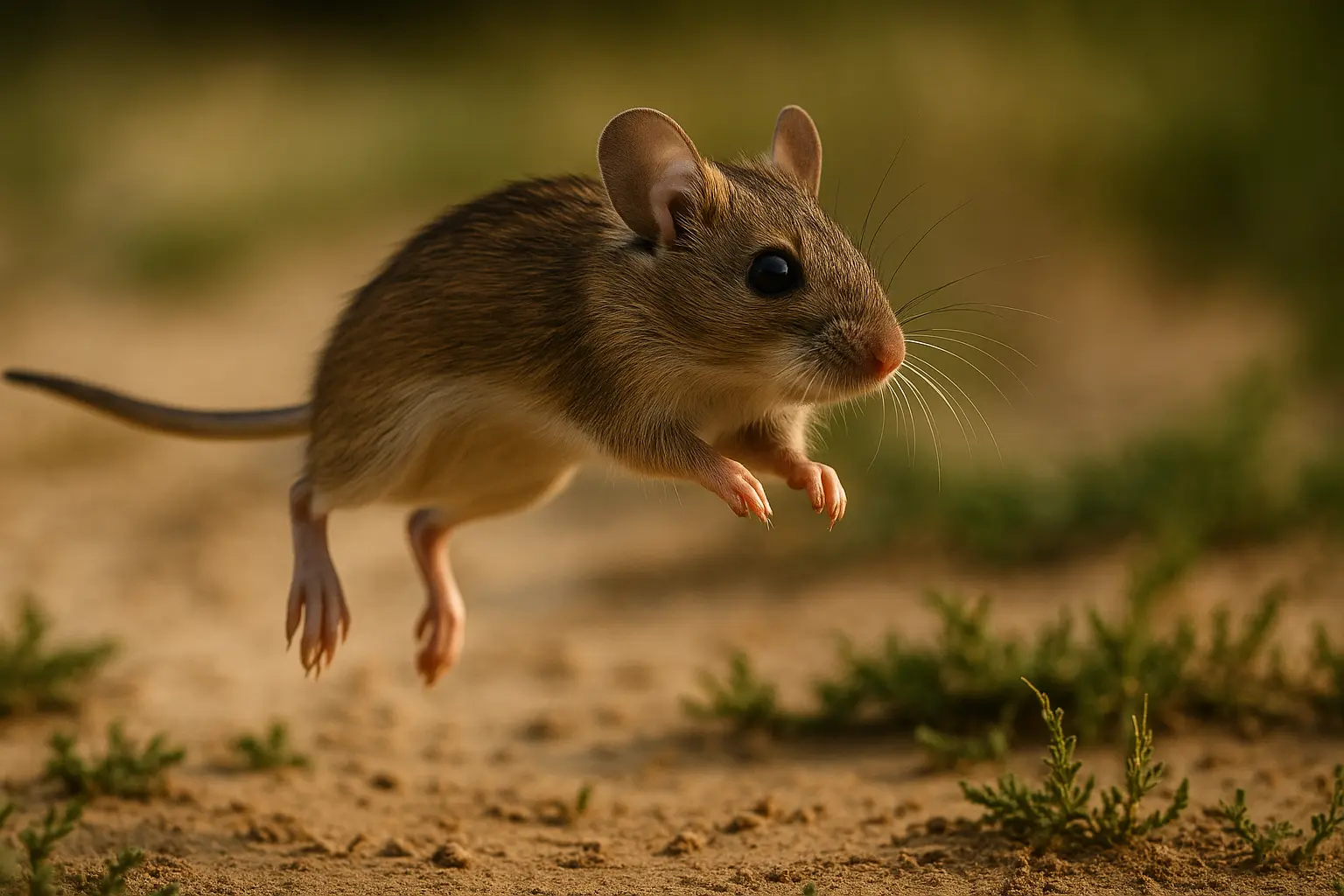
Why Do Rodents Jump? Exploring the Science Behind Their LeapsReferences
Behavioral neuroscience14 min read

Why Do Rodents Jump? Exploring the Science Behind Their LeapsReferences

Learn More about our Services and how can we help you with your research! Click here Introduction What is Resting Behavior? The physiological Aspect Resting Behavior and Mental Health Environmental Influence Circadian Rhythms Social and Hierarchical Signal Neural Activity Resting Disease Models Quantifying Rest Pharmacodynamic Readout Introduction: More Than a Startle—Jumping as a Behavioral Signal […]

Why Rodents Rest: The Science Behind Their Sleep, Nests, and Quiet Moments
Behavioral neuroscience15 min read

Why Rodents Rest: The Science Behind Their Sleep, Nests, and Quiet Moments

Learn More about our Services and how can we help you with your research! Click here Introduction What is? The physiological Aspect Resting Behavior Environmental Influence Circadian Rhythms Social and Hierarchical Signal Neural Activity Resting Disease Models Quantifying Rest Pharmacodynamic Readout Conclusion References Introduction: Why Resting Behavior Matters In the often bustling world of behavioral […]

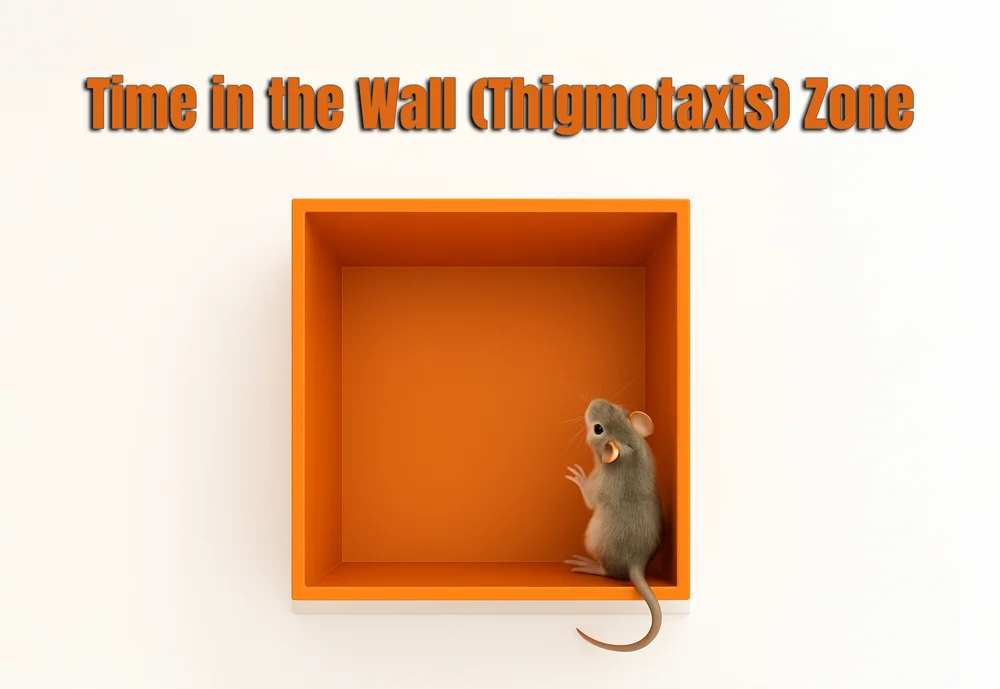
Time in the Wall (Thigmotaxis) Zone: A Core Metric in Open Field Analysis for Evaluating Anxiety and Defensive Behavior
Behavioral neuroscience14 min read

Time in the Wall (Thigmotaxis) Zone: A Core Metric in Open Field Analysis for Evaluating Anxiety and Defensive Behavior

Learn More about our Services and how can we help you with your research! Click here Introduction What is? Efficiency Applications Quantification Conclusion Introduction In the study of rodent behavior, the Open Field Test (OFT) is a widely used assay to measure spontaneous locomotor activity, emotional reactivity, and exploratory tendencies. Among its most reliable and […]

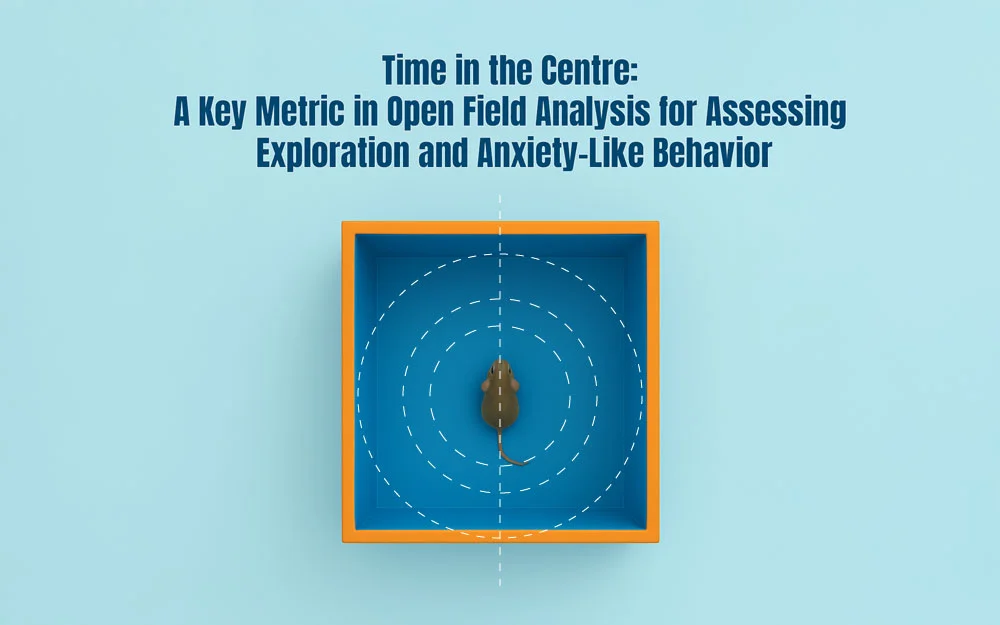
Time in the Centre: A Key Metric in Open Field Analysis for Assessing Exploration and Anxiety-Like Behavior
Behavioral neuroscience14 min read

Time in the Centre: A Key Metric in Open Field Analysis for Assessing Exploration and Anxiety-Like Behavior

Learn More about our Services and how can we help you with your research! Click here Introduction Measurement Relevance Considerations Interpretation Metrics Analysis Introduction The Open Field Test (OFT) is a foundational behavioral assay used in neuroscience and psychology to evaluate general locomotor activity, anxiety-like responses, and exploratory tendencies in rodents. Among the most informative […]

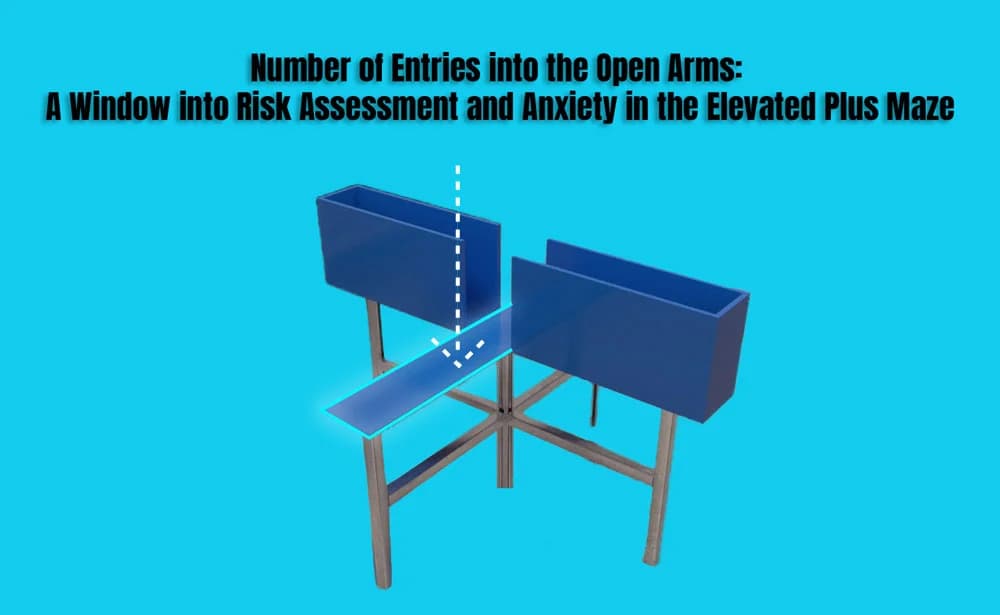
Number of Entries into the Open Arms: A Window into Risk Assessment and Anxiety in the Elevated Plus Maze
Behavioral neuroscience4 min read

Number of Entries into the Open Arms: A Window into Risk Assessment and Anxiety in the Elevated Plus Maze

Learn More about our Services and how can we help you with your research! Click here Introduction Significance Features Study Recommendations Prioritize Conclusion Introduction: What Do Open Arm Entries Really Tell Us? In behavioral neuroscience, the Elevated Plus Maze (EPM) stands as a gold-standard assay for quantifying anxiety-related behaviors in rodents. The maze’s cross-shaped structure […]

Charting Cognitive Efficiency: Understanding Corrected Integrated Path Length in the Morris Water Maze
Behavioral neuroscience15 min read

Charting Cognitive Efficiency: Understanding Corrected Integrated Path Length in the Morris Water Maze

Learn More about our Services and how can we help you with your research! Click here Introduction What is? Efficiency Applications Quantification Conclusion Introduction: Rethinking Performance in the Maze In behavioral neuroscience, the Morris Water Maze has long been a cornerstone of cognitive testing. Its simplicity—a circular pool, a hidden platform, and a swimming rodent—belies […]

Tracing Precision: Understanding Distance Travelled in Whishaw’s Corridor
Behavioral neuroscience11 min read

Tracing Precision: Understanding Distance Travelled in Whishaw’s Corridor

Learn More about our Services and how can we help you with your research! Click here Introduction What is? Measurement Applications Integration Conclusion Introduction: Behavior Isn’t Just What We See It’s How We Measure It In the world of behavioral neuroscience, precision is no longer a luxury—it’s a necessity. As research evolves from broad descriptions […]

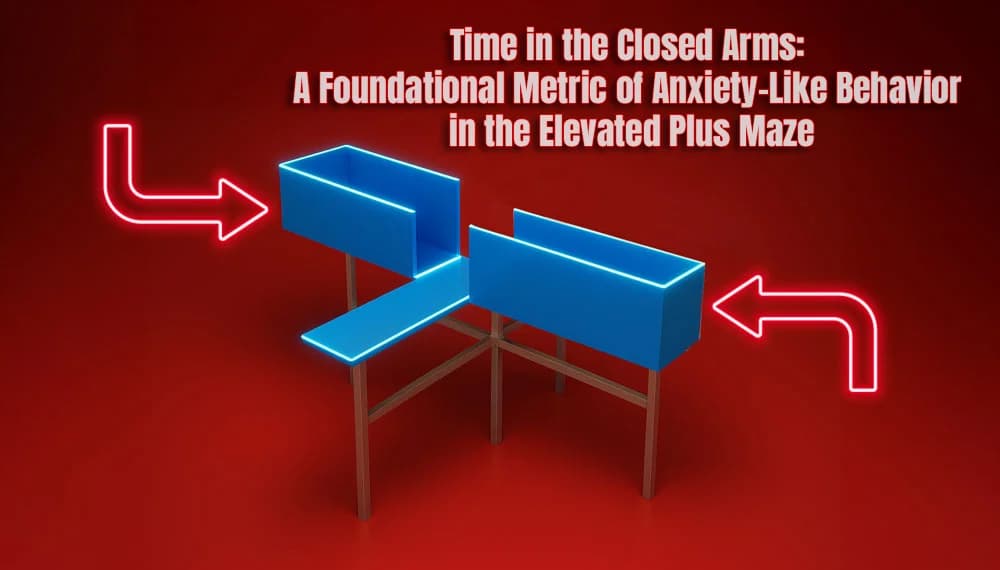
Time in the Closed Arms: A Foundational Metric of Anxiety-Like Behavior in the Elevated Plus Maze
Behavioral neuroscience4 min read

Time in the Closed Arms: A Foundational Metric of Anxiety-Like Behavior in the Elevated Plus Maze

Learn More about our Services and how can we help you with your research! Click here Introduction Relevance Study Metric Integration Applications Final Thoughts Introduction: Why Closed Arms Matter in Anxiety Research The Elevated Plus Maze (EPM) is one of the most widely used and validated behavioral tests for assessing anxiety-like behaviors in rodents. Its […]

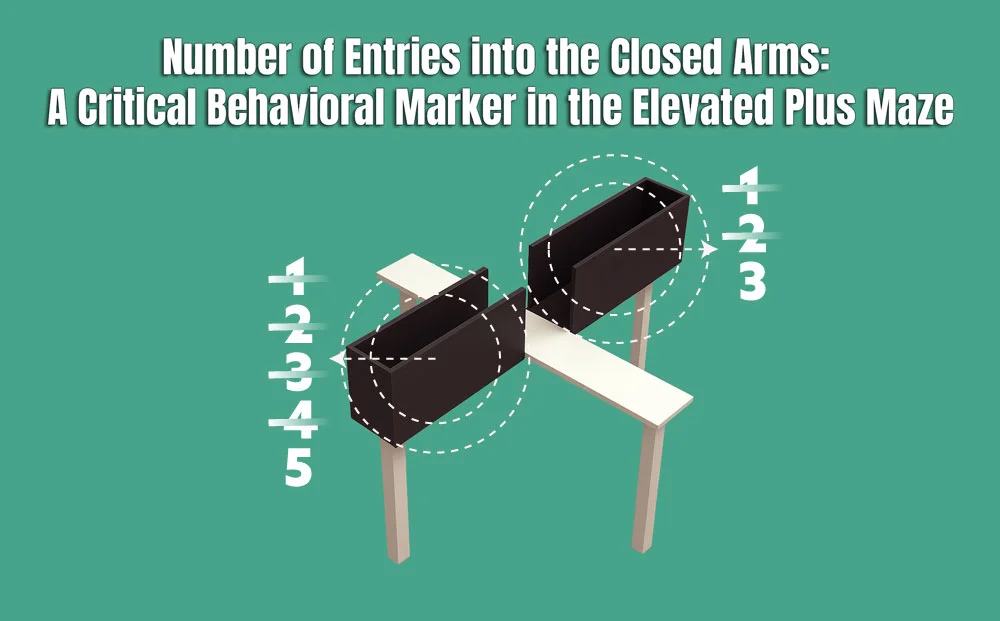
Number of Entries into the Closed Arms: A Critical Behavioral Marker in the Elevated Plus Maze
Behavioral neuroscience4 min read

Number of Entries into the Closed Arms: A Critical Behavioral Marker in the Elevated Plus Maze

Learn More about our Services and how can we help you with your research! Click here Introduction Measurement CS Study Considerations Tracking Applications Conclusion Introduction: Why Count Entries, Not Just Time? The Elevated Plus Maze (EPM) is one of the gold standards for evaluating anxiety-related behavior in rodents. While time spent in the open or […]

Looking for Behavioral neuroscience equipment?

Browse the ConductScience catalog — all apparatus, software, and services in one place.

Browse the catalog