ConductVision Enterprise

Healthcare

ConductVision counts people, chairs and wheelchairs in entrances, waiting areas and corridors, for hospital operations teams who plan seating, staffing and equipment.

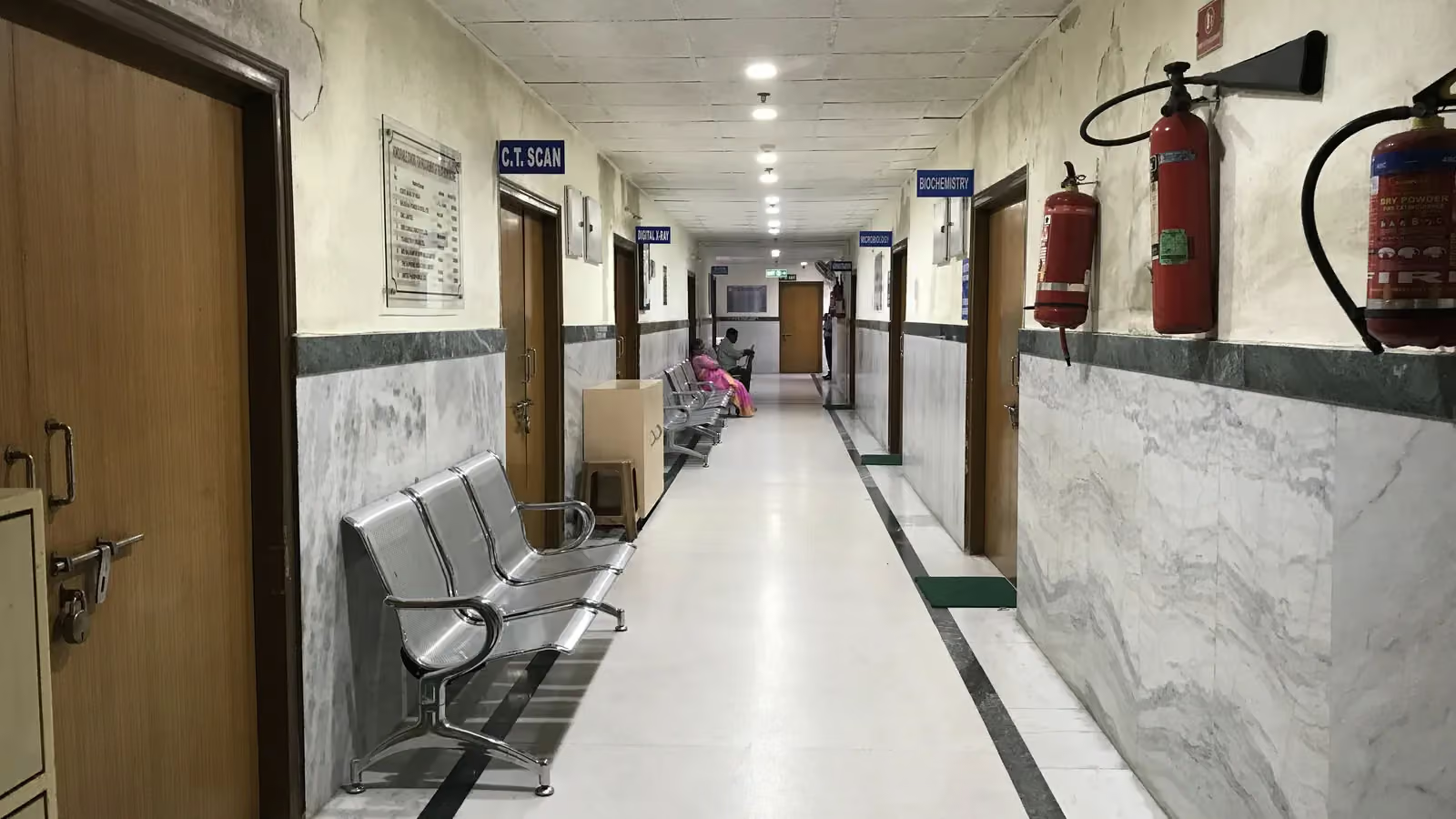
A hospital corridor lined with metal waiting benches and fire extinguishers, with a few people at the far end; boxes mark three people and two benches.5 detections
Hospital corridor with waiting benches
  • Person3
  • Bench2

ConductVision detections on this photo. Photo: Indrajit Das, CC BY-SA 4.0, cropped.

Healthcare facilities face persistent operational challenges that directly impact patient experience and staff efficiency. Waiting room overcrowding, patient fall events, restricted area breaches, and hand hygiene compliance gaps are difficult to monitor consistently with manual observation alone. ConductVision's technology can provide purely operational visual analytics for healthcare environments, monitoring facility flow, occupancy, safety events, and compliance behaviors without any diagnostic function. The platform can help administrators optimize throughput, support safety programs, and maintain auditable compliance records.

Outcomes

What your team gets

Wheelchairs at each entrance

Visitors and staff search the entrance for a free wheelchair at busy times.

Staff leave their posts to fetch chairs from other floors.

How
ConductVision counts the wheelchairs at each entrance and whether a person is seated in each one.
You get
Free wheelchair counts by entrance and hour, with an alert when a bay runs empty.
Seats in waiting areas

Waiting areas fill past their seats at peak hours, and people stand in corridors.

Crowded waiting areas slow staff moving through and leave visitors without a seat.

How
ConductVision counts the people and the empty chairs in each waiting area.
You get
Hourly counts of people beyond the seats and of free chairs, by waiting area.

Corridors kept clear

Chairs and wheelchairs get left in corridors and beside exits.

Cluttered corridors slow staff moving beds and equipment between units.

How
In a pilot, ConductVision flags chairs and wheelchairs that stay in a corridor zone past the time the team sets.
You get
A clutter log by corridor and hour, with a still of each item.

Entrance traffic by hour

Entrances and drop-off bays crowd at shift change and visiting hours.

Arrivals queue at the door while staff and visitors cross the same space.

How
ConductVision counts the people entering and leaving each entrance, hour by hour.
You get
Entrance counts by hour, to plan door staff and the timing of visiting hours.

The challenge

Emergency departments and outpatient clinics struggle with unpredictable patient volumes that create bottlenecks in waiting areas and treatment rooms. Fall events in inpatient settings often go unwitnessed for critical minutes, and hand hygiene compliance audits capture only a small sample of actual behavior across shifts.

Our approach

ConductVision can monitor waiting room occupancy, patient movement patterns, and treatment room turnover to optimize facility flow. Fall detection models can alert nursing staff when an event is detected. Hand hygiene monitoring at station entry points can provide continuous compliance data without manual auditing.

What the model sees

Detections in two more settings

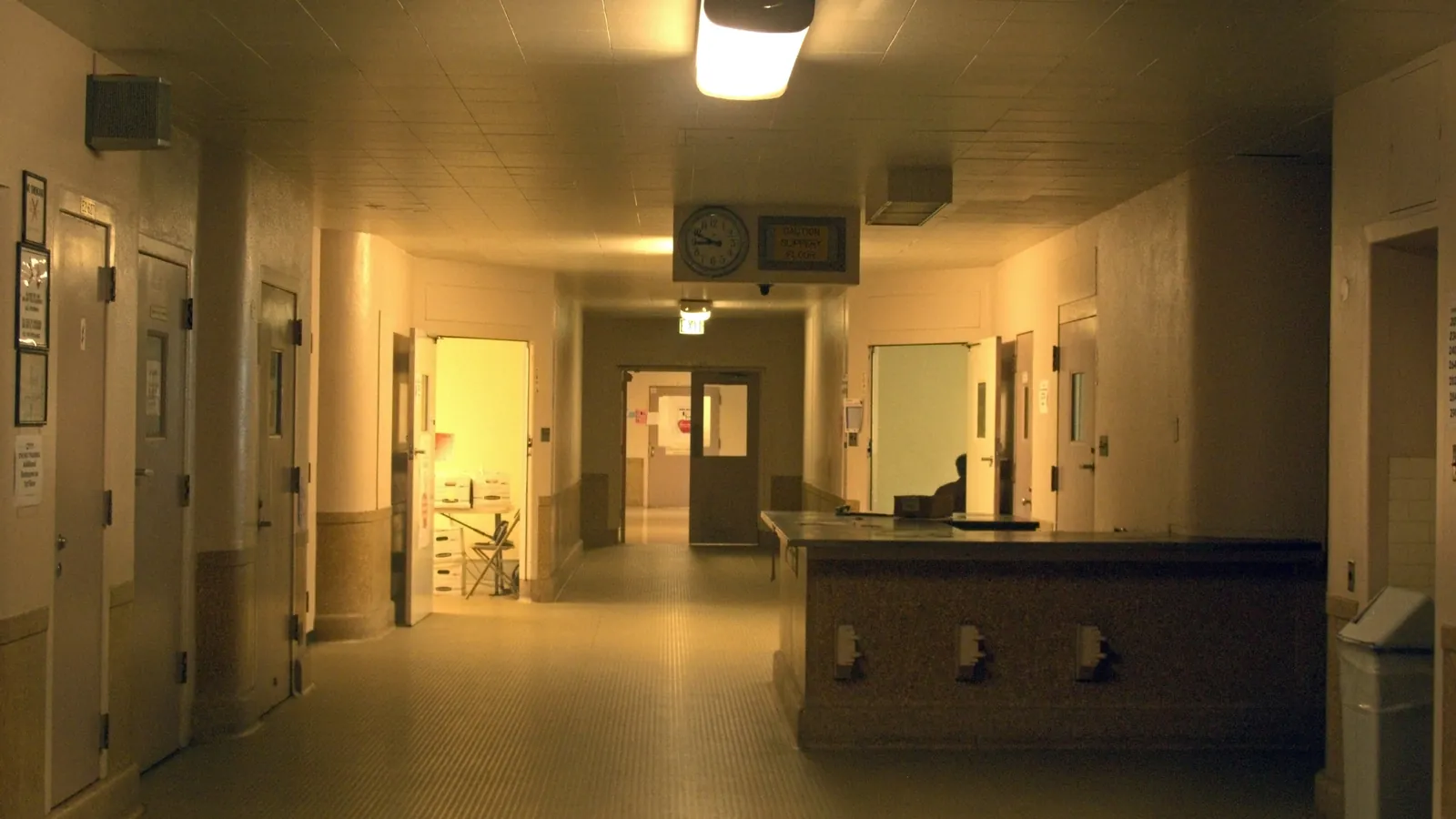
A dimly lit hallway in an old hospital building, with one person seated behind a long counter; boxes mark the person and a chair.
Hallway in an old hospital
  • Chair1
  • Person1

ConductVision detections on this photo. Photo: Downtowngal, CC BY-SA 4.0, cropped.

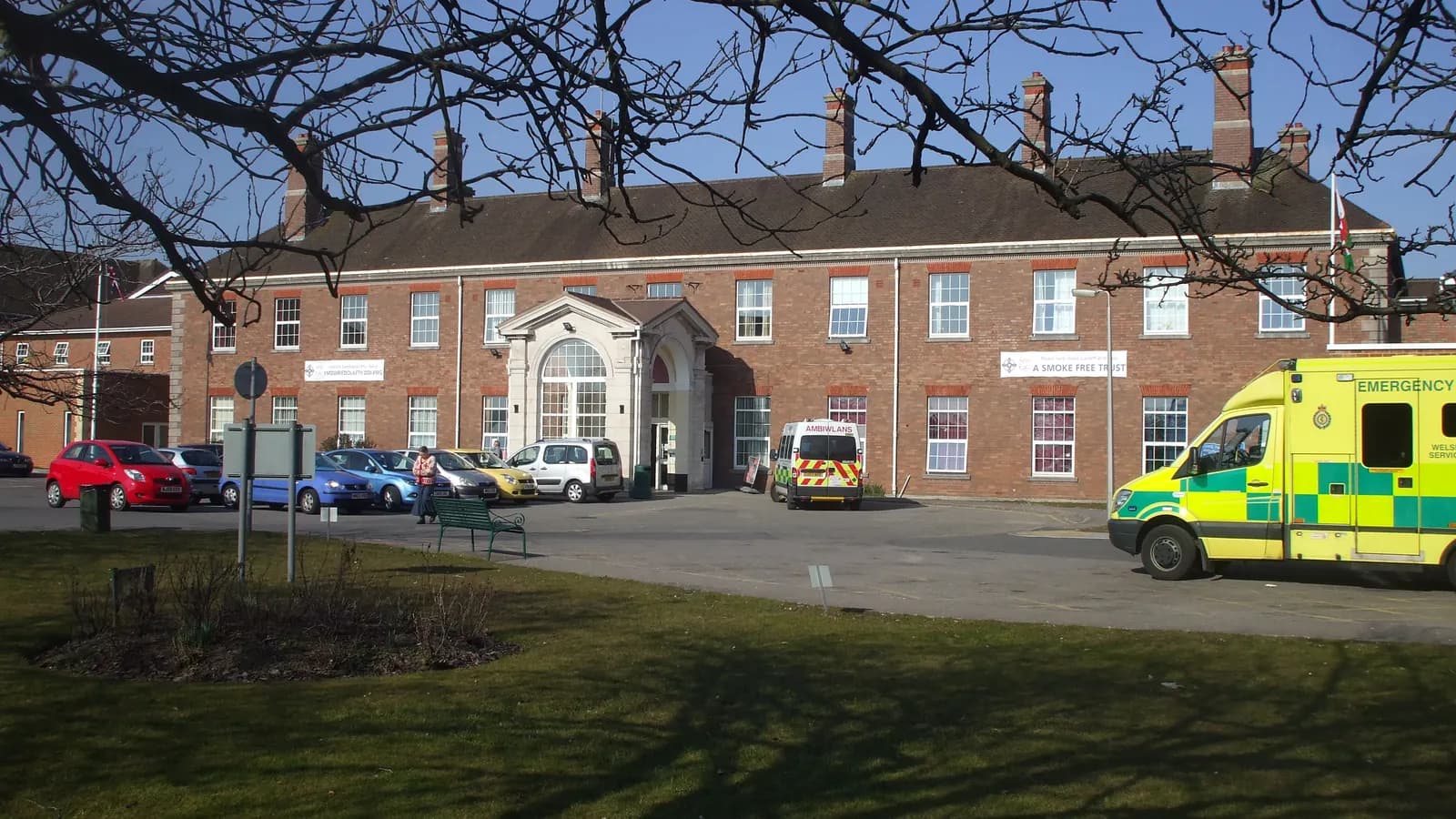
Parked cars and two ambulances outside the main entrance of Llandough Hospital in Wales; boxes mark 7 cars, 2 people and both ambulances.
Main entrance at Llandough Hospital
  • Car7
  • Person2
  • Ambulance2

ConductVision detections on this photo. Photo: John Lord, CC BY-SA 2.0, cropped.

Endpoints

What a pilot measures

Each endpoint is defined before the pilot starts, with what is counted, its unit and how the results are broken down.

What a pilot measures
PrimaryWheelchair availabilityShare of sampled minutes in which an entrance has at least one free wheelchair in its bay.Unit:%By:Entrance, hour
SecondaryWaiting overflowPeople counted in a waiting area minus the chairs in it, when above zero, reported as the hourly peak.Unit:peopleBy:Area, hour
Corridor clutter timeMinutes a chair or wheelchair stays in a corridor zone past the set time, summed per day.Unit:minutes per dayBy:Corridor
Entrance volumePeople crossing each entrance line inward, counted once per crossing.Unit:entries per hourBy:Entrance, hour

How we check the model

Each pilot measures ConductVision on your own footage against a sample checked by hand, before anyone relies on its numbers.

  • Wheelchair state agreement

    Share of wheelchairs in sampled frames whose free or in-use state matches a reviewer's label.

    % · by entrance

  • Free chair count

    Difference between the ConductVision count of free chairs and a reviewer's count on sampled frames.

    chairs (mean absolute difference) · by waiting area

  • Clutter alert precision

    Share of corridor clutter alerts that a reviewer confirms in a hand-checked sample of stills.

    % · by corridor

Use cases

Where teams put it to work

Patient Flow Optimization

Cameras can track patient movement through registration, triage, treatment, and discharge zones. Bottleneck identification and turnover metrics can enable administrators to reallocate staff and resources to constrained areas in real time.

Waiting Room Capacity Management

Occupancy counting in waiting areas can trigger overflow protocols when thresholds are reached. Historical volume patterns by hour and day of week can inform staffing schedules and appointment slot allocation.

Fall Detection and Alerting

Motion analysis models can detect fall events in patient rooms, hallways, and common areas. Alerts can reach nursing stations and flag events that often go unwitnessed during overnight shifts.

Restricted Area Access Monitoring

Pharmaceutical storage, server rooms, and sterile processing areas can be monitored for unauthorized entry. Access events can be logged with timestamps and visual records for security and compliance auditing.

Hand Hygiene Compliance Monitoring

Cameras at hand hygiene stations can detect whether staff perform sanitization upon entering and exiting patient zones. Compliance rates can be reported by department and shift without identifying individual staff members.

Systems it connects to

  • Electronic Health Record (EHR) Systems
  • Nurse Call Systems
  • Real-Time Location Systems (RTLS)
  • Building Management Systems
  • Access Control Platforms

Pilot

Scope a healthcare pilot

Tell us about your sites and cameras, and a ConductVision engineer replies with a scoping plan built around the endpoints above.