ConductVision Enterprise

Ports & Maritime

ConductVision times truck queues at the terminal gate and under the cranes and flags people in a crane's working lane for port and terminal operators.

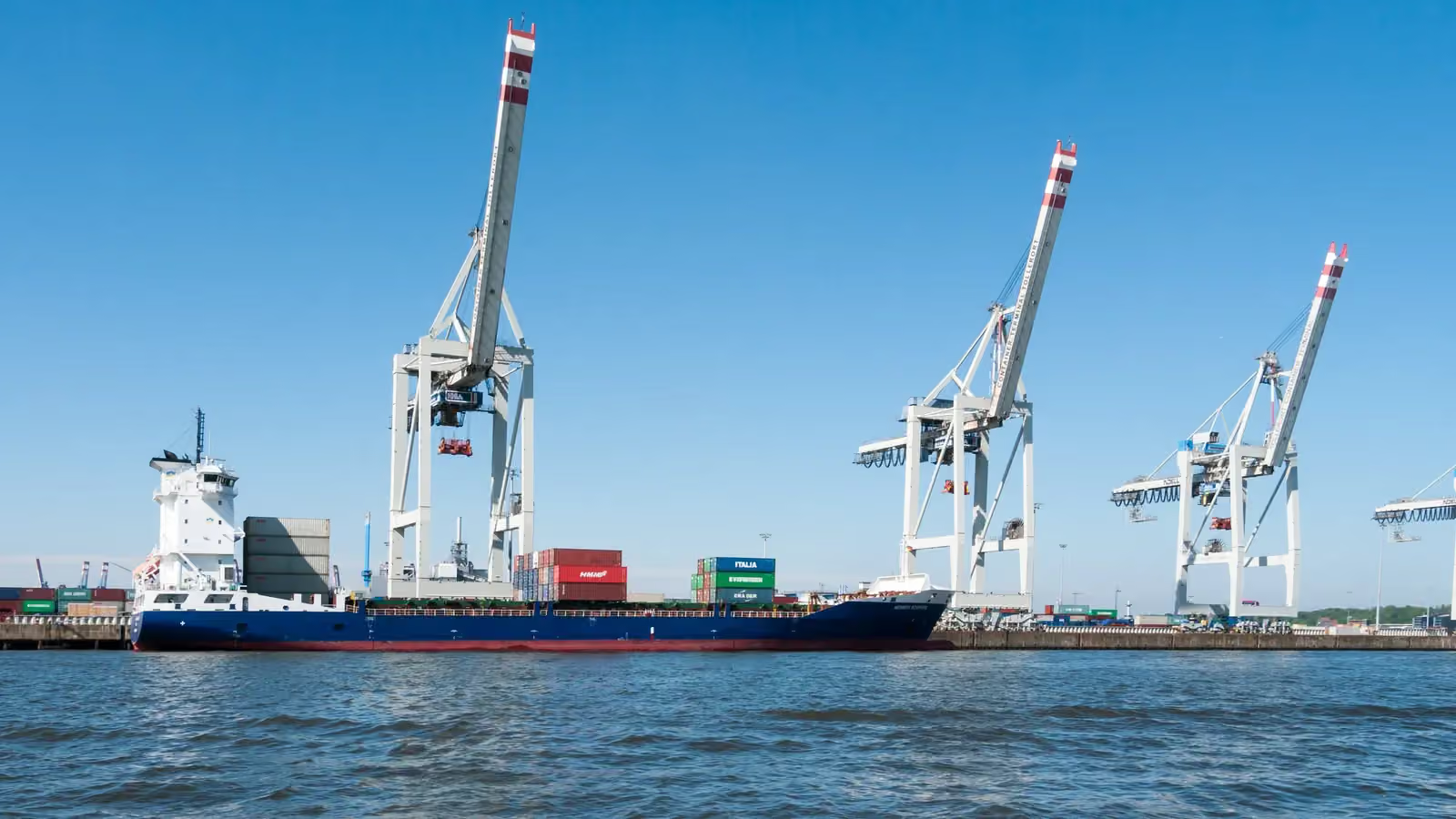
Quay cranes stand over a container terminal in Hamburg with a small container ship in the foreground; boxes mark 3 gantry cranes.3 detections
Container terminal in Hamburg
  • Gantry crane3

ConductVision detections on this photo. Photo: Matti Blume, CC BY-SA 4.0, cropped.

Ports are among the most complex operational environments in global logistics, managing simultaneous vessel arrivals, thousands of container movements, heavy equipment operations, and strict perimeter security requirements within constrained physical footprints. Delays at any stage ripple through supply chains, yet visibility into real-time operations remains fragmented across multiple legacy systems. ConductVision's technology can provide integrated visual analytics across the full port operational cycle: vessel approach and berth management, container identification and tracking, crane and equipment monitoring, perimeter security, and loading/unloading verification. The platform can transform existing port camera infrastructure into a unified operational intelligence layer.

Outcomes

What your team gets

Truck queues outside the gate

Trucks line up on the access road before the in-gate opens and again at peak hours.

Long queues back up onto public roads and stretch every driver's turn time.

How
ConductVision counts the trucks in each access-road view and times how long each one takes to reach the gate.
You get
Queue length and wait time by hour, ready for appointment slot planning.

Truck waits under the crane

Yard trucks bunch up under one crane while another crane waits for its next truck.

Either wait adds to the ship's time at berth.

How
ConductVision detects the trucks in each crane lane and logs how long each one waits there.
You get
Truck wait times per crane lane and hour, showing which side of the hand-off holds up the work.

People under moving loads

Lashing crews and checkers work on the quay under ship-to-shore cranes.

A person under a moving container is a near miss that rarely gets reported.

How
In a pilot, ConductVision flags a person detected in a crane's working lane while a container moves overhead.
You get
A near-miss log per crane and shift, with a clip of each event.

The challenge

Ports handle thousands of container moves per day across multiple berths, with each movement involving coordination between vessels, cranes, yard trucks, and rail systems. Container identification errors cause costly misloads and delays. Perimeter security across miles of waterfront and fencing requires monitoring capacity that exceeds traditional guard forces.

Our approach

ConductVision can read container codes and trailer markings from existing cameras, tracking assets from gate entry through yard storage to vessel loading. Crane cameras can verify load sequences against stowage plans. Perimeter cameras can detect intrusions, unauthorized vessel approaches, and waterside security breaches across the full port boundary.

What the model sees

Detections in two more settings

A row of quay cranes stands in silhouette at a Singapore container terminal; boxes mark 6 gantry cranes.
Quay cranes in Singapore
  • Gantry crane6

ConductVision detections on this photo. Photo: CEphoto, Uwe Aranas, CC BY-SA 3.0, cropped.

Trucks move through a stacked container yard at an inland port on the Rhine; boxes mark 3 trucks.
Container yard at Mannheim harbor
  • Truck3

ConductVision detections on this photo. Photo: Achim Lammerts (Syntaxys), CC BY-SA 4.0, cropped.

Endpoints

What a pilot measures

Each endpoint is defined before the pilot starts, with what is counted, its unit and how the results are broken down.

What a pilot measures
PrimaryGate queue waitMinutes from a truck joining the access-road queue to its arrival at the in-gate.Unit:minutes (median)By:Gate, hour
SecondaryQueue lengthTrucks counted in the access-road queue view, sampled every 5 minutes.Unit:trucks (hourly peak)By:Gate, hour
Crane lane waitMinutes a yard truck stays in a crane lane, from arrival to departure.Unit:minutes (median)By:Crane, shift
Under-load near missesPeople detected in a crane's working lane while a container moves overhead, counted once per event.Unit:events per crane-shiftBy:Crane, shift

How we check the model

Each pilot measures ConductVision on your own footage against a sample checked by hand, before anyone relies on its numbers.

  • Queue count agreement

    Difference between the ConductVision queue count and a reviewer's hand count on sampled frames.

    trucks per frame (mean absolute difference) · by camera, time of day

  • Wait time error

    Difference between the arrival time ConductVision records and a reviewer's timestamp for sampled trucks.

    seconds (median absolute difference) · by lane

  • Near-miss precision

    Share of near-miss alerts that a reviewer confirms in a hand-checked sample of clips.

    % · by crane

Use cases

Where teams put it to work

Container Identification and Tracking

Gate, yard, and quayside cameras can read ISO 6346 container codes, chassis numbers, and seal status. Containers can be tracked through every yard move, eliminating manual code entry errors and enabling real-time yard inventory accuracy.

Vessel Berth Monitoring

PTZ cameras can monitor vessel approach, mooring operations, and berth utilization. Loading and unloading progress can be tracked against planned schedules, providing operations centers with real-time berth productivity data.

Port Perimeter Security

Cameras along fencing, waterfront, and access points can detect unauthorized personnel, vehicles, and watercraft. Intrusion alerts can be classified by zone and threat level, enabling security teams to coordinate responses across large perimeters.

Crane and Equipment Monitoring

Cameras on ship-to-shore cranes, RTG cranes, and straddle carriers can verify load handling, anti-collision clearances, and operational status. Idle time and cycle time analytics can identify equipment utilization opportunities.

Loading and Unloading Verification

Quayside cameras can verify container placement against the stowage plan, detecting misloads before vessel departure. Bay, row, and tier positions can be confirmed visually, providing an independent check against terminal operating system data.

Gate Operations Automation

Inbound and outbound gate cameras can capture container codes, chassis numbers, driver identification, and damage condition in a single pass. Gate transaction time can be reduced while data accuracy improves over manual entry.
Systems it connects to

  • Terminal Operating Systems (Navis, TOPS)
  • Port Community Systems
  • Vessel Traffic Services (VTS)
  • Gate Operating Systems
  • Customs and Border Systems

Pilot

Scope a ports & maritime pilot

Tell us about your sites and cameras, and a ConductVision engineer replies with a scoping plan built around the endpoints above.