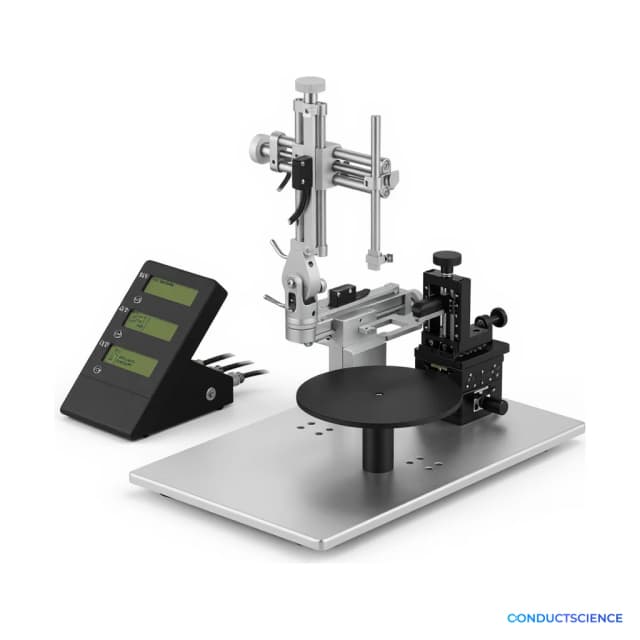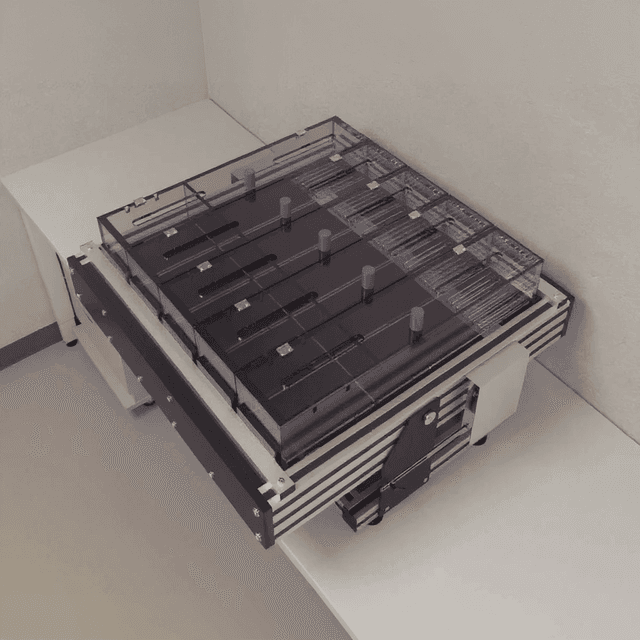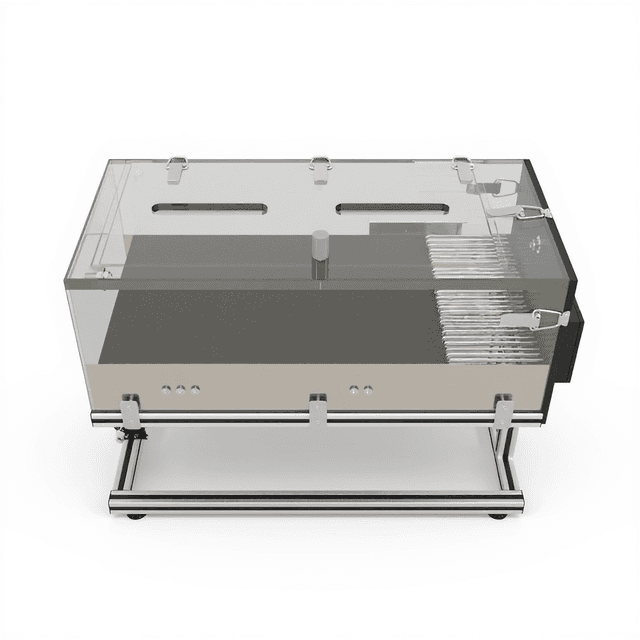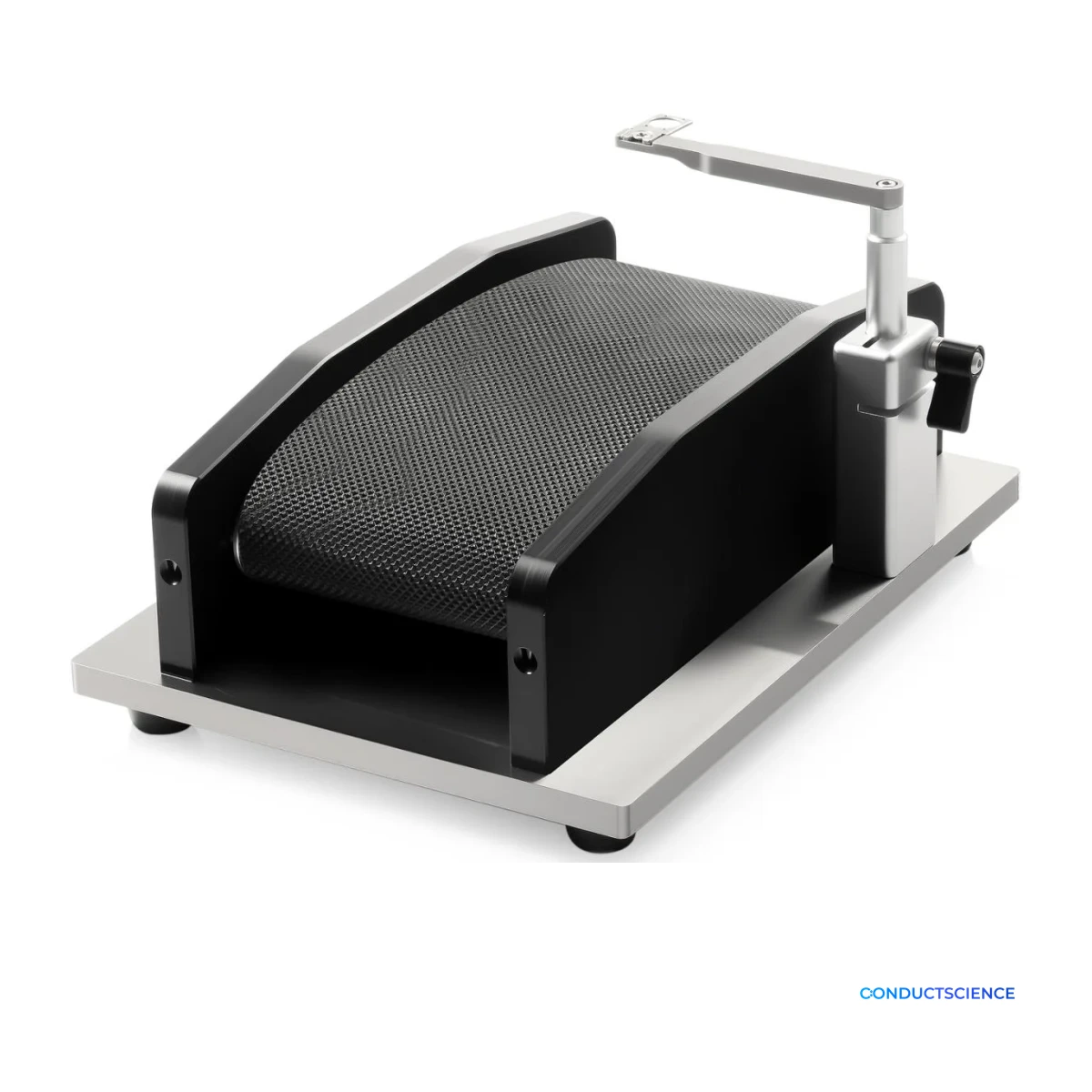
Conscious Mouse Head-Fixed Treadmill System
Conscious mouse head-fixed treadmill system for awake cranial imaging, electrophysiology, visual stimulation, and training workflows, with selectable freely or actively animal-driven belt treadmill and motor-driven belt treadmill configurations, adjustable head-fixation height for mouse comfort, and motor-driven pitch and belt-speed adjustment planning.

Louise Corscadden, PhD
Director of Science · ConductScience
Ask Louise about Conscious Mouse Head-Fixed Treadmill System fit, setup, configuration, or quote prep.
Already working with us? Sign in to connect this with My Scientist.
Key Specifications
Full details →- Model fit
- 2 selectable configurations
- SKU family
- CS-HFIX-TREADMILL-MOUSE
- Sizing
- Model-specific dimensions confirmed from the selected configuration
- Ordering
- Online checkout and quote request available
- Category
- Stereotaxic Systems
- Build notes
- Confirm accessories, station layout, and support needs before purchase
Overview
The Conscious Mouse Head-Fixed Treadmill System is an awake mouse locomotion platform for laboratories that need head fixation and treadmill movement in the same station. The source family separates two belt treadmill configurations: a freely or actively animal-driven treadmill that lets the mouse walk on the belt, and a motor-driven treadmill intended to improve training efficiency through controlled movement.
The system is built around a head-fixation support mounted to the treadmill. Height adjustment lets the lab match the headplate position to the age and size of the mouse, helping the station line up with the microscope, stimulus hardware, or recording setup while reducing unnecessary neck and spine pressure. The motor-driven configuration adds pitch-incline and belt-speed translation adjustment planning for workflows that need controlled training or repeatable belt movement.
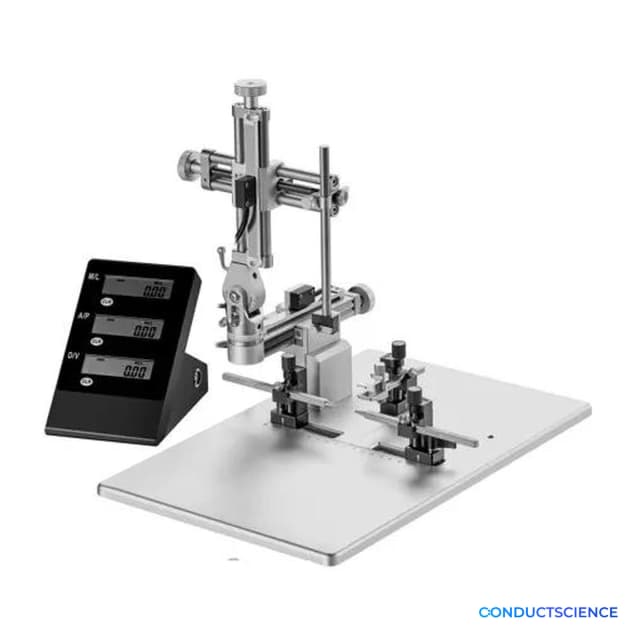
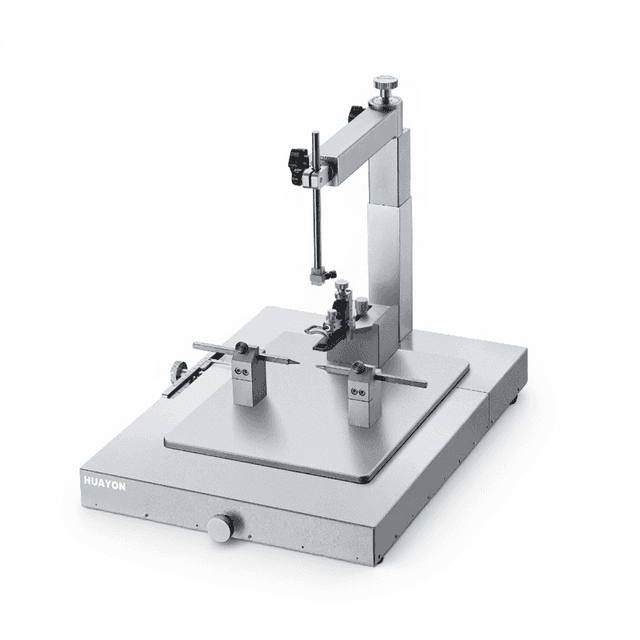
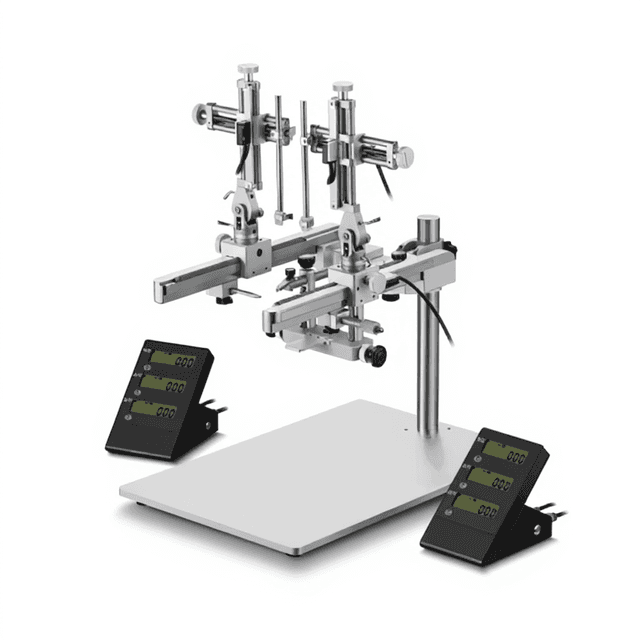
This page is intentionally separate from general ConductScience treadmills and from the Conscious Mouse Stereotaxic Precision Locator. A standard treadmill is mainly a motor and behavior platform. A stereotaxic precision locator is mainly a head-positioning frame. This listing is for the combined awake head-fixed treadmill workflow where locomotion and stable cranial access need to be planned together.
Scientific Use
Head-fixed mouse treadmill workflows are used when the experiment needs stable head access while the animal is awake and moving. The source context names two-photon brain imaging, electrophysiology, and visual stimulation, and the same planning logic can support OCT-adjacent imaging, training, motor behavior, and microscope-compatible locomotion tasks.
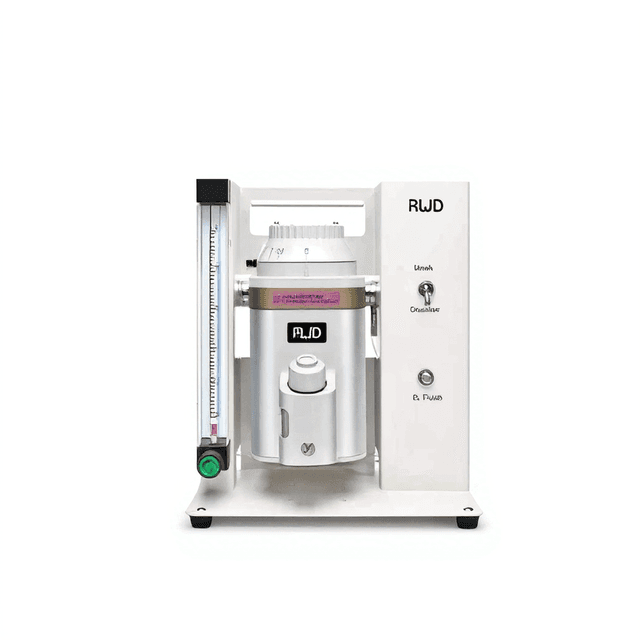
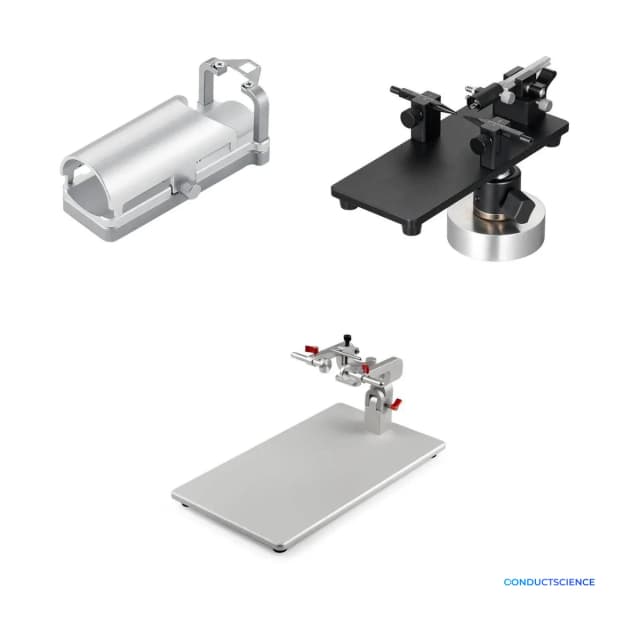
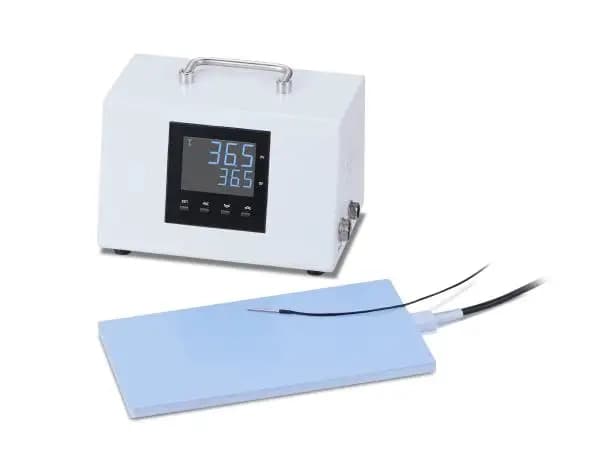
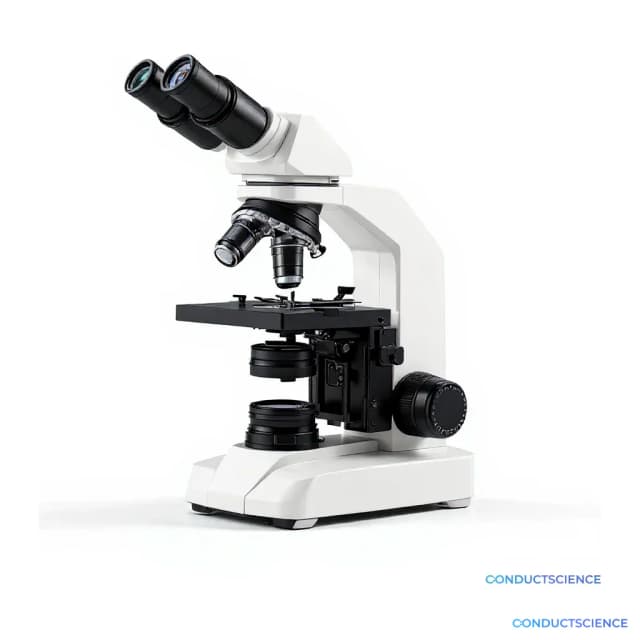
Plan the treadmill with headplates, microscope clearance, stimulus geometry, optional anesthesia transition equipment for preparation, warming and monitoring, behavioral readout needs, and training procedures selected around the lab workflow.
Buying Fit
Choose the freely or actively animal-driven configuration when the study prioritizes mouse-driven walking on the treadmill. Choose the motor-driven configuration when training efficiency, belt-speed adjustment, or pitch-incline planning are part of the purchasing requirement.
Features & Benefits
Model fit
- Awake head-fixed mouse treadmill workflows
Locomotion mode
- Animal-driven walking or motor-driven controlled belt movement by selected configuration
Head fixation
- Integrated height-adjustable head-fixation support for mouse size and comfort planning
Motor-driven controls
- Pitch-incline and belt-speed translation adjustment planning on the motor-driven configuration
Research fit
- Two-photon imaging, OCT-adjacent imaging, electrophysiology, visual stimulation, and training workflows
Plan with
- Headplates, microscope clearance, stimulation hardware, warming, monitoring, and preparation support
| Model | SKU | Listed price | Status | Shipping box |
|---|---|---|---|---|
| Freely or actively animal-driven belt treadmill | CS-HFIX-TREAD-MOUSE-FREE | $7,398.99 | Available | Confirmed during quote |
| Motor-driven belt treadmill | CS-HFIX-TREAD-MOUSE-MOTOR | $8,498.99 | Available | Confirmed during quote |
Practical Tips
Choose animal-driven belt movement for mouse-controlled walking and motor-driven belt movement for controlled training sessions.
Why: The source family separates the two treadmill concepts by driving principle, which affects training and experiment design.
Plan head-fixation height around mouse age, body size, microscope clearance, and the desired neck/spine posture.
Why: The source specifically calls out height adjustment to optimize comfort and relieve pressure on the spine and neck.
Review microscope, stimulus, electrophysiology, warming, monitoring, and preparation-support needs before finalizing the treadmill.
Why: Head-fixed treadmill workflows combine behavior, cranial access, and animal support in one physical station.
Setup Guide
What’s in the Box
- Selected conscious mouse head-fixed belt treadmill configuration
- Freely or actively animal-driven belt treadmill option for normal walking movement
- Motor-driven belt treadmill option for training efficiency and speed-control planning
- Integrated head-fixation support with height adjustment for mouse size and comfort
- Motor-driven configuration supports pitch-incline and belt-speed translation adjustment planning
- Headplate, microscope, stimulation, training, anesthesia transition, and warming/support products configured around the selected workflow
Warranty
Support, replacement, and fulfillment terms are confirmed with the final quote and institutional purchasing requirements.
Compliance
Which treadmill configurations are available?
Two configurations are available: a freely or actively animal-driven belt treadmill for mouse-driven walking, and a motor-driven belt treadmill for controlled movement and training-efficiency planning.
What makes this different from a standard rodent treadmill?
This system combines a mouse treadmill with head-fixation support, so it is designed around awake cranial imaging, electrophysiology, visual stimulation, and microscope-compatible locomotion rather than only running behavior.
When should I choose the motor-driven version?
Choose the motor-driven version when belt-speed adjustment, pitch-incline planning, or more controlled training exposure is important for the workflow.
What should be planned with the treadmill?
Plan headplates, microscope access, visual-stimulation geometry, electrophysiology hardware, warming, monitoring, preparation anesthesia or transition support, and any adjacent behavior or stereotaxic products.
Have a question about this product?
Have a question? Just ask.
Send it over and we'll email you a personalized answer — no call, no scheduling.
Prefer to talk it through?
Accessories
Enhance your setup with compatible accessories
Frequently Bought Together