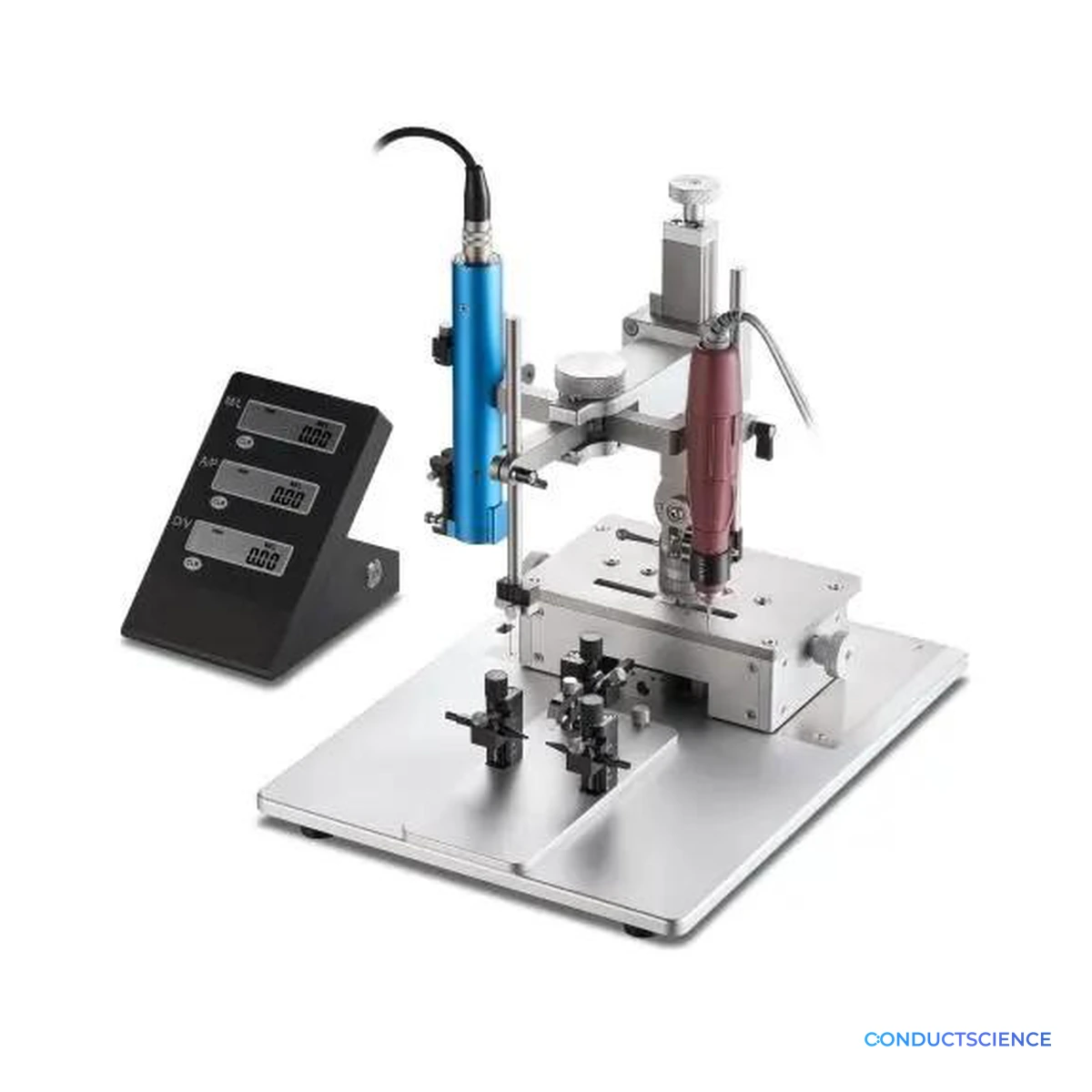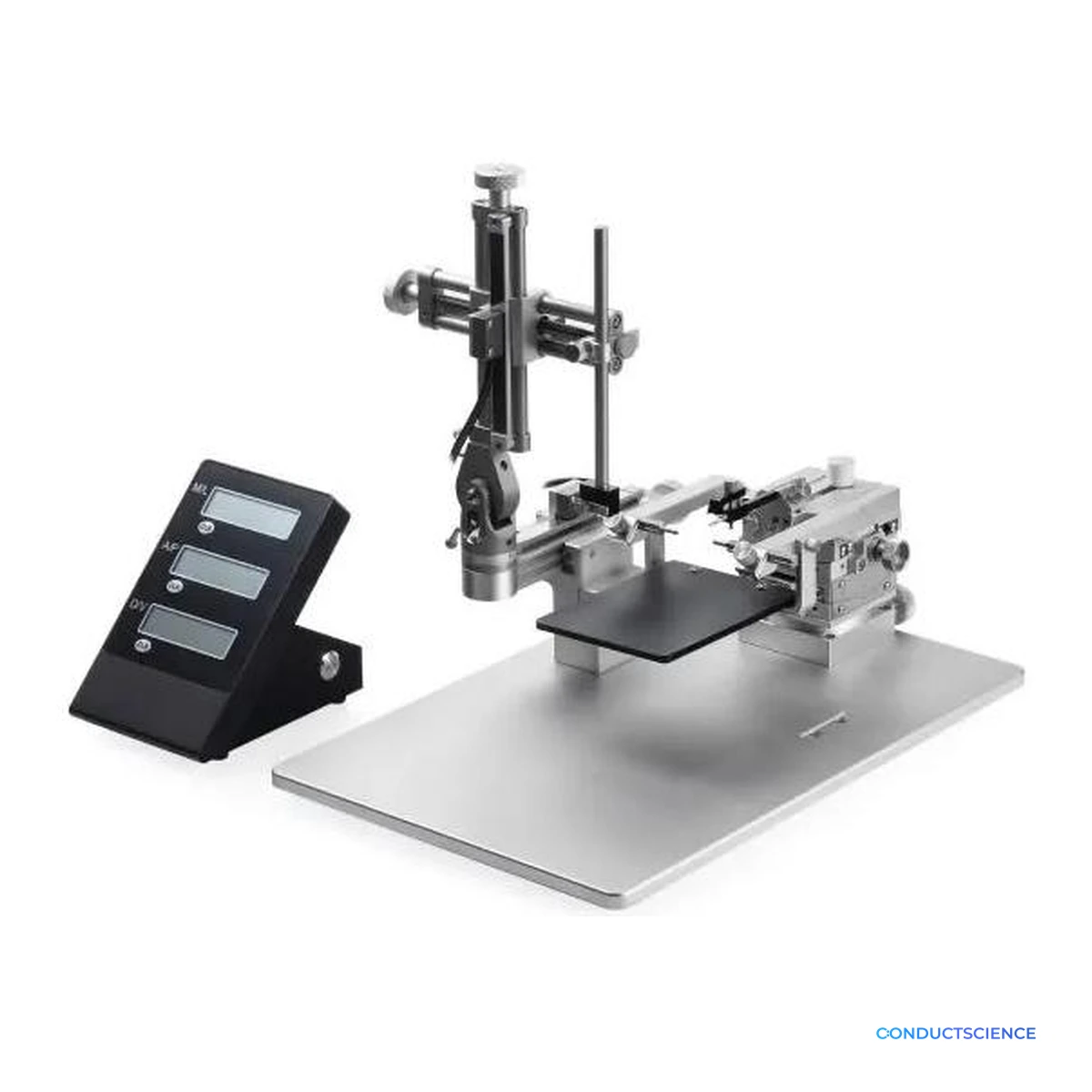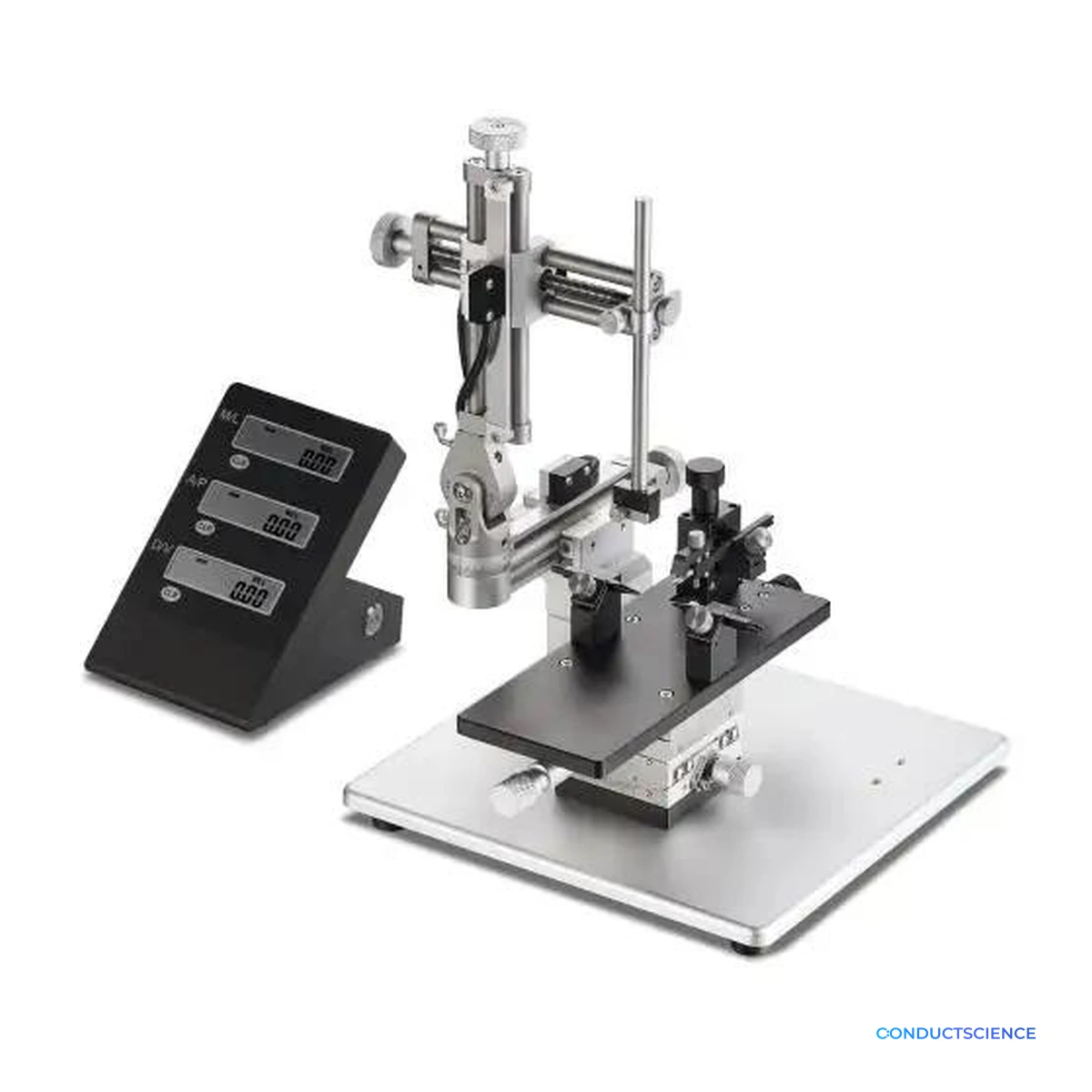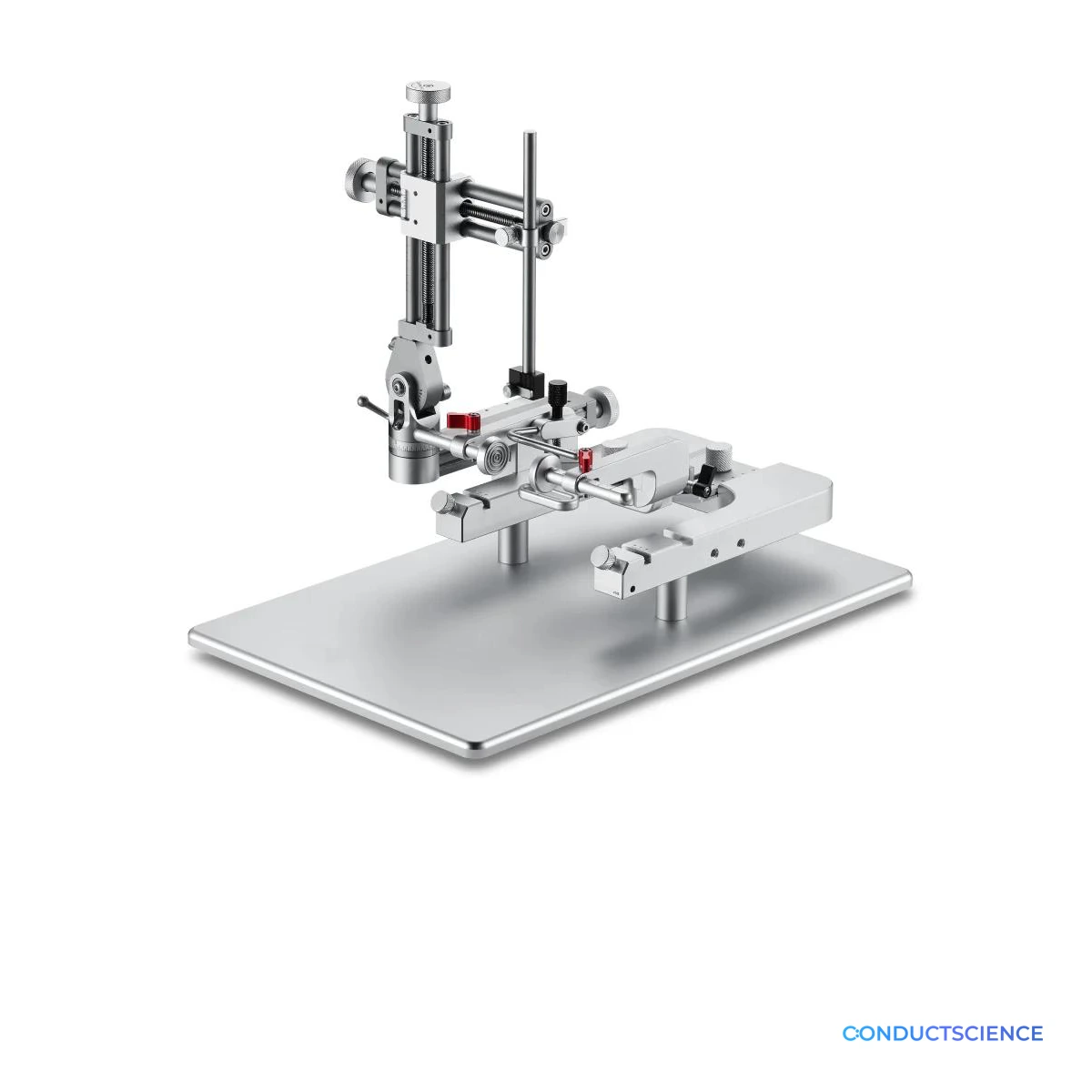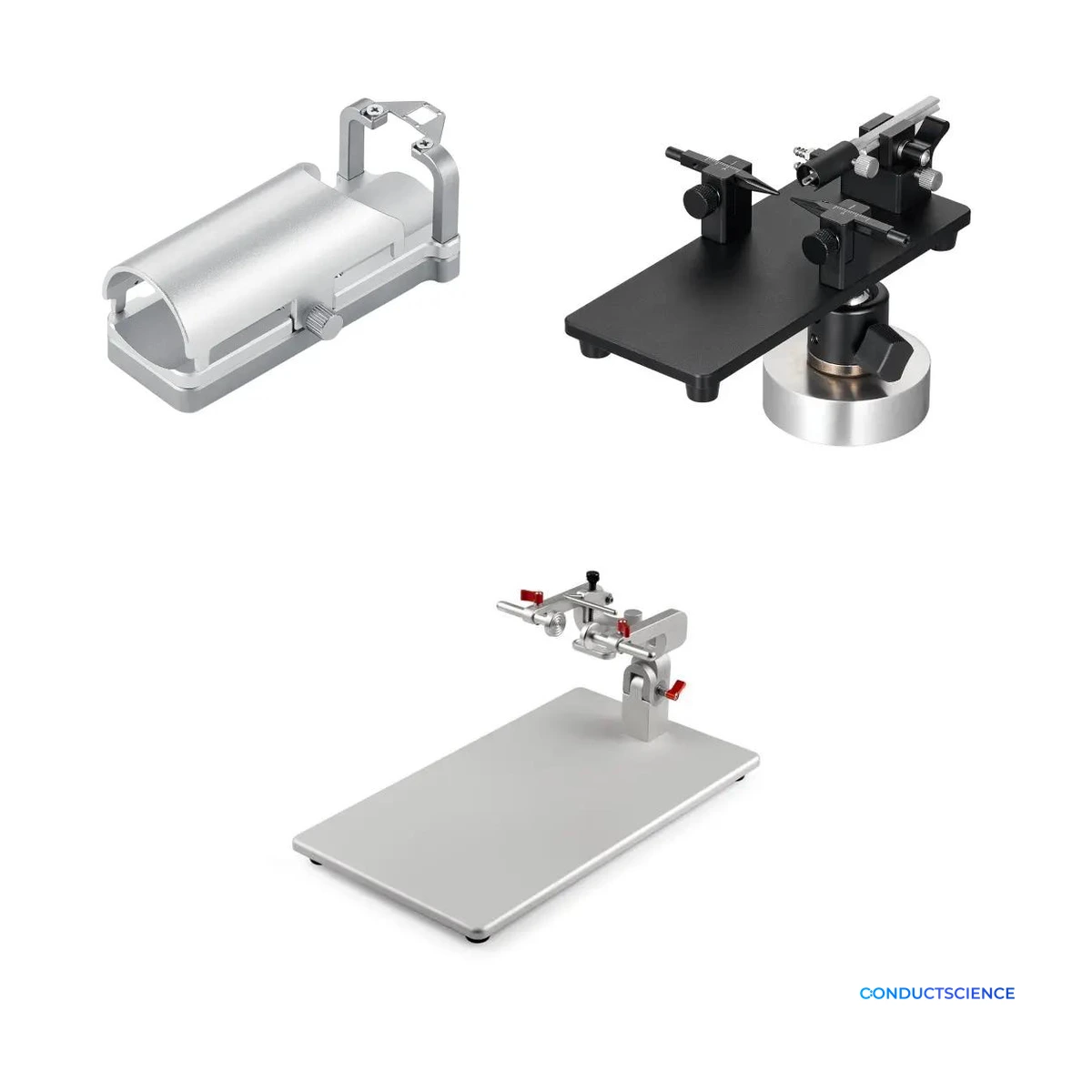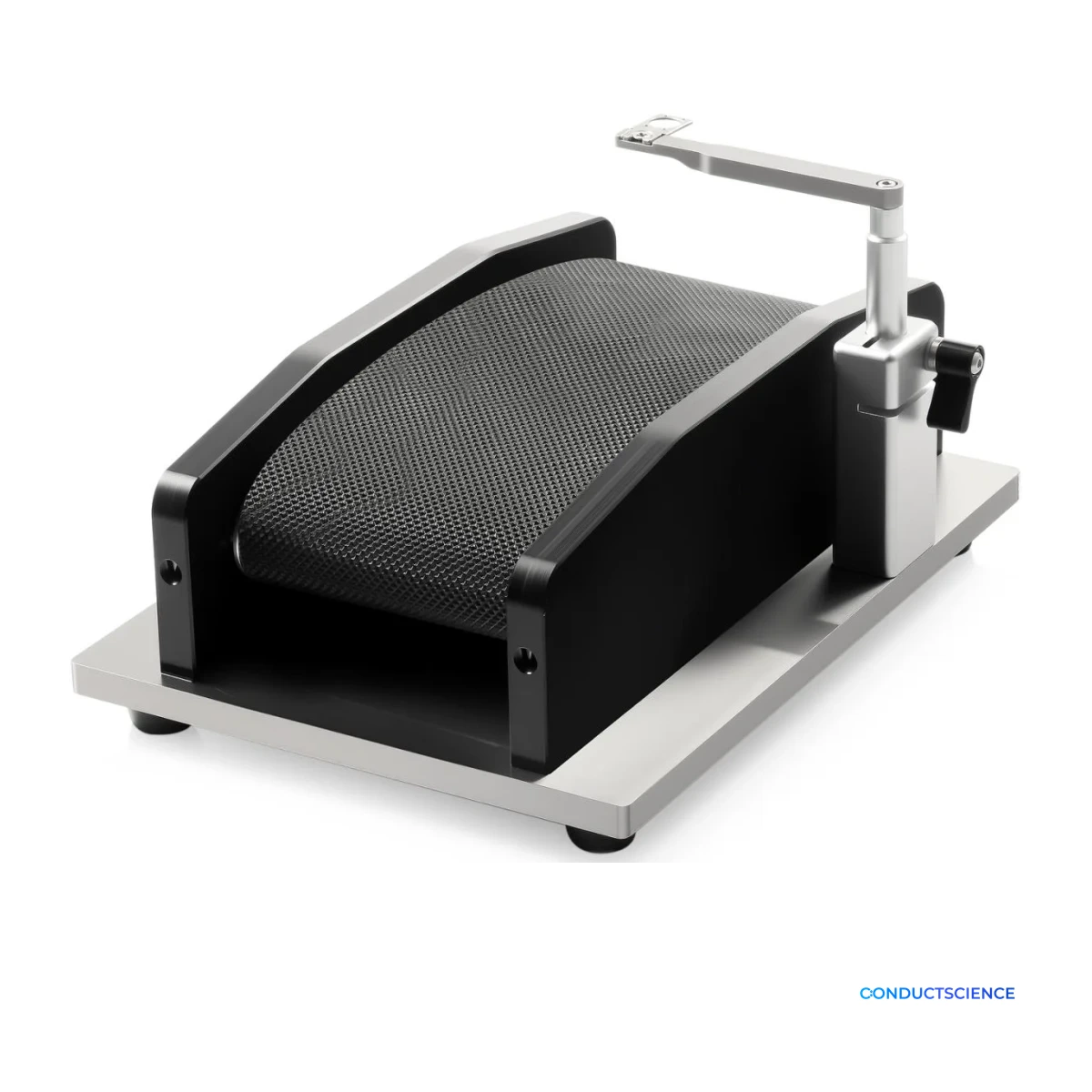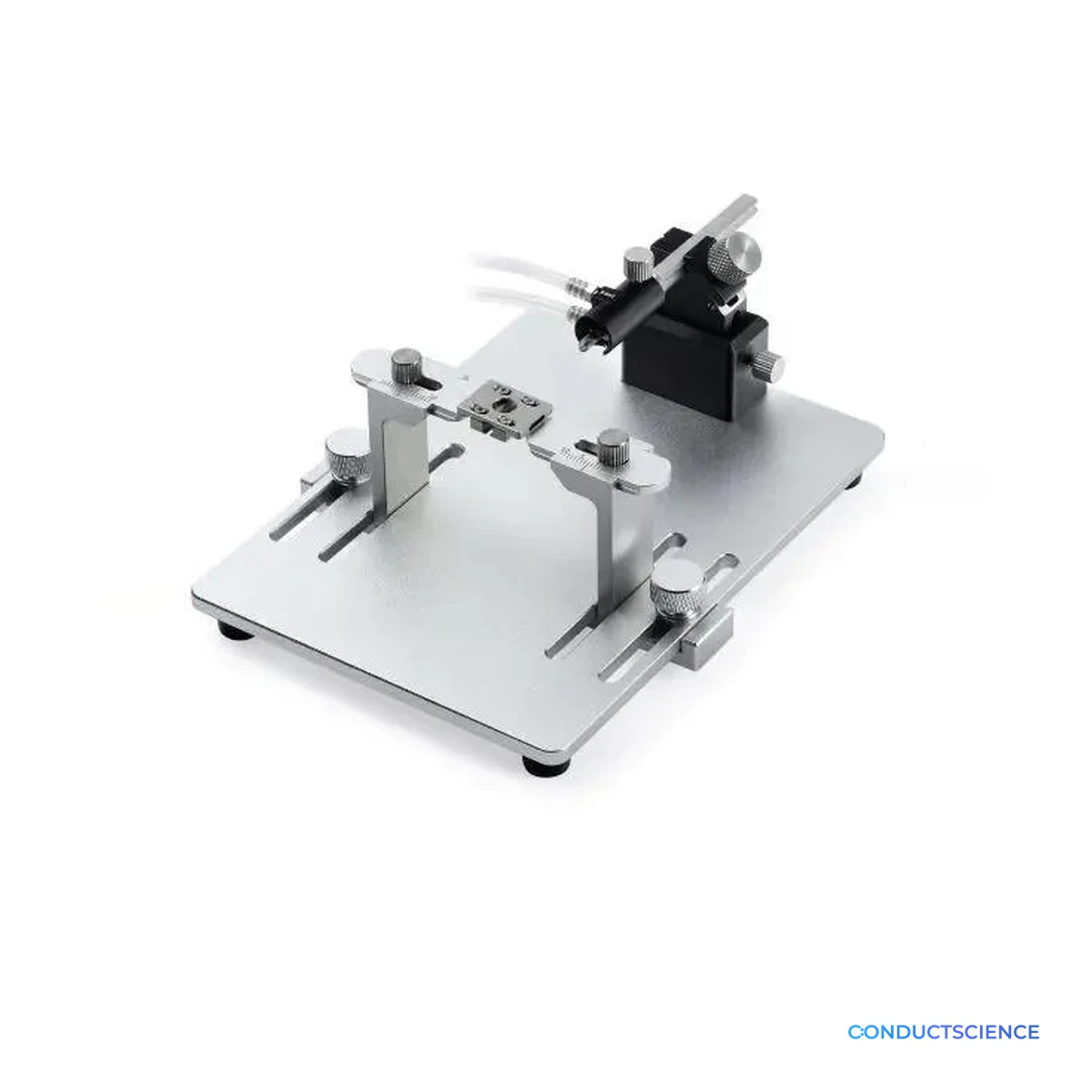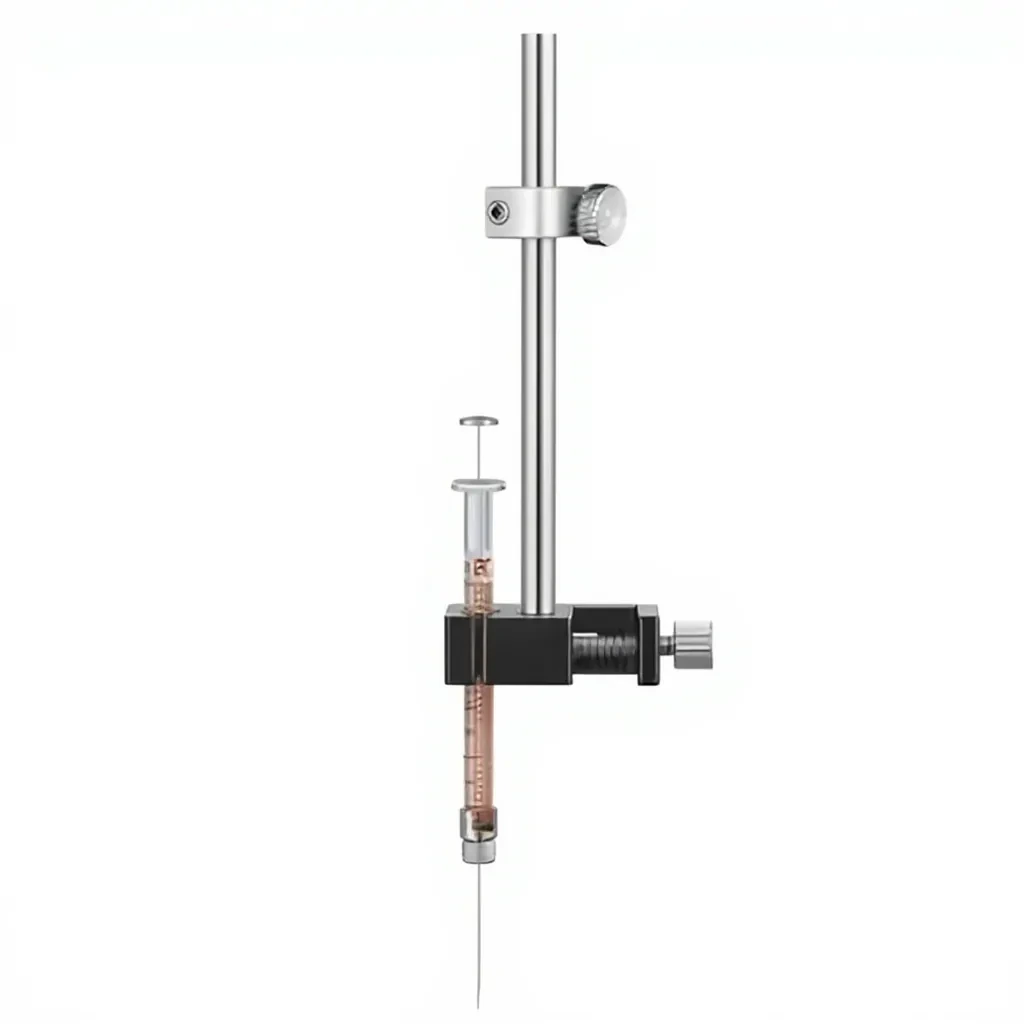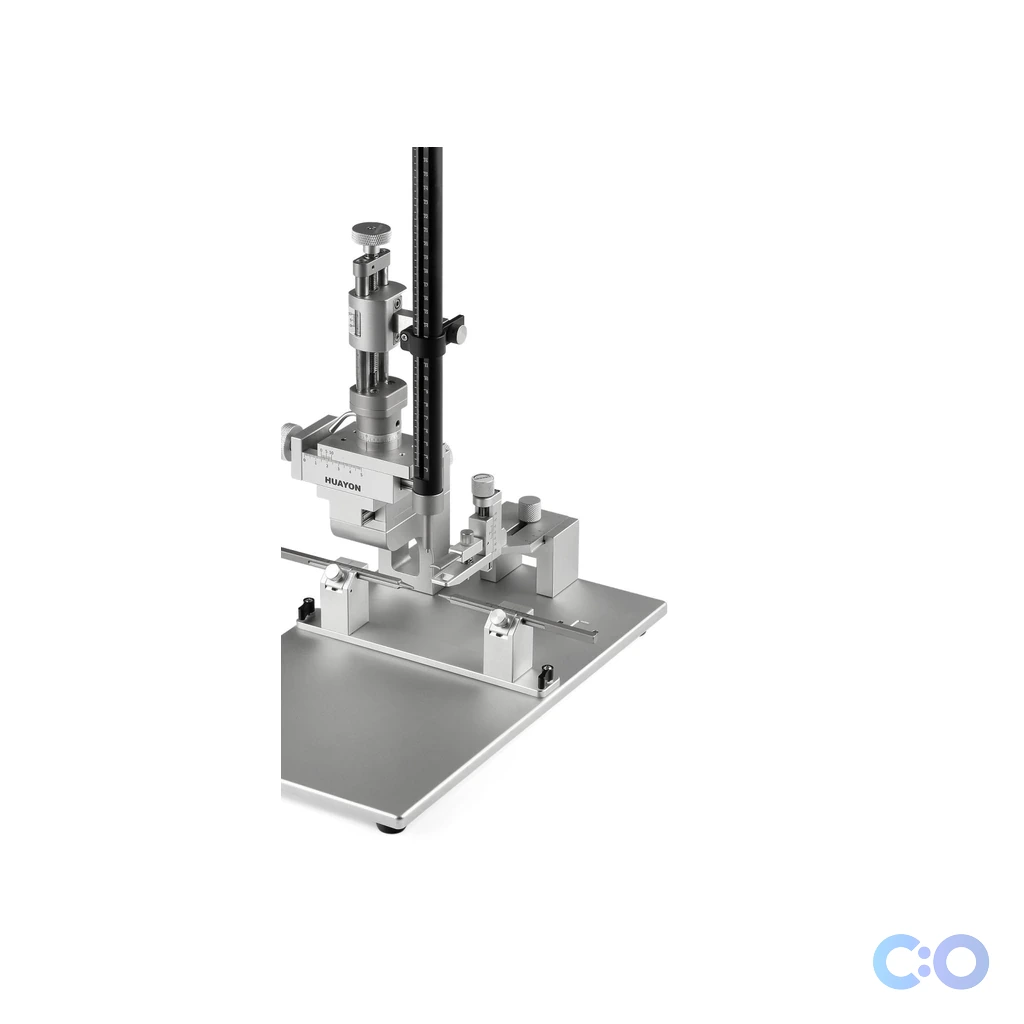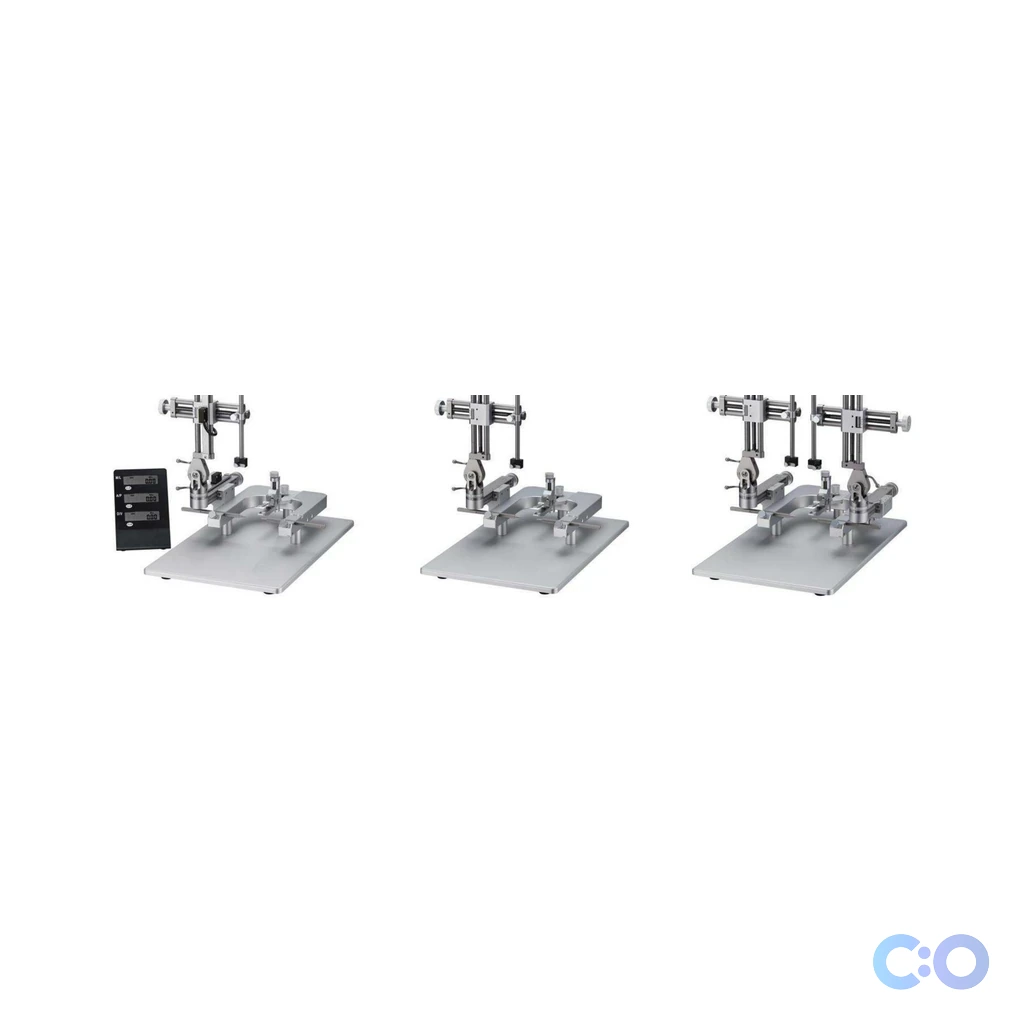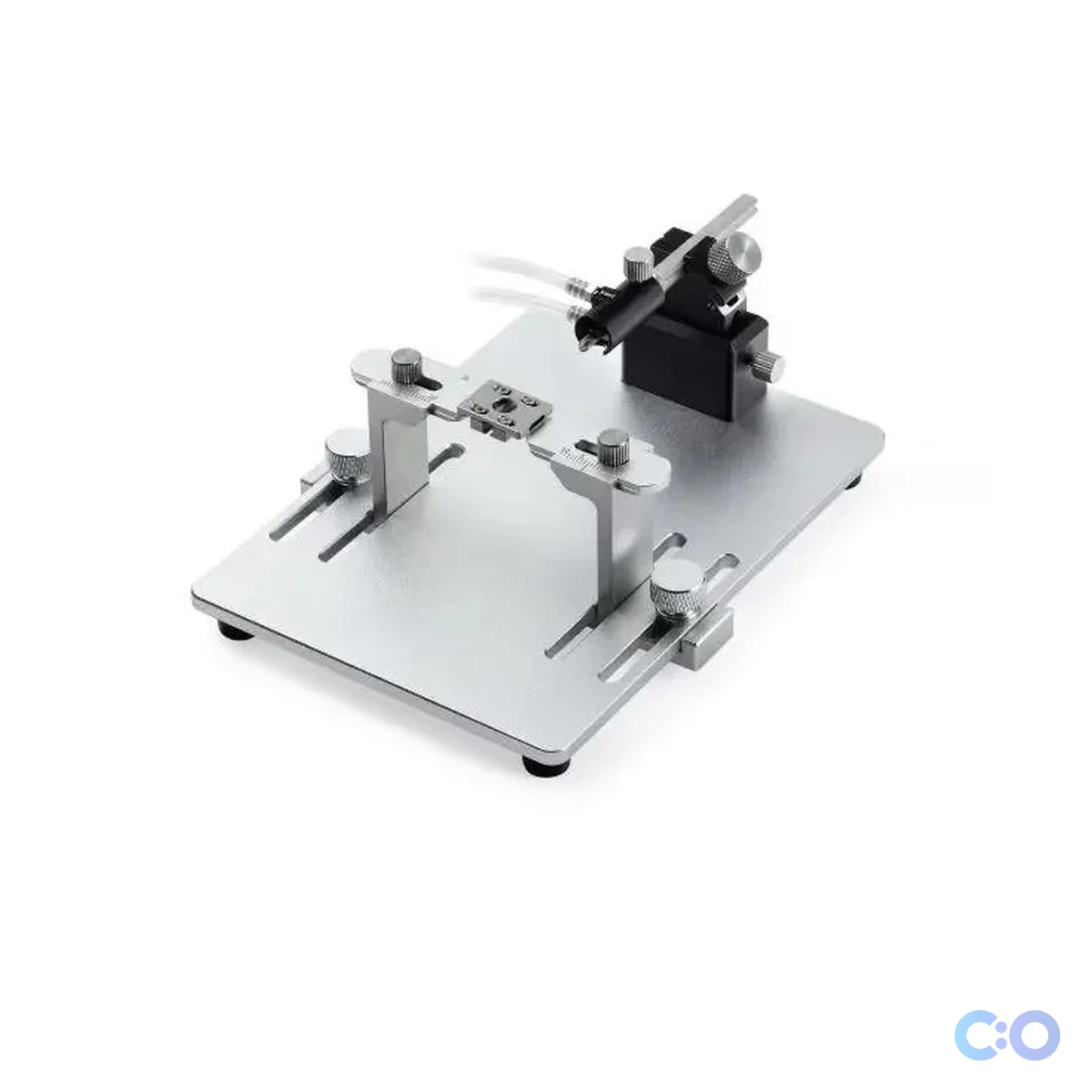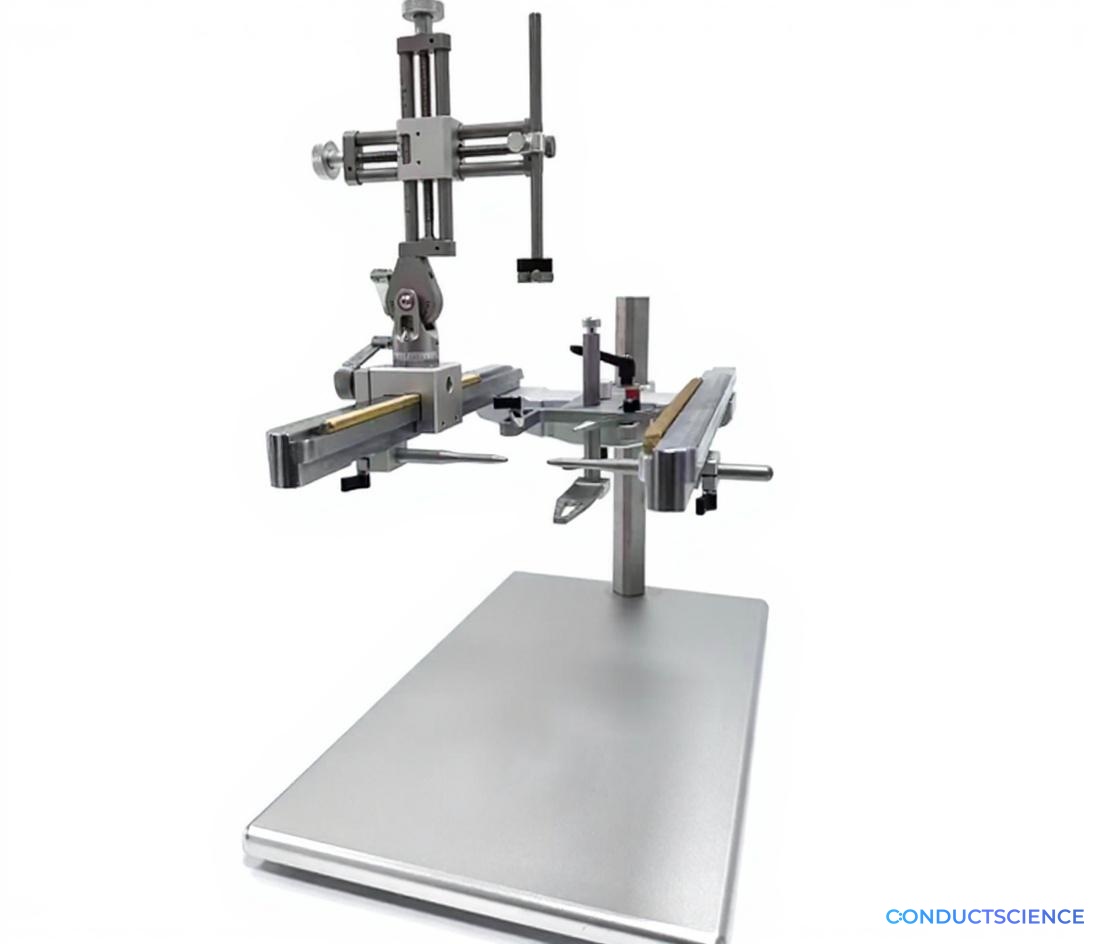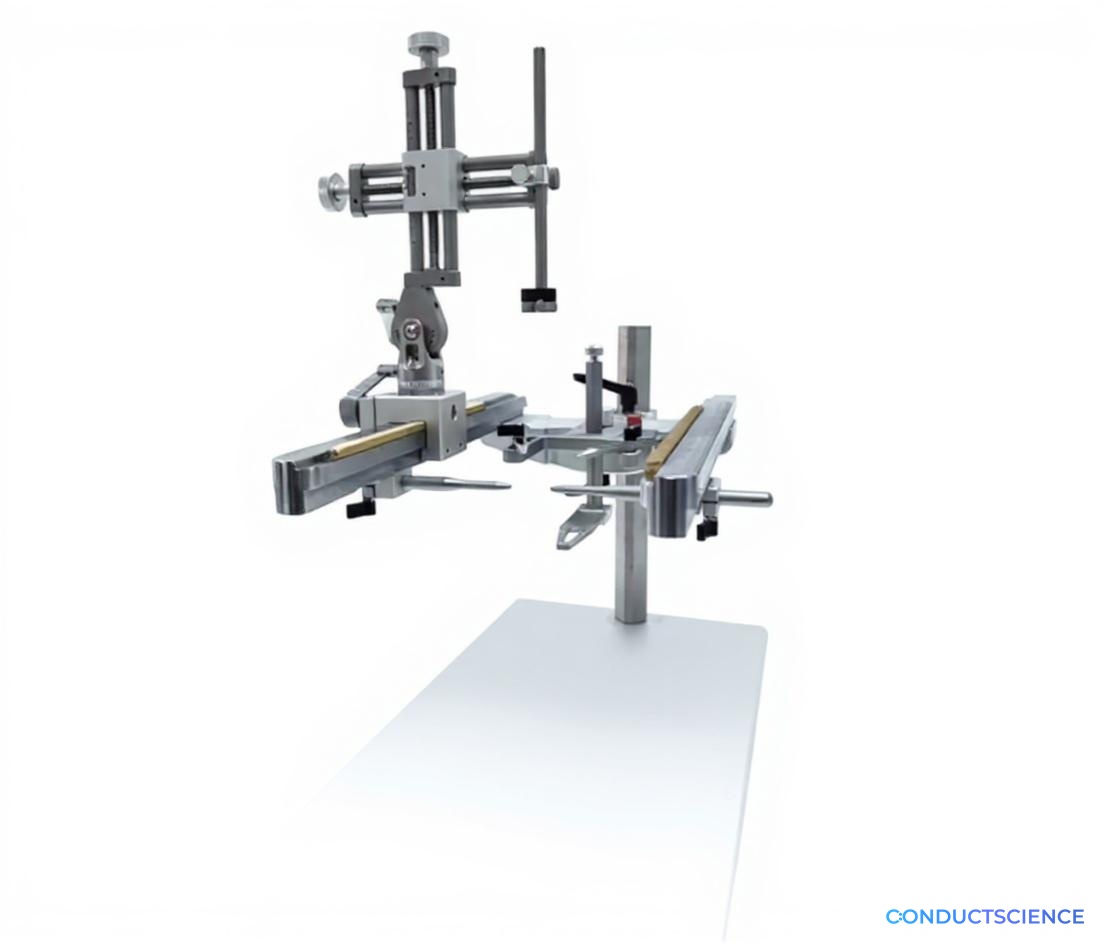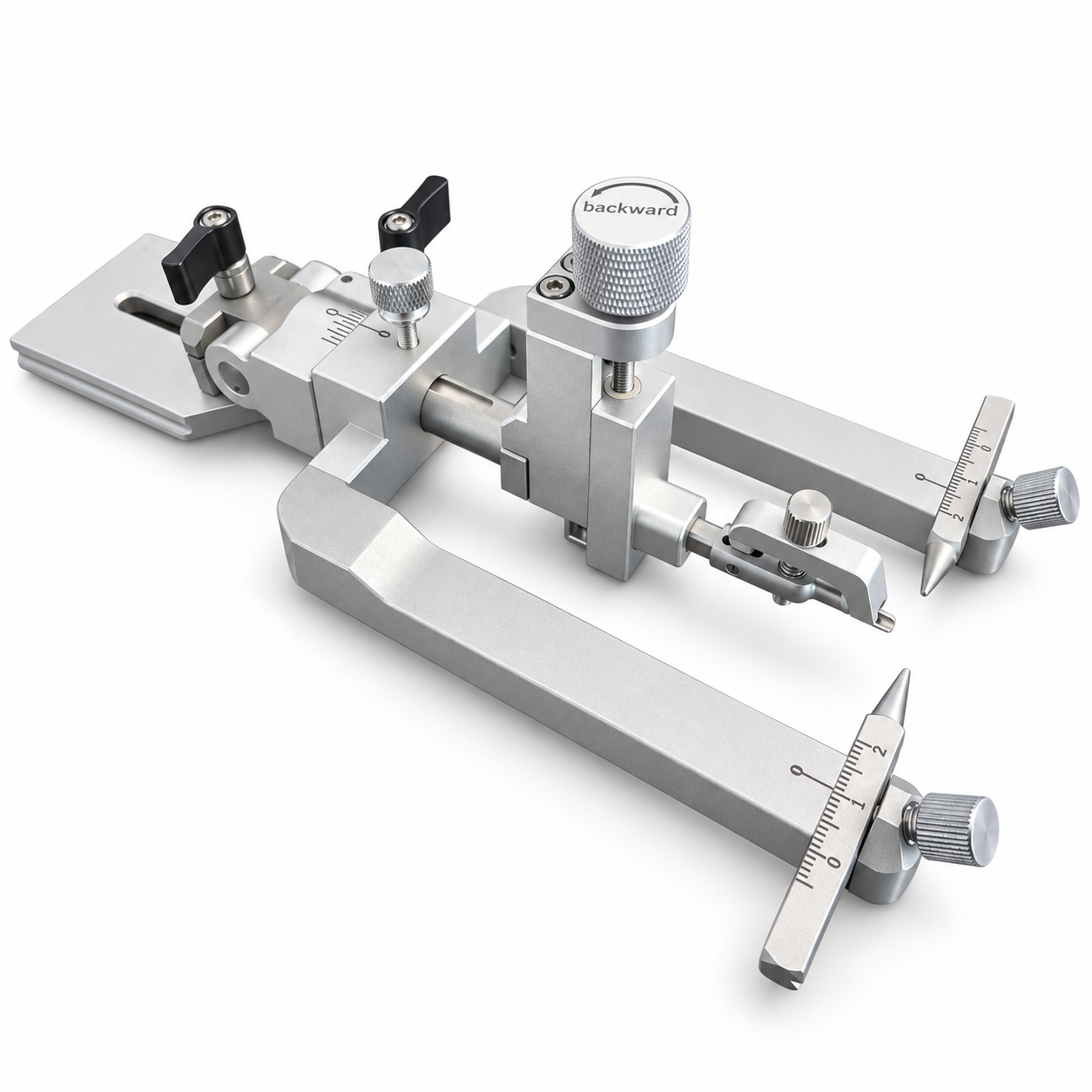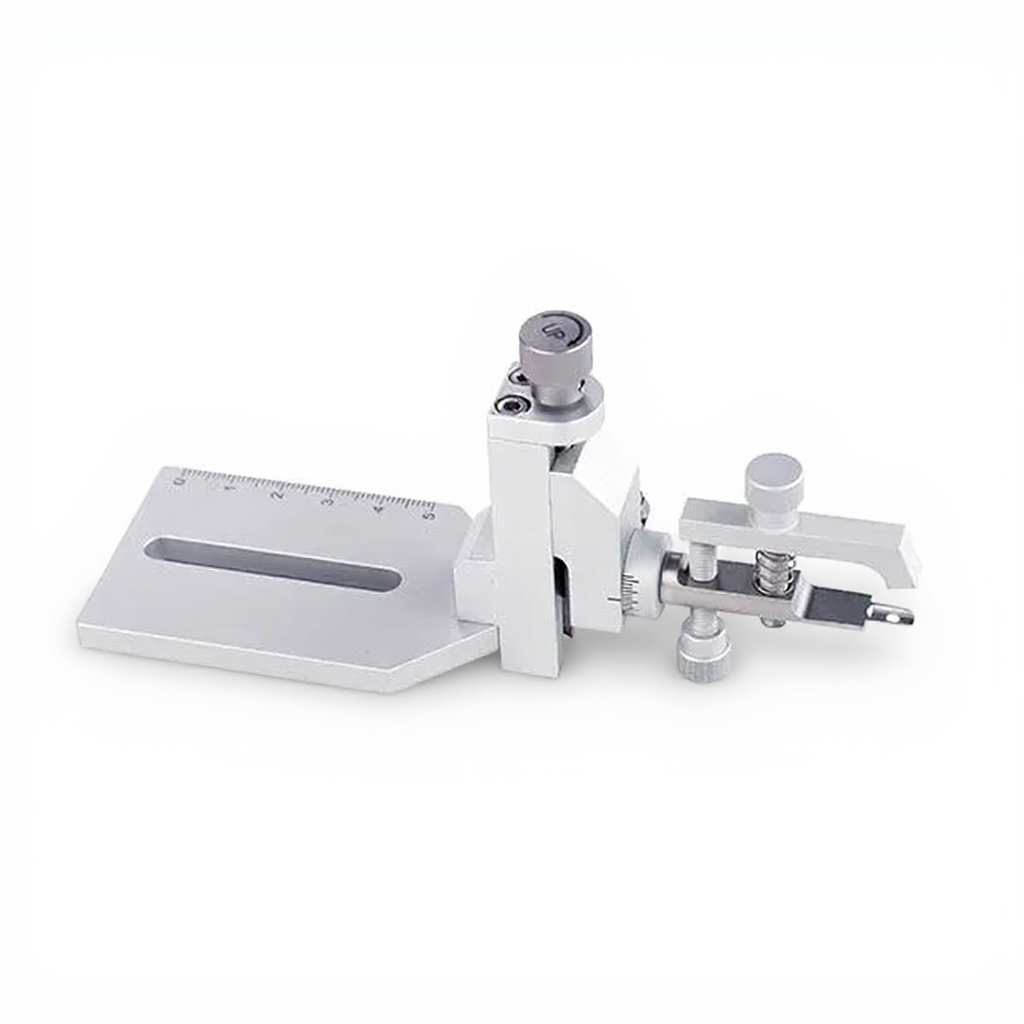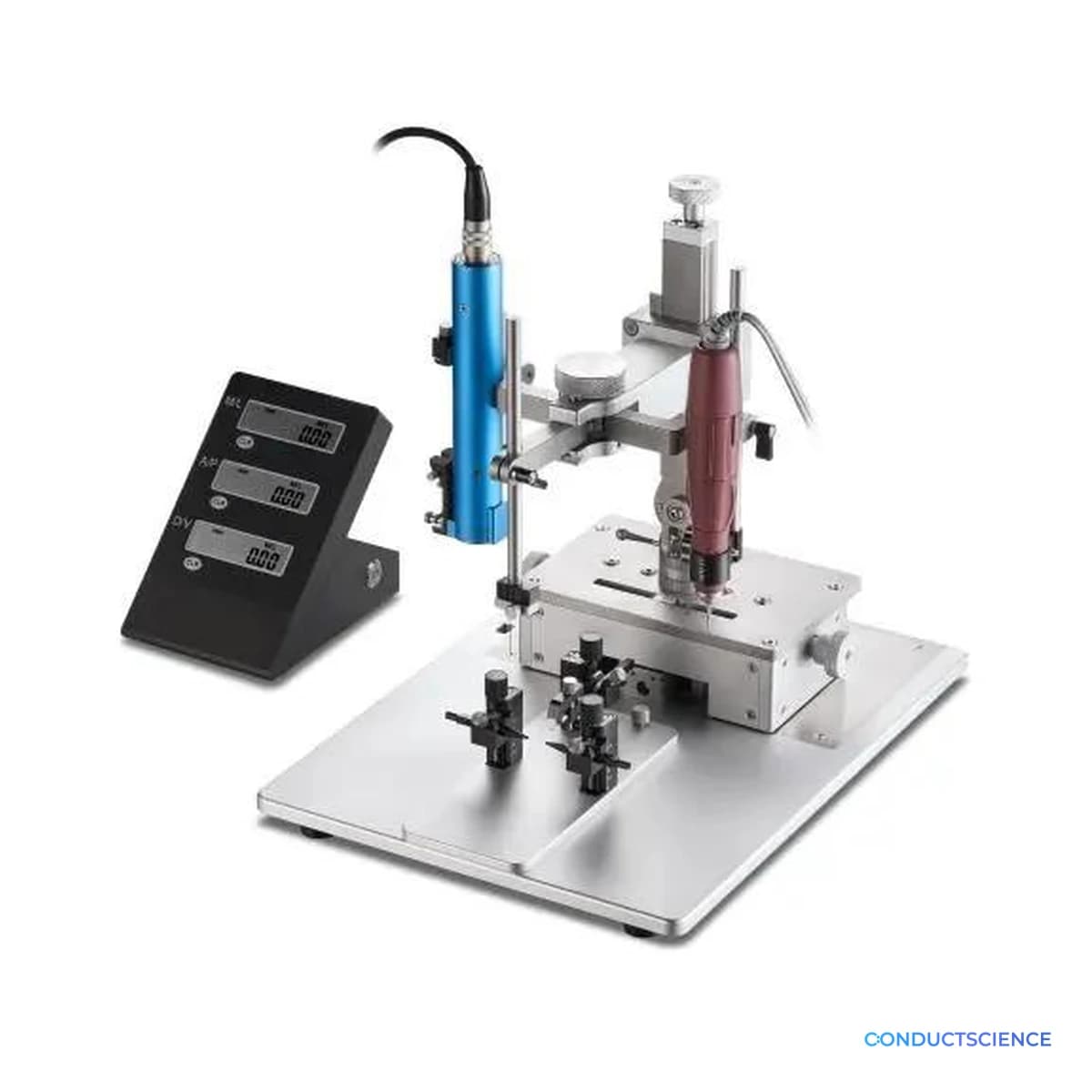
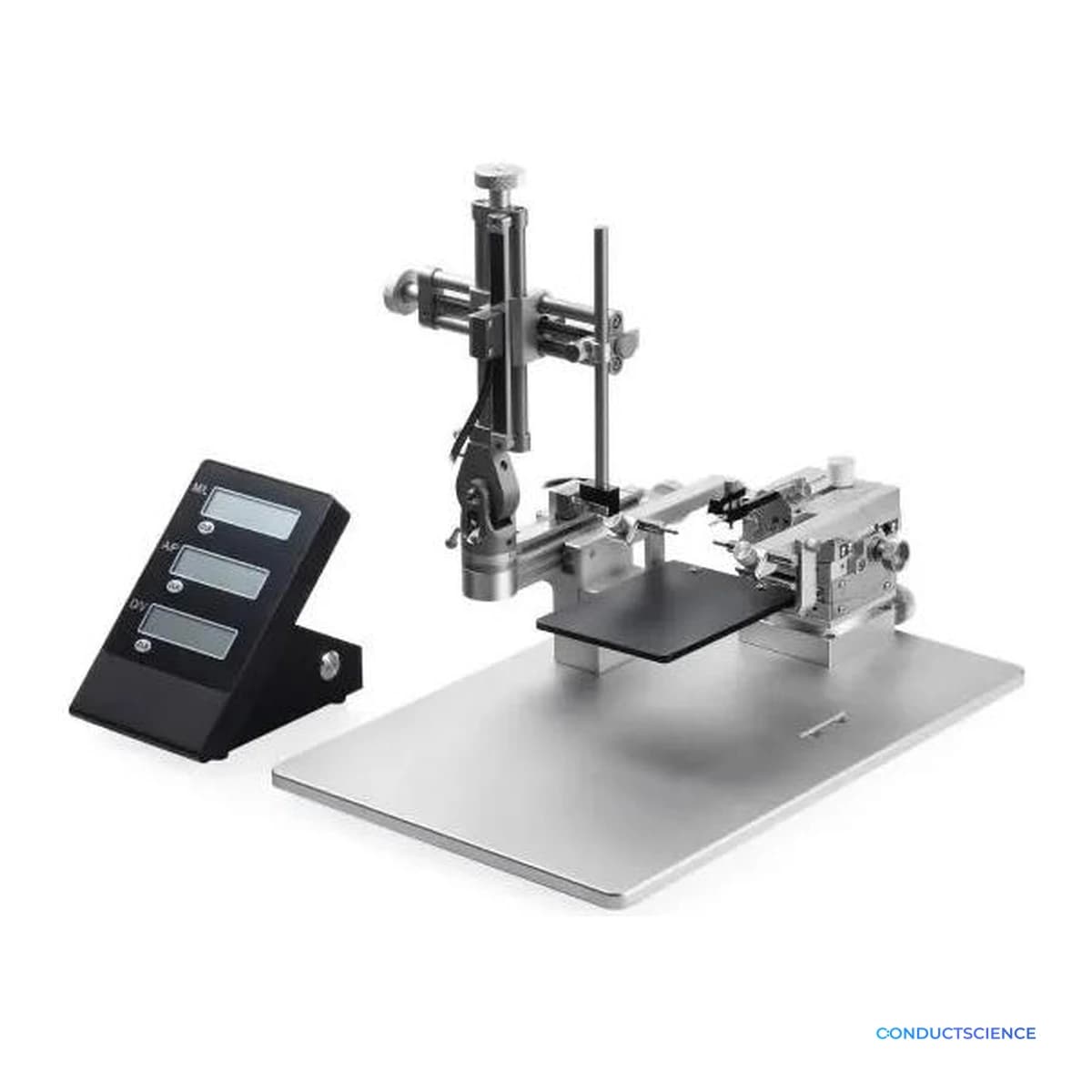
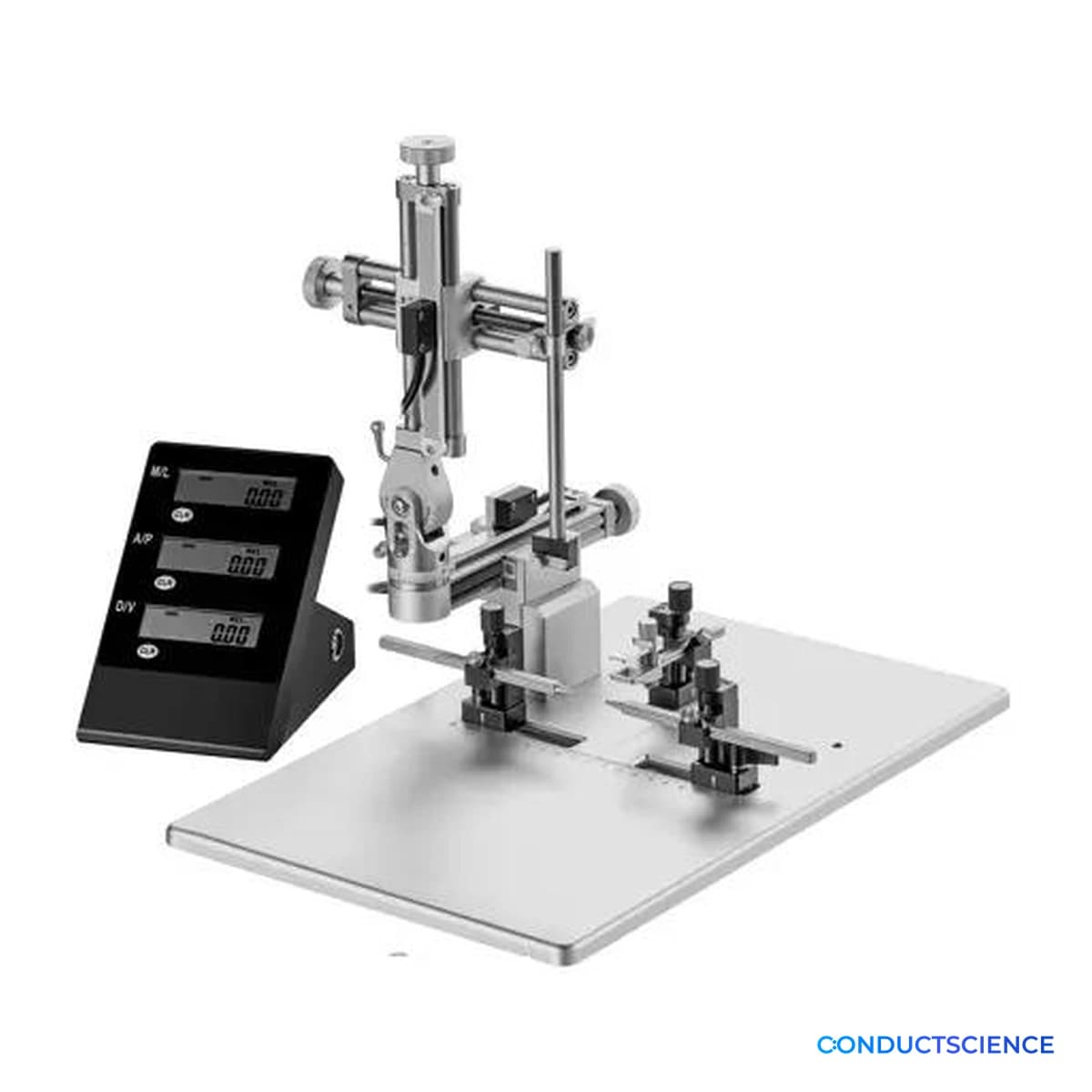
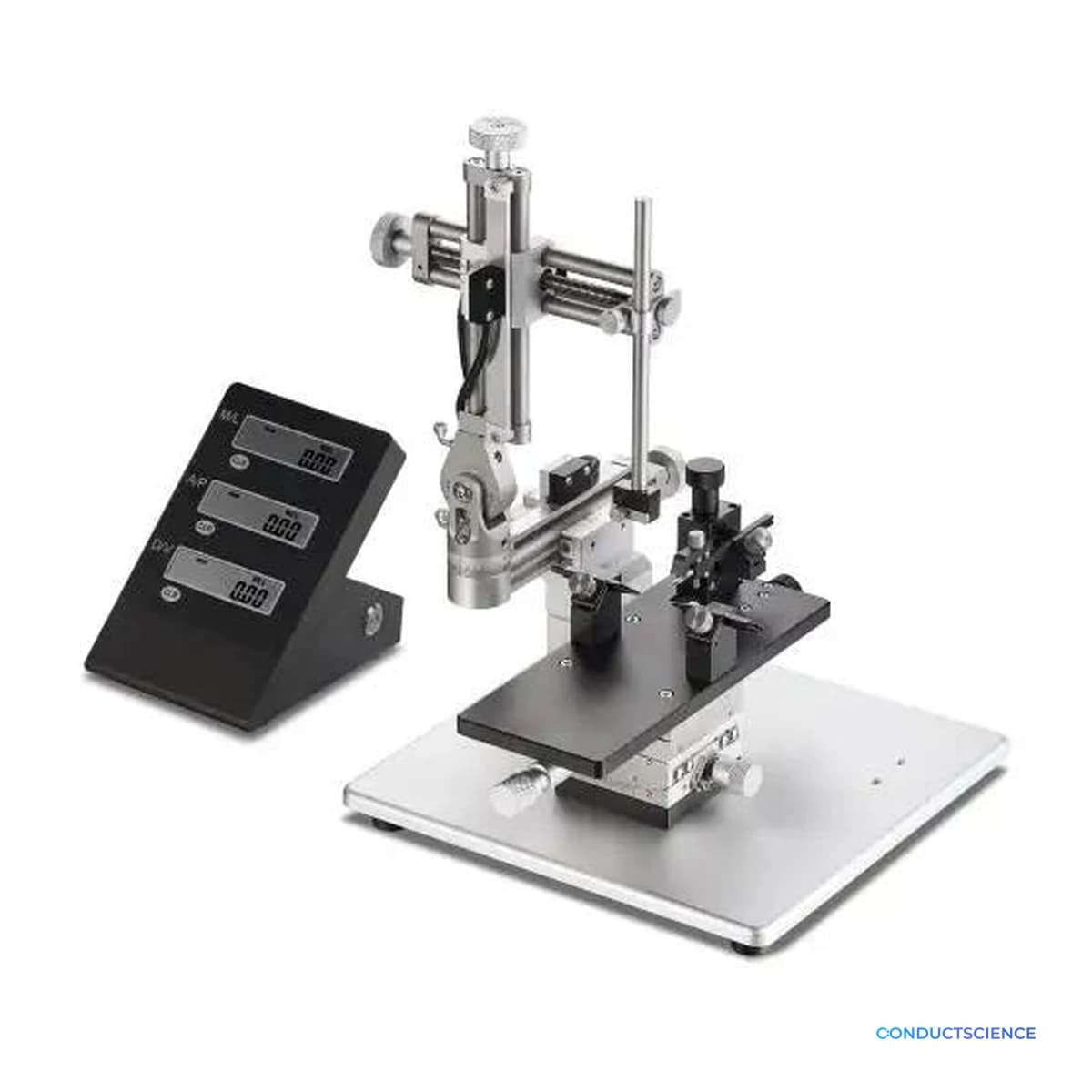
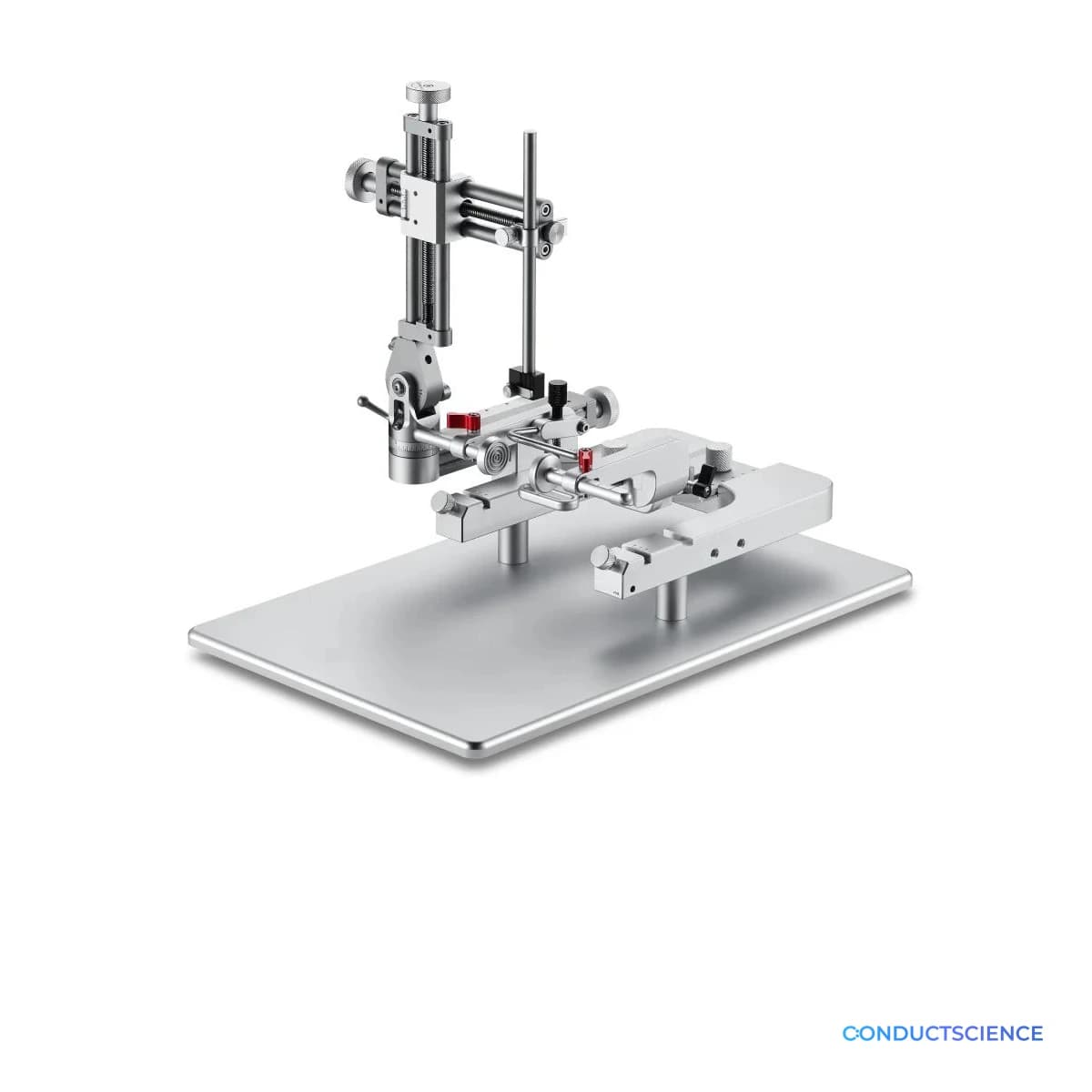

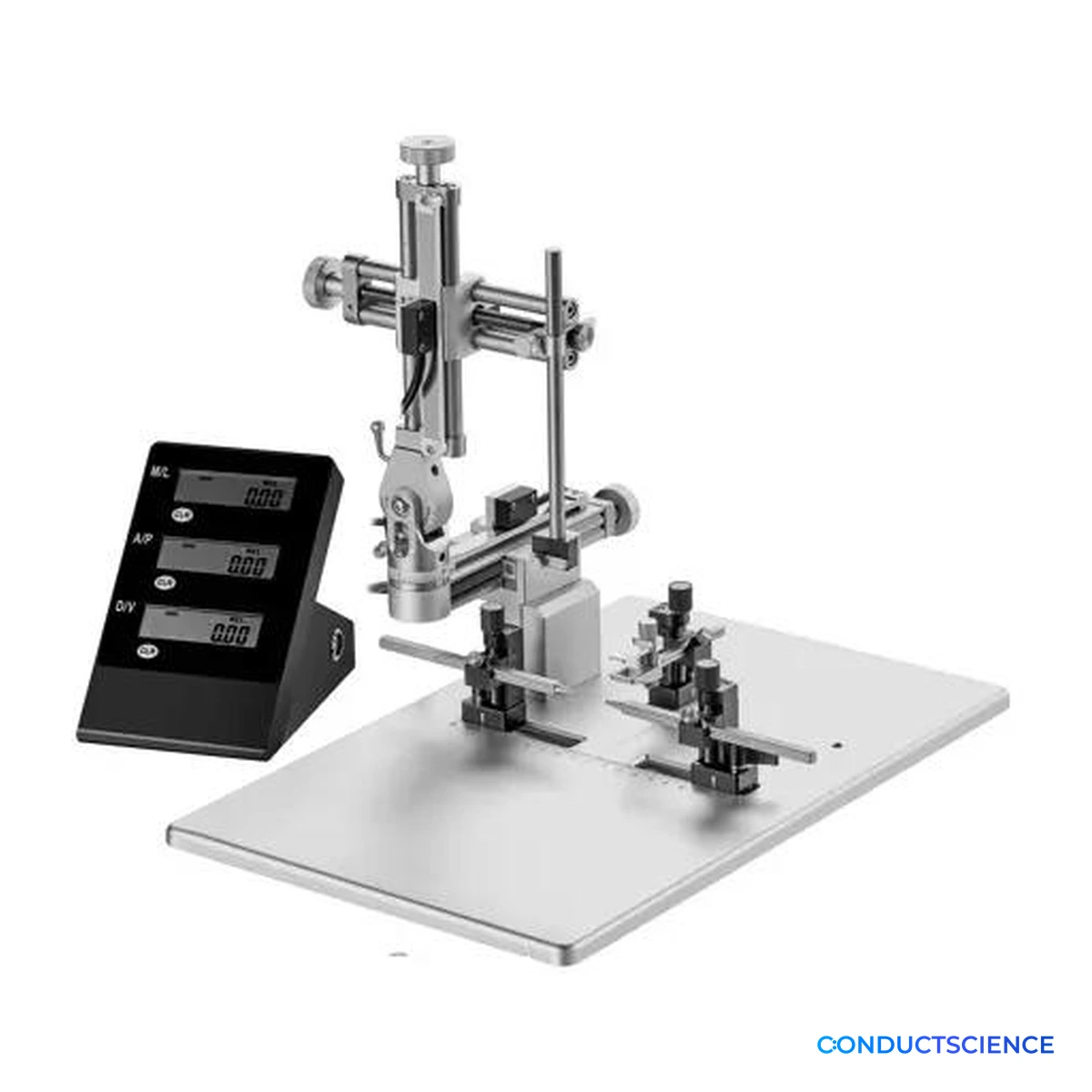
Open-Base Rat and Mouse Stereotaxic Instrument$5,598.99 · In stock
ConductScience Stereotaxic
Frames, manipulators, and adapters for targeted injection, implant, and fiber surgery.

My Scientist
PhD, Director of Science. Talk to a scientist before you buy: product fit, protocol planning, and custom setups.
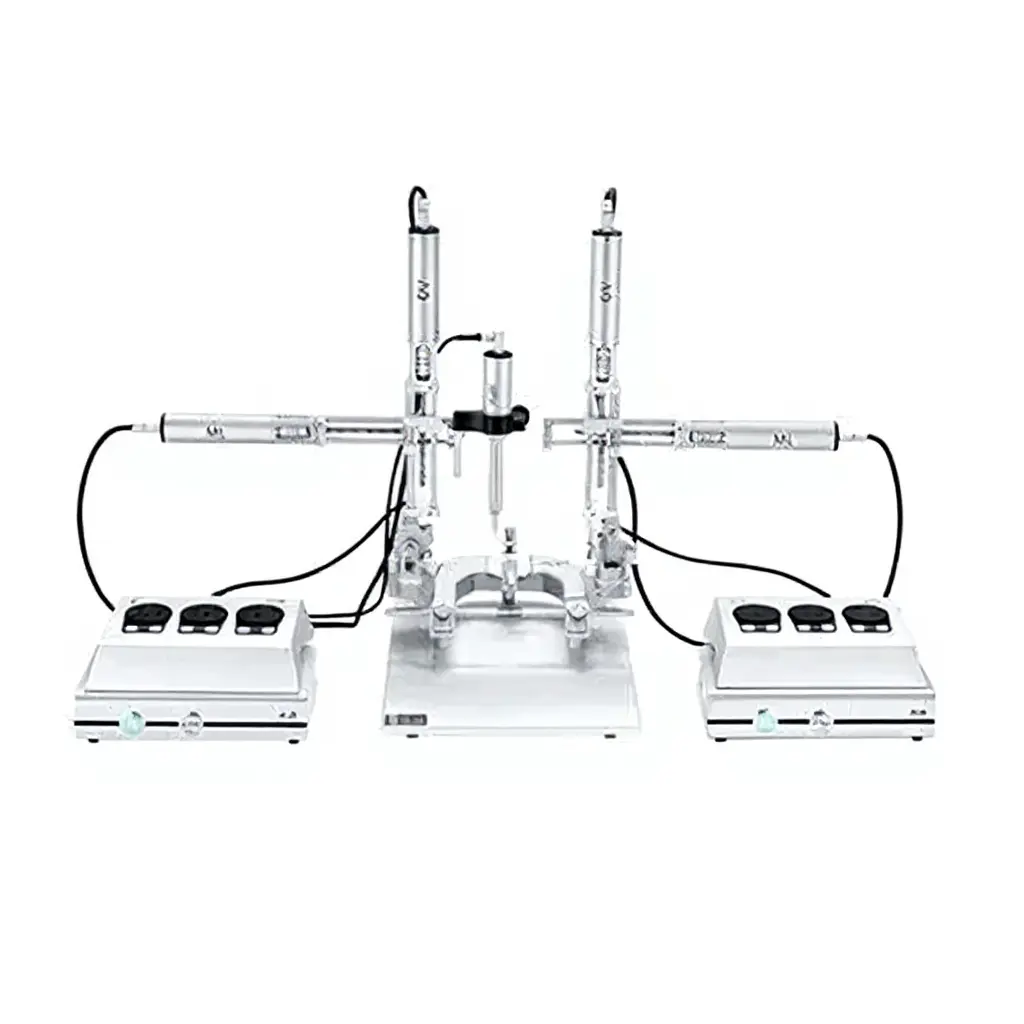
Rigid frame, zero-drift micromanipulator, digital readout to the micron. Built for targets the size of a cubic millimeter.
Submicron readout · Rat and mouse · Automated positioning
View the instrumentFAQ
Manual vernier frames read to about 0.1 mm and suit routine rodent targeting and teaching labs. Digital frames read to 0.01 mm and make coordinates easier to document. Motorized systems add software-driven positioning and are worth it for multi-arm work, GRIN-lens implants, and high-throughput surgery.
Usually the same frame with different adapters and ear bars. Mice typically take 6 mm ear bars, rats an 18-degree set. Specify both if the lab runs both species, since the adapters are what actually change.
When you need angled approaches, Z-axis rotation, or non-standard head-fixing. Straight dorsoventral targeting in mouse or rat does not require it; angled trajectories and GRIN-lens work do.
Use the trajectory planner linked above to convert atlas coordinates and an approach angle into manipulator settings before you order, so you know the arm travel and clearance the frame must provide.
Yes, via a gas anesthesia adapter and nose clamp matched to the frame. Include the anesthesia system you already own in the quote so the adapter is specified correctly rather than retrofitted.
Rigid frame, zero-drift micromanipulator, digital readout to the micron. Built for targets the size of a cubic millimeter.
Submicron readout · Rat and mouse · Automated positioning
View the instrumentDecision workspace
Choose a tool for this category. Inputs and results stay in your browser, and the full tool remains available for methods, citations, and exports.
Build your spec
Answer what you know. Every option below is backed by real stereotaxic systems in this catalogue, so you can never narrow your way to nothing.
A stereotaxic quote is a system, not a SKU: the frame, the adapters, the mounted instruments, and the anesthesia interface all have to agree.
Working equipment plan
Add products, set quantities, and separate listed costs from items that need a quote. Your plan stays in this browser until you copy it or continue to the quote.
This worksheet can add the 36 products currently loaded. The catalogue has 42 matches; use pagination or narrower filters to plan another slice.