Animal Head Fixation Systems
Selectable animal head fixation systems for awake mouse imaging, anesthetized rodent microscope work, gas-anesthesia-compatible mouse or rat fixation, and rabbit zygoma-clamp positioning, with configuration options for headplates, rotational adjustment, nose-clip or mask planning, ear-bar fixation, stable base support, and microscope-friendly access.

Louise Corscadden, PhD
Director of Science · ConductScience
Ask Louise about Animal Head Fixation Systems fit, setup, configuration, or quote prep.
Already working with us? Sign in to connect this with My Scientist.
Key Specifications
Full details →- Model fit
- 7 selectable configurations
- SKU family
- CS-HFIX-ANIMAL
- Sizing
- Model-specific dimensions confirmed from the selected configuration
- Ordering
- Online checkout and quote request available
- Category
- Stereotaxic Systems
- Build notes
- Confirm accessories, station layout, and support needs before purchase
Overview
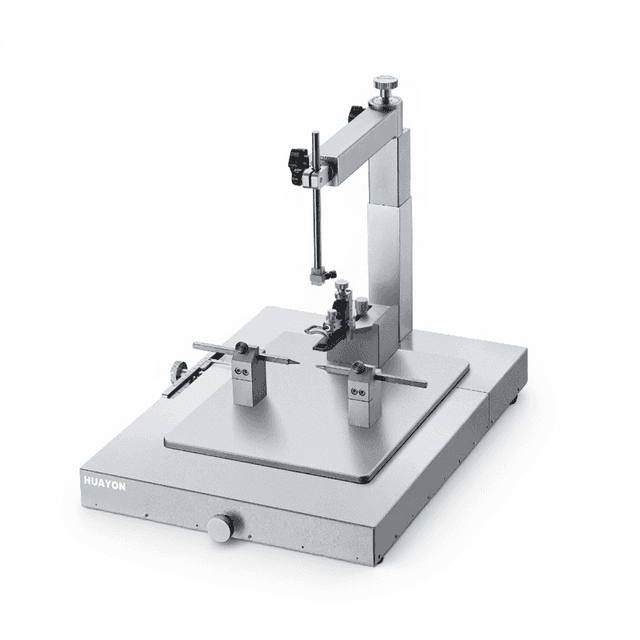
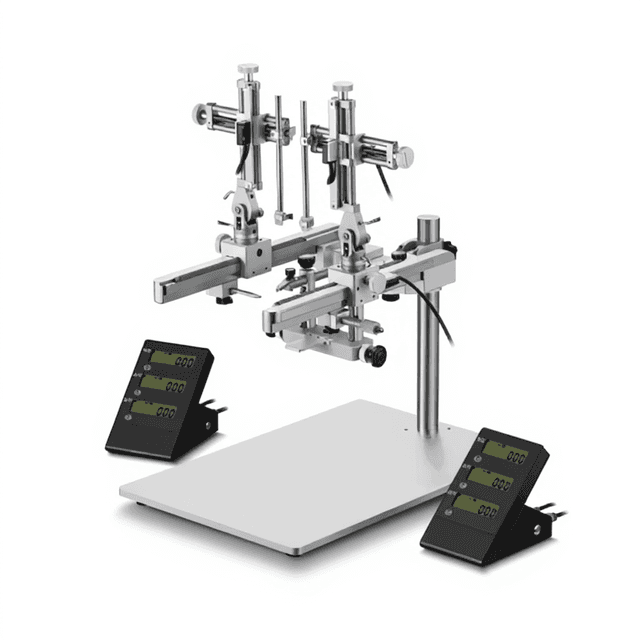
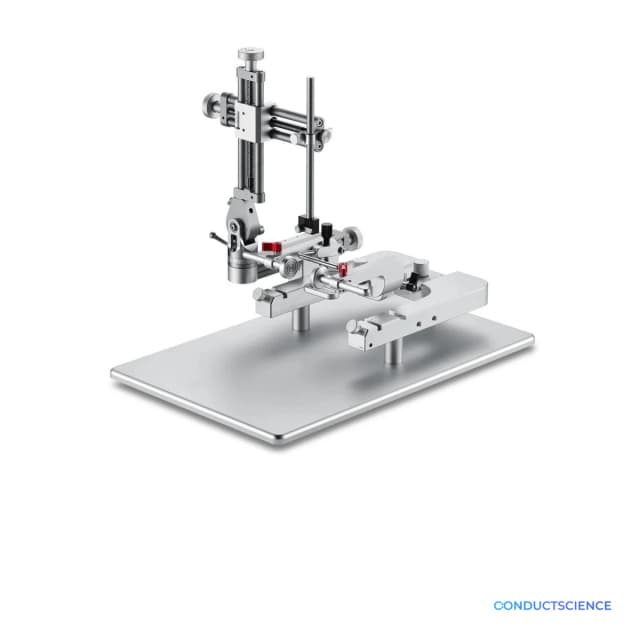
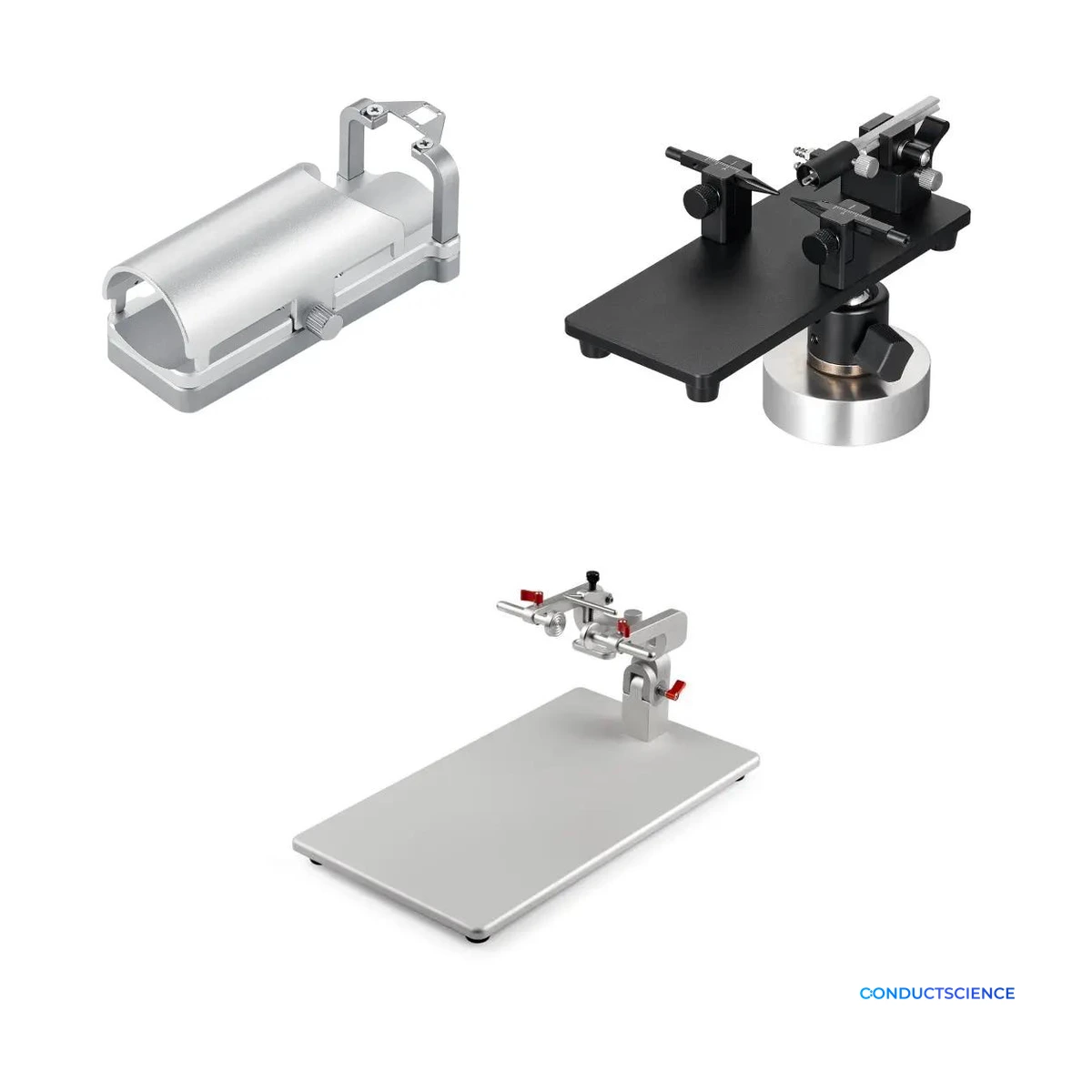
The Animal Head Fixation Systems page gives neuroscience labs a source-backed way to choose head-fixation hardware by workflow instead of forcing awake imaging, anesthetized microscope access, and rabbit positioning into one generic frame. The family covers awake mouse headplate fixation, optional rotational adjustment for coronal and sagittal plane positioning, economical anesthetized rodent fixation, gas-anesthesia-compatible mouse or rat planning, microscope-oriented rodent fixation, and rabbit zygoma-clamp positioning.
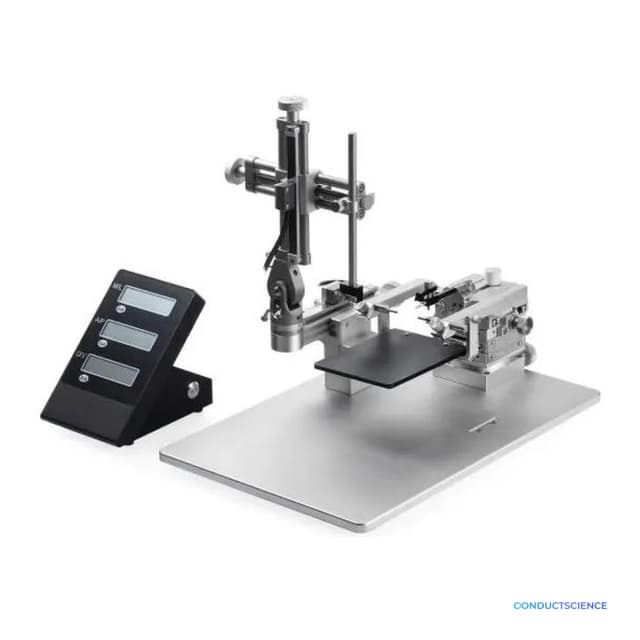
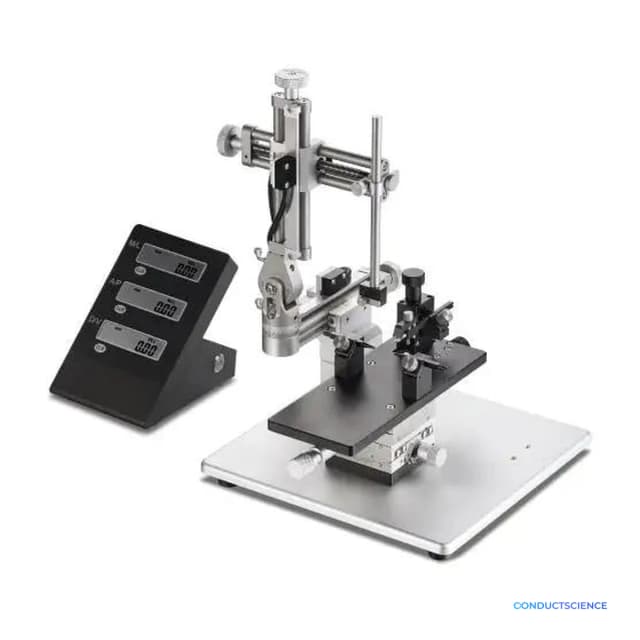
For awake mouse work, the buying decision usually starts with the imaging or recording setup. The source family describes compact headplate-based fixators for in-vivo two-photon imaging, OCT, electrophysiology, and visual-stimulation workflows, with the mouse head secured to a bracket through a headplate and the body supported according to the lab workflow. A rotational option lets the lab adjust the coronal and sagittal planes when wider orientation control is needed.
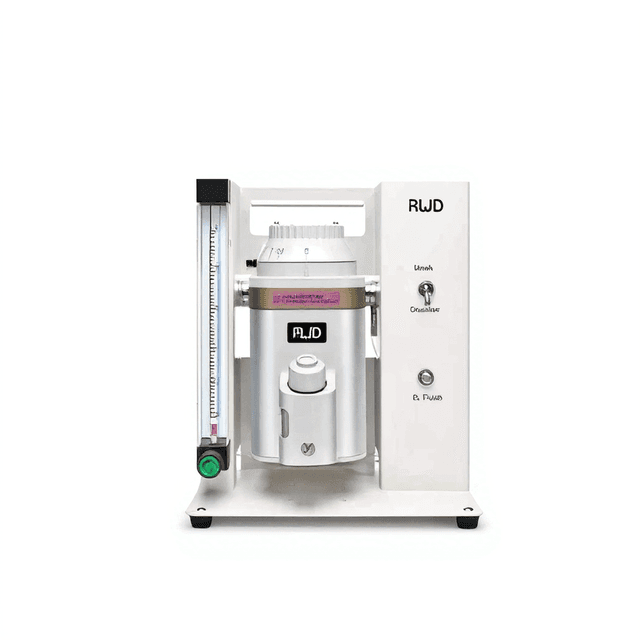
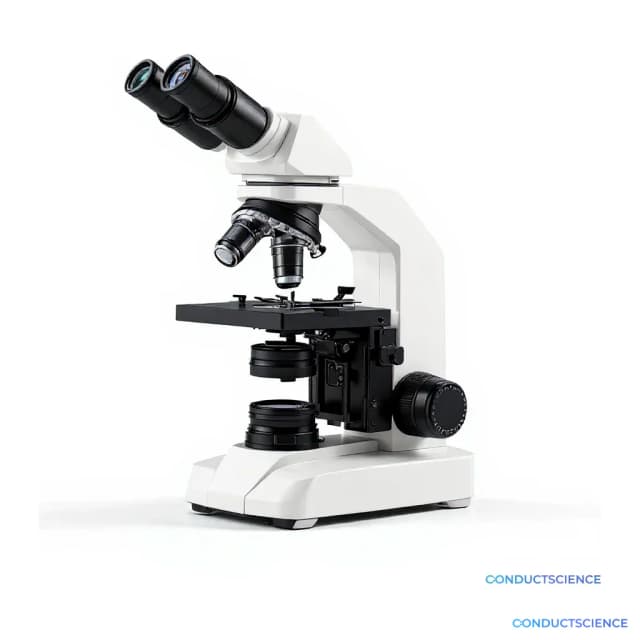
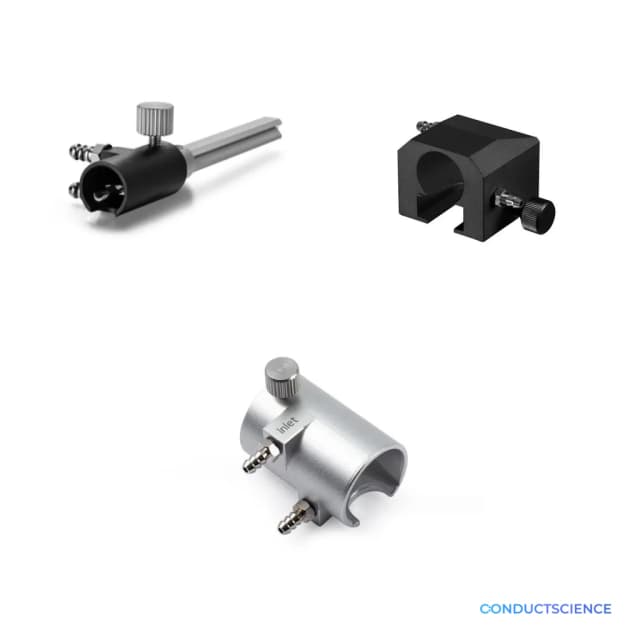
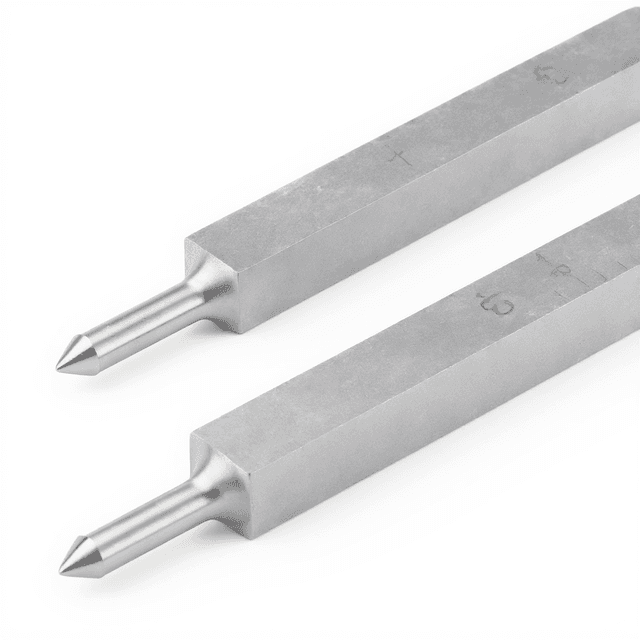
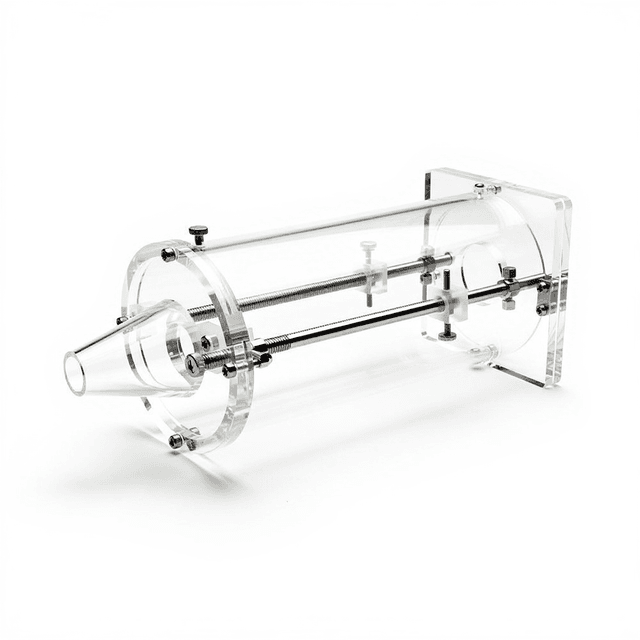
For anesthetized rodent work, the family focuses on stable head positioning with ear-bar and nose-clip geometry, optional stereotaxic masks for gas anesthesia, and microscope-friendly layouts. The microscope configuration adds horizontal, vertical, pitch, and up/down adjustment paths so the head can be positioned around observation or surgical access rather than only around a traditional stereotaxic arm.
For rabbit workflows, the source family uses zygoma clamps with an adjustable tooth bar and nose clamp, plus pitch-angle adjustment for coronal and sagittal positioning. That makes the rabbit option a head-fixation configuration rather than a full rabbit stereotaxic instrument page; use it when the purchasing requirement is rabbit head holding and orientation, and use the rabbit stereotaxic page when manipulator-based coordinate targeting is the main requirement.
Scientific Use
Animal head fixation is central to workflows where stable cranial orientation affects imaging, recording, injection access, or observation quality. Typical use cases include awake mouse two-photon imaging, OCT, electrophysiology, visual stimulation, anesthetized mouse brain or face work, ophthalmology access, rat or mouse microscope observation, and rabbit head positioning for larger-animal preparation.
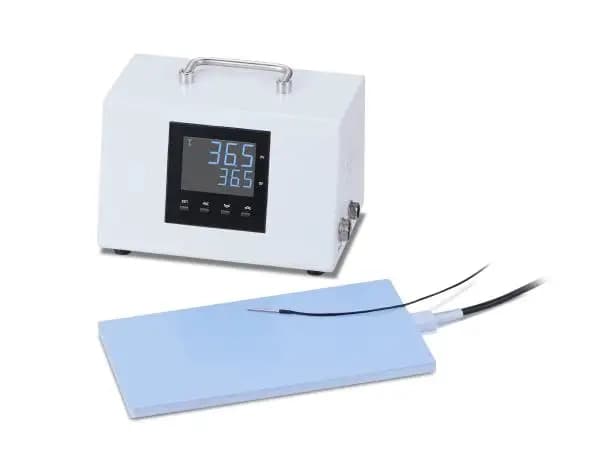
Plan the page around the surrounding station: headplates or compatible masks, anesthesia delivery and scavenging when gas anesthesia is used, warming, microscope clearance, vibration-isolation or breadboard mounting, recovery planning, and any stereotaxic holders or delivery tools that will approach the fixed head.
Buying Fit
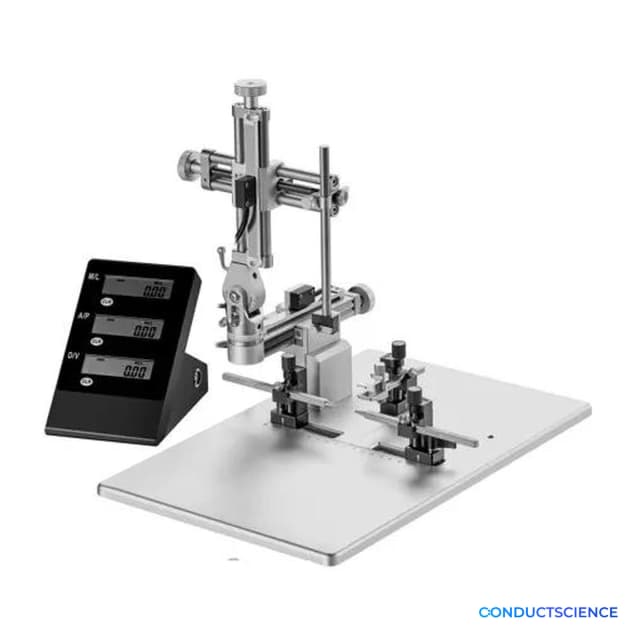
Choose this page when the lab needs head fixation as the primary purchase: holding, orienting, and stabilizing the animal head for an imaging, anesthesia, microscope, ophthalmology, or rabbit positioning workflow. Choose a stereotaxic instrument page when the main need is coordinate-guided manipulator travel, injection holders, drill holders, or atlas-based targeting.
Features & Benefits
Model fit
- Mouse, rat, and rabbit head-fixation workflows selected by configuration
Awake workflow
- Headplate-based awake mouse fixation for two-photon imaging, OCT, electrophysiology, and visual stimulation
Anesthetized workflow
- Ear-bar and nose-clip rodent fixation with optional gas-anesthesia mask planning
Adjustment paths
- Coronal/sagittal rotation, 360 degree horizontal/vertical rotation, pitch adjustment, and up/down movement by selected configuration
Rabbit fixation
- Zygoma clamps with adjustable tooth bar, nose clamp, and pitch-angle positioning
Plan with
- Headplates, stereotaxic masks, anesthesia delivery, warming, monitoring, microscope clearance, and support hardware
| Model | SKU | Listed price | Status | Shipping box |
|---|---|---|---|---|
| Awake mouse compact head fixator | CS-HFIX-AWAKE-MOUSE-COMPACT | $1,898.99 | Available | Confirmed during quote |
| Awake mouse rotational head fixator | CS-HFIX-AWAKE-MOUSE-ROT | $2,498.99 | Available | Confirmed during quote |
| Awake mouse vertical suspension fixator | CS-HFIX-AWAKE-MOUSE-VERT | $2,198.99 | Available | Confirmed during quote |
| Anesthetized rodent economy head fixator | CS-HFIX-RODENT-ECON | $1,998.99 | Available | Confirmed during quote |
| Anesthetized mouse mask-compatible rotating fixator | CS-HFIX-MOUSE-MASK-ROT | $2,498.99 | Available | Confirmed during quote |
| Anesthetized rodent microscope head fixator | CS-HFIX-RODENT-MICRO | $3,198.99 | Available | Confirmed during quote |
| Rabbit zygoma-clamp head fixator | CS-HFIX-RABBIT-ZYGOMA | $3,798.99 | Available | Confirmed during quote |
Practical Tips
Choose awake, anesthetized, microscope, or rabbit head fixation before selecting accessories.
Why: Each configuration solves a different positioning problem, so the workflow should drive the variant choice.
Confirm microscope working distance, objective clearance, headplate height, and rotation or pitch needs before finalizing the setup.
Why: Head fixation is most valuable when the animal position is compatible with the actual imaging or observation geometry.
Plan masks, anesthesia delivery, warming, monitoring, and comfort/support hardware alongside the selected fixator.
Why: Stable head positioning and stable animal support need to be planned together for awake or anesthetized workflows.
Setup Guide
What’s in the Box
- Selected animal head fixation system configuration
- Awake mouse options for headplate-based fixation and imaging-oriented access
- Rotational regulator option for coronal and sagittal plane adjustment
- Anesthetized rodent options with ear-bar and nose-clip head-level adjustment
- Gas-anesthesia mask planning for compatible anesthetized mouse or rat workflows
- Microscope head-fixator options with horizontal, vertical, pitch, and up/down adjustment paths
- Rabbit head-fixator option with zygoma clamps, adjustable tooth bar, nose clamp, and pitch-angle positioning
- Headplates, masks, anesthesia delivery, warming, microscope, and support equipment configured with the selected workflow
Warranty
Support, replacement, and fulfillment terms are confirmed with the final quote and institutional purchasing requirements.
Compliance
Which animal head fixation configurations are available?
Selectable options include awake mouse compact fixation, awake mouse rotational fixation, awake mouse vertical suspension fixation, anesthetized rodent economy fixation, anesthetized mouse mask-compatible rotating fixation, anesthetized rodent microscope fixation, and rabbit zygoma-clamp fixation.
When should I choose an awake mouse head fixator?
Choose an awake mouse configuration when the workflow centers on headplate-based cranial imaging or recording, such as two-photon imaging, OCT, electrophysiology, or visual stimulation.
When should I choose an anesthetized rodent head fixator?
Choose an anesthetized rodent configuration when the study needs ear-bar and nose-clip positioning, gas-anesthesia mask planning, microscope access, or ophthalmology-oriented head orientation.
What is different about the rabbit configuration?
The rabbit configuration uses zygoma clamps with an adjustable tooth bar and nose clamp, plus pitch-angle positioning for coronal and sagittal orientation.
What should be ordered with a head fixation system?
Common additions include compatible headplates, stereotaxic nose cone masks, anesthesia delivery, warming, monitoring, microscope support, vibration-isolation or breadboard mounting, and scientist review of the selected workflow.
Have a question about this product?
Have a question? Just ask.
Send it over and we'll email you a personalized answer — no call, no scheduling.
Prefer to talk it through?
Accessories
Enhance your setup with compatible accessories
Frequently Bought Together