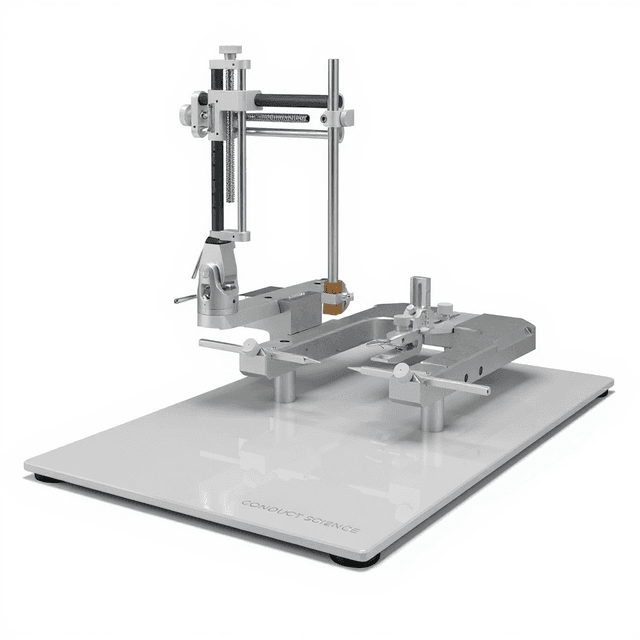
Multi-Arm Mouse Stereotaxic Instrument
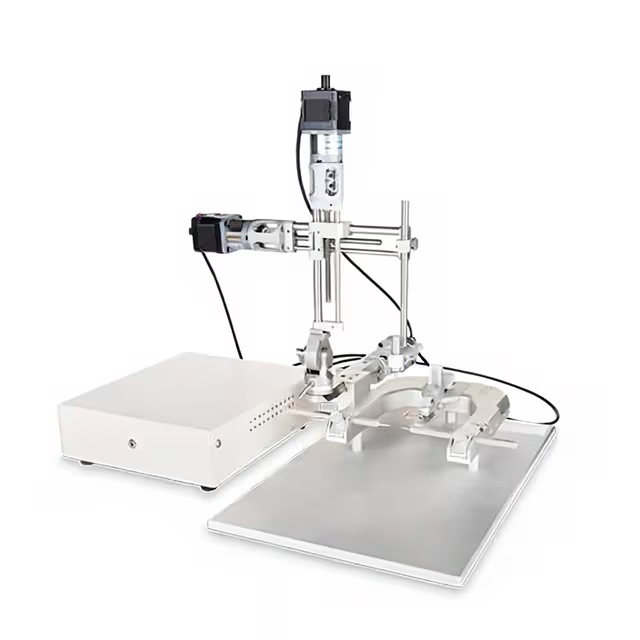
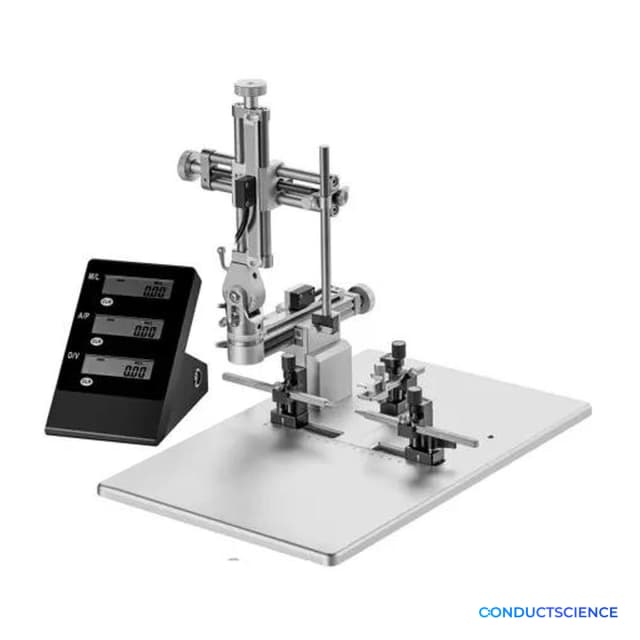
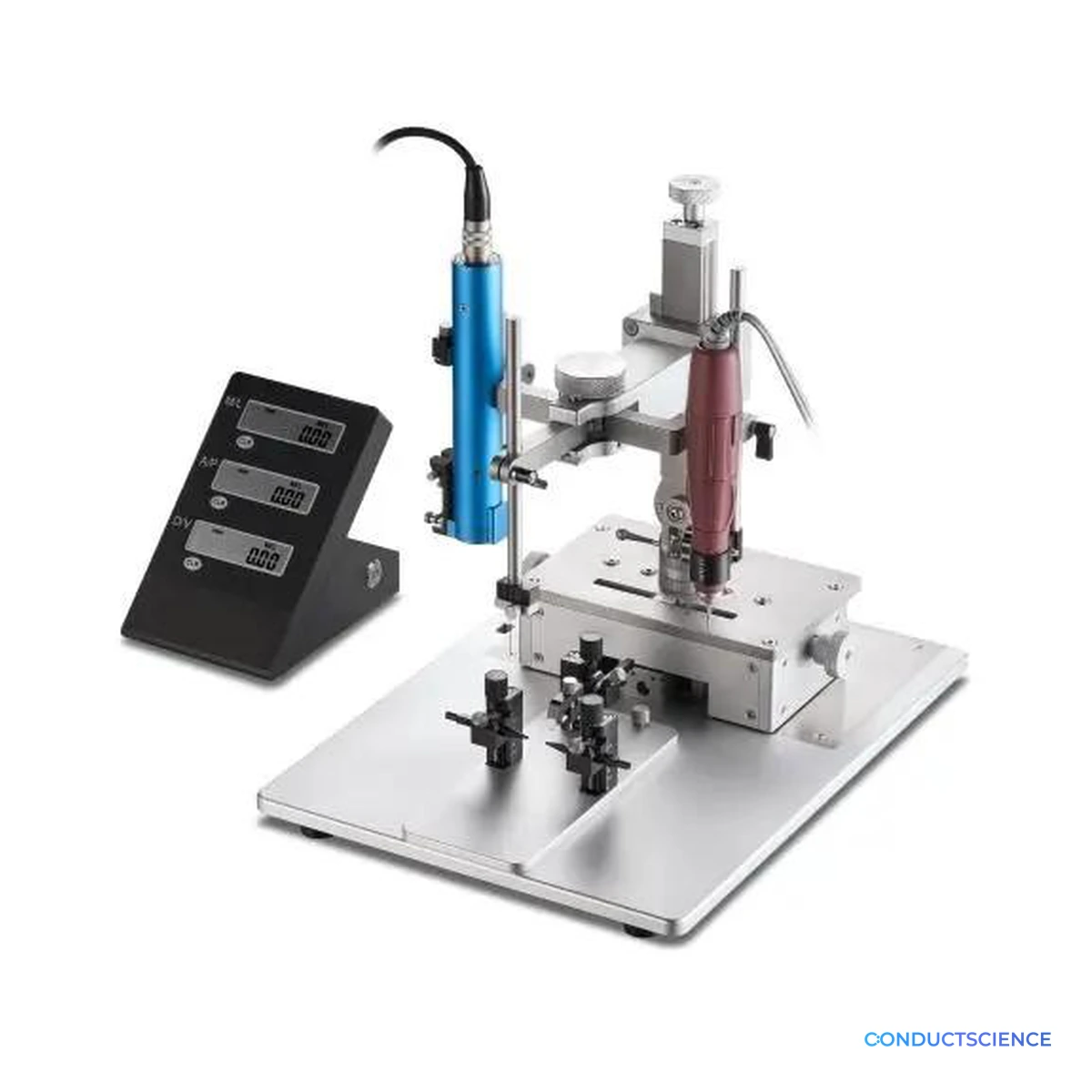
Multi-arm mouse stereotaxic instrument for sequential positioning, skull drilling, and injection workflows, with three rotating clamping arms mounted on an 85 mm Z-manipulator so positioning needles, skull drills, and injection pumps can remain staged without repeated tool removal.
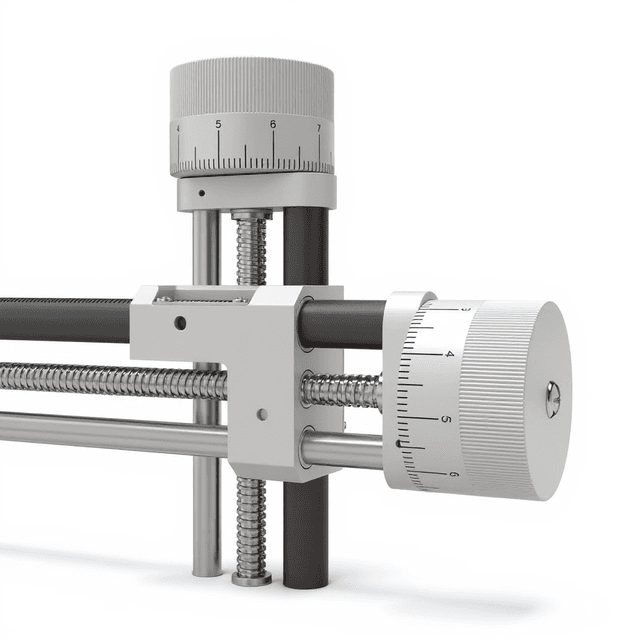
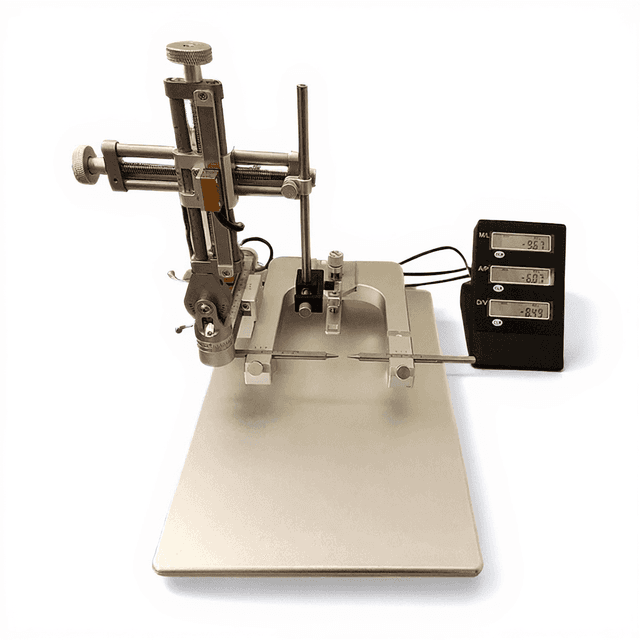
Choose manual 0.1 mm or digital 0.01 mm coordinate readout, with 45 mm X/Y travel on the base plate for stable mouse stereotaxic operation.

Louise Corscadden, PhD
Director of Science · ConductScience
Ask Louise about Multi-Arm Mouse Stereotaxic Instrument fit, setup, configuration, or quote prep.
Already working with us? Sign in to connect this with My Scientist.
Key Specifications
Full details →- Model fit
- Mouse standard workflow; rat head-fixator and base-plate customization can be reviewed
- SKU family
- CS-STX-MA-MOUSE
- Sizing
- Model-specific dimensions confirmed from the selected configuration
- Ordering
- Online checkout and quote request available
- Category
- Stereotaxic Systems
- Build notes
- Confirm accessories, station layout, and support needs before purchase
Overview
The Multi-Arm Mouse Stereotaxic Instrument is a mouse stereotaxic system for procedures that move through positioning, skull drilling, and injection steps in sequence. Instead of repeatedly removing and reinstalling tools, the source design stages three clamping arms on the same Z-manipulator so a positioning needle, skull drill, and injection pump or holder can be kept ready and rotated into working position.
The practical buying value is workflow continuity. Labs running coordinate-guided mouse neuroscience work often need to confirm a target, open the skull, and deliver a reagent, probe, cannula, fiber, or electrode path without rebuilding the tool stack between steps. The multi-arm layout gives the operator a cleaner station plan for staged tools while keeping the X/Y travel on the base plate for stable coordinate movement.
Two configurations are available from one page: manual 0.1 mm readout or digital 0.01 mm readout. The source specification identifies 85 mm travel on the Z-manipulator and 45 mm travel on each X/Y manipulator axis, giving purchasing a clear way to compare this system against standard single-arm mouse frames, open-base rodent frames, and higher-ticket automated stereotaxic systems.
Scientific Use
Multi-step stereotaxic workflows are common in mouse neuroscience when drilling and delivery hardware must be coordinated around a skull-referenced target. The page is useful for labs planning injections, viral-vector delivery, cannula or guide placement, electrode or probe placement, cranial access, and workflows that benefit from having a drill and injection path staged at the same station.
Choose this listing when the purchasing decision is about reducing tool changes during a mouse stereotaxic workflow. Pair the selected configuration with stereotaxic-compatible anesthesia, nose cone masks, microdrill and syringe holders, warming, monitoring, atlas planning, and any lab-specific rat customization review when the same workflow needs to be adapted beyond mouse work.
Buying Fit
This is the better fit when a standard mouse stereotaxic frame can position accurately but slows the procedure because drilling and injection hardware must be swapped repeatedly. The manual configuration fits labs that want a lower-cost multi-arm workflow, while the digital configuration fits teams that want finer coordinate readout during staged tool use.
Features & Benefits
Workflow fit
- Sequential mouse stereotaxic positioning, drilling, and injection workflows
Tool staging
- Three rotating clamping arms for positioning needles, skull drills, and injection pumps or holders
Coordinate readout
- Manual 0.1 mm or digital 0.01 mm configurations
Manipulator travel
- 85 mm Z-manipulator travel; 45 mm X/Y travel on each axis
Animal workflow
- Mouse standard workflow; rat head-fixator and base-plate customization can be reviewed
Plan with
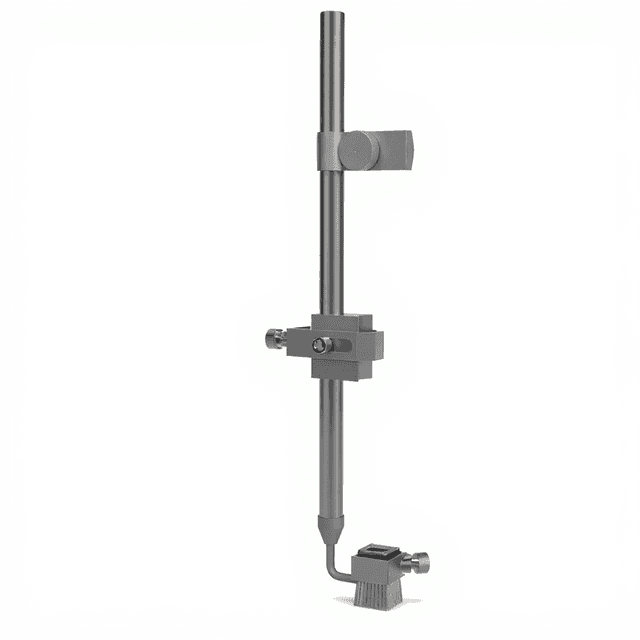
- Stereotaxic anesthesia, nose cone masks, microdrill holder, syringe holder, warming, monitoring, and atlas planning tools
| Model | SKU | Listed price | Status | Shipping box |
|---|---|---|---|---|
| Single manipulator, manual 0.1 mm | CS-STX-MA-MOUSE-SM-MAN | $5,998.99 | Available | Confirmed during quote |
| Single manipulator, digital 0.01 mm | CS-STX-MA-MOUSE-SM-DIG | $7,498.99 | Available | Confirmed during quote |
Practical Tips
Map the positioning needle, skull drill, injection path, and holder hardware onto the three-arm workflow before finalizing the configuration.
Why: The value of the product is keeping sequential stereotaxic tools staged so the station does not need to be rebuilt between positioning, drilling, and injection steps.
Choose manual 0.1 mm for standard staged workflows or digital 0.01 mm when finer readout is helpful for target planning.
Why: The source family offers the same multi-arm concept with two coordinate-readout choices.
Review stereotaxic anesthesia, nose cone masks, microdrill holder, syringe holder, warming, monitoring, and atlas planning with the frame request.
Why: A staged-tool stereotaxic frame works best when the surrounding animal-support and tool-holder layout is planned at the same time.
Setup Guide
What’s in the Box
- Multi-arm mouse stereotaxic base and manipulator assembly
- Three rotating clamping arms mounted on the Z-manipulator
- Selectable manual 0.1 mm or digital 0.01 mm coordinate configuration
- 85 mm Z-manipulator travel
- 45 mm X/Y-manipulator travel on the base plate
- Mouse head-positioning workflow hardware configured during quote review
Warranty
Support, replacement, and fulfillment terms are confirmed with the final quote and institutional purchasing requirements.
Compliance
What does multi-arm mean on this stereotaxic instrument?
The source design places three rotating clamping arms on the Z-manipulator so positioning, drilling, and injection tools can be staged together and switched into position during the same mouse workflow.
Which configurations are available?
Two selectable configurations are available: single manipulator manual 0.1 mm and single manipulator digital 0.01 mm. Both use the staged multi-arm workflow concept.
What tool types can be planned around the three arms?
The source text identifies positioning needles, skull drills, and injection pumps as the intended staged tool path. ConductScience can also review compatible holders, probes, syringes, and microdrill accessories around the selected workflow.
How is this different from the Open-Base Rat and Mouse Stereotaxic Instrument?
The open-base page is about wider access geometry for mouse and rat workflows. This page is about staging multiple tools on a mouse stereotaxic Z-manipulator so sequential positioning, drilling, and injection steps require fewer tool changes.
Can this be used for rat experiments?
The standard listing is mouse-focused. The source notes a rat pathway through customized head-fixator and base-plate review, so rat requirements should be discussed during quote configuration rather than assumed from the mouse page.
Have a question about this product?
Have a question? Just ask.
Send it over and we'll email you a personalized answer — no call, no scheduling.
Prefer to talk it through?
Accessories
Enhance your setup with compatible accessories
Frequently Bought Together
Upgrade Options